Neoplatonic Saints
 75
75

Neoplatonic Saints
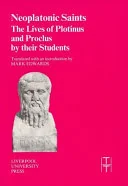
Porphyry's "On the Life of Plotinus" offers a rare, intimate glimpse into the life and thought of one of antiquity's most influential philosophers. The defense against astrological detractors, though specific to its time, reveals enduring anxieties about determinism and human agency. Porphyry's earnestness in portraying Plotinus as a near-divine figure is both compelling and, at times, bordering on hagiography, which serves as a limitation for critical analysis of Plotinus's actual philosophical arguments. The text highlights the crucial role of biography in shaping philosophical legacy; Porphyry's meticulous arrangement of Plotinus's treatises, aiming for a logical progression, itself becomes a philosophical act. The work's value lies in its presentation of Plotinus not just as a system-builder but as a living embodiment of his ideals. It is a vital, albeit partisan, window into the foundations of Neoplatonism.
📝 Description
75
Porphyry's 3rd-century CE biography defends Plotinus against critics and details his teachings.
This volume contains Porphyry's account of Plotinus's life and philosophical writings. Written by Plotinus's student, the text addresses criticisms leveled against his master, particularly from astrologers and rival philosophers. Porphyry aimed to establish Plotinus's intellectual integrity and honor his philosophical legacy. The work provides insight into the Neoplatonic school's intellectual debates in late antiquity.
The book is valuable for anyone studying ancient philosophy, especially Neoplatonism. It also serves students of late Roman intellectual history, the evolution of philosophical biography, and the methods by which philosophical traditions are preserved. Readers interested in primary source material concerning Plotinus and his immediate circle will find this text significant. It offers a direct look at how a prominent student memorialized his teacher.
These writings are situated within the Neoplatonic tradition, a philosophical system that sought to synthesize Platonic ideas with other spiritual and intellectual currents of the Hellenistic period. Neoplatonism posits a hierarchical reality emanating from a supreme, ineffable principle known as 'The One'. The goal for the individual soul is a spiritual ascent, achieved through intellectual and ethical practices, to reunite with this ultimate source. Porphyry's work illuminates this tradition by documenting the life and thought of its most influential figure, Plotinus, and contextualizing it against contemporary intellectual challenges.
💡 Why Read This Book?
• Gain direct insight into the life and character of Plotinus, the founder of Neoplatonism, as depicted by his devoted student Porphyry, offering a unique perspective on the philosopher's personal conduct beyond abstract doctrines. • Understand the biographical conventions of late antiquity through Porphyry's defense of Plotinus, revealing how philosophical reputations were managed and protected against contemporary criticisms, particularly from astrologers around 270 CE. • Explore the early organization of Neoplatonic thought, as Porphyry details the arrangement of Plotinus's works, providing a framework for understanding the sequence and development of key philosophical concepts like The One and emanation.
⭐ Reader Reviews
Honest opinions from readers who have explored this book.
❓ Frequently Asked Questions
When was Porphyry's "On the Life of Plotinus" written?
Porphyry's "On the Life of Plotinus" was written shortly after Plotinus's death in 270 CE, serving as an introduction to the collected works of his teacher.
What criticisms did Porphyry defend Plotinus against?
Porphyry defended Plotinus against posthumous criticisms, notably from astrologers and other philosophers, concerning Plotinus's life and teachings.
What is the significance of "On the Life of Plotinus" for understanding Neoplatonism?
It is fundamental for understanding Neoplatonism as it provides a biographical context for its founder and details the organization of his philosophical writings, aiding in the interpretation of complex doctrines.
What does Porphyry's work reveal about ancient biography?
It demonstrates the conventions of biographical writing in late antiquity, particularly in philosophical circles, where the life of the subject was often presented as a model or vindication of their ideas.
Who was Plotinus?
Plotinus (c. 204/5 – 270 CE) was a major philosopher of the 3rd century, considered the founder of Neoplatonism, who taught in Alexandria and Rome.
What is the Esoteric Library's focus regarding this book?
The Esoteric Library focuses on this book's role in the development of Neoplatonic philosophy, its influence on subsequent mystical traditions, and its presentation of Plotinus as an exemplar of spiritual attainment.
🔮 Key Themes & Symbolism
The Neoplatonic Sage
Porphyry meticulously crafts the image of Plotinus as the ideal Neoplatonic sage, a figure who embodies the philosophical virtues and spiritual ascent described in his teachings. This portrayal goes beyond mere intellectual exposition, presenting Plotinus's life itself as a proof of the practical application of Neoplatonic principles. The work emphasizes Plotinus's detachment from worldly concerns, his profound contemplative states, and his role as a spiritual guide, offering a model for adherents seeking to emulate his path towards The One.
Defense Against Critics
A significant portion of Porphyry's "On the Life of Plotinus" is dedicated to refuting criticisms leveled against his teacher. The focus on astrologers and rival philosophers highlights the intellectual polemics of the 3rd century CE. Porphyry defends Plotinus's character and the integrity of his philosophy, particularly his views on fate and the divine, demonstrating the importance of reputation management in ancient intellectual discourse. This defense reveals the external pressures and internal debates shaping Neoplatonism's early reception.
Arrangement of Works
Porphyry's meticulous cataloging and arrangement of Plotinus's treatises, as presented in this volume, is itself a philosophical act. He sought to organize Plotinus's scattered writings into a coherent system, grouping them thematically and chronologically. This organizational structure, often seen as comprising the "Enneads," profoundly influenced how Plotinus's complex philosophy was studied and understood for centuries, providing a foundational canon for Neoplatonic scholarship.
Biographical Conventions
Beyond its philosophical content, the work offers invaluable insights into the conventions of biography in late antiquity. Porphyry's approach blends historical reporting with encomiastic elements, aiming to glorify his subject while establishing his philosophical lineage. The emphasis on Plotinus's virtue, his ascetic practices, and his divine inspiration reflects a common tendency in ancient biographies of great figures, particularly philosophers and religious leaders.
💬 Memorable Quotes
Direct passages from the work, attributed to the author.
“He was ashamed of being in the body.”
— This concise statement expresses a core Neoplatonic sentiment: the soul's inherent discomfort with its material embodiment and its longing for a return to the spiritual realm.
“He defended his teachings against those who spoke ill of them.”
— This highlights Porphyry's role as not just a biographer but a defender of Plotinus's philosophical legacy, illustrating the intellectual rivalries and the need to protect a teacher's reputation in the 3rd century CE.
“The arrangement of his works was undertaken with great care.”
— This refers to Porphyry's systematic compilation and organization of Plotinus's writings, a crucial act that shaped the study and understanding of Neoplatonic philosophy for subsequent generations.
“He was always striving for the divine.”
— This interpretation emphasizes Plotinus's relentless pursuit of spiritual union, portraying him as a living example of the Neoplatonic goal of ascending towards The One.
“He showed contempt for the criticisms of astrologers.”
— This points to a specific intellectual conflict, showcasing Plotinus's philosophical stance against deterministic views and Porphyry's efforts to underscore his master's independence from such doctrines.
🌙 Esoteric Significance
Tradition
This work is foundational to the Neoplatonic tradition, a major lineage within Western esotericism that sought to re-establish Platonic philosophy as a path to spiritual illumination and union with the divine. It fits within a broader Hermetic and Gnostic milieu by emphasizing emanation from a transcendent source and the soul's journey back to it. However, Neoplatonism, as presented here, prioritizes rigorous philosophical reasoning and ethical discipline over magical practices or revealed Gnostic doctrines.
Symbolism
While Porphyry's text is primarily biographical and polemical, it indirectly invokes Neoplatonic symbolism. 'The One' represents the ultimate, ineffable source from which all reality emanates. The 'soul's ascent' symbolizes the spiritual journey of purification and contemplation, often depicted as a return from the material world (associated with darkness or illusion) back to the intelligible realm (associated with light and truth). Plotinus himself becomes a symbol of the enlightened individual who has achieved this ascent.
Modern Relevance
Contemporary thinkers and practitioners in esoteric philosophy, comparative religion, and consciousness studies continue to draw from Plotinus, as introduced by Porphyry. Modern Neoplatonists, spiritual directors, and scholars of mysticism find value in Plotinus's contemplative methods and his metaphysics. His ideas on the nature of reality, the self, and the pursuit of higher consciousness remain relevant to various modern spiritual movements seeking a philosophical grounding for their practices.
👥 Who Should Read This Book
• Students of Ancient Philosophy: Those studying Plato, Aristotle, and Hellenistic schools will find this text crucial for understanding the development of Neoplatonism and its central figure, Plotinus. • Scholars of Late Antiquity: Researchers interested in intellectual history, biography, and the cultural milieu of the 3rd century CE will gain insights into philosophical debates and biographical writing. • Seekers of Spiritual Philosophy: Individuals interested in contemplative traditions and the philosophical underpinnings of mystical experience will find Plotinus's life and teachings a profound source.
📜 Historical Context
Emerging from the intellectual ferment of 3rd-century Roman Egypt and Rome itself, Porphyry's "On the Life of Plotinus" (written post-270 CE) situates Neoplatonism within a rich philosophical landscape. Plotinus, its founder, taught in Rome from around 244 CE, engaging with Platonic traditions and synthesizing them with other Hellenistic philosophies. This era saw intense philosophical debate, with various schools vying for intellectual dominance. Porphyry's text specifically addresses posthumous criticisms, notably from astrologers and other philosophers, reflecting a common tension between philosophical rationalism and deterministic or mystical interpretations of fate and the cosmos prevalent at the time. While not directly engaging with a named contemporary author in defense, Porphyry implicitly counters figures and schools that relied heavily on astrological prognostication, such as certain Stoic or Pythagorean factions, seeking to elevate Plotinus's rational and spiritual approach.
📔 Journal Prompts
Porphyry's depiction of Plotinus's shame of embodiment.
The defense against astrological criticisms in 270 CE.
The meticulous arrangement of Plotinus's works by Porphyry.
Plotinus's striving for the divine.
The Neoplatonic concept of The One.
🗂️ Glossary
Neoplatonism
A philosophical system founded by Plotinus in the 3rd century CE, based on Plato's teachings, which posits that all reality emanates from a single, transcendent source ('The One') and that the human soul can achieve union with this source through contemplation.
The One
The ultimate, ineffable principle in Neoplatonic philosophy from which all existence emanates. It is beyond being, thought, and description, often understood as pure unity and goodness.
Emanation
The Neoplatonic concept describing the process by which reality flows or proceeds from The One, not as a creation, but as a necessary outpouring of its perfection, creating a hierarchy of being.
Enneads
The collection of Plotinus's philosophical treatises, organized into nine books (or 'enрадs'), compiled and arranged by his student Porphyry after his death.
Sage
In the context of Neoplatonism, a sage is an individual who has achieved a high level of spiritual and intellectual attainment, embodying the virtues and philosophical understanding of the tradition.
Ascent
The Neoplatonic concept of the soul's spiritual journey upward, away from the material world and towards union with The One, achieved through philosophical contemplation and purification.
Encomium
A speech or piece of writing that praises or eulogizes a person or thing; in this context, Porphyry's praise of Plotinus.
This book appears in 1 collection
🔮 Readers Also Liked
Browse all →






From the “Neoplatonism” Collection
View all →









More Free Esoteric History & Biography Books
View all →