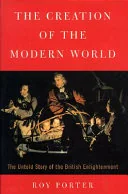
The Creation of the Modern World
 73
73

The Creation of the Modern World
Roy Porter’s The Creation of the Modern World offers a compelling counter-narrative to the traditional European-centric view of the Enlightenment. Porter makes a strong case for the often-underestimated British contribution, particularly highlighting the impact of figures like John Locke and the Royal Society. The book’s strength lies in its accessible prose and its ability to connect abstract intellectual movements to tangible societal changes. A particularly illuminating section discusses the burgeoning print culture and its role in disseminating new ideas beyond academic circles, effectively illustrating how philosophical concepts entered public discourse. However, the argument, while robust, occasionally feels like it could benefit from more direct engagement with the very continental thinkers it implicitly contrasts with, rather than solely focusing on British achievements. Despite this, Porter’s re-evaluation provides a valuable perspective on the origins of modern thought.
Porter successfully reorients our understanding of the Enlightenment's genesis.
📝 Description
73
Roy Porter's 2000 book argues that Britain, not France or Germany, propelled the Enlightenment.
Roy Porter's 2000 book challenges the traditional view of the Enlightenment's origins. He contends that intellectual shifts in Britain, rather than solely in France or Germany, were crucial in developing new ideas about reason, science, and society. Porter highlights the contributions of British figures like John Locke and Isaac Newton, placing their work within the intellectual ferment following the Restoration and the rise of scientific societies.
The book is for anyone interested in the historical formation of modern Western thought, especially those who question standard accounts of intellectual history. It will appeal to students of the Enlightenment, the history of science, and British cultural history. Porter examines how print culture, scientific societies, and empirical observation helped shape new ways of thinking that contributed to the modern world. He uses concepts like the 'Republic of Letters' to describe the international community of thinkers and 'philosophical history' to denote the era's interest in charting human progress.
While classified as esoteric, Porter's work is grounded in historical scholarship rather than occult traditions. Its 'esoteric' nature stems from its focus on the hidden or less appreciated intellectual currents that shaped modernity. It examines how new modes of thought, often arising from empirical observation and rational inquiry, displaced older worldviews. The book reveals the intellectual shifts that underpin secularization and the rise of scientific authority, aspects often considered foundational to modern 'secret' knowledge systems that privilege reason over dogma.
💡 Why Read This Book?
• Learn how the intellectual climate of post-Restoration Britain, particularly the influence of thinkers like John Locke, fundamentally altered conceptions of governance and human understanding. • Understand the specific role of institutions like the Royal Society in fostering empirical inquiry and shaping the scientific method that underpins modern knowledge. • Discover the impact of early print culture and coffeehouse discussions in transforming abstract philosophical ideas into widespread societal discourse, a process accelerated by the mid-17th century.
⭐ Reader Reviews
Honest opinions from readers who have explored this book.
❓ Frequently Asked Questions
What specific British contributions to the Enlightenment does Roy Porter highlight?
Roy Porter emphasizes the significant role of British thinkers and institutions. He highlights figures like John Locke and Isaac Newton, the influence of the Royal Society in promoting empirical science, and the development of a vibrant print culture that disseminated new ideas widely.
When was 'The Creation of the Modern World' first published?
The book 'The Creation of the Modern World' by Roy Porter was first published in the year 2000.
How does Porter challenge traditional views of the Enlightenment?
Porter challenges the conventional focus on France and Germany by arguing that Britain was a primary engine of Enlightenment thought. He demonstrates how British intellectual innovations in science, politics, and philosophy had a profound and far-reaching impact on the modern world.
What is the 'Republic of Letters' concept as discussed by Porter?
The 'Republic of Letters' refers to the transnational intellectual community of the Enlightenment era. Porter uses this concept to illustrate how scholars and thinkers across Europe, including those in Britain, communicated and debated ideas, forming a virtual republic of shared intellectual pursuit.
Who were some key contemporaries or influences Porter discusses?
While the book focuses on British contributions, it engages with the intellectual landscape shaped by figures like John Locke and Isaac Newton. Porter also implicitly addresses the wider European intellectual milieu of the Enlightenment.
What role did print culture play according to the book?
Porter highlights the crucial role of print culture in the spread of Enlightenment ideas. Increased literacy, the proliferation of books, pamphlets, and journals, and the growth of public spaces like coffeehouses allowed for the wider dissemination and discussion of new philosophies and scientific findings.
🔮 Key Themes & Symbolism
The British Enlightenment
Porter argues that the Enlightenment was not solely a French or German phenomenon but had significant, foundational roots in Britain. He details how thinkers from Isaac Newton to John Locke, alongside institutions like the Royal Society, fostered a new emphasis on empirical observation, scientific reasoning, and liberal political philosophy. This intellectual revolution, occurring in the late 17th and 18th centuries, provided the conceptual framework for modern science, governance, and societal organization, influencing developments across Europe and beyond.
Print Culture and Public Sphere
A crucial element in the dissemination of Enlightenment ideas was the expansion of print culture. Porter examines how the increased availability of books, pamphlets, and periodicals, alongside the rise of coffeehouses and salons, created a dynamic public sphere. This environment facilitated the exchange and debate of new philosophies and scientific discoveries, moving them from academic exclusivity into broader societal consciousness and shaping public opinion.
Philosophical History
The book explores the emergence of 'philosophical history,' a mode of historical writing that sought to understand and chart human progress. Thinkers began to analyze history not just as a chronicle of events but as a process driven by reason and intellectual development. This perspective underpinned the Enlightenment's optimistic outlook on human potential and the possibility of societal improvement through knowledge and reform.
The Role of Science
Porter underscores the important role of scientific advancements and the scientific method in forging the modern world. The success of Newtonian physics and the establishment of scientific societies promoted a worldview grounded in empirical evidence and rational inquiry. This emphasis on scientific discovery and its methodical application profoundly influenced other fields, from philosophy to politics, fostering a belief in human capacity to understand and reshape the world.
💬 Memorable Quotes
Direct passages from the work, attributed to the author.
“The British role in delivering the Enlightenment to the modern world.”
— This is the central thesis of Porter's work, highlighting his focus on Britain's often-underestimated contribution to the intellectual and societal transformations of the Enlightenment era.
“The work explores the impact of figures like John Locke and Isaac Newton.”
— This points to the specific individuals whose ideas and scientific contributions, according to Porter, were instrumental in shaping the Enlightenment's trajectory and its lasting legacy.
“The development of print culture and public discourse.”
— This captures Porter's analysis of how increased literacy and the proliferation of printed materials fostered a new public sphere for intellectual exchange, crucial for the Enlightenment's reach.
💡 Key Ideas
Editorial paraphrase of the work's core concepts — not direct quotes.
The monumental transformation of thinking in Great Britain influenced wider developments elsewhere.
This paraphrase emphasizes Porter's argument that British intellectual currents were not isolated but acted as a catalyst for broader European and global changes during the Enlightenment.
An engagingly written and groundbreaking new work.
This paraphrased statement reflects the original blurb's assessment of the book's style and its perceived importance in re-evaluating Enlightenment historiography.
🌙 Esoteric Significance
Tradition
While not strictly an esoteric text, Porter's work engages with the intellectual underpinnings of modernity that later esoteric movements would react to or reinterpret. The Enlightenment's emphasis on rationalism and empiricism created a worldview that many esoteric traditions sought to either challenge, supplement, or re-contextualize within broader metaphysical frameworks. Porter's analysis of this foundational period provides essential context for understanding the historical and intellectual landscape from which various modern esoteric paths emerged, particularly those concerned with the relationship between science, reason, and the hidden or spiritual aspects of reality.
Symbolism
Porter's analysis of the Enlightenment's intellectual currents touches upon symbols and concepts that held latent esoteric resonance. The scientific method itself, with its emphasis on uncovering hidden laws of nature, can be seen as a secularized form of arcane inquiry. Concepts like the 'mechanical philosophy' or the exploration of natural theology, while presented in rationalist terms, often bordered on or were interpreted through more mystical lenses by contemporaries. The very idea of 'progress' and the 'perfectibility of man' became quasi-religious ideals for some, reflecting a desire for transformation and enlightenment.
Modern Relevance
Contemporary esoteric thinkers and practitioners often engage with the legacy of the Enlightenment as a historical counterpoint or a source of ideas to be re-examined. Movements that seek to integrate spirituality with science, or those that critique purely materialistic worldviews, find context in Porter's work. Understanding the Enlightenment's rationalist project, as detailed by Porter, allows for a more informed dialogue about the limitations and strengths of scientific materialism, and provides a historical anchor for those seeking to explore alternative epistemologies and metaphysical understandings in the 21st century.
👥 Who Should Read This Book
• Students of intellectual history and the Enlightenment seeking a detailed examination of Britain's role in shaping modern thought. • Readers interested in the philosophical underpinnings of scientific inquiry and its societal impact, particularly from the 17th and 18th centuries. • Those curious about how prevailing Western ideas concerning reason, society, and progress were formed and disseminated.
📜 Historical Context
Published in 2000, Roy Porter's *The Creation of the Modern World* emerged during a period of ongoing re-evaluation of Enlightenment historiography. While the work itself focuses on British contributions, it implicitly engages with the dominant scholarship that often centered on France and Germany. Porter’s argument for Britain's important role, particularly highlighting the influence of figures like John Locke and the scientific revolution spurred by Isaac Newton, directly challenged prevailing narratives. He emphasized the impact of institutions such as the Royal Society, founded in 1660, and the burgeoning print culture that fostered a wider public sphere for intellectual debate. This countered views that saw Enlightenment thought primarily emanating from continental philosophical salons. The book resonated with scholars seeking a more nuanced understanding of how modern ideas about reason, science, and society took shape, acknowledging the significant, yet often minimized, British intellectual output.
📔 Journal Prompts
The Enlightenment's emphasis on empirical observation and its implications for modern knowledge.
The concept of the 'Republic of Letters' and its influence on intellectual exchange.
Britain's intellectual contributions versus continental Europe during the Enlightenment.
The role of print culture in shaping public discourse and disseminating ideas.
The shift towards 'philosophical history' and its view of human progress.
🗂️ Glossary
Enlightenment
An 18th-century intellectual and cultural movement emphasizing reason, individualism, and skepticism towards tradition and established authority, advocating for progress and reform.
Empiricism
A philosophical stance that knowledge primarily comes from sensory experience and evidence, foundational to the scientific method and prominent in British Enlightenment thought.
Royal Society
A British learned society, founded in 1660, dedicated to promoting and supporting scientific research and discovery, playing a key role in the scientific revolution.
Republic of Letters
A term describing the transnational intellectual community of scholars and thinkers during the early modern period, who communicated through correspondence and publications.
Philosophical History
A genre of history writing during the Enlightenment that sought to analyze past events through the lens of reason and progress, often aiming to guide future societal development.
Print Culture
The system of printing, publishing, and distributing books, pamphlets, and other texts, which expanded significantly during the Enlightenment, facilitating the spread of ideas.
Mechanical Philosophy
A worldview that explained the universe and its phenomena in terms of mechanical processes and interactions, akin to a complex machine, prevalent in the Scientific Revolution.
This book appears in 1 collection
🔮 Readers Also Liked
Browse all →







From the “Enlightenment” Collection
View all →







More Free Esoteric History & Biography Books
View all →