The Enlightenment
 75
75

The Enlightenment
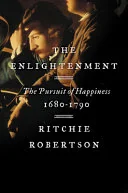
Ritchie Robertson's *The Enlightenment* re-frames the 18th century not just as an age of cold reason, but as a fervent quest for practical human betterment. The work highlights how thinkers like Denis Diderot and Jean-Jacques Rousseau grappled with societal structures, aiming to engineer greater happiness and individual liberty. Robertson meticulously details the intellectual ferment, tracing how ideas of religious tolerance and freedom of expression, central to modern secular values, took root. While the narrative is magisterial, its sheer breadth might occasionally overwhelm readers seeking a single, focused argument. The exploration of the Scottish Enlightenment figures, such as Adam Smith, and their economic theories as a path to societal well-being, is particularly illuminating. Robertson effectively argues that the Enlightenment's legacy is as much about pragmatic idealism as abstract philosophical discourse. It is a comprehensive account that recontextualizes a pivotal era.
📝 Description
75
### What It Is ### Who It's For ### Historical Context ### Key Concepts
💡 Why Read This Book?
• Gain an understanding of the Enlightenment's focus on practical happiness, moving beyond mere intellectualism, as explored through figures like Immanuel Kant. • Grasp how the pursuit of religious tolerance and freedom of thought became foundational tenets of modern Western societies, a key outcome of the period. • Discover the connections between Enlightenment ideals and early economic theories, exemplified by Adam Smith's work, as a means to enhance collective well-being.
⭐ Reader Reviews
Honest opinions from readers who have explored this book.
❓ Frequently Asked Questions
What is the primary argument of Ritchie Robertson's *The Enlightenment* regarding the era's goals?
Robertson argues that the Enlightenment was fundamentally a pursuit of practical means to achieve greater human happiness, not solely an intellectual exercise focused on abstract reason and logic.
Which core values of modern Western society are traced back to the Enlightenment in this book?
The book identifies religious tolerance, freedom of thought, freedom of speech, freedom of the press, and the reliance on rationality and evidence-based arguments as key legacies of the Enlightenment.
Does the book focus only on French thinkers of the Enlightenment?
No, *The Enlightenment* by Ritchie Robertson examines a broad spectrum of European thought, including figures from the Scottish Enlightenment and their contributions to economics and social theory.
When was Ritchie Robertson's *The Enlightenment* first published?
Ritchie Robertson's *The Enlightenment* was first published on February 23, 2021.
How does this book redefine our understanding of the Enlightenment?
It recasts the period as an active quest for improving human lives through societal and intellectual reforms, rather than solely an abstract philosophical movement.
Are there specific examples of practical reforms discussed in the book?
Yes, the work explores how reformers sought to implement changes in areas like legal systems and education to foster greater individual liberty and societal well-being.
🔮 Key Themes & Symbolism
Reason as Practical Tool
Robertson positions reason not merely as an abstract philosophical pursuit but as a vital instrument for tangible societal improvement. The work details how Enlightenment thinkers, like those involved in the Encyclopédie project led by Diderot, applied rational analysis to fields ranging from governance to agriculture, seeking empirical solutions to human suffering and inefficiency. This pragmatic application aimed to dismantle superstition and outdated traditions, paving the way for progress in human welfare and happiness, a departure from purely theoretical debates.
The Architecture of Happiness
A central thesis is the Enlightenment's concerted effort to engineer human happiness. This wasn't merely about individual contentment but about structuring society to foster widespread well-being. The book examines how concepts of social contract theory, as articulated by thinkers like Rousseau, were intended to create political frameworks that maximized collective felicity. This focus on practical happiness as a societal goal underscores the era's ambitious reformist spirit and its lasting influence on political and social ideologies.
Foundations of Secular Values
This work meticulously traces the origins of modern secular Western values to the intellectual currents of the Enlightenment. Robertson highlights the persistent advocacy for religious tolerance, freedom of expression, and the embrace of evidence-based reasoning as critical developments. These ideals, often championed in salons and philosophical societies across Europe, laid the groundwork for democratic societies and individual liberties that continue to shape the contemporary world, challenging established religious and political orthodoxies.
Intellectual Currents and Reform
The book maps the diverse intellectual range of the 18th century, showcasing the interplay between philosophy, science, and emerging social sciences. It details how thinkers grappled with the implications of scientific discoveries and sought to reform institutions, from legal systems to education. The emphasis is on the era's dynamic engagement with knowledge as a catalyst for change, moving society towards greater justice, equality, and human flourishing through deliberate intellectual and social reform.
💬 Memorable Quotes
Direct passages from the work, attributed to the author.
“The Enlightenment is recast as a pursuit of practical means to achieve greater human happiness.”
— This core assertion reframes the historical period, shifting the focus from abstract philosophical debates to the concrete application of reason and new ideas for improving the lives of individuals and society.
“Religious tolerance, freedom of thought, speech and the press, of rationality and evidence-based argument.”
— These are presented as the foundational pillars of modern secular Western values, directly stemming from the intellectual and social shifts that characterized the Enlightenment era.
“Formative periods of European and world history.”
— This highlights the profound and lasting global impact of the Enlightenment, underscoring its role as a critical juncture that shaped subsequent historical developments and societal structures worldwide.
“The fountainhead of modern secular Western values.”
— This metaphor emphasizes the Enlightenment's role as the primary source or origin point from which many of the fundamental principles guiding contemporary Western societies derive their legitimacy and form.
💡 Key Ideas
Editorial paraphrase of the work's core concepts — not direct quotes.
The pursuit of practical means to achieve greater human happiness.
This paraphrased concept captures the book's central argument that Enlightenment thinkers were actively seeking actionable strategies and reforms to enhance collective and individual well-being.
🌙 Esoteric Significance
Tradition
While not explicitly an esoteric text, *The Enlightenment* situates itself within a lineage of Western intellectual history that, at its fringes, intersected with proto-esoteric thought. The emphasis on reason and the critique of superstition can be seen as a secularization of Gnostic impulses to uncover hidden truths and liberate humanity from ignorance. The period's fascination with natural philosophy and the potential for human perfectibility echoes alchemical and Hermetic aspirations, albeit channeled through empirical observation and rational discourse rather than mystical revelation.
Symbolism
The book implicitly engages with symbols of illumination and progress, central to both Enlightenment and esoteric traditions. The 'light' of reason serves as a potent metaphor, dispelling the 'darkness' of ignorance and superstition, akin to the alchemical symbolism of purification. Furthermore, the very act of constructing systematic knowledge, as seen in the *Encyclopédie*, can be viewed as an attempt to map and control the world through intellectual order, mirroring the Hermetic principle of 'as above, so below' applied to the terrestrial realm.
Modern Relevance
Contemporary thinkers and movements concerned with secular ethics, human rights, and the application of scientific reasoning to societal problems owe a direct debt to the Enlightenment as depicted by Robertson. Schools of thought focused on transhumanism, which seek to enhance human capabilities through technology and reason, draw upon the Enlightenment's optimistic view of progress. Moreover, the ongoing debates surrounding religious freedom, free speech, and the role of evidence in public discourse directly reflect the enduring legacy of the values championed during this central historical period.
👥 Who Should Read This Book
• Students of intellectual history seeking a comprehensive overview of the 18th century's philosophical and social movements, understanding key figures like Voltaire and Rousseau. • Individuals interested in the origins of modern secular values, such as religious tolerance and freedom of expression, and how they developed. • Readers curious about the Enlightenment's ambition to improve human happiness through practical reforms and the application of reason to societal challenges.
📜 Historical Context
Ritchie Robertson's *The Enlightenment*, published in 2021, enters a long historiographical tradition debating the nature and legacy of the 18th century. The era itself was marked by intense intellectual ferment, challenging the divine right of kings and the pervasive influence of religious dogma. Thinkers like Voltaire championed religious tolerance, often clashing with established powers, while Denis Diderot and Jean le Rond d'Alembert spearheaded the monumental *Encyclopédie*, a project aimed at disseminating knowledge and rational thought. Robertson's work engages with this context, particularly the tension between radical critique and the desire for societal order. The reception of Enlightenment ideas was complex, facing censorship and opposition from conservative forces, yet its proponents, like Adam Smith in Scotland, were laying groundwork for new economic and social theories that would profoundly shape subsequent centuries.
📔 Journal Prompts
The Enlightenment's pursuit of practical means for greater human happiness.
Voltaire's advocacy for religious tolerance.
The Encyclopédie's role in disseminating knowledge.
Rousseau's concept of the social contract.
The legacy of evidence-based argument in modern society.
🗂️ Glossary
Enlightenment
An 18th-century intellectual and cultural movement emphasizing reason, individualism, and skepticism towards traditional authority, advocating for societal reform and human progress.
Rationality
The quality of being based on or in accordance with reason or logic; the principle of using reason as the primary basis for knowledge and action.
Secular Values
Principles and ethics derived from human reason and experience rather than religious doctrine, focusing on worldly matters like justice, freedom, and well-being.
Religious Tolerance
The acceptance and respect for religious beliefs and practices different from one's own, a key tenet promoted during the Enlightenment.
Freedom of Thought
The liberty of an individual to hold or consider a set of beliefs or opinions without external influence or coercion, central to Enlightenment ideals.
Evidence-based Argument
Reasoning and claims supported by empirical data, observation, and logical deduction, rather than tradition, authority, or faith.
Human Happiness
A state of well-being and contentment, often understood in the Enlightenment context as achievable through societal improvement and rational living.
This book appears in 1 collection
🔮 Readers Also Liked
Browse all →







From the “Enlightenment” Collection
View all →
![ERIC ED085284: World History. Volumes I and II. [Sahuarita High School Career Curriculum Project].](/img/thumb/eric-ed085284-world-history-volumes-i-and-ii-sahuarita-high-school-career-curriculum-project-eric.webp)







More Free Esoteric History & Biography Books
View all →