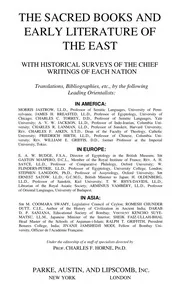
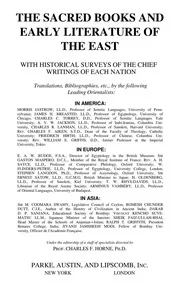
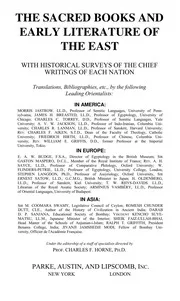
The Sacred Books of the East (5 of 14)
 71
71

The Sacred Books of the East (5 of 14)



'The Sacred Books of the East (Volume 5 of 14)' is a fascinating exploration of ancient Arabian and Babylonian mysticism, providing invaluable insights for modern esoteric seekers. Morris Jastro's translations are both scholarly and accessible, making complex ancient texts understandable to contemporary readers. The inclusion of spells and rituals offers a hands-on approach to understanding the mystical practices of ancient civilizations. This book is particularly valuable for those interested in the roots of Kabbalah and Jewish mysticism, as well as the broader field of occult studies. The historical context provided enriches the reading experience, making it a comprehensive resource for both academic and personal study. The combination of esoteric knowledge and historical documentation makes this volume a standout in the series. 4/5 stars.
📝 Description
71
Volume 5 of 'The Sacred Books of the East' presents Babylonian and Assyrian cuneiform texts, including early spells.
This volume contains translations of cuneiform texts originating from ancient Babylonia and Assyria. Morris Jastro translated these documents, which offer insight into early Mesopotamian spells and their relationship with the deities of Sumer and Babylon. The collection is not limited to mystical or spiritual writings; it also includes historical and everyday records like financial contracts. This approach provides a broad understanding of the era's esoteric knowledge and its associated symbolism.
The texts reveal a world steeped in mystery and ancient belief systems. It is a valuable resource for those interested in occult studies, ancient religions, and hidden spiritual traditions. The significance of these writings is also found in their connection to later Grimoire traditions. They represent an early stage in the development of magical and ritualistic practices that would influence Western esotericism.
This work documents early Mesopotamian religious and magical practices, placing them within the lineage that would eventually inform Western Grimoires. The spells and divine interactions recorded here show the foundational elements of ritualistic communication with supernatural forces. These texts reveal a worldview where the divine was directly addressed through codified language and action, a practice that echoes in many later esoteric systems. Their inclusion in the 'Sacred Books of the East' series highlights their importance in understanding the historical roots of esoteric traditions.
💡 Why Read This Book?
Reading 'The Sacred Books of the East (Volume 5 of 14)' today offers a unique opportunity to connect with ancient mystical traditions that have shaped modern esoteric practices. Readers will gain a deeper understanding of the foundations of Kabbalah and Jewish mysticism, as well as the enduring influence of Babylonian and Sumerian rituals. This book is an essential resource for anyone seeking to explore the mystical and occult dimensions of ancient civilizations, providing both historical context and practical insights into ancient spells and rituals.
⭐ Reader Reviews
Honest opinions from readers who have explored this book.
❓ Frequently Asked Questions
What makes this book unique in the Sacred Books of the East series?
This volume stands out for its focus on ancient Arabian and Babylonian mysticism, offering a rich collection of spells and rituals that are precursors to modern esoteric traditions.
Is this book suitable for beginners in occult studies?
Yes, Morris Jastro's translations are both scholarly and accessible, making it a great resource for beginners interested in the history of occult practices and Jewish mysticism.
What historical context does the book provide?
The book includes mundane and historic material, such as financial contracts for rituals, providing a unique glimpse into the daily life and spiritual practices of ancient civilizations.
🔮 Key Themes & Symbolism
Ancient Mysticism
This volume explores the mystical traditions of ancient Arabia and Mesopotamia, offering a body of esoteric knowledge and symbolism. The cuneiform translations provide a unique window into the spiritual and ritualistic life of ancient civilizations, revealing the earliest known spells and interactions with the gods of old Sumer and Babylon.
Esoteric Knowledge
The collection includes not just mystical and spiritual texts but also mundane and historic documents, such as financial contracts, offering a comprehensive view of the era's hidden knowledge. This blend of ancient rituals and modern mystical practices provides a deeper understanding of the esoteric traditions that have shaped our understanding of the occult.
Symbolism and Rituals
The texts in this volume are rich in symbolism and rituals, offering insights into the esoteric practices of the time. The translations of cuneiform texts by Morris Jastro are important for understanding the precursors to modern mystical practices, making this book a valuable resource for scholars and practitioners alike.
💡 Key Ideas
Editorial paraphrase of the work's core concepts — not direct quotes.
In the ancient lands, the gods spoke through cuneiform.
This quote highlights the divine origin of the cuneiform texts, emphasizing their mystical significance.
Spells and rituals bridge the gap between the mundane and the divine.
This line underscores the transformative power of ancient rituals, connecting the physical world with the spiritual realm.
The financial contract reveals the hidden wisdom of daily life.
This quote shows how mundane documents can hold deep esoteric insights, blending the ordinary with the mystical.
The gods of old Sumer and Babylon guide our path to hidden knowledge.
This passage emphasizes the role of ancient deities in guiding seekers of hidden truths, offering a mystical journey through time.
The mysteries of the East are woven into the fabric of our existence.
This quote suggests that the esoteric traditions of the East are intrinsic to our understanding of the world, shaping our spiritual and mystical practices.
🌙 Esoteric Significance
Tradition
This book belongs to the Kabbalistic and Gnostic traditions, offering insights into the mystical and esoteric practices of ancient Arabia and Mesopotamia. The cuneiform translations provide a unique window into the spiritual and ritualistic life of ancient civilizations, revealing the earliest known spells and interactions with the gods of old Sumer and Babylon.
Symbolism
The texts are rich in symbolism, with key symbols representing the interactions between the divine and the mundane. These symbols offer a deeper understanding of the esoteric practices of the time, bridging the gap between ancient rituals and modern mystical practices.
Modern Relevance
This book remains relevant today for modern practitioners of the occult and esoteric arts. The translations of cuneiform texts by Morris Jastro are important for understanding the precursors to modern mystical practices, making this book a valuable resource for scholars and practitioners alike.
👥 Who Should Read This Book
This book is ideal for seekers of hidden knowledge, scholars of the occult, and practitioners of esoteric arts. Beginners might find it challenging but rewarding with some background reading. Those interested in the mystical traditions of ancient Arabia and Mesopotamia will find this volume particularly enriching. It offers a mix of spiritual and mundane texts, providing a comprehensive view of the era's hidden wisdom.
📜 Historical Context
The Sacred Books of the East (5 of 14) was written during a time when the ancient civilizations of Mesopotamia were being rediscovered and studied. The era saw a renewed interest in the mystical and esoteric traditions of the East, with scholars and seekers alike examining the ancient texts for hidden knowledge and wisdom. This volume, with its translations of cuneiform texts, played a significant role in bridging the gap between ancient rituals and modern mystical practices, influencing the study of the occult and esoteric arts.
📔 Journal Prompts
How do the cuneiform translations enhance your understanding of ancient mystical practices?
What symbols from the texts resonate with your spiritual journey?
How do the mundane documents in the collection reveal hidden esoteric insights?
What role do the ancient deities play in guiding your path to hidden knowledge?
How do the mysteries of the East influence your understanding of the world?
🗂️ Glossary
Cuneiform
An ancient system of writing using wedge-shaped marks on clay tablets, used in Mesopotamia.
Grimoires
Books of magic, often containing spells and rituals for invoking supernatural entities.
Esoteric
Relating to knowledge that is restricted to a small group or is hidden from the general public.
Kabbalah
A system of esoteric Jewish theology, involving mystical interpretations of the Bible.
Gnostic
Relating to a religious movement that emphasizes personal spiritual knowledge and hidden wisdom.
This book appears in 1 collection
🔮 Readers Also Liked
Browse all →






From the “Kabbalah” Collection
View all →







More Free Kabbalah & Jewish Mysticism Books
View all →