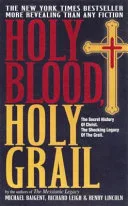
Holy Blood, Holy Grail
 83
83

Holy Blood, Holy Grail
Baigent, Leigh, and Lincoln's "Holy Blood, Holy Grail" remains a formidable, if contentious, exploration of early Christian history and its potential hidden currents. Its primary strength lies in the authors' diligent assembly of disparate historical fragments and esoteric lore into a coherent, albeit speculative, narrative. The connection drawn between the Merovingian dynasty and a supposed bloodline stemming from Jesus and Mary Magdalene is meticulously argued, presenting a compelling case for a history diverging sharply from accepted doctrine. However, the work occasionally falters under the weight of its own speculation; the leaps from suggestive evidence to definitive conclusions can sometimes feel less like scholarly deduction and more like wishful thinking. The passage detailing the alleged descent from Jesus through figures like the Merovingian kings, while central to the thesis, exemplifies this tendency. Despite its limitations, the book’s impact on popular understanding of Christian mysteries and Grail legends is undeniable, offering a perspective that challenges conventional views. It is a significant text for anyone interested in the intersection of history, myth, and esoteric belief.
📝 Description
83
Published in 1983, Holy Blood, Holy Grail proposed Jesus Christ survived the crucifixion and fathered a lineage.
This 1983 book argues that Jesus Christ did not die on the cross but instead survived and, with Mary Magdalene, established a bloodline that continues to this day. The authors meticulously connect biblical accounts with historical records and esoteric lore to trace this potential lineage. They suggest this lineage passed through Merovingian royalty and is linked to the symbolism of the Holy Grail, which they interpret not as a cup but as a dynastic secret.
The book emerged when interest in suppressed Christian histories was growing. It questioned official Church narratives and drew on scholarship that looked at the historical Jesus beyond theological interpretations. Its publication ignited considerable public discussion and academic debate, challenging conventional views of early Christianity and its alleged descendants. The authors sought to uncover a hidden history concealed within established religious and royal traditions.
This work fits within a tradition of questioning orthodox religious history, particularly concerning the origins of Christianity. It taps into ideas about hidden lineages and sacred bloodlines that have circulated in esoteric circles for centuries, often linking them to royal families or secret societies. The book's reinterpretation of the Holy Grail as a dynastic symbol rather than a mere artifact aligns with esoteric practices that find deeper, symbolic meanings within religious narratives and historical events.
💡 Why Read This Book?
• Understand the Merovingian hypothesis: Learn how the authors connect the Merovingian dynasty to a purported bloodline of Jesus and Mary Magdalene, a central tenet of their thesis. • Explore the Grail symbolism: Discover how the concept of the Holy Grail is reinterpreted not as a chalice, but as a symbol for a dynastic continuation. • Examine alternative Christian histories: Gain insight into the historical and esoteric arguments that challenge the orthodox narrative of Jesus's life and legacy.
⭐ Reader Reviews
Honest opinions from readers who have explored this book.
❓ Frequently Asked Questions
What is the central thesis of Holy Blood, Holy Grail?
The book's core argument is that Jesus Christ did not die on the cross but instead married Mary Magdalene, fathered children, and established a bloodline that secretly continued through history, notably linked to the Merovingian dynasty.
Who are the authors of Holy Blood, Holy Grail?
The authors are Michael Baigent, Richard Leigh, and Henry Lincoln. The book was first published in 1983 and quickly became a subject of widespread discussion and controversy.
What historical evidence do the authors cite?
They cite a range of sources including biblical texts, apocryphal gospels, historical chronicles, genealogies, and esoteric traditions, particularly focusing on the history of the Merovingian kings and the Knights Templar.
How does Holy Blood, Holy Grail relate to the Holy Grail legends?
The book posits that the Holy Grail is not a physical object but a metaphor for the bloodline (Sangreal) of Jesus and Mary Magdalene, a secret that was allegedly protected by certain historical orders.
Was the book controversial?
Yes, "Holy Blood, Holy Grail" generated significant controversy. Critics questioned its historical accuracy, methodology, and the speculative nature of its claims, while proponents found its arguments compelling and revelatory.
What is the significance of Mary Magdalene in this book?
Mary Magdalene is presented not just as a disciple but as the wife of Jesus and the mother of his children, making her a crucial figure in the proposed continuation of Christ's lineage.
🔮 Key Themes & Symbolism
The Merovingian Bloodline
This theme centers on the controversial assertion that the Merovingian dynasty, the royal house of the Franks from the 5th to the 8th century CE, are direct descendants of Jesus Christ and Mary Magdalene. The authors meticulously, though speculatively, trace genealogies and historical records, suggesting a hidden lineage that influenced European history. This concept challenges the traditional view of Christ's celibacy and the Church's narrative, proposing a secret dynastic continuity that persisted through centuries.
Mary Magdalene as Wife and Mother
Contrary to traditional Christian interpretations that view Mary Magdalene primarily as a penitent sinner or devoted follower, this book elevates her to the status of Christ's wife and the mother of his offspring. This reinterpretation is important to the authors' thesis of a surviving bloodline. It reframes her role from a passive disciple to an active participant in continuing Jesus's legacy through progeny, significantly altering the understanding of early Christian dynamics.
The Holy Grail as Dynastic Symbol
The work radically reinterprets the legend of the Holy Grail. Instead of a physical chalice, the Grail is presented as a symbol for the 'Sangreal' – the sacred bloodline of Jesus. This interpretation connects the Arthurian legends and various medieval romances to the supposed hidden lineage. The book suggests that secret societies and mystics throughout history have sought to protect or uncover this bloodline, making the Grail legend a coded reference to dynastic survival.
Suppressed Christian History
A core element is the idea that orthodox Christianity, particularly after the Council of Nicaea in 325 CE, deliberately suppressed alternative narratives and historical truths concerning Jesus's life and teachings. The authors propose that a more 'earthly' and familial aspect of Jesus's existence was systematically erased to establish ecclesiastical authority. This theme explores the notion of a hidden, esoteric history running parallel to the exoteric, official religious doctrine.
💬 Memorable Quotes
Direct passages from the work, attributed to the author.
“Jesus did not die on the cross but instead married Mary Magdalene and had a child creating a blood line that lives on in the modern world.”
— This is the foundational premise of the book, suggesting a historical Jesus who lived a human life, procreated, and established a physical lineage that was subsequently concealed from mainstream history and religious doctrine.
“The Merovingians were kings of the Franks, and we believe they were descended from Jesus and Mary Magdalene.”
— This statement highlights the authors' primary genealogical link, proposing that the ancient Merovingian dynasty is the tangible evidence of the surviving bloodline, thus connecting early Christianity directly to major European royal houses.
“The Church suppressed the truth about Jesus's marriage and family to consolidate its power.”
— This interpretation reflects the authors' view on the historical motivations behind the perceived cover-up. It suggests a deliberate act by early Church authorities to erase elements of Jesus's life that contradicted the established dogma of his divinity and celibacy.
“The Priory of Sion was a secret society guarding the secret of the bloodline.”
— This points to a specific alleged secret society that the authors identify as instrumental in protecting the lineage and its associated secrets throughout history, linking the modern era back to ancient Christian origins.
💡 Key Ideas
Editorial paraphrase of the work's core concepts — not direct quotes.
The Holy Grail is not a cup, but a bloodline.
This paraphrase captures the book's redefinition of the Grail legend. It shifts the focus from a religious artifact to a biological and historical lineage, suggesting the legends were coded messages about this hidden dynastic continuity.
🌙 Esoteric Significance
Tradition
This work draws heavily from Western esoteric traditions, particularly Gnosticism, Grail legends, and Templar lore. It attempts to bridge the gap between historical scholarship and mystical interpretations of Christianity. While not strictly adhering to a single lineage like Hermeticism or Kabbalah, it reinterprets Christian history through an esoteric lens, suggesting hidden knowledge and a secret lineage preserved outside orthodox religious structures.
Symbolism
The primary symbol is the 'Sangreal' or Holy Grail, reinterpreted not as a chalice but as the sacred bloodline itself. Another key motif is the Merovingian dynasty, symbolizing the tangible, earthly continuation of Christ's lineage. The lily, often associated with the Merovingians and French royalty, also appears as a symbol of purity and dynastic legitimacy within the book's framework.
Modern Relevance
Contemporary thinkers and practitioners in fields like alternative history, Grail studies, and certain strands of New Age spirituality continue to reference "Holy Blood, Holy Grail." It remains a foundational text for those exploring the idea of hidden Christian lineages and the esoteric interpretations of biblical narratives. The book's influence can be seen in modern fiction, documentaries, and online communities dedicated to uncovering suppressed historical or spiritual truths.
👥 Who Should Read This Book
• Amateur historians and researchers: Individuals fascinated by alternative historical theories and the potential for hidden truths within religious narratives will find the book's synthesis of evidence intriguing. • Students of Western Esotericism: Those interested in the evolution of secret societies, Grail legends, and non-orthodox interpretations of Christianity will appreciate its thematic connections. • Skeptics of established dogma: Readers who question traditional religious accounts and seek compelling arguments for suppressed histories will find this book a catalyst for further inquiry.
📜 Historical Context
Published in 1983, "Holy Blood, Holy Grail" emerged during a cultural moment ripe for questioning established religious and historical narratives. The late 20th century saw a surge of interest in Gnosticism, alternative biblical interpretations, and the historical Jesus, fueled by discoveries like the Nag Hammadi library. This book capitalized on that curiosity, presenting a synthesis of esoteric lore, genealogical speculation, and historical conjecture. It tapped into existing theories about the Knights Templar and secret societies, popularizing them for a mass audience. The work directly engaged with and often challenged the historical consensus maintained by mainstream biblical scholars and theologians of the time. Its reception was polarized, with fervent support from alternative history enthusiasts and sharp criticism from academic historians who pointed to methodological flaws and unsupported leaps in logic. It certainly spurred further debate and inspired subsequent works, including Dan Brown's "The Da Vinci Code," demonstrating its significant cultural impact.
📔 Journal Prompts
The Merovingian dynasty's alleged connection to Jesus Christ.
Mary Magdalene's role as wife and mother in the proposed lineage.
The reinterpretation of the Holy Grail as a bloodline symbol.
Evidence presented for a suppressed Christian history.
The potential implications of a surviving bloodline of Jesus.
🗂️ Glossary
Sangreal
A term often used interchangeably with the Holy Grail, which the authors reinterpret to mean 'sacred blood' or 'royal blood,' referring to the lineage of Jesus Christ.
Merovingian Dynasty
The ruling Frankish dynasty in Western Europe from the 5th to the 8th century CE. The book controversially claims they are descendants of Jesus and Mary Magdalene.
Gnosticism
A diverse set of religious and philosophical beliefs that emerged in the early Christian era, emphasizing personal spiritual knowledge (gnosis) and often viewing the material world as flawed or evil.
Priory of Sion
A purported secret society, allegedly founded in 1099, which the authors suggest was responsible for protecting the secret of the Sangreal and the Davidic bloodline.
Council of Nicaea
The first ecumenical council of Christian bishops, convened in 325 CE by Roman Emperor Constantine I. The book suggests significant doctrinal decisions made here contributed to suppressing alternative narratives.
Apocrypha
Texts related to the Bible that are not part of the canonical scriptures. The book draws upon some apocryphal texts for its historical and theological arguments.
Cathars
A medieval dualistic religious movement, often considered heretical by the Catholic Church. The book briefly touches upon them in relation to preserved ancient traditions.