Roman Republican Augury
 73
73

Roman Republican Augury
Lindsay Gayle Driediger-Murphy’s Roman Republican Augury is a welcome re-evaluation of a practice often reduced to its legalistic outcomes. The author provocatively centers the agency of the augurs themselves, questioning the extent to which they were constrained by or actively shaping the political landscape. A particular strength lies in the detailed analysis of the *auspicium* and its procedural intricacies, revealing a system more dynamic than previously assumed. However, the book sometimes struggles to fully escape the very political focus it aims to transcend, occasionally re-centering the *cursus honorum* when discussing augural pronouncements. The discussion concerning the *templum* and its conceptualization as a space for divine communication offers a compelling, albeit brief, glimpse into the phenomenology of Roman ritual. Ultimately, this work provides a valuable corrective, urging readers to consider the subjective experience and intellectual underpinnings of Roman state divination.
📝 Description
73
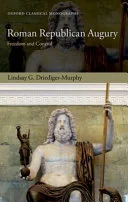
Lindsay Gayle Driediger-Murphy's 2023 book examines Roman Republican augury not just as a political tool, but as a window into Roman thought.
This book reconsiders the practice of augury in the Roman Republic. Instead of concentrating on its role in legitimizing political acts or maintaining social order, the author focuses on what the ritual of observing natural phenomena for divine guidance reveals about Roman ideas of divine will and human agency. The study delves into the specific context of the Roman Republic, a time of significant political change and territorial growth. It moves beyond previous analyses that often highlighted augury's function in blocking or enabling political actions or its part in upholding existing social structures. The work instead asks more fundamental questions about how augury affected Roman society's understanding of its place in the world.
The book clarifies core concepts like the *auspicium*, the authority to interpret omens, and the *templum*, the designated sacred space for such observations. It also distinguishes between *augures*, the officials who interpreted signs from the sky, and *haruspices*, Etruscan diviners who read animal entrails. By examining how these elements functioned together, the author shows how they shaped Roman decision-making and their ongoing debate between fate and free will.
Within the broader tradition of divination studies, this book addresses Roman augury, a practice rooted in observing natural events for divine communication. It connects to historical methods of seeking guidance from the cosmos, a practice found across many ancient cultures. While not strictly part of modern occult traditions, the book's focus on interpreting signs and understanding divine will situates it within the historical lineage of attempts to align human actions with perceived cosmic order.
⭐ Reader Reviews
Honest opinions from readers who have explored this book.
❓ Frequently Asked Questions
What is the primary focus of Roman Republican Augury by Lindsay Gayle Driediger-Murphy?
The book focuses on understanding augury, a Roman state divination ritual, not just for its political or social effects, but for what it reveals about Roman concepts of divine will and human agency, especially concerning the god Jupiter.
Who are the main figures involved in Roman augury discussed in the book?
The book discusses the *augures*, the Roman officials responsible for interpreting omens from natural signs like lightning or bird flight, and their role in state decision-making during the Republic.
What is the significance of the *auspicium* in the context of Roman augury?
The *auspicium* refers to the right and practice of observing omens, which was a crucial element of Roman state religion. Driediger-Murphy examines its procedural aspects and implications for political authority.
How does this book differ from previous scholarly studies of Roman augury?
Unlike studies focusing on legal-constitutional effects or social structures, this work emphasizes what augury tells us about Roman beliefs concerning divine intervention and human freedom, shifting the focus to the interpretive act itself.
What historical period does Roman Republican Augury primarily cover?
The book focuses on the Roman Republic, a period of significant political development and expansion, examining how augury functioned within its state apparatus and religious practices.
Does the book explore the practical application of augury in Roman history?
Yes, it explores the practical application by examining how the observation and interpretation of omens influenced Roman state decisions, considering both the constraints and the potential for agency within the ritual process.
🔮 Key Themes & Symbolism
Divine Will vs. Human Agency
The work critically examines the tension between the perceived will of Jupiter, as interpreted through augural signs, and the agency of Roman officials and politicians. It probes whether augury served as a genuine divine communication or a tool for manipulating political outcomes, particularly in central moments such as elections or military campaigns. This exploration moves beyond simple functionalism to consider the existential implications for Romans seeking to understand their place in a divinely ordered cosmos.
The Ritual Space of the Templum
Central to the practice of augury was the *templum*, a conceptualized sacred space defined by the augur's gaze and ritual instruments. This book analyzes the *templum* not just as a physical locus but as a performative and cognitive space where divine communication was facilitated. Understanding the *templum* is key to grasping how Romans enacted their relationship with the gods, transforming ordinary landscapes into sites for divine consultation and shaping collective consciousness.
Augury as Political Technology
Beyond its religious dimension, augury functioned as a sophisticated political technology within the Roman Republic. The book investigates how the *augures*, as interpreters of divine signs, wielded significant influence over state affairs, from the timing of assemblies to the legitimacy of magistrates. It scrutinizes the procedures, the specialized knowledge required, and the potential for both consensus-building and obstruction inherent in the practice, revealing its intricate role in Roman governance.
Interpreting the Signs
The core of augury lay in the interpretation of phenomena such as bird flight, thunder, and lightning. Driediger-Murphy studies the semiotics of these signs, exploring the established interpretative frameworks and the inherent ambiguities that allowed for varied readings. This focus highlights the intellectual and hermeneutic skills of the *augures* and underscores the Roman belief that the gods communicated through the natural world, requiring careful observation and reasoned judgment.
💬 Memorable Quotes
Direct passages from the work, attributed to the author.
“The *auspicium* was not merely a legal requirement but a ritual act that shaped perception.”
— This statement highlights that the observation of omens in Roman society was more than just a bureaucratic hurdle; it was a deeply ingrained ritual practice that actively influenced how events were perceived and understood by those in power.
“The *templum* created a space where divine attention could be focused and interpreted.”
— This concept emphasizes the sacred, conceptual nature of the *templum* in augury. It suggests that Romans believed they could ritually delineate areas where divine messages were more accessible, transforming ordinary space into a conduit for communication with Jupiter.
“The distinction between *augures* and *haruspices* reveals differing modes of divine access.”
— This highlights the functional and methodological differences between various forms of Roman divination. While *augures* observed celestial and atmospheric phenomena, *haruspices* (often Etruscan) interpreted entrails, showcasing a spectrum of perceived divine communication channels.
“Control was often exercised through the performance of ritual consultation.”
— This interpretation suggests that the very act of performing augural rituals, regardless of the specific outcome, served as a mechanism for Roman elites to assert control, demonstrate piety, and legitimize their authority within the state apparatus.
💡 Key Ideas
Editorial paraphrase of the work's core concepts — not direct quotes.
Augury presented a constant negotiation between divine decree and human interpretation.
This paraphrased concept points to the core tension in Roman augury: the belief that gods communicated signs, but humans possessed the agency and responsibility to interpret those signs, leading to a dynamic interplay of fate and free will in decision-making.
🌙 Esoteric Significance
Tradition
While Roman augury is a classical practice, its study can be situated within broader Western esoteric traditions that explore divination, celestial influence, and the human capacity to perceive divine will. It engages with the hermeneutic challenge of interpreting symbolic language, a central to traditions like Hermeticism and Renaissance magic. The work departs from purely historical accounts by implicitly inviting contemplation on the nature of sacred knowledge and the structures through which it is accessed and applied, resonating with practices that seek to align human action with cosmic principles.
Symbolism
The primary symbols within Roman augury include natural phenomena themselves: lightning, thunder, bird flight, and even celestial movements. These were not merely random events but encoded messages from Jupiter. The *templum*, as a divinely consecrated space, symbolizes the focused attention required for divine communication. The *auspicium* itself represents the ritualistic framework and the authoritative right to interpret these celestial 'texts,' signifying the intersection of divine communication and human governance.
Modern Relevance
Contemporary practitioners of divination, astrologers, and scholars of comparative religion can find resonance in Driediger-Murphy's analysis. The book's exploration of how ancient societies structured their understanding of fate and free will through ritualistic observation remains relevant for understanding modern psychological and philosophical debates. Thinkers interested in the phenomenology of ritual and the semiotics of natural signs may draw parallels to contemporary practices seeking connection with deeper patterns or universal consciousness.
👥 Who Should Read This Book
['• Academic researchers in Roman history and religion seeking nuanced analyses of divination beyond its political functions.', '• Students of comparative religion interested in the mechanisms of state-sponsored divination and its role in ancient societies.', '• Practitioners of esoteric arts interested in the historical roots of divination, ritual space, and the interpretation of omens.']
📜 Historical Context
Published in 2019, Lindsay Gayle Driediger-Murphy's work emerges in a vibrant field of Roman Studies, building upon decades of scholarship. The late 20th and early 21st centuries saw a significant re-evaluation of Roman religion, moving beyond simplistic notions of superstition or mere political theatre. Scholars like Mary Beard and John North had already begun to emphasize the performative and social construction of Roman religious practices. Driediger-Murphy's contribution engages with this ongoing discourse by focusing specifically on augury's interpretive dimension, contrasting with earlier studies that might have prioritized its constitutional weight, such as those examining its role in delaying or validating legislation. The book arrives at a time when the intellectual currents favor understanding ancient belief systems on their own terms, acknowledging the complex interplay of ritual, belief, and power in shaping the Roman world.
📔 Journal Prompts
The function of the *templum* as a ritual space.
Negotiating divine decree versus human interpretation in augury.
The symbolic language of natural phenomena in Roman divination.
The perceived agency of the *augures* in state decision-making.
The concept of Jupiter's will as communicated through the *auspicium*.
🗂️ Glossary
Augury
The Roman practice of observing and interpreting omens, typically from the flight of birds, thunder, lightning, or other natural phenomena, to determine the will of the gods, especially Jupiter.
Auspicium
The right and practice of taking auspices, a formal religious act performed by Roman magistrates or priests to ascertain divine approval for public business or state actions.
Templum
In augural practice, a sacred space defined by ritual boundaries, often conceptual rather than physical, where omens were observed and interpreted.
Augures
The college of Roman priests responsible for interpreting omens derived from the sky and natural phenomena, holding significant influence over state affairs.
Haruspices
Diviners, often of Etruscan origin, who practiced divination by inspecting the entrails of sacrificed animals, a practice distinct from augury.
Jupiter
The principal god in the Roman pantheon, king of the gods, associated with the sky, thunder, and law, to whom augural consultations were primarily directed.
Res Publica
Latin for 'public affair' or 'commonwealth,' referring to the Roman Republic, the period and political system under examination in the book.
This book appears in 1 collection
🔮 Readers Also Liked
Browse all →









From the “Augury” Collection
View all →









More Free Esoteric History & Biography Books
View all →