Lost Civilizations

 71
71

Lost Civilizations
Bill Harris’s "Lost Civilizations" offers a compelling, albeit speculative, survey of archaeological puzzles that defy easy explanation. The strength of the work lies in its clear presentation of the physical evidence at sites like Stonehenge and Easter Island, prompting genuine wonder about their construction. However, the book’s primary limitation is its tendency to lean heavily on conjecture, often presenting hypotheses as near certainties without fully engaging with counter-arguments from mainstream archaeology. A particularly memorable section examines the sheer logistical challenge of transporting and erecting the Easter Island statues, highlighting the profound questions about the engineering skills possessed by the Rapa Nui people. Ultimately, "Lost Civilizations" serves as an engaging primer for those new to ancient mysteries, but seasoned researchers may find its conclusions less than definitive.
📝 Description
71
Bill Harris's 1993 book questions the origins of monumental structures and the societies that built them.
Published in 1993, "Lost Civilizations" by Bill Harris examines enduring archaeological enigmas and the vanished societies that might have created them. The book analyzes monumental structures and artifacts, questioning their origins and the sophistication of their builders. It moves beyond simple description into speculative inquiry, proposing theories about the capabilities and circumstances of these ancient peoples. Harris's work appeals to readers fascinated by ancient mysteries, megalithic sites, and the broader scope of human history beyond established timelines. It is for those who enjoy questioning conventional archaeological narratives and are open to hypotheses about advanced prehistoric cultures. Readers interested in comparative mythology and the potential existence of pre-diluvian civilizations will find value in its approach.
"Lost Civilizations" appeared during a time of heightened public interest in alternative archaeology, a trend influenced by works like Erich von Däniken's "Chariots of the Gods?". Harris's book joins a discourse that challenged mainstream archaeological explanations. It draws on 19th-century esoteric traditions that searched for hidden histories. The work engages with sites that have long been subjects of speculation, echoing the investigations of figures like Augustus Le Plongeon.
💡 Why Read This Book?
• Gain an overview of enigmatic archaeological sites like Stonehenge and the Easter Island statues, understanding the specific challenges their construction presents to conventional historical timelines. • Explore speculative theories regarding advanced prehistoric cultures and the potential cataclysms that may have erased them from historical record, moving beyond standard historical narratives. • Consider the Minoan civilization on Crete as a case study for lost advanced societies, learning about the unique archaeological evidence and the questions it raises about their sudden decline.
⭐ Reader Reviews
Honest opinions from readers who have explored this book.
❓ Frequently Asked Questions
What specific archaeological sites are examined in Bill Harris's "Lost Civilizations"?
The book scrutinizes prominent sites such as Stonehenge in England, the iconic Moai statues of Easter Island, and the ruins of the Minoan civilization on Crete, among others.
What is the primary argument of "Lost Civilizations"?
The central thesis explores the possibility of advanced, yet vanished, global civilizations that existed before recorded history, using archaeological evidence as its foundation.
When was "Lost Civilizations" originally published?
Bill Harris's work "Lost Civilizations" was first published in 1993.
Does the book offer scientific proof of lost civilizations?
Rather than offering definitive scientific proof, the book presents archaeological evidence and speculates on hypotheses about these ancient societies and their potential demise.
Who is Bill Harris, the author of "Lost Civilizations"?
Bill Harris is an author known for his explorations into topics of ancient history, mysteries, and speculative archaeology, with "Lost Civilizations" being one of his notable works.
What kind of reader would enjoy "Lost Civilizations"?
Readers interested in ancient mysteries, megalithic structures, alternative history, and speculative theories about prehistory will find this book engaging.
🔮 Key Themes & Symbolism
Megalithic Engineering Puzzles
The book examines the construction of sites like Stonehenge, questioning how ancient peoples, with presumed limited technology, managed to quarry, transport, and erect massive stones. It examines the precision and scale of these undertakings, suggesting a sophisticated understanding of engineering and astronomy that challenges conventional timelines for technological development. The work prompts consideration of the knowledge base required for such monumental feats, hinting at lost sciences or techniques.
Theories of Global Cataclysm
Harris explores the recurring theme of widespread destruction as a cause for the disappearance of advanced ancient civilizations. Drawing parallels between myths of floods and other apocalypses across cultures, the book speculates on natural or cosmic events that could have wiped out entire societies. This concept frames the lost civilizations not just as builders but as victims of cyclical planetary changes, explaining the absence of continuous historical records.
Minoan Civilization Enigma
The Minoan ruins on Crete are presented as a prime example of a sophisticated Bronze Age culture that vanished abruptly. The book examines the archaeological findings, including the advanced palaces and unique art, and discusses theories surrounding their decline, such as volcanic eruptions or societal collapse. It positions the Minoans as a potential link to a broader network of ancient, advanced peoples, whose fall may have been part of a larger pattern of societal dissolution.
Prehistoric Technological Sophistication
A central theme is the potential for significant technological and scientific advancement in civilizations predating recorded history. Harris uses examples like the Easter Island statues and the precision of ancient astronomical observatories to argue for a level of sophistication often dismissed by mainstream archaeology. This challenges the linear progression of human development, suggesting periods of advanced knowledge that were subsequently lost.
💬 Memorable Quotes
Direct passages from the work, attributed to the author.
“The sheer scale of the Easter Island statues demands an explanation beyond simple human labor.”
— This statement captures the author's astonishment at the Moai, emphasizing that their size and placement suggest sophisticated logistical planning and engineering capabilities.
“Stonehenge stands as a silent question mark on the field of human history.”
— This metaphor highlights Stonehenge as a profound enigma, representing the limits of current understanding regarding its purpose, construction, and the people who built it.
“The Minoan collapse hints at a wider pattern of ancient societal fragility.”
— This interpretation suggests that the downfall of the Minoan civilization was not an isolated event but indicative of a broader vulnerability among advanced ancient societies.
“Could advanced knowledge have been lost in a global catastrophe?”
— This rhetorical question expresses the book's central speculative inquiry into how sophisticated civilizations and their wisdom might have been erased from existence.
“Archaeological anomalies challenge our neat timelines of human progress.”
— This points to the idea that unexplained artifacts and structures force a re-evaluation of the assumed steady, linear advancement of human technology and culture.
🌙 Esoteric Significance
Tradition
The work aligns with a post-Theosophical and New Age interest in pre-diluvian civilizations and cyclical views of history. It draws from a lineage of thought that seeks hidden knowledge predating Abrahamic religions and classical antiquity, suggesting a continuity of advanced wisdom through lost epochs. While not strictly adhering to a specific lineage like Hermeticism or Gnosticism, it echoes their concern with lost golden ages and esoteric knowledge that has been obscured by mainstream historical narratives.
Symbolism
The monumental structures themselves—Stonehenge's celestial alignments, the solitary Moai of Easter Island, the labyrinthine Minoan palaces—function as potent symbols. Stonehenge represents cosmic order and ancient astronomical prowess. The Moai symbolize lost power, ancestral reverence, and perhaps a communication with the divine or cosmic forces. The Minoan labyrinth evokes mystery, complex societal structures, and the hidden dangers of advanced civilizations.
Modern Relevance
Contemporary interest in ancient astronaut theories, lost technologies, and alternative timelines carries the speculative inquiries found in "Lost Civilizations." Thinkers and communities exploring consciousness, earth mysteries, and critiques of established historical paradigms often reference or are influenced by the kinds of questions Harris raises about our past. It contributes to a broader discourse on humanity's deep history that continues to find an audience in online forums and esoteric communities.
👥 Who Should Read This Book
['• Amateur archaeologists and history enthusiasts interested in unconventional theories about ancient sites like Stonehenge and Easter Island.', '• Readers exploring comparative mythology and ancient flood legends, seeking connections between global myths and potential lost civilizations.', '• Individuals curious about speculative historical narratives that challenge mainstream timelines of human technological and societal development.']
📜 Historical Context
Published in 1993, "Lost Civilizations" emerged in an era where alternative history and ancient mysteries garnered significant public fascination, partly fueled by the enduring appeal of authors like Erich von Däniken. The book taps into a long-standing tradition of esoteric inquiry into suppressed or forgotten histories, a current that found expression in the late 19th century with figures like Helena Blavatsky and her Theosophical Society, which posited ancient root races and lost continents. Harris's work engages with sites that have been focal points for such speculation for decades, offering a popular synthesis rather than academic rigor. It existed alongside a growing field of pseudoarchaeology that often contested the findings and interpretations of mainstream archaeology and anthropology, sometimes drawing criticism from established scholars who viewed these theories as lacking empirical evidence.
📔 Journal Prompts
The engineering challenges of the Easter Island statues and your own perceptions of ancient capabilities.
Stonehenge's astronomical alignments and your thoughts on pre-modern scientific understanding.
The Minoan civilization's sudden end and parallels with modern societal vulnerabilities.
Interpreting the silence of archaeological anomalies regarding lost civilizations.
Reflecting on the concept of cyclical history versus linear progression.
🗂️ Glossary
Megalithic
Referring to structures constructed from large, rough stones, often associated with prehistoric monuments like Stonehenge and ancient tombs.
Moai
The monolithic human figures carved by the Rapa Nui people on Easter Island, renowned for their imposing size and mysterious origins.
Minoan Civilization
A Bronze Age Aegean civilization centered on Crete, known for its advanced palaces (like Knossos), art, and maritime trade, which mysteriously declined.
Pre-diluvian
Literally 'before the flood,' referring to civilizations or periods believed to have existed before a great cataclysmic flood, often mentioned in myths and esoteric traditions.
Archaeological Enigma
A historical site, artifact, or structure that presents significant challenges to conventional archaeological explanations due to its age, construction, or purpose.
Esoteric
Intended for or likely to be understood by only a small number of people with a specialized knowledge or interest; often relating to mystical or occult subjects.
Cyclical History
A view of history that sees events and civilizations as recurring in patterns or cycles, rather than progressing linearly toward a final state.
This book appears in 1 collection
🔮 Readers Also Liked
Browse all →









From the “Lost Civilizations” Collection
View all →




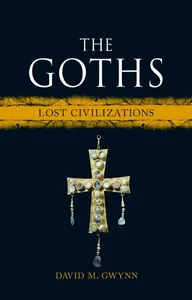

More Free Esoteric History & Biography Books
View all →