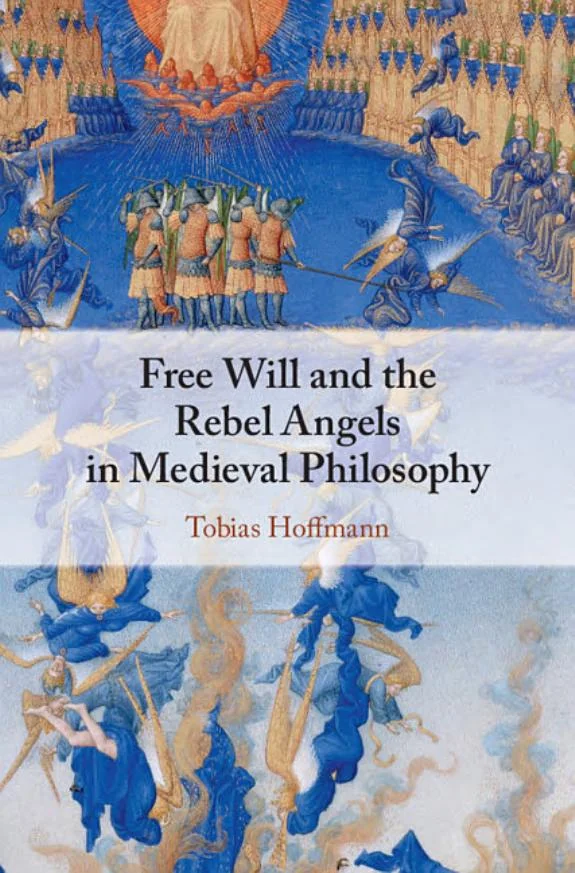
Free Will and the Rebel Angels in Medieval Philosophy
 82
82

Free Will and the Rebel Angels in Medieval Philosophy
Hoffmann’s meticulous examination of medieval angelology and free will offers a significant contribution to scholastic studies. The book excels in its detailed analysis of figures like Aquinas and Scotus, particularly in how they conceptualize the angelic will’s capacity for self-determination, even towards evil. Hoffmann clarifies the subtle distinctions between different scholastic positions on assent and choice, which is crucial for understanding the problem. A minor limitation might be the dense prose, which, while accurate, occasionally obscures the broader philosophical implications for a less specialized reader. The section detailing Duns Scotus's nuanced view on the will's independence from intellect is particularly illuminating. Ultimately, this is a rigorous and valuable scholarly work for specialists.
📝 Description
82
Tobias Hoffmann's 2021 book examines medieval arguments about angels choosing evil.
Tobias Hoffmann's "Free Will and the Rebel Angels in Medieval Philosophy" dissects medieval thinkers' discussions on volition. It specifically addresses how purely intellectual beings, like angels, could sin, a question central to understanding divine justice and the origins of evil. Hoffmann analyzes scholastic arguments, detailing their reasoning with care.
The book situates these debates within the broader medieval intellectual context, from Neoplatonism to Aristotelian thought. Thinkers such as Augustine, Aquinas, and Duns Scotus wrestled with reconciling God's all-knowing nature and predestination with the reality of creaturely freedom. The fall of angels, a paradox of good creation turning bad, posed a persistent problem for medieval theology and philosophy.
Hoffmann covers core concepts including the nature of angelic intellect, the will as a faculty of desire, and the relationship between choices and their objects. He also touches on the role of divine grace. The rebel angels function as a key case study, illuminating theories on the limits of divine causality and the inherent possibility of created beings deviating from their intended path.
This work engages with a long tradition of theological and philosophical inquiry into the nature of spiritual beings and their capacity for choice. Medieval thinkers, grappling with scriptural accounts and classical philosophical frameworks, developed complex doctrines concerning the will, intellect, and the origins of sin. The focus on angels, beings considered closer to the divine and possessing pure intellect, allows for an examination of free will in its most abstract and fundamental form, removed from the complexities of human embodiment and sensation. This intellectual lineage connects to broader discussions on cosmology, demonology, and the structure of the spiritual hierarchy.
💡 Why Read This Book?
• Gain a precise understanding of how medieval thinkers like Thomas Aquinas addressed the paradox of angelic free will, moving beyond simplistic notions of choice. • Grasp the philosophical distinctions between intellect and will as debated by scholars such as Duns Scotus, learning how they understood the origin of evil in perfect beings. • Appreciate the historical development of theological arguments concerning predestination and freedom from the 13th century onwards, recognizing its impact on subsequent Western thought.
⭐ Reader Reviews
Honest opinions from readers who have explored this book.
❓ Frequently Asked Questions
What specific medieval philosophical problem does Tobias Hoffmann's book address regarding free will?
The book tackles the complex problem of how beings of pure intellect, like angels, could possess free will and subsequently choose evil, a key issue in medieval theological and philosophical discourse.
Which prominent medieval philosophers are discussed in relation to free will and angels?
Tobias Hoffmann’s work extensively analyzes the views of major scholastic figures including Thomas Aquinas and Duns Scotus, examining their unique contributions to the debate.
How does the concept of 'rebel angels' function in the book's argument?
Rebel angels serve as a crucial case study to explore the limits of divine causation and the intrinsic possibility of creaturely defection, illuminating theories on free will and sin.
What is the primary focus of the book's historical context section?
It situates the debates within the broader intellectual currents of the Middle Ages (5th-15th century), influenced by Neoplatonism and Aristotelian thought, concerning divine omniscience and creaturely freedom.
Who would benefit most from reading 'Free Will and the Rebel Angels in Medieval Philosophy'?
Advanced students and scholars of medieval philosophy, theology, and the history of ideas, as well as those interested in comparative angelology and the philosophical basis of religious doctrine.
Does the book discuss the nature of angelic intellect and its relation to choice?
Yes, the work scrutinizes the nature of angelic intellect and the will as an appetite, dissecting how these faculties were understood to interact in volitional acts during the medieval period.
🔮 Key Themes & Symbolism
Angelic Volition
The core of the book examines how medieval thinkers conceptualized the free will of angels, beings created in a state of perfection. It explores the philosophical mechanisms that allowed these pure intellects to make choices, particularly the momentous decision to rebel against the divine. Hoffmann scrutinizes distinctions between knowing the good and willing it, a critical aspect of understanding sin even in unfallen beings.
The Problem of Evil
Central to the work is the theological and philosophical challenge posed by the existence of evil. By focusing on the fall of Lucifer and other angels, the book investigates how evil could originate within creation, especially from beings created good by an omnibenevolent God. This exploration touches upon discussions of divine permission, creaturely autonomy, and the nature of sin itself.
Scholastic Method
Hoffmann employs the rigorous analytical tools characteristic of the scholastic tradition. The book showcases the detailed argumentation, precise terminology, and dialectical method used by medieval philosophers to dissect complex theological problems. Understanding this method is key to appreciating the nuances of debates surrounding free will and divine causality in the period.
Intellect and Will
A recurring theme is the intricate relationship between the intellect (reason) and the will (appetite) in medieval thought. The book explores how different philosophers, like Aquinas and Scotus, understood the will's freedom in relation to the intellect's apprehension of the good. This examination is crucial for understanding how a choice, particularly a morally significant one, is made.
💬 Memorable Quotes
Direct passages from the work, attributed to the author.
“Angels, as purely spiritual beings, possess an intellect and a will.”
— This statement highlights the foundational premise for discussing angelic free will. It establishes that angels, unlike humans who have corporeal limitations, operate with faculties analogous to ours but in a purer, more direct form, making their volitional acts a prime subject for philosophical analysis.
“The choice of evil by an angel implies a defect in the will's orientation, not in its capacity for choice.”
— This interpretation suggests that the possibility of an angelic fall stems from the will's inherent freedom to turn away from the good it understands, rather than an inability to understand or choose. It emphasizes the radical nature of free will, even in perfect beings.
“Aquinas distinguishes between the will's act of choosing and the intellect's presentation of the good.”
— This points to a key distinction in Aquinas's thought, where the will is not merely determined by what the intellect presents. The will retains a freedom to assent or dissent, a crucial element in explaining how an angel might choose against its better judgment or divine command.
“Duns Scotus emphasizes the will's absolute liberty, independent of intellectual necessity.”
— This highlights Scotus's voluntarism, a position that grants the will a significant degree of autonomy. It suggests that the will's decisions are not strictly necessitated by the intellect's apprehension of the good, providing another avenue for explaining the origin of evil.
“The concept of 'the good' itself is central to understanding the object of both angelic intellect and will.”
— This underscores that the pursuit of 'the good' is the fundamental drive for both intellect and will, even for angels. The deviation from this ultimate good, therefore, represents the essence of their fall and the nature of sin.
🌙 Esoteric Significance
Tradition
While rooted in scholastic philosophy, the book's focus on angelic nature and the origin of evil touches upon themes resonant with certain esoteric traditions, particularly those concerned with cosmology, fallen hierarchies, and the nature of spiritual beings. It provides a philosophical scaffold for understanding concepts found in Gnosticism or later magical systems that detail angelic orders and their potential for deviation from the divine.
Symbolism
The 'rebel angels' themselves function as potent symbols of pride, rebellion, and the misuse of free will. Lucifer, as the archetypal fallen angel, symbolizes the inherent danger of spiritual perfection turned inward. The concept of 'pure intellect' represents an ideal state of being, whose potential for error underscores the fundamental nature of choice in any created existence, whether material or immaterial.
Modern Relevance
Contemporary discussions in comparative religion, consciousness studies, and even certain branches of speculative philosophy continue to explore the nature of agency and the origins of malevolence. Hoffmann's work offers a rigorous historical and philosophical foundation for these inquiries, providing insights into how profound questions about free will and the existence of evil were addressed by some of the most influential minds in Western thought.
👥 Who Should Read This Book
• Scholars of Medieval Philosophy: Gain a deeper, textually-grounded understanding of specific debates on free will and angelology, enhancing your grasp of scholastic reasoning. • Theology Students: Explore the philosophical underpinnings of doctrines concerning sin, divine justice, and the nature of spiritual beings in a key historical period. • Comparative Religion Researchers: Analyze how Western medieval thought conceptualized concepts of fallen entities and moral responsibility, offering a contrast to other traditions.
📜 Historical Context
The medieval period, spanning roughly from the 5th to the 15th century, was a critical era for developing theories of free will, heavily influenced by Christian doctrine and the rediscovery of Aristotelian philosophy. Thinkers like Augustine of Hippo in the Patristic period and later, Thomas Aquinas and Duns Scotus in the High Middle Ages, grappled with reconciling divine sovereignty and foreknowledge with the reality of human and angelic freedom. The problem of evil, particularly how created beings could sin, was a persistent theological and philosophical puzzle. Hoffmann’s work engages directly with the complex solutions proposed by scholastic masters, who meticulously dissected the operations of the intellect and the will. This period saw robust debate, for instance, between Aquinas's more integrated view of intellect and will and Scotus's emphasis on the will's radical liberty. The intellectual climate fostered by universities and theological faculties provided a fertile ground for such detailed analysis, though these ideas often faced scrutiny from more conservative theological factions.
📔 Journal Prompts
The nature of angelic free will as distinct from human volition.
The philosophical problem of evil originating from perfect beings.
Duns Scotus's concept of the will's independence from the intellect.
Thomas Aquinas's distinction between the will's act and the intellect's presentation.
The symbolic meaning of the rebel angels in medieval thought.
🗂️ Glossary
Free Will (Liberum Arbitrium)
The capacity of agents to choose between different possible courses of action unimpeded. In medieval philosophy, this was a complex concept applied to both humans and angels, debated in relation to divine foreknowledge and grace.
Angel
In medieval theology, a purely spiritual, created being, possessing intellect and will but lacking a physical body. Angels were considered higher than humans and served as crucial subjects for discussions on free will and divine perfection.
Will (Voluntas)
The faculty of the soul or mind by which one chooses or decides. Medieval philosophers debated whether the will was primarily driven by reason (intellect) or possessed an independent capacity for choice.
Intellect (Intellectus)
The faculty of the mind concerned with reasoning, understanding, and abstract thought. The relationship between the intellect's apprehension of the good and the will's choice was a central point of contention.
Sin
An action or omission that violates divine law or moral principles. The book explores how sin could originate even in beings like angels, who were created good and possessed perfect intellects.
Theodicy
The theological attempt to reconcile the existence of evil and suffering with the existence of an all-good, all-powerful God. The problem of the rebel angels is a key aspect of medieval theodicy.
Voluntarism
A philosophical or theological position emphasizing the primacy of the will. Duns Scotus is often associated with voluntarism, arguing for the will's independence from intellectual determination.
This book appears in 1 collection
🔮 Readers Also Liked
Browse all →




From the “Angels” Collection
View all →
More Free Esoteric History & Biography Books
View all →