The Return of King Arthur
 80
80

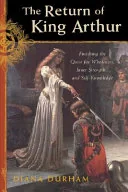
The Return of King Arthur
Diana Durham's *The Return of King Arthur* presents a compelling Jungian re-reading of the familiar Arthurian cycles. The author's strength lies in her ability to convincingly map the archetypal journeys of the Round Table and the Grail quest onto the individual's path toward psychic integration. Particularly insightful is her interpretation of Arthur himself not just as a historical or legendary king, but as a symbol of the ego's attempt to establish order within the psyche. However, the book sometimes feels overly reliant on Jungian jargon, which may present a barrier for readers unfamiliar with psychological terminology. The detailed exploration of specific symbols, such as the Fisher King and his wounded land, offers concrete anchors for the broader theoretical framework, demonstrating the tangible application of these concepts. This work offers a valuable, if specialized, perspective on enduring myths.
📝 Description
80
Diana Durham's 2005 book views Arthurian legends through a modern Jungian lens.
Diana Durham's *The Return of King Arthur* analyzes the Arthurian legends using a contemporary Jungian framework. The book separates the mythology into two main streams: the chivalric tales of Camelot and the Round Table, and the spiritual pursuit of the Grail. Durham argues that the Grail quest reflects an individual's path to psychological integration, whereas the Arthurian cycle represents a collective human story. The author carefully examines the symbolic structures that connect these intertwined myths.
This work is for readers interested in the psychological and symbolic aspects of mythology, especially those familiar with Jungian analysis and archetypal patterns. It will also appeal to scholars of Arthurian legend looking for interpretations beyond historical or literary readings. Individuals exploring concepts like individuation, the collective unconscious, and the search for wholeness will find relevant ideas within these pages. It is also suitable for those interested in esoteric studies who see how ancient narratives can offer insight into modern psychological experiences.
Published in 2005, *The Return of King Arthur* enters a continuing discussion on myth and psychology. The early 21st century saw sustained interest in Arthurian lore, often examined historically or literarily. However, Jungian psychology had already provided a method for seeing myths as psychic expressions, with figures like Marie-Louise von Franz leading the way. Durham applies these Jungian principles directly to the Arthurian complex, building upon existing psychological approaches to myth, though she does not heavily reference earlier works like Jessie Weston's 1920 study on Grail mythology.
💡 Why Read This Book?
• Gain a unique Jungian interpretation of the Grail quest as an individual's path to wholeness, a concept explored extensively in the book's analysis of the questing knight's inner journey. • Understand King Arthur and Camelot not just as historical or fictional elements, but as representations of collective human narratives and the psyche's drive for order, as detailed in Durham's symbolic breakdown. • Explore the psychological significance of specific Arthurian symbols like the wounded king and the sacred vessel, providing concrete examples of how ancient myths reflect universal psychological patterns, as discussed throughout the book.
⭐ Reader Reviews
Honest opinions from readers who have explored this book.
❓ Frequently Asked Questions
What is the core Jungian interpretation of the Arthurian legends in Diana Durham's book?
Diana Durham interprets the Arthurian legends through a Jungian lens, viewing the Grail quest as the individual's psychological journey toward wholeness (individuation) and the Arthurian court and King Arthur as representing humanity's collective narrative and the ego's struggle for order.
When was 'The Return of King Arthur' by Diana Durham first published?
The book 'The Return of King Arthur' by Diana Durham was first published in 2005.
Does the book focus more on King Arthur and Camelot or the Grail quest?
The book explores both strands of Arthurian myth. It examines the collective narrative represented by King Arthur and the Round Table, alongside the individual spiritual and psychological journey symbolized by the Grail quest.
What kind of symbolism does Durham analyze in the book?
Durham analyzes key symbols within the Arthurian myths, such as the figure of King Arthur, the knights of the Round Table, the Holy Grail, and associated motifs like the wounded king and the quest, interpreting them as expressions of psychological states and archetypal patterns.
Is this book suitable for someone new to Jungian psychology?
While the book applies Jungian concepts, it is written for readers with some interest in psychological interpretations of myth. Familiarity with basic Jungian ideas like archetypes and the collective unconscious would enhance the reading experience, though the work aims for clarity.
What is the relationship between the individual and collective in Durham's interpretation?
Durham posits the Grail quest as the individual's path to psychological wholeness and the Arthurian legends of the Round Table as representing a collective narrative of humanity, exploring how these two levels of experience are intertwined within the mythology.
🔮 Key Themes & Symbolism
Individuation via the Grail
The book frames the Grail quest not merely as a medieval adventure but as a profound metaphor for the individuation process, the psychological journey toward becoming a whole, integrated self. Durham interprets the questing knight's trials and encounters as symbolic representations of the internal struggles and discoveries inherent in personal growth and self-realization, drawing parallels to Carl Jung's concepts of psychological development and the search for meaning.
Collective Psyche and the King
King Arthur and the ideals of the Round Table are presented as manifestations of the collective human psyche's aspirations for order, justice, and community. Durham explores how these legends reflect societal structures and shared cultural narratives, acting as archetypal blueprints for human civilization. The king figure, in this context, embodies the conscious ego's attempt to impose order on the chaos of both internal and external realities.
Symbolic Language of Myth
Central to Durham's approach is the detailed exegesis of symbolic elements within the Arthurian canon. The work dissects recurring motifs, characters, and objects—such as the Fisher King, the wounded land, the sacred chalice, and the sword—interpreting them as potent carriers of psychological meaning that speak to universal human experiences and archetypal patterns, revealing the myth's enduring power.
Intertwined Narratives
Durham emphasizes the dynamic interplay between the individual quest for wholeness (Grail) and the collective narrative of civilization (Arthur). The book argues that these two strands are not separate but are deeply interwoven, reflecting the fundamental human condition where personal development is shaped by societal context and collective ideals influence individual aspirations, creating a complex mythological structure.
💬 Memorable Quotes
Direct passages from the work, attributed to the author.
“The quest for the Holy Grail is, in a larger sense, the story of the individual's path to wholeness.”
— This statement captures the book's central thesis, re-framing the legendary quest as a powerful psychological metaphor for personal integration and self-discovery, aligning with Jungian concepts of individuation.
“The King Arthur legends represent a collective narrative of humanity.”
— This highlights Durham's view of the Arthurian cycle as more than just a historical or literary subject, but as a symbolic expression of shared human experiences, societal structures, and collective consciousness.
“The work analyzes the key symbols from the intertwined Arthurian myths.”
— This indicates the book's methodological focus: a deep dive into the symbolic language of the legends, treating figures and objects as carriers of psychological meaning relevant to understanding the human condition.
“The Grail quest is the story of the individual's path to wholeness.”
— A concise articulation of the book's core argument, presenting the legendary search for the Grail as a profound metaphor for psychological development and the attainment of inner completeness.
“The Arthurian legends represent a collective narrative of humanity.”
— This signifies the book's perspective on the broader Arthurian cycle, viewing it as a repository of shared cultural myths and archetypes that reflect humanity's collective journey and aspirations.
🌙 Esoteric Significance
Tradition
Durham's work operates firmly within the tradition of Jungian analytical psychology, which itself draws heavily on esoteric concepts like archetypes, the collective unconscious, and symbolism. While not strictly a Hermetic or Kabbalistic text, its interpretive framework finds resonance with Gnostic ideas of the soul's journey and the search for inner truth, treating myth as a vehicle for profound psychological and spiritual insight accessible through symbolic interpretation.
Symbolism
The book focuses on key Arthurian symbols. King Arthur himself is interpreted as an archetype of order and the ego's structure, while the Grail represents the ultimate goal of psychological wholeness and spiritual attainment. The Fisher King and his blighted kingdom are analyzed as potent symbols of psychic wounding and the collective malaise that can arise from unaddressed psychological issues, reflecting a deep connection to earth-based and spiritual malaise.
Modern Relevance
In contemporary esoteric and psychological circles, Durham's approach remains relevant for its sophisticated application of Jungian theory to foundational Western myths. Thinkers and practitioners exploring archetypal psychology, comparative mythology, and the integration of ancient narratives into modern therapeutic and spiritual practices often reference or are influenced by such analyses. It speaks to a continued interest in understanding the psyche through symbolic storytelling.
👥 Who Should Read This Book
• Students of Jungian psychology seeking practical applications of archetypal theory to Western mythology, particularly those interested in the journey of individuation. • Arthurian scholars and enthusiasts looking for innovative, psychologically-oriented interpretations that move beyond historical or literary analyses, offering new perspectives on familiar tales. • Individuals engaged in personal growth and spiritual exploration who wish to understand the symbolic language of myths as maps for navigating their own inner landscapes and the search for wholeness.
📜 Historical Context
Published in 2005, *The Return of King Arthur* emerged during a period of sustained academic and popular interest in Arthurian studies, which often leaned towards historical or literary analyses. Diana Durham's work positioned itself within the ongoing exploration of Jungian psychology's application to myth, a field significantly shaped by earlier scholars like Marie-Louise von Franz and Robert Johnson. While figures like Jessie Weston had foundational influence on Grail studies in the early 20th century with works like *From Ritual to Romance* (1920), Durham's book offered a contemporary Jungian perspective. It engaged with the archetypal dimensions of the myths, providing an alternative to purely historical or literary interpretations and contributing to the broader discourse on myth as a reflection of the psyche.
📔 Journal Prompts
The Grail's representation of individual wholeness: How does your personal quest for integration mirror the knight's journey?
Archetypes of the Round Table: Reflect on the symbolic role of chivalry and community in establishing psychological order.
The wounded king and his land: Consider what psychic 'wounds' might be reflected in the collective consciousness today.
Symbolic interpretation of the sword: What does this archetype represent in terms of assertion and personal power within your life?
Interplay of collective and individual narratives: How do societal stories influence your personal path toward wholeness?
🗂️ Glossary
Jungian Interpretation
An analytical approach, pioneered by Carl Jung, that views myths, dreams, and symbols as expressions of the unconscious mind, particularly the collective unconscious and its archetypes, aiming for psychological integration.
Individuation
In Jungian psychology, the lifelong process of psychological differentiation and integration, leading to the development of a distinct, whole, and unique individual self.
Archetype
Universal, archaic patterns and images that derive from the collective unconscious and are the psychic counterpart of instincts. Examples include the Mother, the Hero, the Wise Old Man.
Collective Unconscious
A concept proposed by Carl Jung, referring to a layer of the unconscious mind that is inherited and shared by all humanity, containing universal patterns of thought and behavior (archetypes).
Grail Quest
In Arthurian legend, the spiritual and often perilous journey undertaken by knights to find the Holy Grail. In Durham's work, it symbolizes the individual's path to psychological wholeness.
Round Table
The legendary fellowship of knights associated with King Arthur's court. Durham interprets it as representing the collective narrative and the structure of societal ideals.
Symbolism
The use of symbols to represent ideas and qualities. In this context, it refers to interpreting mythological figures, objects, and events as conveying deeper psychological meanings.
This book appears in 1 collection
🔮 Readers Also Liked
Browse all →









From the “Sacred Geometry” Collection
View all →







More Free Esoteric History & Biography Books
View all →