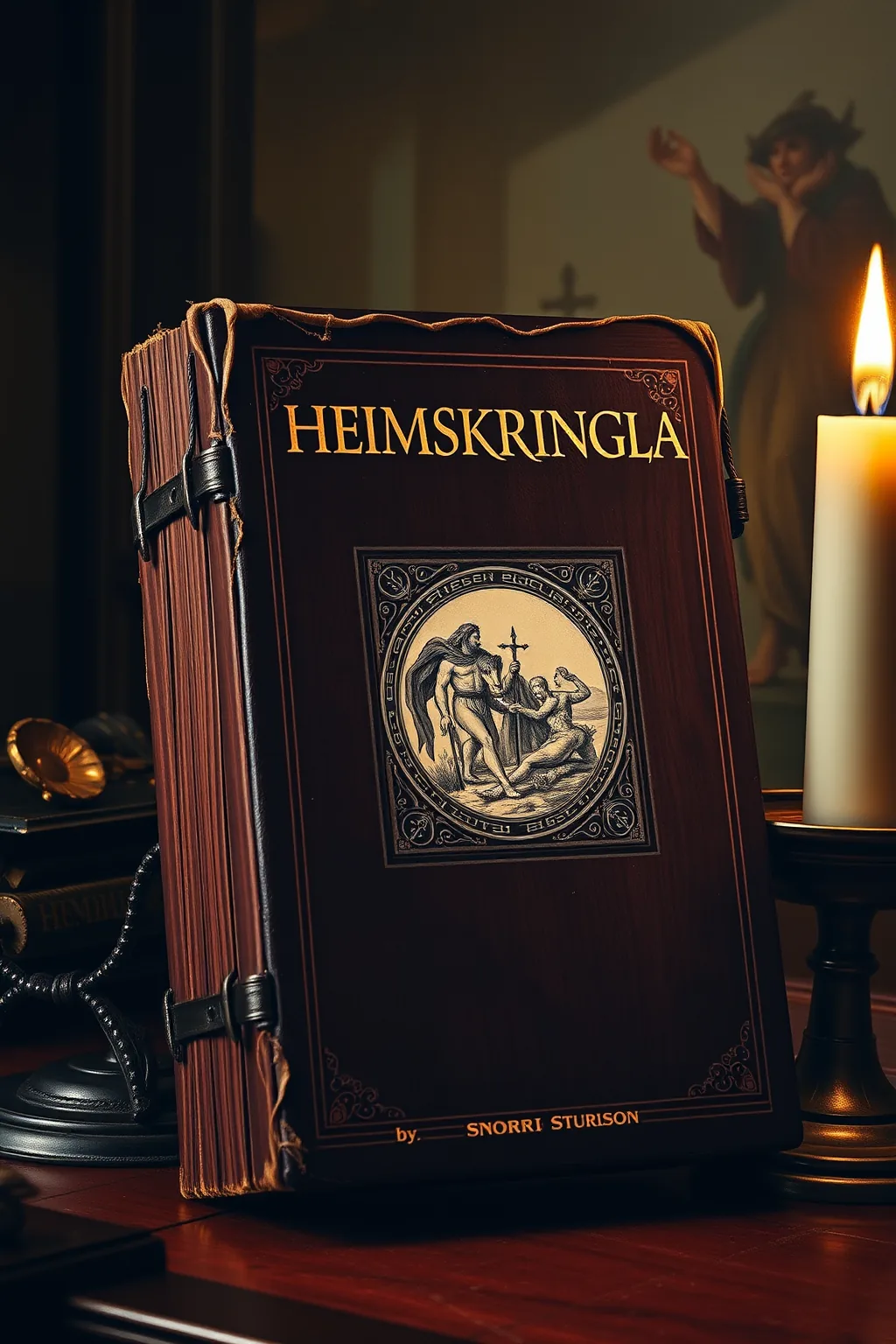
Heimskringla
 78
78

Heimskringla


Ophelia Vance (Mystical Literature Reviewer) — Snorri Sturluson's "Heimskringla" is an unparalleled gateway to the mystical heart of Norse lore. Far more than a historical account, it offers profound insights into shamanistic practices, divine lineage, and the cyclical understanding of time prevalent in ancient Scandinavia. Sturluson masterfully blends historical detail with myth, revealing the esoteric underpinnings of kingship and societal structure. Its strength lies in its immersive narrative, drawing readers into a world where magic, prophecy, and the will of the gods are palpable forces. Essential for seekers of ancient wisdom, folklorists, and practitioners of Northern traditions.
📝 Description
78
Snorri Sturluson compiled the "Heimskringla" in the 13th century, detailing the sagas of Norse kings.
Snorri Sturluson's "Heimskringla" is a collection of sagas recounting the lives of Norwegian kings, from mythical origins to his own time. The work begins with the Ynglinga saga, tracing the lineage of Swedish kings back to the god Odin. It continues through the reigns of numerous rulers, detailing their conquests, political struggles, and personal lives.
This compilation moves beyond simple historical accounts to incorporate mythological elements and the cultural beliefs of the Norse people. It presents a worldview where divine intervention and human agency are intertwined, shaping the destinies of both individuals and nations. The sagas are rich with accounts of battles, voyages, and the establishment of laws and customs, offering insight into the social and political structures of early Scandinavia.
Written in the 13th century, "Heimskringla" records Norse mythology and the sagas of its kings, placing it within the context of medieval European historiography that often blended religious belief, folklore, and historical events. Snorri Sturluson, a prominent Icelandic politician and poet, compiled these narratives, which served to legitimize royal authority and preserve cultural memory. The work reflects a transitional period where pagan Norse traditions were being integrated with Christianity, retaining elements of ancient cosmology and belief systems within a Christian framework.
✍️ Author
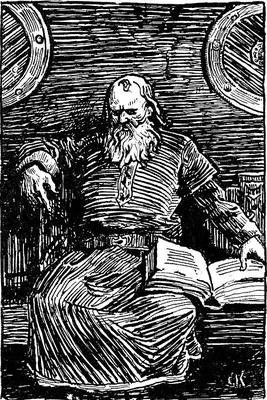
Snorri Sturlson
Snorri Sturluson (Old Norse: [ˈsnorːe ˈsturloˌson]; Icelandic: [ˈstnɔrːɪ ˈstʏ(r)tlʏˌsɔːn]; 1179 – 23 September 1241) was an Icelandic historian, poet, knight, and politician. He was elected twice as lawspeaker of the Icelandic parliament, the Althing.
💡 Why Read This Book?
Unravel the mystical origins of Norse kingship and explore a worldview where myth and history are inextricably linked. 'Heimskringla' offers profound insights into ancient Scandinavian spirituality, shamanic practices, and the cyclical nature of destiny. Ideal for seekers of hidden knowledge, scholars of comparative mythology, and practitioners interested in the esoteric roots of Northern European culture. Discover the sacred lineage of gods and heroes.
⭐ Reader Reviews
Honest opinions from readers who have explored this book.
❓ Frequently Asked Questions
What does 'Heimskringla' mean?
'Heimskringla' translates from Old Norse to 'The Circle of the World' or 'The Orb of the Earth,' reflecting its comprehensive scope and cyclical worldview.
Who was Snorri Sturluson?
Snorri Sturluson was a 13th-century Icelandic historian, poet, and politician, renowned for his masterful prose and his pivotal role in preserving Norse mythology and history.
What is the primary focus of 'Heimskringla'?
The book primarily chronicles the lives and reigns of Norwegian and Swedish kings, beginning with legendary figures and extending to historical rulers.
Does 'Heimskringla' contain mythological elements?
Yes, it is deeply interwoven with Norse mythology, featuring accounts of gods, giants, and mythical creatures that shape the early sagas.
Is 'Heimskringla' a primary source for Norse history?
While it incorporates historical accounts, it is also a literary work blending history, myth, and legend, making it a vital, albeit complex, source.
🔮 Key Themes & Symbolism
Divine Kingship and Cosmic Order
The sagas of 'Heimskringla' present kings not merely as temporal rulers but as figures imbued with a sacred mandate, often tracing their lineage back to the Æsir. This theme explores the esoteric concept of divine right, where the monarch acts as a conduit between the celestial and earthly realms. The success and legitimacy of a king are often depicted as intrinsically linked to their adherence to cosmic principles and their ability to maintain harmony within the 'Circle of the World.' Understanding this connection reveals a worldview where political power is deeply intertwined with spiritual authority and the maintenance of a divinely ordained order.
Fate, Prophecy, and the Web of Destiny
Central to the Norse worldview, and vividly portrayed in 'Heimskringla,' is the pervasive influence of fate (Wyrd). The narratives are replete with prophecies, omens, and the inescapable machinations of the Norns, who combine the threads of destiny for gods and mortals alike. This theme studies the esoteric understanding of time as cyclical rather than linear, where past, present, and future are interconnected. The sagas illustrate how even the most powerful individuals are subject to these cosmic forces, prompting contemplation on free will versus predestination and the hidden patterns that govern existence.
The Elements of Myth and the Shamanic Undercurrent
Beyond the historical reigns, 'Heimskringla' serves as a repository of ancient Norse myths, providing glimpses into a vibrant spiritual landscape. The presence of Odin, the All-Father, and his association with magic, wisdom, and sacrifice, hints at deeper shamanic traditions. The sagas often depict individuals possessing extraordinary abilities, communicating with spirits, or undertaking spiritual journeys, suggesting an underlying esoteric practice. This theme invites readers to explore the symbolic language of the myths, the rituals that may have been practiced, and the profound connection between humanity and the unseen forces of nature.
💬 Memorable Quotes
Direct passages from the work, attributed to the author.
“He who has a good name will be remembered.”
— This aphorism highlights the Norse emphasis on honor and legacy, suggesting that true immortality is achieved through virtuous deeds and a lasting reputation.
“It is better to be a warrior at a banquet than a reveller at a battle.”
— This proverb underscores the importance of readiness and courage, valuing preparedness for conflict over superficial enjoyment.
“A friend who is at hand is better than a kinsman far away.”
— This emphasizes the value of present companionship and loyalty, suggesting that tangible support from a friend outweighs distant familial ties.
“The wolf must be met with the wolf.”
— This reflects a pragmatic and often ruthless approach to conflict, advocating for a response that mirrors the aggression of an adversary.
💡 Key Ideas
Editorial paraphrase of the work's core concepts — not direct quotes.
When men are far from home, they are often at their best.
This quote speaks to the transformative power of journey and adversity, implying that challenges forge character and reveal one's true mettle.
🌙 Esoteric Significance
Tradition
The esoteric significance of 'Heimskringla' is deeply rooted in the Norse pagan and pre-Christian spiritual traditions. It offers a window into a worldview that encompasses animism, ancestor veneration, and a complex pantheon of gods and goddesses whose actions influence the mortal realm. The text reveals an understanding of cosmic principles, fate, and the interconnectedness of all things, hinting at practices akin to shamanism, divination, and ecstatic journeys. It's a vital source for understanding the esoteric underpinnings of Germanic and Scandinavian mysticism.
Symbolism
Key symbols abound, including the World Tree Yggdrasil, representing the cosmic axis and the interconnectedness of all realms; the runes, potent symbols of magic and divination; Odin's ravens, Huginn (thought) and Muninn (memory), symbolizing wisdom and knowledge; and the cyclical nature of the sun and seasons, reflecting the eternal dance of creation and destruction. These symbols are not merely decorative but represent fundamental forces and concepts within the Norse esoteric framework.
Modern Relevance
In the modern era, 'Heimskringla' serves as a crucial touchstone for those exploring Germanic Heathenry, Asatru, and other Neo-Pagan traditions. Its narratives provide foundational myths, ethical frameworks, and a rich source of inspiration for spiritual practice. Furthermore, its exploration of themes like destiny, honor, and the relationship between humanity and the divine speaks to contemporary seekers interested in alternative spiritualities and the wisdom of ancient cultures. It offers a counterpoint to Western monotheistic thought, providing a compelling alternative cosmology.
📜 Historical Context
Composed in the early 13th century, "Heimskringla" emerged during a period of significant cultural and political transition in Scandinavia. Iceland, where Snorri Sturluson lived, had recently established its own distinct literary tradition, drawing heavily on its Viking past. The sagas were written in Old Norse, a language still widely understood across the Nordic region, facilitating the dissemination of these narratives. This era saw the gradual Christianization of Scandinavia, yet the old pagan beliefs and myths remained deeply ingrained in the cultural consciousness. Sturluson's work can be seen as an effort to both chronicle this history and preserve the body of the pre-Christian worldview, offering a complex interplay between evolving religious beliefs and enduring cultural heritage. The meticulous detail and narrative skill employed by Snorri reflect the sophisticated literary culture of medieval Iceland.
This book appears in 1 collection
🔮 Readers Also Liked
Browse all →







From the “Transcendental Meditation” Collection
View all →







More Free Esoteric History & Biography Books
View all →