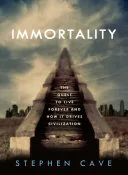
Immortality
 76
76

Immortality
Stephen Cave's "Immortality" offers a panoramic survey of humanity's age-old obsession with defying death. Rather than simply cataloging myths and scientific pursuits, Cave critically interrogates the very impulse. His strength lies in contextualizing this drive within broader historical and philosophical currents, demonstrating how our preoccupation with ending mortality often shapes our understanding of life itself. A particularly insightful passage discusses the "four stories" of immortality—biological, spiritual, technological, and psychological—which provides a useful framework for dissecting disparate approaches. However, the sheer breadth of the subject occasionally leads to a slightly superficial treatment of some complex philosophical arguments. The work ultimately serves as a powerful reminder that the human confrontation with finitude is perhaps more vital than the pursuit of its negation.
📝 Description
76
Stephen Cave's 2012 book examines humanity's long struggle against death.
Stephen Cave's "Immortality" examines the human drive to overcome death. The book surveys historical and philosophical attempts to achieve eternal life, from ancient myths to modern science. Cave analyzes the motivations behind this desire and questions whether true immortality is truly achievable or even desirable. He traces this pursuit through various cultures and eras, connecting ancient beliefs about the afterlife with contemporary technological ambitions. The work considers biological, spiritual, and digital forms of continued existence.
The author discusses the psychological, social, and philosophical dimensions of our fear of death and our pursuit of longevity. He highlights key figures and movements dedicated to extending life or achieving some form of eternal existence, placing these efforts within the context of broader societal changes. "Immortality" offers a balanced look at grand human aspirations, encouraging readers to consider the complexities of life's ultimate mystery.
This book engages with the perennial human quest for transcendence and continued existence, a theme central to many esoteric traditions. While grounded in historical and scientific analysis, Cave's work touches upon concepts like spiritual immortality and the transformation of consciousness, which resonate with alchemical, mystical, and gnostic pursuits of overcoming the limitations of mortal life. It examines how these deep-seated desires have manifested across different cultures and historical periods, offering a modern perspective on age-old aspirations for overcoming death.
💡 Why Read This Book?
• Understand the "four stories" of immortality—biological, spiritual, technological, and psychological—as presented by Stephen Cave, to critically evaluate different paths to overcoming death. • Gain insight into the historical roots of the immortality quest, tracing its evolution from ancient Egypt to modern bio-hacking, as detailed in the book's historical context sections. • Reflect on the existential implications of defying mortality, as Cave argues our preoccupation with death drives many aspects of human endeavor, a concept explored throughout the work.
⭐ Reader Reviews
Honest opinions from readers who have explored this book.
❓ Frequently Asked Questions
What are the main historical periods Stephen Cave discusses regarding the pursuit of immortality?
Stephen Cave's "Immortality" covers a vast historical span, from ancient civilizations like Egypt and Greece, through the alchemical pursuits of the Renaissance, and into the modern era of scientific and technological advancements.
What is the "four stories" concept in Stephen Cave's Immortality?
The "four stories" refer to the primary ways humanity has conceptualized immortality: biological (extending physical life), spiritual (transcending the body), technological (digital consciousness or advanced life extension), and psychological (achieving legacy or lasting impact).
Does Stephen Cave believe immortality is achievable?
Cave's work is more focused on exploring the *desire* for immortality and its historical manifestations rather than definitively stating whether it's achievable. He critically examines the potential consequences and motivations behind the pursuit.
Who are some figures or movements mentioned in the book related to immortality?
The book references alchemists, ancient philosophers, religious figures, and modern scientists and futurists who have engaged with the concept of extending life or achieving eternal existence in various forms.
What is the central argument about our preoccupation with death?
Cave suggests that our intense focus on defying mortality is a fundamental driver of human culture, innovation, and philosophical inquiry, shaping our values and actions profoundly, as explored throughout the book.
Is "Immortality" by Stephen Cave a philosophical treatise or a historical overview?
It is a blend of both, offering a historical survey of humanity's quest for immortality while also engaging in philosophical analysis of the desire, its implications, and its meaning.
🔮 Key Themes & Symbolism
The Four Stories of Immortality
Cave identifies four primary narratives humanity uses to conceive of immortality: biological, spiritual, technological, and psychological. The biological story focuses on extending the physical lifespan through science. The spiritual narrative explores transcendence, an afterlife, or reincarnation. The technological approach envisions digital consciousness uploads or advanced life-extension technologies. Finally, the psychological dimension encompasses legacy, remembrance, and achieving a lasting impact on the world. This framework allows for a comprehensive analysis of diverse cultural and individual aspirations towards overcoming death.
The Driving Force of Mortality
A central theme is how the very awareness and fear of death propel human endeavor. Our preoccupation with mortality, Cave argues, fuels innovation, creativity, and the search for meaning. This constant confrontation with finitude shapes societies, religions, and individual life choices. The book posits that rather than simply being an obstacle to be overcome, the confrontation with death is an essential element of the human experience, driving our quest for legacy and transcendence.
Historical Pursuit of Eternal Life
The work meticulously traces the historical trajectory of the immortality quest across different cultures and eras. From ancient Egyptian beliefs in an afterlife and the alchemical pursuit of the elixir of life during the Renaissance, to modern scientific endeavors in genetics and cryonics, Cave illustrates the persistent human desire to escape the finality of death. This historical perspective reveals recurring patterns and evolving methodologies in humanity's long struggle against mortality.
The Desirability and Consequences of Immortality
Beyond exploring *how* people have sought immortality, Cave critically examines *whether* it is truly desirable. He probes the potential social, psychological, and existential consequences of achieving indefinite life. Would an immortal existence be meaningful? How would it alter human relationships, societal structures, and our perception of time and value? The book encourages a thoughtful contemplation of the potential downsides and the inherent trade-offs involved in defying natural limits.
💬 Memorable Quotes
Direct passages from the work, attributed to the author.
“It is our very preoccupation with defying mortality that drives us.”
— This core assertion suggests that the human condition is intrinsically defined by our awareness of death and our subsequent efforts to overcome it, influencing everything from art and science to religion and personal ambition.
“The four stories of immortality: biological, spiritual, technological, and psychological.”
— Cave categorizes the diverse human approaches to immortality into these four fundamental narratives, providing a structured way to understand the complex nature of this ancient aspiration.
“The alchemists sought an elixir to grant eternal life.”
— This refers to a specific historical pursuit of biological immortality, illustrating how ancient and medieval thinkers actively pursued physical means to achieve longevity or unending existence.
“Digital consciousness represents a modern technological path to immortality.”
— This points to a contemporary concept where the human mind could be uploaded to a computer, offering a form of eternal existence independent of the biological body.
💡 Key Ideas
Editorial paraphrase of the work's core concepts — not direct quotes.
Our fear of oblivion fuels our search for legacy.
This paraphrase highlights the psychological underpinnings of the immortality quest, suggesting that the desire to be remembered and to leave a lasting mark is a direct response to the existential dread of complete disappearance.
🌙 Esoteric Significance
Tradition
While "Immortality" primarily engages with historical and philosophical perspectives rather than a specific esoteric lineage, it touches upon themes resonant with Hermeticism and Gnosticism. The pursuit of an 'elixir of life' echoes Hermetic alchemical goals of transformation and perfection. The concept of spiritual immortality and transcending the material body aligns with Gnostic ideas of escaping the material realm to achieve a higher state of being. Cave's work, however, analyzes these pursuits from a secular, critical viewpoint, deconstructing their mythic and symbolic dimensions rather than embracing them as spiritual practices.
Symbolism
The book implicitly engages with symbols of eternity, such as the Ouroboros (the snake eating its tail, representing cycles and eternity) or the Tree of Life, by discussing the ancient myths and philosophical concepts that underpin them. The alchemical quest itself is a potent symbol of transformation and the desire for perfection, aiming to transmute base elements into gold and, metaphorically, mortal flesh into an immortal state. The concept of a 'soul' or 'consciousness' that can persist beyond the physical body also carries deep symbolic weight, representing the enduring aspect of selfhood.
Modern Relevance
Cave's analysis of the "four stories" of immortality remains highly relevant for contemporary discussions within transhumanism, biohacking, and digital consciousness movements. Thinkers and practitioners exploring radical life extension, mind uploading, and cryonics can see their aspirations contextualized within this historical and philosophical framework. Furthermore, his critical examination of the desire for immortality is essential for anyone engaging with the ethical and existential questions posed by emerging technologies that promise to alter the fundamental human experience of life and death.
👥 Who Should Read This Book
• Students of philosophy and intellectual history seeking a comprehensive overview of humanity's relationship with death and eternity. • Futurists and technologists interested in understanding the historical and psychological roots of life extension and transhumanist goals. • Individuals grappling with existential questions about mortality, legacy, and the meaning of life in the face of finitude.
📜 Historical Context
Written in the early 2010s, Stephen Cave's "Immortality" emerged during a period of burgeoning interest in life extension technologies and transhumanist thought. The intellectual landscape was increasingly shaped by advancements in genetics, neuroscience, and artificial intelligence, sparking widespread debate about the possibility and ethics of radically extending human lifespans. Contemporaries like Ray Kurzweil were popularizing ideas of the "singularity" and digital immortality. Cave's work distinguished itself by offering a more critical and historically grounded perspective, situating these futuristic visions within a much longer human tradition of seeking to conquer death. While not facing significant censorship, the book entered a discourse populated by futurists and bioethicists, offering a broader, more philosophical counterpoint to purely technological optimism.
📔 Journal Prompts
The "four stories" of immortality: biological, spiritual, technological, psychological.
The human drive to overcome mortality and its implications.
Historical quests for eternal life: ancient to modern.
Is achieving immortality truly desirable?
The relationship between our fear of oblivion and our pursuit of legacy.
🗂️ Glossary
Biological Immortality
The concept of extending an organism's lifespan indefinitely through biological means, such as halting or reversing aging processes, rather than achieving true eternal life.
Spiritual Immortality
The belief that a non-physical aspect of a person, such as a soul or consciousness, continues to exist after the death of the physical body, often through an afterlife or reincarnation.
Technological Immortality
The idea of achieving eternal life through advanced technology, most notably through methods like mind uploading to a digital substrate or radical life extension via scientific intervention.
Psychological Immortality
Achieving a form of continued existence through legacy, remembrance, cultural impact, or the lasting influence of one's actions and creations on future generations.
Elixir of Life
A legendary alchemical potion said to grant eternal life or cure all diseases, pursued by alchemists throughout history, particularly during the Renaissance.
Transhumanism
A philosophical and intellectual movement that advocates for the use of science and technology to enhance human capabilities and overcome fundamental human limitations, including aging and death.
Mind Uploading
A hypothetical process of scanning the mental state of a human brain and transferring it to a non-biological substrate, such as a computer, thereby creating a digital form of consciousness.