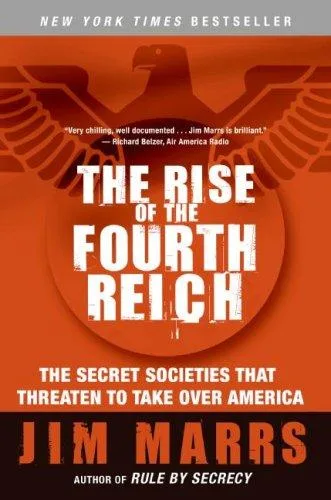
The Rise of the Fourth Reich
 79
79

The Rise of the Fourth Reich
Jim Marrs' "The Rise of the Fourth Reich" presents a sweeping, if contentious, thesis that the ideological seeds of Nazism survived WWII and have since germinated within the American power structure. Marrs, known for his deep dives into conspiracy, marshals an impressive array of historical anecdotes, connecting figures and events across decades. His analysis of how perceived control mechanisms—from financial systems to media narratives—could facilitate authoritarian creep is compelling. The book's strength lies in its meticulous assembly of disparate elements into a coherent, albeit alarming, worldview. However, a significant limitation is the heavy reliance on interpretation and the frequent absence of direct, verifiable causal links between the alleged conspirators and the historical outcomes. The discussion of the Bilderberg Group's influence, for instance, offers a fascinating glimpse into secret meetings but struggles to definitively prove direct orchestration of global policy in the manner suggested. Ultimately, "The Rise of the Fourth Reich" is a provocative, meticulously researched polemic that challenges readers to consider hidden histories, even as it demands a robust skepticism regarding its ultimate conclusions.
📝 Description
79
Jim Marrs' 2009 book, "The Rise of the Fourth Reich," argues Nazism's core ideas persisted after WWII.
Jim Marrs' "The Rise of the Fourth Reich" argues that ideologies similar to Nazism did not disappear after World War II. Instead, he suggests these authoritarian principles have subtly infiltrated and reshaped political and economic systems. The book examines how powerful, clandestine groups might have manipulated events to establish a new, potentially global, Reich with its base in the United States. Marrs frames his argument by tracing connections from early 20th-century German occult groups and the Nazi Party to post-war American intelligence agencies and global financial institutions.
This work is for readers who question official narratives and look for hidden forces allegedly shaping global events. It appeals to those interested in conspiracy theories, historical revisionism, and the sociology of power. Individuals concerned with the erosion of civil liberties and the concentration of wealth and influence may find Marrs' analysis relevant, though it requires a critical approach from its audience. Marrs' central concept is the "Fourth Reich," which he presents not as a literal return of the Third Reich, but as a continuation of its authoritarian principles and control methods.
Marrs' work fits within a tradition of critical inquiry into power structures, often associated with theories of hidden agendas and secret societies influencing world events. It follows in the vein of earlier works that sought to expose alleged conspiracies, connecting historical occult groups and their alleged rise to power with modern financial and intelligence apparatuses. The book positions itself as a continuation of such investigations, examining how perceived authoritarian principles might persist and adapt.
💡 Why Read This Book?
• Learn how Marrs connects alleged post-WWII Nazi elements to contemporary American power structures, offering a unique perspective on "The Fourth Reich" concept. • Understand Marrs' interpretation of historical events, such as the alleged influence of groups like the Bilderberg Group, to critically assess claims of hidden global control. • Gain insight into Marrs' examination of propaganda and media manipulation as tools allegedly used to maintain authoritarian influence, as discussed in his analysis of information control.
⭐ Reader Reviews
Honest opinions from readers who have explored this book.
❓ Frequently Asked Questions
What is the central argument of "The Rise of the Fourth Reich"?
The book argues that ideologies and structures similar to those of Nazi Germany, rather than being eradicated, have persisted and infiltrated American power centers, potentially leading to a "Fourth Reich."
Who was Jim Marrs?
Jim Marrs was an American investigative journalist and author known for his work on conspiracy theories, UFOs, and alleged government cover-ups, including his bestseller "Rule by Secrecy."
What historical periods does the book cover?
It spans from the early 20th century, including the rise of Nazism and related occult groups, through World War II, and into the post-war era, examining alleged developments in American political and financial spheres.
Does the book claim a literal continuation of the Nazi party?
No, the book posits a continuation of Nazi *ideologies* and *methods* of control, rather than a direct organizational successor, under the concept of a "Fourth Reich."
What are some key organizations or concepts Marrs discusses?
Marrs discusses organizations like the Bilderberg Group, Skull and Bones, and concepts such as the "New World Order," propaganda, and the alleged manipulation of global finance.
Is "The Rise of the Fourth Reich" considered a factual historical account?
It is presented as investigative journalism and analysis of alleged conspiracies. Many historians and critics view its conclusions with skepticism due to its reliance on interpretation and unverified connections.
🔮 Key Themes & Symbolism
Authoritarian Creep
The work dissects how authoritarian tendencies, allegedly mirroring those of the Third Reich, may have subtly embedded themselves within American governance and society. Marrs examines the gradual erosion of civil liberties and democratic processes, suggesting that control is maintained not through overt force but through sophisticated manipulation of information, finance, and political systems. The concept of a "Fourth Reich" implies a continuation of these methods, operating under a different guise but with similar aims of centralized power and control over populations.
Secret Societies and Elite Control
A central theme is the alleged influence of clandestine organizations and elite groups in steering global events. Marrs connects various historical societies, from early German occult orders to contemporary international forums like the Bilderberg Group, positing them as conduits for a hidden agenda. The book explores how these alleged cabals may orchestrate economic crises, political shifts, and media narratives to consolidate power and advance a "New World Order."
Information Warfare and Propaganda
Marrs dedicates significant attention to the role of media and propaganda in maintaining control. He argues that the "approved textbooks" and "corporate mass media" mentioned in the original blurb function as tools to shape public perception and suppress dissenting views. The work investigates how historical propaganda techniques, refined during the Nazi era, might be employed today to manufacture consent, distract populations, and obscure the true nature of power structures.
Historical Revisionism
The book challenges conventional historical narratives, urging readers to "throw out everything you think you know about history." Marrs reinterprets key events and figures, drawing alleged connections between seemingly unrelated phenomena. This approach positions the work within a tradition of historical revisionism, aiming to uncover a hidden, often darker, truth beneath the surface of accepted historical accounts, particularly concerning the post-WWII era.
💬 Memorable Quotes
Direct passages from the work, attributed to the author.
“Throw out everything you think you know about history.”
— This opening directive sets the tone for Marrs' work, urging readers to abandon conventional understanding and be open to alternative, often suppressed, historical interpretations.
“Close the approved textbooks, turn off the corporate mass media, and whatever you do, don't believe anything you hear from the government.”
— This emphasizes Marrs' distrust of official sources and mainstream information channels, positioning them as potentially misleading or complicit in maintaining a false narrative.
“The United States is becoming the Fourth Reich.”
— This is the core thesis, suggesting a continuation of Nazi-like authoritarian principles and control mechanisms within the contemporary American system, rather than a literal political successor.
“The continuation of an ideology.”
— This clarifies that the "Fourth Reich" concept refers to the perpetuation of specific ideologies and methods of control associated with Nazism, rather than a direct organizational or national rebirth.
“The frighteningly real possibility that today the United States is becoming the Fourth Reich.”
— This highlights the author's conviction and the urgent, alarming nature of his thesis, presenting it not as abstract speculation but as a tangible and present danger.
🌙 Esoteric Significance
Tradition
While not explicitly rooted in a single esoteric lineage, Marrs' work draws heavily on the conspiratorial undercurrents found in various traditions, particularly those concerned with hidden power structures and secret societies. It appeals to Gnostic ideas of hidden knowledge and malevolent forces influencing the material world, as well as certain strands of Hermeticism that explore cosmic laws and the influence of unseen agents. The focus on secret societies reflects the historical narratives surrounding groups like the Illuminati and Freemasonry, often interpreted through an esoteric lens.
Symbolism
The central symbol is the "Fourth Reich" itself, representing not just a political entity but a symbolic culmination of authoritarian principles and control mechanisms. The eagle, often associated with imperial power and Nazism, is implicitly invoked. Furthermore, the book explores motifs of hidden symbols within corporate logos, government seals, and architectural designs, suggesting they serve as markers or conduits for esoteric power and control, linking the visible world to unseen forces.
Modern Relevance
Marrs' work remains relevant in contemporary discussions surrounding deep state theories, the influence of global financial elites, and the role of media in shaping public opinion. Thinkers and commentators exploring the power dynamics of organizations like the World Economic Forum or the concept of a "Great Reset" often engage with the kind of historical analysis Marrs provides. His emphasis on information control and psychological manipulation continues to be a key area of interest for those studying modern propaganda and influence operations.
👥 Who Should Read This Book
• Students of political conspiracy and alternative history seeking to understand theories about hidden power structures influencing global events. • Readers interested in the sociology of power and the alleged mechanisms by which authoritarianism can emerge and persist outside of traditional political frameworks. • Investigators of secret societies and their purported role in shaping historical outcomes, particularly those examining the post-World War II era and alleged continuations of certain ideologies.
📜 Historical Context
Published in 2009, "The Rise of the Fourth Reich" emerged during a period of heightened public anxiety regarding financial crises, government surveillance, and the perceived consolidation of power. This era saw a resurgence of interest in critical analyses of global institutions and hidden influences, echoing concerns raised by earlier figures like Carroll Quigley. Marrs' work tapped into a pre-existing undercurrent of skepticism towards official narratives, particularly following events like 9/11. The book's reception was largely within circles already receptive to conspiracy literature, with mainstream historians and political scientists often dismissing its premises as unsubstantiated. It arrived in a landscape where authors like David Icke were also exploring similar themes of elite control and secret societies, contributing to a broader discourse on alternative histories and power structures.
📔 Journal Prompts
The concept of the "Fourth Reich" as an ideology of control.
Alleged manipulation of media and propaganda techniques.
The role of secret societies like the Bilderberg Group.
Connections between historical authoritarianism and modern governance.
The interpretation of symbols in power structures.
🗂️ Glossary
Fourth Reich
A concept proposed by Marrs suggesting a continuation of Nazi-like authoritarian ideologies and control methods within the United States, rather than a literal political successor to the Third Reich.
New World Order
A term used to describe a secret, alleged conspiracy by powerful elites to eventually rule the world through an authoritarian global government, often linked to clandestine organizations.
Bilderberg Group
An annual, private conference of approximately 120-150 influential figures from North America and Europe in politics, business, and academia, often cited in conspiracy theories as a powerful, secretive global policy-making body.
Propaganda
Information, especially of a biased or misleading nature, used to promote or publicize a particular political cause or point of view, a key tool discussed in the book for maintaining control.
Authoritarianism
A form of government characterized by strong central power and limited political freedoms, often involving the suppression of opposition and strict social control.
Esoteric
Relating to or being knowledge or practice accessible only to a select group of people with specialized training or initiation, often involving hidden meanings or spiritual insights.
Censorship
The suppression or prohibition of any parts of books, films, news, etc. that are considered obscene, politically unacceptable, or a threat to security, a tactic discussed in relation to controlling information.