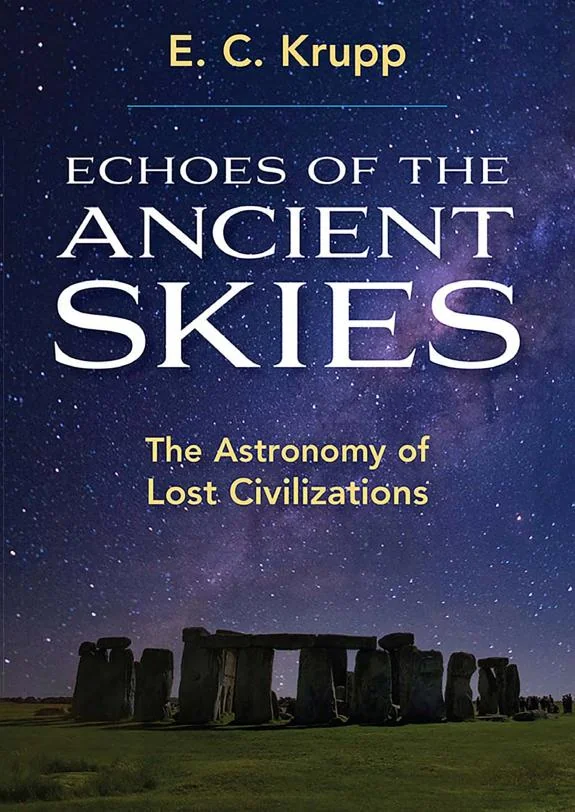
Echoes of the Ancient Skies
 83
83

Echoes of the Ancient Skies
E. C. Krupp's "Echoes of the Ancient Skies" presents a compelling case for the central role of celestial observation in shaping human culture. The sheer volume of information, buttressed by 208 illustrations, makes complex astronomical alignments and their cultural implications accessible. Krupp navigates the vast subject matter with a scholar's precision, detailing how megalithic structures, like those potentially studied by Alexander Thom, served as observatories. However, the book’s encyclopedic nature, while a strength, can sometimes feel overwhelming, making it less of a narrative flow and more of a reference. A passage detailing the Maya's sophisticated understanding of Venus cycles, for instance, showcases Krupp's ability to connect intricate astronomical data with cultural practices. Despite occasional density, the work remains an essential resource for understanding humanity's ancient skyward gaze.
📝 Description
83
E. C. Krupp's 1997 book examines how ancient cultures observed and interpreted the skies.
Echoes of the Ancient Skies investigates archaeoastronomy, the study of how past societies understood celestial phenomena. Krupp details the methods used by scholars to uncover the astronomical knowledge of ancient peoples. The book illustrates the deep connection between the cosmos and the growth of human civilization, supported by numerous images.
It addresses the origins of calendars, the construction of monuments aligned with astronomical events, and the mythological systems that developed from sky observation. The work is suitable for anyone interested in the sky's role in ancient societies, including amateur astronomers, history enthusiasts, and students of anthropology and religion. Readers wanting a clear overview of early human perceptions of the universe will find it especially useful.
This book fits within a tradition of scholarship that seeks to understand ancient worldviews through their relationship with the cosmos. While not strictly an esoteric text itself, it engages with the ways various cultures integrated astronomical observation into their religious, mythological, and societal structures. It highlights how celestial events were not merely observed but imbued with meaning, shaping calendars, rituals, and the very understanding of humanity's place in the universe. This approach connects to broader interests in how ancient peoples perceived spiritual or cosmic order.
💡 Why Read This Book?
• Gain an understanding of how ancient peoples, such as those who constructed sites like Newgrange around 3200 BCE, used celestial alignments to structure their societies and rituals. • Discover the specific astronomical knowledge held by cultures like the Maya, including their sophisticated tracking of Venus, and how this knowledge informed their worldview. • Explore the methodologies of archaeoastronomy, learning how scholars analyze ancient sites and artifacts to reconstruct past celestial observations and their cultural significance.
⭐ Reader Reviews
Honest opinions from readers who have explored this book.
❓ Frequently Asked Questions
What is archaeoastronomy and how does E. C. Krupp define it in 'Echoes of the Ancient Skies'?
Archaeoastronomy is the study of ancient people's observation of the skies. Krupp defines it as the investigation into how celestial phenomena influenced cultural evolution, mythology, and societal structures across diverse ancient civilizations.
How does 'Echoes of the Ancient Skies' illustrate the cultural significance of celestial events?
The book illustrates this through examples like the alignment of Stonehenge with the summer solstice sunrise, demonstrating how astronomical events were integrated into religious practices and calendrical systems.
What kind of visual aids does 'Echoes of the Ancient Skies' include?
The book is richly illustrated with 208 images, including diagrams of celestial alignments, photographs of ancient sites, and artwork depicting cosmological interpretations from various cultures.
What ancient civilizations are discussed in relation to their sky observation?
The book covers a wide range, including but not limited to, the Maya, ancient Egyptians, Stonehenge builders, and various Neolithic European cultures, detailing their unique astronomical practices and beliefs.
When was 'Echoes of the Ancient Skies' first published?
The first publication date for 'Echoes of the Ancient Skies' by E. C. Krupp was March 15, 2012.
What is the primary focus of E. C. Krupp's work in archaeoastronomy?
Krupp's primary focus is on demonstrating the integral role of astronomical observation in the development of human culture, from early calendar systems to the construction of monumental architecture.
🔮 Key Themes & Symbolism
Celestial Navigation and Timekeeping
This theme centers on how ancient peoples utilized the predictable movements of celestial bodies, such as the sun, moon, and stars, to establish calendars and navigate. The book details how phenomena like solstices and equinoxes were observed, often requiring sophisticated architectural alignments as seen in sites like Newgrange, to mark crucial points in the agricultural and ritual year. It highlights the fundamental human need to understand and order time through cosmic cycles.
Mythology and Cosmic Worldviews
The work explores the profound link between astronomical observation and the formation of myths and religious beliefs. Celestial events were not merely observed but imbued with meaning, often becoming personified in deities or central to creation narratives. Krupp examines how these cosmic interpretations shaped the entire worldview of ancient societies, influencing their understanding of life, death, and their place in the universe, as exemplified by the Maya's sacred Venus cycles.
Monumental Architecture as Observatories
A significant aspect discussed is the deliberate construction of ancient monuments, such as henges and pyramids, with precise astronomical orientations. These structures served not only as religious or ceremonial centers but also as functional observatories. The book analyzes how these sites, like Stonehenge, were engineered to track solstices, equinoxes, and the rising or setting of specific stars, demonstrating an advanced understanding of celestial mechanics integrated into the built environment.
The Evolution of Astronomical Knowledge
This theme traces the development of astronomical understanding across different cultures and epochs. It showcases how early, often intuitive, observations evolved into more systematic studies, leading to complex calendrical systems and predictive models. Krupp illustrates this progression by contrasting the observational achievements of various civilizations, highlighting the cumulative nature of astronomical inquiry throughout human history.
💬 Memorable Quotes
Direct passages from the work, attributed to the author.
“Ancient peoples watched the sky to orient themselves and their societies.”
— This concept underscores the practical and foundational role of astronomy in early human civilization, suggesting that celestial observation was not merely academic but essential for survival, agriculture, and social order.
“The alignment of structures like Stonehenge with solstices reveals intentional celestial observation.”
— This highlights a key piece of evidence in archaeoastronomy, indicating that ancient builders possessed a sophisticated understanding of astronomy and deliberately incorporated it into their monumental constructions.
“Maya astronomy incorporated complex cycles, notably those of Venus.”
— This points to the advanced and specific astronomical achievements of cultures like the Maya, emphasizing that their sky-watching extended beyond basic solar and lunar observations to intricate planetary tracking.
“Celestial events formed the basis for many ancient mythologies.”
— This interpretation emphasizes the deep connection between astronomical phenomena and the narrative and belief systems of ancient cultures, suggesting that myths often served to explain or deify the observed cosmos.
“Calendars were developed from consistent observation of cosmic rhythms.”
— This concept explains the practical necessity behind early astronomy, illustrating how the need to track seasons, predict floods, or plan agricultural cycles drove the development of sophisticated timekeeping systems based on celestial patterns.
🌙 Esoteric Significance
Tradition
While not strictly adhering to a single lineage, Krupp's work appeals to Hermetic and Gnostic traditions that emphasize the macrocosm reflecting the microcosm. It aligns with the perennialist interest in universal cosmic laws observable across cultures and time. This approach departs from purely materialistic archaeology by positing that celestial observation was a primary driver of spiritual and intellectual development, akin to how ancient mystery schools viewed cosmic principles.
Symbolism
Key symbols explored include the Sun, representing life, order, and divine power, often aligned with solstitial points in monumental architecture. The Moon, symbolizing cycles, intuition, and feminine energies, is linked to lunar calendars and observatories. Stars, particularly prominent constellations or planets like Venus (as observed by the Maya), represent navigation, destiny, and divine messengers, forming the basis of many cosmologies and mythic narratives.
Modern Relevance
Contemporary thinkers and practitioners in fields like Jungian psychology (archetypal sky figures), eco-spirituality (reconnecting with natural cycles), and even certain strands of New Age thought draw inspiration from the understanding that ancient cultures were deeply attuned to celestial rhythms. The work informs modern paganism and earth-based spiritualities seeking to revive ancient connections to natural cycles and cosmic awareness.
👥 Who Should Read This Book
• Students of comparative mythology and religion seeking to understand the cosmic underpinnings of ancient belief systems. • Amateur astronomers and history enthusiasts interested in the practical applications of celestial observation in antiquity. • Archaeologists and anthropologists exploring the cultural and societal roles of astronomical knowledge in prehistoric and ancient societies.
📜 Historical Context
Published in 2012, "Traces of the Ancient Skies" emerged within a field of archaeoastronomy that had been solidifying since the mid-20th century. This period saw scholars like Gerald Hawkins, author of "Stonehenge Decoded" (1965), bring renewed attention to the astronomical alignments of ancient sites, sparking both interest and debate. Krupp’s work builds upon this foundation, engaging with theories proposed by figures like Alexander Thom regarding megalithic lunar observatories. The intellectual climate of the time was characterized by an increasing willingness to view ancient peoples not just as builders, but as sophisticated observers and thinkers with a deep understanding of the cosmos. While competing interpretations often focused on purely functional or ritualistic explanations for ancient structures, archaeoastronomy offered a compelling lens through which to understand the integration of science, religion, and culture, challenging earlier, more simplistic views of prehistoric capabilities.
📔 Journal Prompts
The observation of solstices in ancient structures like Stonehenge.
The Maya civilization's specific astronomical achievements, particularly regarding Venus.
The construction of calendars based on celestial rhythms.
The role of celestial events in ancient myth-making.
The symbolic meaning of the Sun and Moon in ancient cosmologies.
🗂️ Glossary
Archaeoastronomy
The interdisciplinary study of how people in the past perceived and used celestial phenomena, and how these phenomena influenced their cultures, religions, and daily lives.
Solstice
The time of year when the Sun reaches its highest or lowest point in the sky at noon, resulting in the longest and shortest days; typically occurs around June 20/21 and December 21/22.
Equinox
The moment in the year when the Sun appears to be directly above the Earth's equator, resulting in a nearly equal length of day and night across the globe; occurs around March 20/21 and September 22/23.
Megalithic
Relating to or denoting prehistoric structures, especially in Europe, constructed from or containing large undressed stones, such as Stonehenge or dolmens.
Henge
A Neolithic monument of a circular earthwork or stone circle, often with a surrounding ditch, such as Stonehenge.
Cosmology
The branch of astronomy concerned with the origin and evolution of the universe; an understanding of the universe as a whole.
Calendrical Systems
Methods developed by societies to organize time, often based on astronomical cycles like the solar year, lunar month, or planetary movements, used for agriculture, religious festivals, and civil administration.
This book appears in 1 collection
🔮 Readers Also Liked
Browse all →









From the “Lost Civilizations” Collection
View all →








More Free Occult Philosophy Books
View all →