France in the Enlightenment
 78
78

France in the Enlightenment
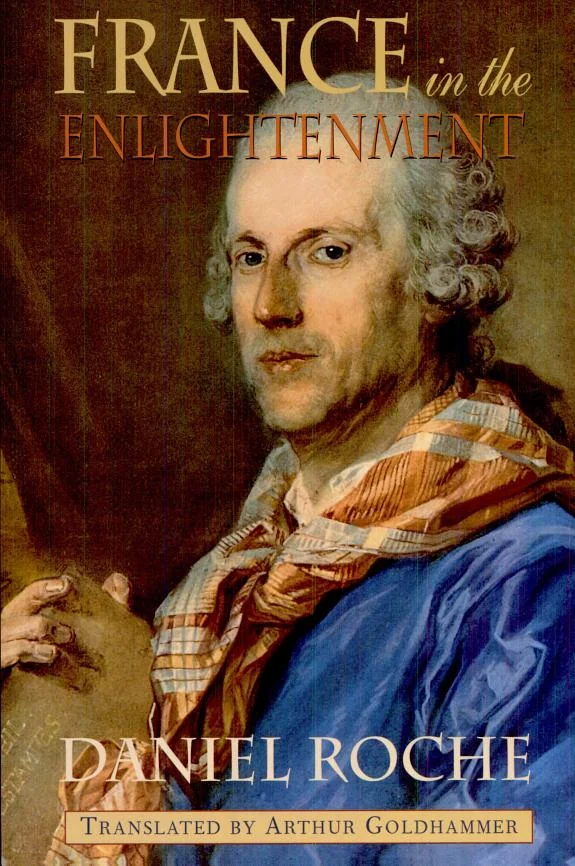
Daniel Roche's "France in the Enlightenment" is a monumental achievement, painting the Ancien Régime not as a monolithic entity but as a complex, dynamic society teeming with individual lives and evolving ideas. Roche excels at detailing the quotidian realities—the food people ate, the clothes they wore, the spaces they inhabited—making the abstract historical period palpable. The chapter exploring the domestic sphere, for instance, reveals much about social stratification and changing familial norms. However, the sheer density of information can occasionally feel overwhelming, requiring sustained focus from the reader. While the book masterfully reconstructs the material and social landscape, its engagement with the more esoteric or philosophical undercurrents of the era feels somewhat secondary to the socio-economic analysis. Nevertheless, for its unparalleled depiction of a civilization on the cusp of profound change, "France in the Enlightenment" stands as a foundational text.
📝 Description
78
Daniel Roche's 1998 book examines French society just before the Revolution.
Daniel Roche's France in the Enlightenment reconstructs the lived experience of 18th-century French society. The book details social structures, cultural practices, and evolving political thought from the Ancien Régime. Roche moves beyond simple chronology to show how individuals navigated their world during this period of immense intellectual change.
This study appeals to historians of early modern Europe and scholars of cultural and intellectual history. Readers interested in the social history of ideas and the material realities of life before the French Revolution will find it especially relevant. Advanced students and researchers seeking a detailed understanding of pre-revolutionary France will find it a valuable resource.
While not overtly esoteric in the occult sense, this book functions as an esoteric text for historians by revealing the hidden social and cultural mechanisms that underpinned the French Revolution. Roche dissects the everyday beliefs, practices, and structures of the Ancien Régime, treating them as keys to understanding a society on the verge of radical transformation. The focus on the 'lived experience' and the 'deep currents' preceding upheaval positions the book as a guide to the less visible forces shaping historical events.
💡 Why Read This Book?
• Gain a granular understanding of 18th-century French social structures, moving beyond abstract theories to the lived realities of different classes, as detailed in Roche's exploration of "social hierarchies." • Grasp the intricate relationship between material culture and intellectual life, learning how everyday objects and practices influenced the dissemination of Enlightenment ideas. • Understand the precise historical conditions and societal fault lines that directly preceded the French Revolution, offering a counterpoint to purely political or philosophical accounts of the era.
⭐ Reader Reviews
Honest opinions from readers who have explored this book.
❓ Frequently Asked Questions
What was the primary focus of Daniel Roche's "France in the Enlightenment"?
The book provides a comprehensive panorama of 18th-century French civilization, detailing its social structures, cultural practices, and political thought, with a focus on the period leading up to the French Revolution.
What historical period does "France in the Enlightenment" cover?
It covers the 18th century in France, often referred to as the Ancien Régime, specifically the decades leading up to the French Revolution.
Who was Daniel Roche?
Daniel Roche was a prominent French historian specializing in the social and cultural history of 18th-century France. He was a leading scholar of the Enlightenment and the Ancien Régime.
What are some key themes explored in the book?
Key themes include social hierarchies, the evolution of public opinion, the role of print culture, material life, and the intellectual currents of the Enlightenment.
How does "France in the Enlightenment" relate to the French Revolution?
The book details the societal conditions, cultural shifts, and intellectual climate of the pre-revolutionary era, offering insights into the underlying causes and context of the French Revolution.
What is the significance of the book's publication date (1998)?
Published in 1998, the work reflects late 20th-century historical scholarship on the Enlightenment and the Ancien Régime, engaging with existing interpretations and contributing new social and cultural perspectives.
🔮 Key Themes & Symbolism
Social Stratification
Roche meticulously details the rigid yet dynamic social hierarchies of 18th-century France, from the aristocracy and clergy to the burgeoning bourgeoisie and the common populace. He illustrates how status, wealth, and occupation dictated daily life, access to resources, and social mobility. This granular examination reveals the intricate web of relationships and power dynamics that characterized the Ancien Régime, setting the stage for later revolutionary fervor.
Public Opinion and Print Culture
The book explores the burgeoning concept of public opinion as a force in 18th-century France, significantly influenced by the expansion of print culture. Roche examines the proliferation of books, pamphlets, and newspapers, and how these mediums facilitated the spread of Enlightenment ideas beyond elite salons. This analysis highlights the growing intellectual engagement of a wider populace and its impact on societal discourse.
Material Culture and Daily Life
A core aspect of Roche's work is its deep dive into the material conditions of 18th-century life. He reconstructs the realities of diet, housing, clothing, and consumption patterns across different social strata. By focusing on these tangible elements, the book offers a vivid portrayal of the everyday existence of French citizens, demonstrating how material realities shaped their experiences and perceptions of the world.
The Ancien Régime on the Eve of Revolution
The work serves as a comprehensive portrait of French society in the decades preceding the 1789 Revolution. Roche illuminates the deep-seated tensions, evolving mentalities, and structural issues within the Old Regime. It provides a richly detailed backdrop against which the dramatic events of the Revolution can be understood, emphasizing the complex interplay of social, economic, and cultural factors.
💬 Memorable Quotes
Direct passages from the work, attributed to the author.
“The Enlightenment was not merely an intellectual movement but a social phenomenon.”
— This interpretation suggests that the ideas of the Enlightenment permeated French society at all levels, influencing not just philosophers but the daily lives, customs, and interactions of ordinary people.
“The structure of everyday life reveals the foundations of social order.”
— This highlights Roche's focus on the material and mundane aspects of existence—food, housing, work—as key indicators of the underlying social and political structures of the Ancien Régime.
“Consumption patterns reflected and reinforced social distinctions.”
— This interpretation underscores the book's examination of how what people bought, used, and displayed served as markers of their social status and aspirations within 18th-century France.
“The Old Regime was a world on the verge of cataclysm.”
— This captures the book's depiction of late 18th-century France as a society rife with internal tensions and undergoing significant transformations, poised for the dramatic upheaval of the Revolution.
💡 Key Ideas
Editorial paraphrase of the work's core concepts — not direct quotes.
Print and discourse transformed the public sphere.
This paraphrased concept points to the book's analysis of how the increasing availability of printed materials and the subsequent discussions they generated reshaped public awareness and political engagement.
🌙 Esoteric Significance
Tradition
While "France in the Enlightenment" is primarily a work of secular social history, its detailed examination of the intellectual and cultural milieu of the 18th century indirectly touches upon currents that would later inform esoteric traditions. The Enlightenment's emphasis on reason, individual inquiry, and the questioning of established dogma created fertile ground for both rationalist and counter-rationalist movements. This period saw the rise of Freemasonry, Rosicrucian revivals, and early interest in mesmerism, all of which engaged with Enlightenment discourse while seeking alternative forms of knowledge and spiritual experience.
Symbolism
The book's focus on material culture and social structures provides a unique lens through which to view potential esoteric symbolism. For instance, the meticulous descriptions of *salons* can be seen as microcosms of intellectual exchange and the formation of hidden networks. The emphasis on *print culture* and the dissemination of ideas reflects a shift towards knowledge as a powerful, almost alchemical force, transforming society. The very *social hierarchies* described, while mundane, can be interpreted as reflections of more cosmic or spiritual orders being challenged or reinterpreted.
Modern Relevance
Contemporary esoteric thinkers and practitioners interested in the historical roots of modern occultism find value in Roche's work. Understanding the Enlightenment's complex relationship with reason, science, and mysticism provides context for later esoteric revivals like Theosophy and the New Age movement. Scholars examining the historical sociology of belief systems can use Roche's findings to trace the societal conditions that fostered both radical rationalism and occult revivals, demonstrating how the breakdown of old orders creates space for new spiritual explorations.
👥 Who Should Read This Book
• Historians specializing in 18th-century France and the Ancien Régime seeking a comprehensive social and cultural analysis. • Scholars of cultural history and the history of ideas interested in how societal structures influenced intellectual movements like the Enlightenment. • Readers fascinated by the pre-revolutionary period and the deep societal factors that led to the French Revolution, desiring a grounded, detailed perspective.
📜 Historical Context
Daniel Roche's "France in the Enlightenment," published in 1998, arrived during a period of sustained academic interest in the social history of the Ancien Régime. Building on the legacy of historians like Alexis de Tocqueville, Roche offered a meticulously researched social and cultural history that countered purely political narratives of the French Revolution. The intellectual currents of the time emphasized micro-history and the study of everyday life, themes Roche masterfully integrates. Contemporaries like Robert Darnton were also exploring similar avenues, focusing on the history of the book and popular culture. Roche's work was significant for its synthesis of vast archival material, providing a detailed social panorama that illuminated the complex realities of 18th-century French life and the deep roots of revolutionary change. Its reception was largely positive among scholars for its depth and breadth.
📔 Journal Prompts
The evolution of public opinion during the Enlightenment.
The material conditions of life for the French Third Estate.
Social hierarchies and their influence on daily interactions.
The role of print culture in disseminating Enlightenment ideals.
The tension between tradition and modernity in 18th-century France.
🗂️ Glossary
Ancien Régime
The political and social system of France before the Revolution of 1789, characterized by an absolute monarchy and a rigid social hierarchy divided into three estates.
Salons
Gathering places, typically hosted by women of high social standing, where intellectuals, artists, and politicians met to discuss literature, philosophy, and politics during the Enlightenment.
Public Opinion
The collective attitudes, beliefs, and sentiments of a population regarding political issues, social matters, and cultural trends, which began to gain significant influence in the 18th century.
Print Culture
The cultural environment shaped by the production, distribution, and consumption of printed materials, including books, pamphlets, and newspapers, which expanded dramatically in the 18th century.
Bourgeoisie
The social class situated between the aristocracy and the proletariat, comprising merchants, manufacturers, and professionals; a rising and influential group in 18th-century France.
Estates (Three Estates)
The traditional division of French society into three orders: the clergy (First Estate), the nobility (Second Estate), and the commoners (Third Estate), which encompassed the vast majority of the population.
Material Culture
The study of the relationship between people and their things, focusing on the physical objects, artifacts, and environments that shape human life and society.
This book appears in 1 collection
🔮 Readers Also Liked
Browse all →








From the “Enlightenment” Collection
View all →



![ERIC ED085284: World History. Volumes I and II. [Sahuarita High School Career Curriculum Project].](/img/thumb/eric-ed085284-world-history-volumes-i-and-ii-sahuarita-high-school-career-curriculum-project-eric.webp)



More Free Esoteric History & Biography Books
View all →