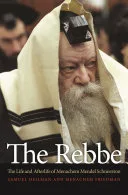
The Rebbe
 71
71

The Rebbe
Heilman and Friedman's "The Rebbe" presents a meticulous, if sometimes detached, account of Rabbi Menachem Mendel Schneerson's extraordinary influence. The authors succeed in illustrating the sheer scale of Schneerson's impact, transforming a relatively small Hasidic group into a global network by the time of his death in 1994. A particular strength lies in their detailed exposition of the "Shlichus" program, the emissary system that became the engine of Chabad's outreach. However, the work occasionally falters in capturing the spiritual fervor that animated the movement, at times leaning too heavily on sociological analysis. The exploration of Schneerson's messianic beliefs, while factually presented, could benefit from a deeper engagement with the mystical underpinnings that fueled them. Despite this, the book remains a significant, albeit academic, portrait of a pivotal modern religious leader. It offers a valuable, fact-driven understanding of one of the 20th century's most impactful Jewish figures.
📝 Description
71
Published in 2010, "The Rebbe" examines Rabbi Menachem Mendel Schneerson's transformative leadership of the Lubavitch movement.
Samuel Heilman and Menachem Friedman's 2010 book details Rabbi Menachem Mendel Schneerson's leadership of the Lubavitch Hasidic movement from the 1950s until his death in 1994. The authors chronicle how Schneerson, the seventh Lubavitcher Rebbe, expanded the Chabad outreach program into a significant global force within Jewish life. The narrative covers his messianic expectations and his belief in the possibility of altering history.
This work is for readers interested in influential religious figures, the dynamics of modern Hasidic Judaism, and the leadership of transformative spiritual movements. It speaks to scholars of religion, sociology, and Jewish studies, as well as those seeking to understand Rabbi Schneerson's complex legacy and the Chabad movement. The book addresses the intersection of faith, leadership, and eschatological belief.
Heilman and Friedman situate Schneerson's leadership in the post-World War II era, a time of rebuilding and spiritual reorientation for Jewish communities. They contrast the Lubavitch movement's growth under Schneerson with other Jewish branches and discuss the evolving relationship between religious leadership and global Jewish identity. The authors acknowledge the societal and political contexts that shaped Schneerson's mission and the movement's expansion, particularly in the late 20th century.
This biography situates Rabbi Schneerson's leadership within a tradition that emphasizes spiritual authority and the potential for divine intervention in worldly affairs. While not strictly an esoteric text itself, the book addresses the Rebbe's deep engagement with messianic thought and the Chabad movement's distinctive approach to disseminating Jewish observance globally. It examines how Schneerson interpreted and acted upon beliefs concerning the imminent arrival of the Messiah and the spiritual transformation of the world, a theme resonant in various mystical and messianic currents within Jewish history.
💡 Why Read This Book?
• Understand the strategic expansion of the Lubavitch movement through the "Shlichus" emissary program, a core element of its global reach since the mid-20th century. • Explore the messianic expectations surrounding Rabbi Schneerson, examining his belief in the imminent arrival of the "Moshiach" and its impact on his followers. • Gain insight into the organizational structure and leadership philosophy that propelled Chabad-Lubavitch from a small sect into a prominent force in Jewish life by 1994.
⭐ Reader Reviews
Honest opinions from readers who have explored this book.
❓ Frequently Asked Questions
What is the primary focus of 'The Rebbe' by Heilman and Friedman?
The book focuses on the life and leadership of Rabbi Menachem Mendel Schneerson, detailing how he transformed the Chabad-Lubavitch movement into a significant global force in Jewish life from the 1950s until his death in 1994.
When was 'The Rebbe' first published?
'The Rebbe' by Samuel Heilman and Menachem Friedman was first published on May 10, 2010.
What key concept of Chabad's expansion does the book explore?
The book extensively explores the 'Shlichus' program, which involved sending emissaries worldwide to establish Chabad centers and spread Jewish observance and education.
Does the book discuss Rabbi Schneerson's messianic beliefs?
Yes, 'The Rebbe' examines Rabbi Schneerson's strong belief in the imminent arrival of the Messiah ('Moshiach') and how this expectation influenced his leadership and the movement's outlook.
Who are the authors of 'The Rebbe'?
The authors are Samuel Heilman and Menachem Friedman.
What was the state of the Lubavitcher movement before Rabbi Schneerson's leadership?
The book describes the Lubavitcher movement as a relatively small sect within Hasidic Judaism before Rabbi Schneerson revitalized and expanded it significantly.
🔮 Key Themes & Symbolism
Global Outreach and Emissaries
The book meticulously documents the "Shlichus" initiative, a central tenet of Schneerson's strategy. This involved dispatching thousands of emissaries to establish Chabad houses globally, fostering Jewish education and practice in communities far from traditional centers. The work details how this network became the primary vehicle for the movement's expansion, transforming it into a worldwide presence by the late 20th century.
Messianic Expectations
A significant aspect explored is Rabbi Schneerson's profound conviction regarding the imminent arrival of the "Moshiach" (Messiah). The book examines how this eschatological focus permeated his teachings and actions, motivating his followers and shaping the movement's spiritual trajectory. It touches upon his belief that he could influence historical events and potentially deny death itself, a concept central to his followers' devotion.
Spiritual Leadership and Transformation
The work analyzes Schneerson's unique leadership style, which blended traditional Hasidic devotion with modern organizational acumen. It explores how he inspired intense loyalty and fostered a sense of purpose among his followers, leading to the revitalization of Hasidism. The book illustrates how his personal charisma and unwavering vision were instrumental in the movement's dramatic growth and adaptation.
Hasidism in the Modern World
"The Rebbe" situates the Lubavitch movement within the broader context of 20th-century Jewish history and the evolution of Hasidism. It examines how Schneerson navigated the challenges of modernity, secularism, and historical trauma to rebuild and expand a spiritual tradition. The book highlights the movement's distinctive approach to outreach and its ability to connect with diverse Jewish populations.
💬 Memorable Quotes
Direct passages from the work, attributed to the author.
“He built the Lubavitcher movement from a relatively small sect... into the powerful force in Jewish life that it is today.”
— This statement captures the dramatic success of Rabbi Schneerson's leadership, highlighting the immense growth and influence the Chabad-Lubavitch movement achieved under his guidance from the mid-20th century onwards.
“Swept away by his expectation that the Messiah was coming, he came to believe that he could deny death and change history.”
— This interpretation points to the deeply held messianic beliefs of Rabbi Schneerson and his followers, suggesting a conviction in his ability to transcend mortal limitations and actively shape the course of redemptive history.
“From the 1950s until his death in 1994”
— This phrase anchors the narrative within a specific, significant timeframe, underscoring the sustained and impactful nature of Rabbi Schneerson's leadership over several decades of the late 20th century.
“Revered by his followers worldwide simply as the Rebbe”
— This highlights the profound respect and singular status afforded to Rabbi Menachem Mendel Schneerson by the global Chabad community, emphasizing his role as their ultimate spiritual authority.
“The story of one of the most compelling religious leaders of modern times”
— This positions Rabbi Schneerson as a figure of immense historical and spiritual importance, suggesting that his life and impact warrant serious study and consideration within the context of contemporary religious history.
🌙 Esoteric Significance
Tradition
While rooted in Hasidic Judaism, a mystical branch of Orthodox Judaism, "The Rebbe" explores aspects that resonate with broader esoteric traditions. Schneerson's emphasis on "Tikkun Olam" (repairing the world) and his messianic vision, particularly the belief in his potential to influence history and transcend death, echo Gnostic and Kabbalistic concepts of redemption and divine immanence. The movement's focus on spreading divine light and knowledge globally can be seen as a practical application of esoteric principles.
Symbolism
The "Moshiach" (Messiah) is a central symbolic concept, representing ultimate redemption and the rectification of the world. The "Shluchim" (emissaries) symbolize active divine will manifested through human agents, carrying spiritual light to every corner of the globe. The menorah, a key symbol of Chabad, represents illumination and the spreading of Jewish knowledge, often interpreted esoterically as a conduit for divine energy.
Modern Relevance
Contemporary thinkers in Jewish mysticism and comparative religion often reference Schneerson's leadership and the Chabad movement's model. His emphasis on proactive outreach and spiritual engagement in secular societies influences modern spiritual entrepreneurs and community organizers. Discussions on messianism and the role of charismatic leaders in times of uncertainty continue to draw from the phenomena surrounding the Rebbe, impacting fields from theology to leadership studies.
👥 Who Should Read This Book
• Students of modern religious movements: Those researching the evolution of Hasidism and the dynamics of charismatic leadership in the 20th century will find a detailed case study. • Scholars of Jewish studies: Individuals interested in the history of Orthodox Judaism, particularly the Chabad-Lubavitch branch, and its global impact will benefit. • Readers interested in Messianism: Those seeking to understand contemporary messianic movements and the psychology of religious devotion and expectation will find significant material.
📜 Historical Context
Written in the shadow of the Holocaust and during the Cold War, "The Rebbe" emerges from a post-war era grappling with Jewish continuity and identity. Rabbi Menachem Mendel Schneerson's leadership of the Chabad-Lubavitch movement from the 1950s onwards represented a significant resurgence within Hasidism, a branch deeply impacted by the devastation of European Jewry. While other Jewish movements focused on rebuilding established institutions or engaging with secularism, Schneerson pioneered a dynamic, global outreach model centered on emissaries, or "Shluchim." This approach contrasted sharply with more insular or assimilationist trends. The book's publication in 2010 reflects a growing academic interest in modern religious leaders and the sociological impact of spiritual movements. Its detailed exploration of Schneerson's messianic fervor also engages with broader 20th-century religious phenomena characterized by apocalyptic expectations.
📔 Journal Prompts
The "Shlichus" program's global reach.
Rabbi Schneerson's messianic expectations.
The transformation of the Lubavitch movement.
The concept of "Tikkun Olam" in Schneerson's directives.
The role of "havayot" in spiritual leadership.
🗂️ Glossary
Rebbe
A title for a spiritual leader in Hasidic Judaism, particularly the head of a Hasidic dynasty. Rabbi Menachem Mendel Schneerson was universally known by this title within the Chabad movement.
Lubavitcher
A follower of the Chabad-Lubavitch movement, a branch of Hasidic Judaism founded in the late 18th century, known for its intellectual approach to Jewish mysticism and its extensive global outreach.
Hasidic Judaism
A spiritual movement within Orthodox Judaism founded in 18th-century Eastern Europe, emphasizing Jewish mysticism, joy, and the leadership of charismatic rebbes.
Shlichus
The Chabad concept of emissary work, involving sending trained individuals and couples worldwide to establish Chabad centers, promote Jewish observance, and provide religious and social services.
Moshiach
The Hebrew term for Messiah, a prophesied redeemer who will bring an era of peace and universal knowledge. Rabbi Schneerson held strong beliefs about the imminent arrival of the Moshiach.
Tikkun Olam
A Hebrew phrase meaning 'repairing the world.' In Jewish tradition, it refers to acts of social justice and the belief that humanity can help perfect the world.
Havayot
A Hebrew term referring to profound experiences or encounters, often used in Hasidic discourse to describe spiritual insights or moments of divine connection.