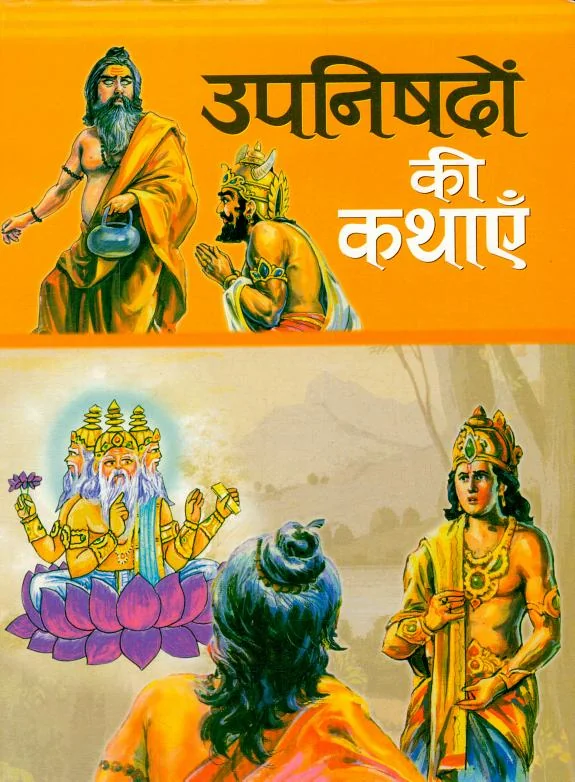
Upanishadon Ki Kathayen
 78
78

Upanishadon Ki Kathayen
Harish Sharma's "Upanishadon Ki Kathayen" offers a commendable effort to bridge the gap between the dense philosophical discourse of the Upanishads and the general reader. The strength of this collection lies in its narrative approach; it transforms abstract doctrines into relatable stories, a method that has been central to spiritual transmission for centuries. Sharma successfully extracts the essence of teachings concerning the nature of Atman and Brahman, presenting them through engaging tales. However, a limitation emerges in the occasional simplification of these complex ideas. While accessibility is a goal, some nuances might be lost in translation from the original Sanskrit philosophical rigor. A passage discussing the concept of 'neti neti' (not this, not that) as a means to understand Brahman is particularly illustrative of this, conveying the idea but perhaps not the full meditative depth.
Ultimately, this book serves as a valuable gateway for those intimidated by the original texts.
📝 Description
78
Harish Sharma retells Upanishadic narratives in "Upanishadon Ki Kathayen" to illuminate core Hindu philosophical ideas.
Upanishadon Ki Kathayen collects stories from the Upanishads, the philosophical texts central to Hindu thought. Harish Sharma retells these ancient narratives in clear language, aiming to make their complex spiritual and philosophical teachings accessible. The book translates abstract metaphysical ideas into digestible tales for a wider readership. It is for anyone interested in the philosophical roots of Eastern spirituality, especially those new to the Upanishadic tradition. Readers seeking to grasp concepts like karma, dharma, and the nature of reality through stories will find this work valuable. Students of comparative religion and philosophy will also benefit from its approach.
The Upanishads themselves emerged from ancient India during a period of significant philosophical inquiry, roughly between the 8th and 5th centuries BCE. They marked a shift in focus from ritualistic practices found in earlier Vedic literature toward introspection and metaphysical speculation. The traditions that grew from them, particularly Vedanta, have shaped Indian thought and spirituality for thousands of years, differing from the ritualistic emphasis of the Brahmanas.
The Upanishads, originating in ancient India between the 8th and 5th centuries BCE, represent a pivotal shift in Vedic thought. They moved beyond the ritualistic focus of earlier texts, like the Brahmanas, to emphasize philosophical inquiry and introspective contemplation. These texts are considered foundational to Vedanta, one of the major schools of Hindu philosophy. They explore concepts of ultimate reality (Brahman), the individual soul (Atman), and the cycle of rebirth (samsara), aiming for liberation (moksha). The narratives in Sharma's book distill these profound ideas, connecting them to the broader traditions of Eastern spirituality.
💡 Why Read This Book?
• Gain an understanding of the concept of Brahman, the ultimate reality, as illustrated through narrative examples, offering a unique perspective on its all-encompassing nature. • Explore the principle of Atman, the individual soul, and its relationship to Brahman, learning how these Upanishadic tales illuminate this core philosophical tenet. • Grasp the cyclical nature of existence, samsara, and the pursuit of liberation, moksha, as presented through specific stories that make these profound concepts more tangible.
⭐ Reader Reviews
Honest opinions from readers who have explored this book.
❓ Frequently Asked Questions
What are the Upanishads and why are they important?
The Upanishads are ancient Sanskrit texts from India, dating back to roughly the 8th century BCE. They form the philosophical core of Hinduism, focusing on concepts like Brahman, Atman, and liberation, influencing countless spiritual traditions.
Who is Harish Sharma and what is his background?
Harish Sharma is the author of "Upanishadon Ki Kathayen." While specific biographical details about his esoteric background are not widely publicized, his work indicates a deep engagement with Vedic and Upanishadic literature.
When was "Upanishadon Ki Kathayen" first published?
The first publication date for "Upanishadon Ki Kathayen" by Harish Sharma is January 1, 2010.
Are the stories in this book literal or allegorical?
The stories in "Upanishadon Ki Kathayen" are primarily allegorical and illustrative. They use narrative to convey complex philosophical and spiritual teachings found in the original Upanishads, rather than recounting historical events.
Can someone new to Indian philosophy understand these stories?
Yes, the book is designed for accessibility. Sharma's narrative approach simplifies the intricate concepts of the Upanishads, making them understandable for beginners in Eastern philosophy and spirituality.
What is the core message of the Upanishads presented in this book?
The core message revolves around the unity of the individual soul (Atman) with the universal consciousness (Brahman) and the path to realizing this truth, leading to liberation from the cycle of rebirth.
🔮 Key Themes & Symbolism
The Nature of Reality (Brahman)
The book illuminates Brahman not merely as a divine entity but as the singular, unchanging reality underlying all existence. Through narratives, Sharma illustrates the Upanishadic concept that the universe, in its vast diversity, is an expression of this ultimate principle. The stories often depict sages contemplating the source of all creation, hinting at Brahman as the substratum of both the manifest and unmanifest worlds, a concept central to Advaita Vedanta.
The Individual Self (Atman)
Central to the Upanishadic worldview is the Atman, the true self, which is often obscured by the ego and worldly attachments. "Upanishadon Ki Kathayen" uses allegorical characters and situations to demonstrate the Atman's inherent divinity and its fundamental identity with Brahman. The tales explore the journey of self-discovery, where shedding illusions reveals the eternal nature of the soul, distinct from the transient physical form.
Liberation (Moksha)
The ultimate goal presented is moksha, liberation from the cycle of birth and death (samsara). The stories in this collection serve as guides, outlining the paths and practices—such as knowledge, devotion, and selfless action—that lead to this state of spiritual freedom. Sharma portrays moksha not as an afterlife reward but as an experiential realization of one's true nature while living.
Maya and Illusion
The concept of Maya, often translated as illusion or cosmic deception, is explored as the force that veils the true nature of reality. The narratives within "Upanishadon Ki Kathayen" show how individuals are bound by their perceptions and desires, mistaking the impermanent for the real. The stories suggest that understanding Maya is a crucial step towards discerning the eternal Brahman from the phenomenal world.
💬 Memorable Quotes
Direct passages from the work, attributed to the author.
“As fire, having consumed its fuel, becomes formless, so the knower of the self becomes free.”
— This analogy illustrates the process of spiritual realization. Just as fire ceases to have a distinct form once its fuel is gone, the enlightened individual transcends the limitations of ego and individuality to merge with the formless Brahman.
“All this is Brahman. From Brahman alone does all this arise.”
— This is a core tenet of Vedanta, asserting the monistic nature of reality. The interpretation highlights that everything perceived, including oneself, is fundamentally an expression or manifestation of the singular, ultimate reality known as Brahman.
“The wise man sees the same in all beings, and knows that the Lord is within.”
— This reflects the Upanishadic emphasis on equanimity and the recognition of the divine spark within every creature. The interpretation suggests that true wisdom lies in perceiving the universal spirit, Brahman, immanent in all existence.
“He who knows the Atman is freed from the cycle of rebirth.”
— This statement directly links the realization of the true self (Atman) with the attainment of moksha. The interpretation underscores that liberation is achieved through self-knowledge, understanding one's eternal nature beyond temporary existence.
💡 Key Ideas
Editorial paraphrase of the work's core concepts — not direct quotes.
The self is not born, nor does it die; it is without beginning or end.
This paraphrased concept emphasizes the Upanishadic view of Atman as eternal and unchanging, existing outside the limitations of physical birth and death that govern the material world.
🌙 Esoteric Significance
Tradition
This work is intrinsically linked to the Vedanta tradition, a major school of Hindu philosophy that evolved from the Upanishads. While not strictly Western esotericism, Vedanta offers profound metaphysical and contemplative paths that resonate with Hermetic, Gnostic, and Buddhist traditions in its exploration of consciousness, illusion, and ultimate reality. It provides a non-dualistic framework for understanding the relationship between the individual and the cosmos.
Symbolism
Key symbols include the 'Lotus' (Padma), representing purity, spiritual awakening, and the unfolding of consciousness from the material world, much like a lotus rises from mud. The 'Sun' (Surya) symbolizes Brahman, the source of light, knowledge, and life, representing ultimate reality and consciousness. The 'River' often symbolizes the flow of time, samsara, and the journey of the soul towards the ocean (Brahman).
Modern Relevance
Contemporary spiritual seekers, mindfulness practitioners, and philosophers of consciousness frequently draw upon Upanishadic concepts. Thinkers exploring non-dual awareness, the nature of reality, and the limitations of empirical perception find resonance in these ancient texts. Practices like meditation and self-inquiry, popular in modern wellness and spiritual movements, echo the contemplative methods advocated within the Upanishadic tradition.
👥 Who Should Read This Book
• Students of comparative philosophy seeking to understand foundational texts of Eastern thought, offering a narrative bridge to complex Vedanta concepts. • Individuals interested in spiritual growth and self-discovery, providing relatable stories that illustrate profound metaphysical principles like Brahman and Atman. • Readers new to Indian religious traditions, offering an accessible entry point into the rich philosophical range of the Upanishads without requiring prior academic knowledge.
📜 Historical Context
The Upanishads, from which these stories are drawn, emerged during an important era in ancient Indian intellectual history, roughly between 800 and 500 BCE. This period saw a significant shift from the earlier Vedic emphasis on ritual and sacrifice (as detailed in the Brahmanas) towards profound philosophical inquiry and introspection. Thinkers of this time began questioning the nature of existence, the self, and the cosmos, laying the groundwork for major Indian philosophical schools like Vedanta. The Upanishads represent a move towards inner exploration, contrasting with the external focus of Brahmanical practices. Contemporary Indian thought was grappling with these new ideas, which would eventually influence and be debated by later philosophers, establishing a dominant lineage of thought that continues to this day, distinguishing itself from earlier Vedic traditions.
📔 Journal Prompts
The concept of Brahman as the singular reality: how does this contrast with your everyday perception?
Reflect on the Atman: what aspects of yourself feel eternal and unchanging?
Consider the nature of Maya: where do you perceive illusion most strongly in your life?
The journey towards Moksha: what practices or insights could help you move towards liberation?
Contemplate the 'neti neti' approach: how can negation lead to a deeper understanding of truth?
🗂️ Glossary
Brahman
The ultimate, unchanging reality or absolute consciousness that underlies all existence. It is the supreme cosmic spirit and the source of all creation.
Atman
The individual soul or self. In Upanishadic philosophy, it is ultimately identical with Brahman, representing the true, eternal essence of a living being.
Samsara
The cycle of birth, death, and rebirth, driven by karma. It is a continuous process of reincarnation that souls undergo.
Moksha
Liberation or release from the cycle of samsara. It is the ultimate spiritual goal, achieving a state of eternal bliss and union with Brahman.
Maya
Cosmic illusion or the power that conceals the true nature of reality, making the impermanent and manifold world appear as real.
Karma
The law of cause and effect, where actions in one life influence the circumstances of future lives. It is the driving force behind samsara.
Neti Neti
A Sanskrit phrase meaning 'not this, not that'. It refers to a method of understanding Brahman by negating all finite descriptions and phenomenal realities.
This book appears in 1 collection
🔮 Readers Also Liked
Browse all →








From the “Upanishads” Collection
View all →





More Free Sacred Texts & Gnosticism Books
View all →