The Flower of Life and the History of Meta-Physics
 77
77

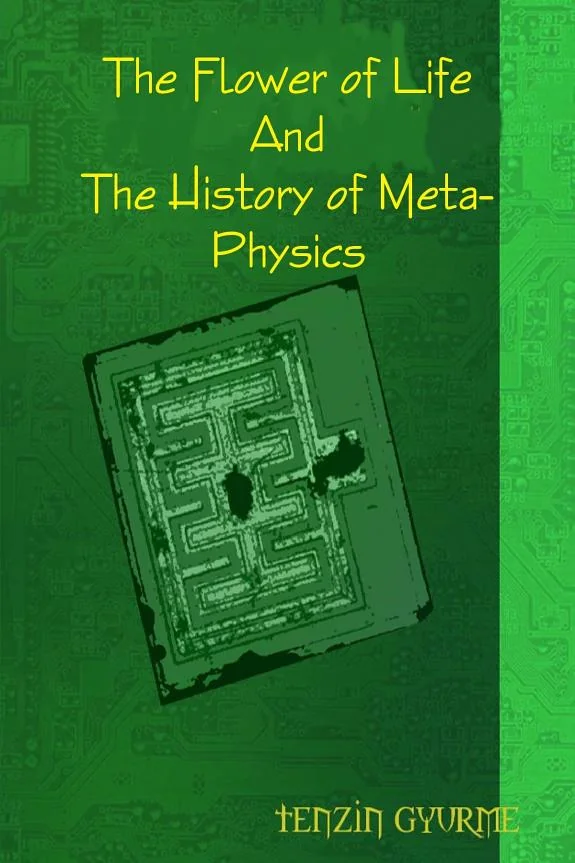
The Flower of Life and the History of Meta-Physics
Tenzin Gyurme’s exploration of metaphysical history, particularly as it relates to the concept of the Flower of Life, presents a fascinating, if somewhat densely packed, overview. The book’s strength lies in its ambitious scope, attempting to map a continuous thread of esoteric knowledge from antiquity to the modern era. Gyurme’s commitment to presenting this lineage of thought without resorting to overly simplistic explanations is commendable. However, the book’s primary limitation is its occasional lack of deep engagement with specific historical figures or movements, sometimes presenting them more as points on a timeline than as fully realized intellectual actors. A notable section discusses the challenges of translating ancient symbolic language into understandable metaphysical concepts, a point Gyurme handles with careful consideration.
Ultimately, The Flower of Life and the History of Meta-Physics serves as a valuable compendium for those already familiar with esoteric traditions, offering a structured perspective on their historical development.
📝 Description
77
Tenzin Gyurme's 2018 book traces esoteric thought on realities beyond ordinary perception.
This work examines the historical development of ideas concerning realities that lie beyond the material world. Gyurme follows the individuals and traditions that perceived a more complex existence, detailing how their insights were preserved and passed down through different eras. The narrative connects these disparate historical threads, illustrating a persistent human quest to understand the nature of being.
The book is for readers interested in the philosophical aspects of consciousness and reality that exist outside conventional scientific or religious views. It will appeal to those who study comparative spirituality, ancient traditions, and the history of metaphysical thought. Those seeking a deeper meaning beyond what is immediately visible will find value here.
Gyurme situates these explorations within a long history of human questioning. The text references thinkers who throughout time challenged the limits of sensory experience and highlights the continuity of metaphysical inquiry from antiquity to modern esoteric movements.
The Flower of Life and the History of Meta-Physics is situated within the broader tradition of Western esotericism, particularly those currents concerned with cosmology and the nature of reality. It engages with ideas that posit a spiritual or energetic substratum to the physical world, a concept found in Hermeticism, Neoplatonism, and various mystical traditions. The book connects these historical lines of thought, demonstrating a lineage of thinkers who sought to understand existence through means beyond empirical observation, often employing symbolic language and contemplative practices.
💡 Why Read This Book?
• Understand the historical evolution of metaphysical thought, tracing concepts from ancient esoteric traditions up to the early 21st century, as detailed in the book's historical context sections. • Gain insight into the symbolic language of the 'Flower of Life' motif, exploring its purported connection to universal patterns and its representation across different historical periods. • Discover the persistent inquiry into realities beyond the 3-Dimensional world, learning about the various sages and their accumulated knowledge presented by Tenzin Gyurme.
⭐ Reader Reviews
Honest opinions from readers who have explored this book.
❓ Frequently Asked Questions
What is the 'Meta-Physical reality' discussed in The Flower of Life and the History of Meta-Physics?
The 'Meta-Physical reality' refers to a perceived layer of existence that is more complex and subtle than the ordinary, three-dimensional material world. Tenzin Gyurme's work traces how various historical sages understood and described this reality.
When was The Flower of Life and the History of Meta-Physics first published?
The book by Tenzin Gyurme, exploring the history of metaphysical thought, was first published on February 6, 2017.
Who are some of the historical figures or groups whose knowledge is explored?
While not always explicitly named in the blurb, the book covers knowledge accumulated by 'sages' aware of a Meta-Physical reality, implying a broad historical sweep from ancient wisdom traditions to more recent esoteric thinkers.
What is the significance of the 'Flower of Life' in this book's context?
The 'Flower of Life' motif is presented as a key symbol or concept that represents the underlying patterns and interconnectedness of this Meta-Physical reality, understood by ancient sages.
Is this book suitable for beginners in metaphysics?
Yes, the book aims to provide a historical overview of metaphysical knowledge, making it accessible to newcomers interested in understanding the lineage of thought beyond the visible world.
What kind of knowledge does the book claim to present?
It presents historical knowledge accumulated by individuals who perceived a complex, Meta-Physical reality beyond the apparent 3-Dimensional world, detailing their insights and how this awareness was passed down.
🔮 Key Themes & Symbolism
Perception of Deeper Realities
This theme examines how certain individuals throughout history, referred to as 'sages,' possessed an awareness that transcended the conventional understanding of the 3-Dimensional world. Gyurme outlines the historical development of this awareness, suggesting it’s not a new phenomenon but a perennial aspect of human consciousness. The book traces the accumulation of knowledge related to these 'Meta-Physical' realms, emphasizing that these insights were often kept hidden or passed down through specific lineages, preserving a different view of existence beyond empirical observation.
The Flower of Life Symbolism
The 'Flower of Life' serves as a central motif, representing the fundamental patterns and interconnectedness of the universe as understood through a metaphysical lens. Gyurme's work explores how this ancient symbol has been interpreted across different cultures and epochs as a key to unlocking the secrets of creation and reality. Its geometric perfection is often seen as a blueprint for existence, reflecting the underlying order that sages perceived in the Meta-Physical realm, connecting the microcosm and macrocosm.
Historical Transmission of Esoteric Knowledge
A core aspect of the book is the historical narrative of how esoteric knowledge concerning Meta-Physical realities has been preserved and transmitted over millennia. Gyurme details the challenges faced by those who held this wisdom, often working against prevailing paradigms. The book illustrates the methods employed for safeguarding and disseminating these profound understandings, whether through oral traditions, symbolic texts, or secret societies, ensuring the continuity of this specialized knowledge across generations.
Critique of Materialistic Worldviews
Implicitly and explicitly, the book challenges the limitations of viewing reality solely through the lens of empirical science and material existence. By presenting the history of metaphysical thought, Gyurme highlights an alternative framework for understanding consciousness, the universe, and our place within it. The work posits that a more comprehensive understanding of reality requires acknowledging dimensions and principles that lie beyond the reach of standard scientific instrumentation, advocating for a broader epistemological approach.
💬 Memorable Quotes
Direct passages from the work, attributed to the author.
“Sages knew that things were not as they seemed.”
— This foundational statement expresses the book's premise: a lineage of wise individuals perceived a reality more intricate than the one presented by everyday sensory experience, hinting at deeper layers of existence.
“This Meta-Physical reality was more complex than the 3-Dimensional world.”
— Gyurme emphasizes the multidimensional nature of existence, suggesting our common perception is limited. This 'Meta-Physical reality' is presented as a richer, more intricate framework for understanding the cosmos.
“This Book is a history of the knowledge that these sages accumulated over the ages.”
— The primary aim of Gyurme's work is historical documentation, charting the evolution and preservation of esoteric insights concerning non-material aspects of existence across vast stretches of time.
“Awareness that things were not as they seemed since the beginning of time.”
— This highlights the ancient origins of metaphysical inquiry, suggesting a persistent human intuition or insight into the illusory nature of superficial reality, driving the search for deeper truths.
“The knowledge accumulated by wise beings aware of a Meta-Physical reality.”
— This phrase defines the core subject matter, focusing on the collective wisdom of those who understood a reality beyond the physical, and how this understanding has been gathered and presented.
🌙 Esoteric Significance
Tradition
The work aligns with perennial philosophy and esoteric traditions that posit a unified, underlying spiritual reality. It draws from a broad spectrum of mystical thought, potentially incorporating elements reminiscent of Gnosticism's emphasis on hidden knowledge and Hermeticism's focus on correspondence between different levels of reality. It fits within a modern esoteric context that seeks to synthesize ancient wisdom with contemporary understanding, viewing the Flower of Life as a key that unlocks universal principles.
Symbolism
The 'Flower of Life' itself is a primary symbol, representing the interconnectedness of all creation, the geometric blueprint of the universe, and the cyclical nature of existence. Another implied symbol is the concept of 'Meta-Physical reality' as a area of higher consciousness or subtle energies, distinct from the mundane. The book likely explores how these symbols function as keys to understanding the fundamental structure of being, bridging the visible and invisible worlds.
Modern Relevance
Contemporary thinkers and practitioners in fields like consciousness research, sacred geometry, and various forms of embodied spirituality (e.g., certain yoga and meditation lineages) draw upon the concepts explored in this book. It provides a historical framework for understanding the recurring fascination with universal patterns and the idea of a hidden reality, influencing modern explorations into the nature of consciousness and its potential beyond physical limitations.
👥 Who Should Read This Book
• Students of comparative mythology and ancient symbolism seeking to understand recurring patterns across cultures. • Individuals interested in the historical development of metaphysical and esoteric thought beyond Western philosophical traditions. • Seekers curious about alternative cosmologies and the perennial quest for meaning beyond empirical reality.
📜 Historical Context
Published in 2017, Tenzin Gyurme's work emerges in an era where interest in consciousness studies, quantum physics' philosophical implications, and ancient wisdom traditions has seen a resurgence. It taps into a lineage of thought influenced by figures like Helena Blavatsky and the Theosophical Society in the late 19th century, which sought to synthesize Eastern and Western esoteric traditions. Gyurme's book also implicitly engages with the broader post-New Age movement, which often revisits and reinterprets ancient symbolic systems like the Flower of Life. While not directly engaging with academic philosophy of mind or comparative religion in a scholarly fashion, it offers a narrative that appeals to those exploring alternative cosmologies, potentially positioning itself against purely materialistic interpretations of reality that dominated much of 20th-century thought.
📔 Journal Prompts
The concept of 'Meta-Physical reality' and its distinction from the 3-Dimensional world.
The historical transmission of esoteric knowledge across different ages.
The geometric patterns represented by the 'Flower of Life' symbol.
The idea that 'things were not as they seemed' to historical sages.
Reflecting on the accumulated knowledge of beings aware of deeper realities.
🗂️ Glossary
Meta-Physical Reality
A perceived layer or dimension of existence that is more complex and subtle than the ordinary, three-dimensional material world. It refers to areas of consciousness, energy, or being beyond empirical observation.
Sages
Wise individuals throughout history who possessed a deeper understanding of reality, recognizing the existence of a Meta-Physical realm and accumulating knowledge about its nature and workings.
3-Dimensional World
The physical universe as commonly perceived through our five senses, characterized by length, width, and height. It is presented in contrast to the more complex, multi-layered Meta-Physical reality.
Flower of Life
An ancient symbolic geometric pattern composed of multiple overlapping circles, believed by some esoteric traditions to represent the fundamental patterns of creation and the interconnectedness of all life.
Accumulated Knowledge
The body of insights, understandings, and wisdom gathered by sages over extended periods regarding the nature of Meta-Physical reality and existence beyond the material plane.
Esoteric Knowledge
Information or understanding that is specialized, hidden, or meant for a select group of initiates, often concerning spiritual, mystical, or metaphysical subjects. This contrasts with exoteric or publicly available knowledge.
Perennial Philosophy
The idea that all major religions and spiritual traditions share a common core of metaphysical truths, which Gyurme's work implicitly explores through historical context.
This book appears in 1 collection
🔮 Readers Also Liked
Browse all →






From the “Flower of Life” Collection
View all →







More Free Sacred Texts & Gnosticism Books
View all →