The Principal Upanishads

 77
77

The Principal Upanishads
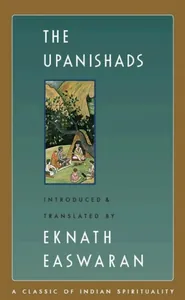
David Frawley’s compilation, The Principal Upanishads, offers a direct encounter with texts that form the bedrock of much Indian philosophical inquiry. The strength lies in its focus on core selections, allowing for a concentrated study without the overwhelming breadth of the entire Upanishadic corpus. Frawley’s introductory material, while concise, effectively frames the historical and philosophical landscape. However, the work sometimes sacrifices the poetic nuance of the original Sanskrit for a more direct, almost clinical, rendering of complex ideas. The exploration of the concept of *neti neti* (not this, not this) in passages like those found in the Brihadaranyaka Upanishad, while present, could benefit from deeper explication of its paradoxical and apophatic nature. For those seeking an unvarnished introduction to the philosophical core of Vedanta, this edition serves a clear purpose. It provides a solid, if sometimes stark, foundation for further study.
📝 Description
77
David Frawley's 2001 edition translates foundational Upanishadic texts from ancient India.
This volume collects key Upanishadic texts, offering access to early Hindu philosophical thought. Originating from oral traditions more than two millennia old, these dialogues and discourses examine the nature of reality, consciousness, and the self. Frawley's translations and commentary aim to make these complex philosophical and spiritual inquiries accessible to a wider audience.
The Upanishads arose during a dynamic period of intellectual development in ancient India, approximately from 800 BCE to 200 BCE. This era saw a turn from ritualistic practices toward philosophical speculation. The texts address fundamental questions about existence, the cosmos, and humanity's place within it. They represent a significant development in the intellectual history of the subcontinent, alongside the emergence of Buddhism and Jainism.
Readers will encounter core concepts such as Brahman, the ultimate reality, and Atman, the individual self. The texts explore the connection between these, notably the idea that Atman is Brahman. Other central ideas discussed include karma, the principle of action and reaction; samsara, the cycle of rebirth; and moksha, the path to liberation from this cycle.
The Upanishads form a crucial part of the Vedanta tradition within Hinduism, representing the philosophical culmination of the Vedas. They are considered by many to be the earliest systematic articulation of concepts central to Indian spiritual thought, including the nature of consciousness and the ultimate ground of being. Their focus on inner realization and direct knowledge of the self places them within a broad category of esoteric traditions that seek experiential understanding beyond mere dogma or ritual.
💡 Why Read This Book?
• Gain direct access to foundational texts of Hindu philosophy, understanding concepts like Brahman and Atman as presented in selections from the Brihadaranyaka Upanishad and Chandogya Upanishad. • Grasp the historical milieu of the Upanishads' emergence, a period around 800 BCE to 200 BCE, contextualizing them alongside other developing Indian spiritual movements. • Explore the concept of *moksha*, or liberation, as a central goal, examining its philosophical underpinnings as articulated in these early Indian speculative works.
⭐ Reader Reviews
Honest opinions from readers who have explored this book.
❓ Frequently Asked Questions
What is the historical period of the Upanishads?
The Upanishads primarily date from the later Vedic period, with most compositions originating between 800 BCE and 200 BCE, representing a significant shift in Indian philosophical thought.
Who is David Frawley and why did he translate The Principal Upanishads?
David Frawley, also known as Vamadeva Shastri, is an American author and teacher of Vedic traditions. His work on the Upanishads aims to make these essential texts accessible to a modern audience interested in their spiritual and philosophical depth.
What is the core philosophical concept explored in the Upanishads?
A central theme is the relationship between Brahman (the ultimate reality) and Atman (the individual self), with the Upanishads often asserting their fundamental identity.
Are the Upanishads related to yoga and meditation practices?
Yes, the Upanishads are considered a source of wisdom for many yogic and meditative practices, exploring consciousness, self-realization, and the nature of reality, which are key elements in these disciplines.
What does 'Upanishad' literally mean?
'Upanishad' is often translated as 'sitting near' or 'by the side', implying instruction given by a teacher to a student in a close, intimate setting, emphasizing the transmission of profound knowledge.
How do the Upanishads differ from the earlier Vedas?
While the Vedas focus more on rituals, hymns, and cosmology, the Upanishads shift towards philosophical inquiry, exploring metaphysical questions about existence, consciousness, and the ultimate truth.
🔮 Key Themes & Symbolism
Brahman and Atman
The Upanishads profoundly explore the nature of Brahman, the absolute, unchanging reality that underpins all existence, and Atman, the individual soul or true self. A recurring and central tenet is the assertion of their identity – 'Atman is Brahman.' This concept signifies that the deepest essence of the individual is indistinguishable from the universal consciousness. Frawley's edition highlights this through various dialogues and aphorisms, guiding the reader toward an understanding of non-duality and the dissolution of perceived separation between the self and the cosmos.
The Path to Liberation (Moksha)
Central to Upanishadic thought is the concept of *moksha*, liberation from the cycle of birth, death, and rebirth (*samsara*). This state is achieved not through ritual alone, but through self-knowledge and the realization of one's true nature as Brahman. The texts outline various paths, including wisdom (*jnana*), meditation (*dhyana*), and detachment. Frawley’s presentation emphasizes that this liberation is an awakening to the ever-present reality, rather than a future attainment, achievable through understanding the illusory nature of the material world and the ego.
Karma and Rebirth
The Upanishads articulate the principle of karma, the law of cause and effect that governs the cycle of *samsara*. Actions performed in this life, driven by desire and ignorance, create consequences that shape future experiences and rebirths. Understanding karma is crucial for comprehending the human condition as depicted in these texts. Frawley’s work helps readers see how this doctrine serves as a framework for ethical living and the pursuit of spiritual liberation, providing a cosmic perspective on individual responsibility.
The Nature of Reality and Illusion (Maya)
A significant theme is the Upanishadic distinction between ultimate reality (Brahman) and the phenomenal world, often described as *maya* or illusion. The world of sensory experience, with its multiplicity and impermanence, is seen as a veil obscuring the singular, eternal truth. The texts encourage a turning inward, away from the distractions of the external world, to perceive the underlying unity. Frawley’s edition facilitates this contemplation by presenting the arguments for the illusory nature of the manifest universe and the primacy of consciousness.
💬 Memorable Quotes
Direct passages from the work, attributed to the author.
“Atman is Brahman.”
— This concise aphorism captures the core non-dualistic philosophy of the Upanishads, asserting the fundamental identity between the individual self and the ultimate cosmic reality.
“Neti, neti.”
— Meaning 'not this, not this,' this phrase describes an apophatic method of understanding Brahman by negating all descriptions that do not apply to the absolute, ineffable truth.
“The world is the manifestation of Brahman.”
— This concept highlights that the entire universe arises from and is sustained by Brahman, suggesting a deep interconnectedness between all phenomena and the ultimate source.
“Ignorance binds; knowledge liberates.”
— This reflects the Upanishadic emphasis on wisdom (*jnana*) as the primary means to escape the cycle of suffering and achieve spiritual freedom (*moksha*).
“The seer is never born, nor does he die.”
— This statement points to the eternal, unchanging nature of the true self (Atman), which transcends the physical processes of birth and death experienced by the temporary body.
🌙 Esoteric Significance
Tradition
The Upanishads are foundational to the Vedanta school of Hindu philosophy, which profoundly influences many esoteric traditions within India and, by extension, global spiritual movements. While not strictly 'esoteric' in the Western sense of secret societies, their philosophical depth and focus on inner realization align with mystical and contemplative paths worldwide. They represent a move from exoteric ritual to esoteric wisdom, emphasizing direct experience of the divine or ultimate reality.
Symbolism
Key symbols include the syllable 'Om' (AUM), representing the totality of existence, consciousness, and the underlying reality. The concept of the 'cave of the heart' symbolizes the inner space where the Atman resides, accessible through meditation. The 'sun' (Surya) often represents Brahman or ultimate knowledge, with its light revealing truth but also sometimes blinding ignorance.
Modern Relevance
Contemporary thinkers and practitioners in fields ranging from consciousness studies to transpersonal psychology draw heavily on Upanishadic concepts. Schools of yoga and meditation worldwide continue to base their teachings on these ancient texts. Figures like Swami Vivekananda, who introduced Vedanta to the West in the late 19th century, were deeply influenced, making Upanishadic ideas accessible to modern seekers interested in non-duality and self-realization.
👥 Who Should Read This Book
• Students of comparative philosophy and religion seeking to understand the origins of major Indian metaphysical systems. • Practitioners of yoga and meditation looking for the philosophical underpinnings of their disciplines, particularly concerning consciousness and self-awareness. • Spiritual seekers interested in exploring non-dualistic philosophies and the nature of ultimate reality from a primary source perspective.
📜 Historical Context
The Upanishads, primarily composed between 800 BCE and 200 BCE, emerged during a vibrant period of intellectual and spiritual awakening in ancient India. This era saw the consolidation of Vedic traditions alongside the rise of competing philosophical schools, including early forms of Buddhism and Jainism, which also sought paths to liberation. The Upanishadic seers moved beyond the sacrificial rituals emphasized in earlier Vedic texts, turning towards introspection and metaphysical inquiry. Thinkers like Yajnavalkya, prominent in the Brihadaranyaka Upanishad, articulated sophisticated concepts of consciousness and reality. The reception of these texts was primarily within the Brahminical tradition, forming the basis of Vedanta philosophy, though their ideas influenced a broad spectrum of Indian thought and practice over centuries.
📔 Journal Prompts
The concept of Atman as distinct from the ego.
The relationship between Brahman and the manifest universe.
Reflecting on the implications of karma for personal responsibility.
The process of realizing 'not this, not this' through contemplation.
The meaning of liberation (moksha) as presented in the texts.
🗂️ Glossary
Brahman
The ultimate, unchanging, absolute reality that is the source and sustainer of all existence in Hindu philosophy. It is the supreme cosmic spirit.
Atman
The individual soul or true self, often considered identical with Brahman. It is the eternal consciousness within each being.
Maya
Often translated as 'illusion', it refers to the power that conceals the true nature of reality (Brahman) and projects the phenomenal world of multiplicity and change.
Samsara
The cycle of birth, death, and rebirth, driven by karma and ignorance. It is the continuous process of existence in the material world.
Moksha
Liberation or release from the cycle of samsara. It is the ultimate spiritual goal, achieved through self-knowledge and realization of the true self.
Jnana
Knowledge, particularly spiritual or self-knowledge, considered a primary means to achieve liberation from samsara.
Om (AUM)
A sacred syllable representing the totality of sound, consciousness, and the universe. It is considered a fundamental mantra in Hinduism.
This book appears in 1 collection
🔮 Readers Also Liked
Browse all →









From the “Upanishads” Collection
View all →





More Free Occult Philosophy Books
View all →