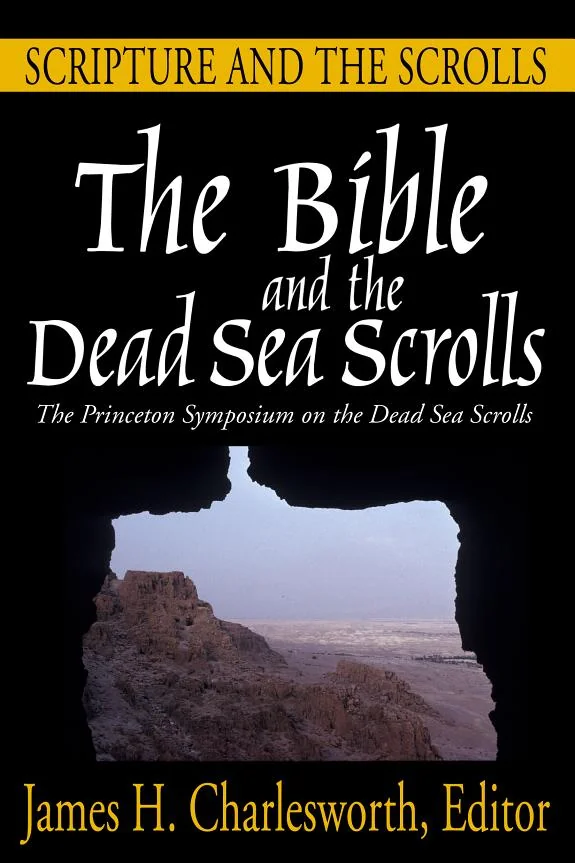
The Bible and the Dead Sea Scrolls: Scripture and the scrolls
 71
71

The Bible and the Dead Sea Scrolls: Scripture and the scrolls
James H. Charlesworth's compilation offers a sobering, critical look at the Dead Sea Scrolls' implications. The strength lies in its unwavering commitment to scholarly rigor, presenting findings that often challenge devotional interpretations of scripture. One particularly illuminating section details the textual discrepancies between scroll fragments and later biblical canons, forcing a re-evaluation of textual transmission. A limitation, however, is the dense academic prose, which can be a barrier for the casual reader. The work meticulously details how the scrolls' discovery in the 1940s and 1950s necessitated a fundamental reassessment of Second Temple Judaism's complexity. Charlesworth's collection is an essential, albeit demanding, resource for serious students of ancient texts.
📝 Description
71
James H. Charlesworth's 1995 collection analyzes the Dead Sea Scrolls' impact on biblical texts.
This compilation gathers scholarly analyses of the Dead Sea Scrolls, concentrating on their significance for understanding biblical texts, Second Temple Judaism, and early Christianity. The research details how these discoveries, found in eleven caves near the Dead Sea, have fundamentally altered historical and religious understandings. The work carefully considers how these ancient documents have reshaped established narratives about history and religion.
Scholars and students of ancient history, biblical studies, and comparative religion will find this volume particularly useful. It is geared toward individuals seeking evidence-based examinations of primary source materials and their interpretive consequences. Those interested in the historical Jesus, the variety of Jewish sects, and the textual development of the Hebrew Bible will appreciate its thorough scholarship. The recovery of the scrolls, starting in 1947, caused a major shift in biblical archaeology and textual criticism.
The Dead Sea Scrolls, uncovered from 1947 onwards, revealed a landscape of Jewish religious thought far more varied than previously understood. This period, from the 3rd century BCE to the 1st century CE, was alive with diverse movements, some exhibiting proto-Gnostic ideas and intense messianic fervor. The scrolls provide direct evidence of these currents, challenging monolithic views of Judaism and offering a crucial backdrop for the emergence of Christianity. Charlesworth's work situates these texts within the broader context of their historical and theological environment, illuminating the complex religious milieu of ancient Judea.
💡 Why Read This Book?
• Gain specific insights into textual variants of biblical books as revealed by the scrolls, allowing for a deeper understanding of scripture's historical development beyond later standardized versions. • Learn about the diverse landscape of Second Temple Judaism, including the specific practices and beliefs of groups like the Qumran community, as illuminated by these primary sources. • Grasp the direct impact of the 800 recovered documents on early Christian origins, moving beyond abstract connections to concrete textual and theological influences discussed in the scholarship.
⭐ Reader Reviews
Honest opinions from readers who have explored this book.
❓ Frequently Asked Questions
When were the Dead Sea Scrolls discovered and where?
The Dead Sea Scrolls were discovered between 1947 and 1956 in eleven caves on the northwest shores of the Dead Sea, near the ancient settlement of Qumran.
How did the Dead Sea Scrolls revolutionize biblical studies?
They provided much older manuscripts of biblical books than previously known, revealing textual variations and offering direct evidence of the diversity of Jewish thought during the Second Temple period.
What is Second Temple Judaism?
It refers to the period of Jewish history and religious development from the rebuilding of the Second Temple in Jerusalem around 516 BCE until its destruction by the Romans in 70 CE.
Who was James H. Charlesworth?
He was a prominent scholar of ancient Judaism and early Christianity, specializing in the Dead Sea Scrolls and the historical Jesus, and edited numerous volumes on these subjects.
What kind of documents were found among the Dead Sea Scrolls?
The collection includes over 800 documents, comprising biblical manuscripts, apocryphal texts, commentaries, and sectarian writings detailing the rules and beliefs of specific Jewish groups.
Does this book discuss the origins of Christianity?
Yes, the work explores the Jewish roots of Christianity by examining how the scrolls illuminate the religious and cultural milieu in which Jesus and his early followers lived and taught.
🔮 Key Themes & Symbolism
Textual Evolution of Scripture
The collection emphasizes how the Dead Sea Scrolls have fundamentally altered our perception of the biblical text's transmission. By presenting manuscripts predating the commonly accepted Masoretic Text by centuries, scholars can now trace textual development with unprecedented accuracy. This exploration reveals not a single, static text, but a dynamic process of copying, editing, and interpretation that shaped the scriptures we have today, including significant variations that challenge monolithic understandings of divine revelation.
Diversity of Second Temple Judaism
Contrary to earlier assumptions of a uniform Jewish practice, the scrolls highlight the vibrant plurality of religious thought and observance during the Second Temple era (c. 516 BCE – 70 CE). The work details the existence of various sects and movements, each with distinct interpretations of the Law, messianic expectations, and community structures. This diversity is crucial for understanding the context from which Christianity emerged, revealing a fertile ground of spiritual inquiry and practice.
Jewish Roots of Christianity
The book meticulously examines the parallels and divergences between the teachings and practices found in the Dead Sea Scrolls and the emergence of early Christianity. It elucidates how the scrolls provide critical background for understanding the language, concepts, and theological debates that informed Jesus and his followers. By informative the Jewish milieu, the work offers a scholarly lens through which to view the historical Jesus and the nascent Christian movement within its original context.
Archaeological Revelation
The discovery of approximately 800 documents in eleven caves near the Dead Sea represents one of the most significant archaeological finds of the 20th century. The collection focuses on the scholarly analysis of these artifacts, demonstrating their immense value in reconstructing ancient history and religious thought. It underscores how tangible discoveries can dramatically reshape established narratives and academic understanding, providing direct evidence from antiquity.
💬 Memorable Quotes
Direct passages from the work, attributed to the author.
“The recovery of 800 documents... is one of the most sensational archeological discoveries in the Holy Land to date.”
— This highlights the sheer magnitude and unexpected nature of the Dead Sea Scrolls' unearthing, framing it as an important event in the field of biblical archaeology and historical research.
“These three volumes... demonstrate in detail how the scrolls have revolutionized our knowledge of the text of the Bible.”
— This emphasizes the critical, evidence-based approach of the scholarship presented, showcasing the transformative effect the scrolls have had on established understandings of biblical textual history.
“The scrolls have revolutionized... the character of Second Temple Judaism.”
— This points to the profound shift in understanding the complex, diverse religious range of Judea prior to the destruction of the Second Temple, moving beyond simplistic portrayals.
“The scrolls have revolutionized... the Jewish beginnings of Christianity.”
— This indicates the work's focus on how the scrolls illuminate the historical and theological context from which early Christianity emerged, revealing deep connections and influences.
“These three volumes, the very best of critical scholarship...”
— This asserts the high academic quality and rigorous methodology employed in the analyses, positioning the work as a definitive scholarly resource on the subject matter.
🌙 Esoteric Significance
Tradition
While not explicitly aligning with a single esoteric tradition like Kabbalah or Hermeticism, this work provides foundational knowledge for many esoteric paths. The focus on ancient Hebraic roots, Gnostic precursors, and the interpretation of mystical texts aligns with the source-seeking impulse common in esoteric studies. It offers empirical data that esotericists can use to ground their understanding of ancient mystical traditions and the development of Western esotericism, particularly its Jewish and early Christian antecedents.
Symbolism
The scrolls offer insights into symbols prevalent in early Jewish mysticism, potentially including numerological significance, angelic hierarchies, and dualistic cosmologies that echo later Gnostic thought. Concepts like the 'Sons of Light' versus 'Sons of Darkness' found in texts like the War Scroll reflect dualistic frameworks that have been reinterpreted across various esoteric traditions, offering a glimpse into ancient symbolic language about spiritual struggle and cosmic order.
Modern Relevance
Contemporary scholars of Western Esotericism, particularly those focusing on Gnosticism, Jewish mysticism, and the historical Jesus, frequently engage with the findings presented by Charlesworth's work. Thinkers exploring the influence of Qumranic thought on early Christian Gnostic groups, or those seeking to understand the pre-Christian roots of concepts like divine wisdom (Sophia) and esoteric initiation, draw heavily on the detailed textual and historical analyses these volumes provide.
👥 Who Should Read This Book
• Students of comparative religion and biblical archaeology seeking to understand the historical and textual range of ancient Judea. • Scholars of early Christianity interested in the Jewish context that shaped Jesus's teachings and the earliest Christian movement. • Individuals with a specific interest in the Dead Sea Scrolls and their impact on our understanding of scripture and ancient Jewish sects.
📜 Historical Context
The discovery of the Dead Sea Scrolls, beginning in 1947, occurred during a period of intense academic and religious re-evaluation following World War II. The mid-20th century saw burgeoning interest in the historical Jesus and the origins of Christianity, alongside critical biblical scholarship that questioned traditional textual interpretations. This era was marked by figures like Rudolph Bultmann, who emphasized demythologization, and a general academic climate open to challenging established doctrines. The scrolls’ contents, dating primarily from the 3rd century BCE to the 1st century CE, offered direct textual evidence for the diversity within Judaism, including movements like the Essenes (often associated with the Qumran community). This directly challenged monolithic views of Jewish practice and belief prevalent at the time, forcing scholars to reconcile the scrolls' sectarian writings with broader Rabbinic traditions and early Christian developments. Reception was largely academic, though the sensational nature of the find captured public imagination, fueling both scholarly debate and popular speculation.
📔 Journal Prompts
The textual variants of biblical books as revealed by the scrolls.
The specific practices and beliefs of the Qumran community.
The concept of the 'Sons of Light' versus 'Sons of Darkness'.
The historical context of Second Temple Judaism.
The influence of scroll content on the Jewish beginnings of Christianity.
🗂️ Glossary
Dead Sea Scrolls
A collection of approximately 800 Jewish religious manuscripts discovered between 1947 and 1956 in caves near the ancient settlement of Qumran on the northwest shores of the Dead Sea.
Second Temple Judaism
The period of Jewish history and religious development from the completion of the Second Temple in Jerusalem (c. 516 BCE) until its destruction by the Romans in 70 CE.
Masoretic Text
The authoritative medieval Hebrew and Aramaic text of the Jewish Bible, established by the Masoretes between the 7th and 10th centuries CE.
Qumran
An ancient settlement near the Dead Sea where many scholars believe the Dead Sea Scrolls were written or preserved, possibly by a Jewish sect such as the Essenes.
Textual Criticism
The study and comparison of ancient texts to determine their original wording and identify variations or errors introduced during the copying process.
Apocrypha
Biblical apocryphal texts are ancient religious writings that are not part of the canonical Old or New Testaments but were often circulated and valued alongside canonical works.
Sectarian Writings
Texts found among the Dead Sea Scrolls that describe the specific rules, beliefs, and practices of particular Jewish groups or sects active during the Second Temple period.
This book appears in 1 collection
🔮 Readers Also Liked
Browse all →






From the “Dead Sea Scrolls” Collection
View all →





More Free Sacred Texts & Gnosticism Books
View all →