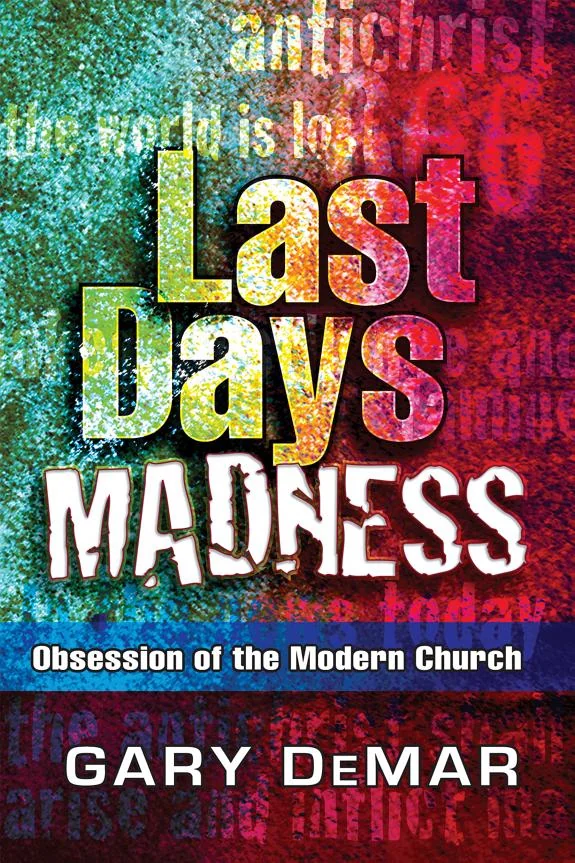
Last Days Madness: Obsession of the Modern Church
 76
76

Last Days Madness: Obsession of the Modern Church
Gary DeMar's Last Days Madness attempts to cut through layers of eschatological speculation with a focus on textual exegesis. The author's strength lies in his meticulous engagement with scripture, systematically dissecting passages often left ambiguous by less rigorous analysis. His interpretation of Daniel's prophecies, for instance, offers a coherent, albeit challenging, alternative to prevailing futurist views. However, the book's dense prose and reliance on specific theological frameworks might prove inaccessible to readers unfamiliar with covenant theology or preterist interpretations. The challenge lies not in the clarity of DeMar's arguments, but in the reader's pre-existing understanding of biblical prophecy. The work provides a solid, text-driven counterpoint to common eschatological narratives, making it a valuable resource for those willing to engage deeply with its premises.
📝 Description
76
Gary DeMar published 'Last Days Madness' in 1999, examining biblical prophecy and eschatology.
Gary DeMar's 1999 book, 'Last Days Madness: Obsession of the Modern Church,' scrutinizes biblical prophecy, especially end-times passages. DeMar seeks to clarify complex prophetic texts by interpreting key verses and figures in Christian eschatology. He specifically addresses references from Daniel, Matthew, 2 Thessalonians, and 2 Peter.
The book targets readers who want a structured method for understanding biblical prophecy about the end times. It is for those who find common interpretations unclear or conflicting and desire textual analysis of prophetic scriptures. The work is also relevant for readers interested in historical-critical approaches to theological topics.
Published during a late 20th-century revival of interest in prophecy, particularly around millennial themes and apocalyptic literature, DeMar's work offered a viewpoint distinct from popular dispensationalism. His method connects with covenant theology and preterist or partial-preterist perspectives, suggesting prophetic fulfillment occurred within historical periods rather than solely in the future.
While not strictly Gnostic, 'Last Days Madness' engages with interpretations of sacred texts that depart from mainstream eschatological views. DeMar's preterist or partial-preterist approach, which places prophetic fulfillment in historical contexts, challenges literal, future-oriented readings common in some Christian traditions. This method of re-examining temporal frameworks for prophecy aligns with traditions that seek deeper, historically grounded meanings within scripture, distinct from purely futuristic or allegorical interpretations.
💡 Why Read This Book?
• Understand the specific prophetic passages like Daniel 9:24-27 by examining DeMar's historical-critical methodology, offering a distinct interpretive lens. • Gain clarity on figures such as the Antichrist and the Beast by analyzing DeMar's arguments that link them to historical events rather than solely future occurrences. • Re-evaluate concepts like Armageddon and the rebuilding of the temple through DeMar's framework, which proposes fulfillment in the first century, challenging common modern interpretations.
⭐ Reader Reviews
Honest opinions from readers who have explored this book.
❓ Frequently Asked Questions
What specific prophetic passages does Gary DeMar analyze in Last Days Madness?
Gary DeMar analyzes numerous passages, including Daniel 7:13-14, Daniel 9:24-27, Matthew 16:27-28, 2 Thessalonians 2, and 2 Peter 3:3-13, among others, to support his eschatological interpretations.
What is DeMar's interpretation of the Antichrist and the Beast?
DeMar often interprets figures like the Antichrist and the Beast not as singular future entities but as symbolic representations or historical individuals and systems that have already appeared, particularly within the context of the Roman Empire.
Does Last Days Madness discuss the rebuilding of the temple?
Yes, the book addresses the prophecy concerning the rebuilding of the temple, typically interpreting it within a first-century context, often relating it to the destruction of the Second Temple in Jerusalem in 70 AD.
What is the meaning of 666 according to DeMar's analysis?
DeMar's work typically offers interpretations of the number 666 that connect it to historical figures or entities, often a specific Roman emperor or the Roman system, rather than a future individual.
What theological framework does Gary DeMar use in Last Days Madness?
DeMar primarily employs a covenantal and often preterist or partial-preterist framework, emphasizing that many biblical prophecies, including those concerning the end times, found fulfillment in historical events, particularly before 70 AD.
When was Last Days Madness first published?
Last Days Madness by Gary DeMar was first published in August 1999.
🔮 Key Themes & Symbolism
First Century Fulfillment
A central theme is the argument that many prophecies concerning the 'last days,' including Jesus' Olivet Discourse (Matthew 24) and passages in 2 Peter, refer to events within the first century AD. DeMar posits that the destruction of Jerusalem and the Temple in 70 AD marked a significant fulfillment of these prophecies, challenging interpretations that place them exclusively in a distant future.
Identification of Esoteric Figures
The book tackles the identification of key prophetic figures such as the Beast, the Antichrist, and the Man of Lawlessness. DeMar often links these entities not to a single future individual but to systems of power, apostasy, or specific historical figures within the Roman era, arguing for a context-specific understanding.
Reinterpreting Apocalyptic Language
DeMar provides a framework for interpreting the symbolic and often dramatic language found in apocalyptic literature. He advocates for reading these texts through the lens of their original historical and cultural context, suggesting that symbolic language often described tangible events and powers relevant to the original audience.
Critique of Dispensationalism
While not always explicitly named, DeMar's work implicitly critiques dispensationalist eschatology, which often posits a distinct future kingdom for Israel and a literal, future fulfillment of many prophecies. His approach leans towards covenantal theology, viewing the church as the primary inherent of God's promises and prophetic timelines.
💬 Memorable Quotes
Direct passages from the work, attributed to the author.
“The meaning of 666.”
— DeMar's interpretation of the number 666 often points to historical figures or systems, challenging the common notion of it being solely a future individual's identifier.
“The Beast and the Antichrist.”
— The book systematically analyzes these terms, suggesting they represent powers or individuals within historical contexts relevant to the biblical authors, rather than exclusively future entities.
“The rebuilding of the temple.”
— This concept is often linked by DeMar to events surrounding the destruction of the Second Temple in 70 AD, proposing a fulfillment tied to that specific historical period.
“Daniel 9:24-27.”
— This key passage is dissected to argue for its fulfillment within the first century, specifically relating the 'seventy weeks' to events leading up to the destruction of Jerusalem.
💡 Key Ideas
Editorial paraphrase of the work's core concepts — not direct quotes.
Matthew 16:27-28.
DeMar uses this passage to support the idea that Jesus predicted the coming of his kingdom and judgment within the lifetime of his disciples, pointing to the events of 70 AD.
🌙 Esoteric Significance
Tradition
While Gary DeMar's work is primarily rooted in Christian eschatology and covenant theology, its focus on explaining prophetic texts and uncovering hidden meanings can resonate with broader esoteric interests. The meticulous textual analysis and the search for symbolic layers within scripture echo methods found in traditions like Gnosticism or Kabbalah, which seek deeper, often allegorical, understandings of divine revelation beyond literal interpretations.
Symbolism
The book directly engages with potent biblical symbols such as the 'Beast' and the number '666'. In many esoteric traditions, these symbols are not merely literal markers but represent cosmic principles of opposition, deception, or flawed systems of power. DeMar's interpretation, grounding them historically, offers a unique lens that can be contrasted with esoteric readings that explore their archetypal or spiritual dimensions.
Modern Relevance
DeMar's emphasis on historical context and critical exegesis finds echoes in contemporary scholarship that seeks to understand biblical texts within their original socio-historical settings. Thinkers interested in the historical Jesus, early Christian eschatology, and the development of apocalyptic literature might draw upon DeMar's arguments to refine their own understanding of first-century beliefs and expectations.
👥 Who Should Read This Book
• Students of biblical prophecy seeking alternative interpretations beyond popular futurism, particularly those interested in covenantal or preterist viewpoints. • Readers of historical theology who want to understand the development of eschatological thought and critiques of dispensationalism as it existed in the late 20th century. • Individuals seeking a systematic, text-based analysis of challenging prophetic passages like Daniel and Revelation, desiring a reasoned approach to complex scripture.
📜 Historical Context
Published in 1999, Gary DeMar's *Last Days Madness* emerged during a period of intense popular interest in biblical eschatology, fueled by anxieties about Y2K and the approaching millennium. The late 20th century saw a proliferation of books and media focused on end-times prophecy, often dominated by dispensationalist interpretations that emphasized a future, literal fulfillment of biblical prophecies. DeMar's work positioned itself as a counterpoint, drawing on covenant theology and preterist principles. This approach, which suggests many prophecies were fulfilled in the first century, particularly around the destruction of Jerusalem in 70 AD, contrasted sharply with the futurist views championed by authors like Hal Lindsey. While DeMar's precise reception within academic circles is difficult to pinpoint without specific citations, his arguments engaged directly with a significant cultural and theological debate, offering a historically-grounded alternative to prevalent eschatological timelines.
📔 Journal Prompts
The interpretation of the Beast and Antichrist.
The specific timing implied by Jesus' Olivet Discourse prophecies.
The significance of the number 666 within its historical context.
How the concept of the 'rebuilding of the temple' informs first-century eschatology.
The implications of applying a preterist framework to passages in 2 Peter 3.
🗂️ Glossary
Preterism
A theological view of eschatology that holds that biblical prophecies concerning the end times (like the Olivet Discourse or the Book of Revelation) were fulfilled in past events, primarily the destruction of Jerusalem and the Temple in 70 AD.
Dispensationalism
A theological system that divides history into distinct periods or 'dispensations,' often emphasizing a literal interpretation of biblical prophecy and a future, distinct role for national Israel.
Covenant Theology
A theological framework that interprets biblical history through a series of covenants between God and humanity, often seeing the church as the spiritual inherent of the promises made to Israel.
Eschatology
The branch of theology concerned with the final events of history, or the ultimate destiny of humanity and the world, often referred to as 'end times' prophecy.
The Olivet Discourse
The discourse delivered by Jesus on the Mount of Olives, recorded in Matthew 24, Mark 13, and Luke 21, which discusses future events, including the destruction of Jerusalem and signs of the end.
The Man of Lawlessness
A figure mentioned in 2 Thessalonians 2, often identified with the Antichrist, whose appearance precedes the second coming of Christ. Interpretations vary widely regarding his identity and timing.
Armageddon
A symbolic location mentioned in the Book of Revelation, often interpreted as the site of a final, climactic battle between good and evil forces at the end of time.
This book appears in 1 collection
🔮 Readers Also Liked
Browse all →








From the “Prophecy” Collection
View all →



More Free Sacred Texts & Gnosticism Books
View all →