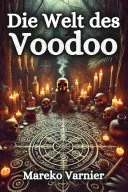
Die Welt des Voodoo
 78
78

Die Welt des Voodoo
Mareko Varnier's "Die Welt des Voodoo" attempts to demystify a tradition frequently obscured by sensationalism. The book commendably focuses on the actual spiritual and social functions of Voodoo, particularly in its Haitian context. Varnier's strength lies in his detailed descriptions of ritual structure and the pantheon of the Loa, presenting them with a respect often absent in Western accounts. However, the work occasionally feels overly academic, potentially alienating readers seeking a more experiential understanding. A passage detailing the specific invocation of Papa Legba, the gatekeeper Loa, is particularly illuminating, showcasing the intricate symbolic language at play. While a valuable resource for its factual grounding, it sometimes lacks the evocative prose needed to fully convey the spiritual depth it describes. It serves as a competent, if somewhat dry, introduction to a misunderstood faith.
📝 Description
78
Mareko Varnier's 2015 book examines Voodoo's historical roots and contemporary practices.
Mareko Varnier's "Die Welt des Voodoo" presents a scholarly yet accessible look at the Voodoo spiritual tradition. The book moves beyond sensationalized portrayals to investigate the historical roots and current practices of Voodoo. It details the connection between its African origins, its development in the Caribbean, and its syncretic evolution. The work situates Voodoo within the history of enslaved peoples in the Americas from the 17th century onwards. It traces the preservation and adaptation of West African spiritual practices under colonial rule. Voodoo emerged as a distinct religious system in Saint-Domingue, modern Haiti, and later spread, acknowledging Catholic influence and persecution.
Varnier discusses core Voodoo concepts like the Loa, the roles of the Houngan and Mambo, and the importance of ritual objects and ceremonies. The text clarifies possession, divination, and healing practices, showing them as integral parts of a complex worldview and social structure. This work is for students of comparative religion, anthropology, and cultural studies who want an unvarnished look at Voodoo. It is also for those curious about African diasporic religions and seeking to understand the spiritual framework that informs many communities, dispelling common myths.
This book falls within the study of African diasporic religions, a significant branch of modern esotericism. These traditions often preserve and adapt African spiritual and cosmological frameworks within new cultural contexts, particularly in the Americas. Voodoo's syncretism with Catholicism, its complex spirit hierarchy (Loa), and its ritual practices demonstrate a sophisticated spiritual system that developed under specific historical pressures. Understanding these traditions requires looking past Western interpretations and engaging with their internal logic and social functions.
💡 Why Read This Book?
• Understand the true nature of the Loa, the spirits central to Voodoo, by examining their specific roles and iconography as presented in the book's exploration of Haitian Vodou. • Gain insight into the historical syncretism of Voodoo by learning about its development in Saint-Domingue from the 17th century onwards, a period of intense cultural fusion. • Grasp the function of ritual specialists like the Houngan and Mambo, understanding their societal importance beyond simplistic portrayals of magic.
⭐ Reader Reviews
Honest opinions from readers who have explored this book.
❓ Frequently Asked Questions
What is the historical origin of Voodoo?
Voodoo's origins trace back to West African spiritual traditions, particularly those of the Fon and Kongo peoples, brought to the Americas by enslaved Africans during the transatlantic slave trade.
How does "Die Welt des Voodoo" differentiate itself from sensationalized depictions?
The book moves beyond stereotypes by focusing on the theological underpinnings, ritual practices, and social roles of Voodoo practitioners, presenting a more accurate and respectful overview.
Who are the Loa in Voodoo?
The Loa are spirits or deities in Haitian Vodou, intermediaries between humanity and the divine creator, Bondye. Each Loa has distinct characteristics, symbols, and domains of influence.
What role do priests and priestesses play in Voodoo?
Houngans (priests) and Mambos (priestesses) are spiritual leaders who guide rituals, perform ceremonies, offer divination, and serve as healers and counselors within the community.
Is Voodoo a form of black magic?
No, Voodoo is a complex religious system with its own cosmology, ethics, and practices. The association with 'black magic' is largely a product of colonial propaganda and sensationalized media.
When was "Die Welt des Voodoo" first published?
The original publication date for "Die Welt des Voodoo" by Mareko Varnier is May 27, 2025.
🔮 Key Themes & Symbolism
The Loa Pantheon
The book meticulously details the pantheon of the Loa, the spirits central to Haitian Vodou. It explains their diverse characteristics, the symbolic offerings they receive, and their roles as intermediaries between humanity and the supreme creator, Bondye. Varnier emphasizes that these are not malevolent entities but complex spiritual forces governing aspects of life and the cosmos.
Ritual and Community
Varnier examines the structure and purpose of Voodoo rituals, from communal ceremonies to individual divinations. He highlights the importance of music, dance, and specific offerings in invoking the Loa and fostering spiritual connection. The text underscores how these practices reinforce social cohesion and provide spiritual guidance within the community.
Syncretism and History
A significant focus is placed on Voodoo's historical development and its syncretic nature. The book traces the fusion of West African spiritual beliefs with Roman Catholic practices, a process driven by the conditions of slavery in Saint-Domingue. This historical perspective is crucial for understanding Voodoo's unique theological landscape.
Ethical Framework
Beyond superficial notions of sorcery, the work studies the ethical dimensions of Voodoo. It discusses the principles guiding interactions with the Loa and within the community, emphasizing balance, respect, and the pursuit of spiritual well-being. The role of Houngans and Mambos in upholding these principles is also explored.
💬 Memorable Quotes
Direct passages from the work, attributed to the author.
“The Loa are not distant deities, but intimate forces shaping daily existence.”
— This interpretation highlights the immanent quality of the Loa in Voodoo, suggesting they are actively involved in the lives of practitioners, influencing events and offering guidance rather than remaining aloof.
“Ritual acts as a bridge, connecting the mundane world to the spiritual realm.”
— This frames ritual in Voodoo as a functional mechanism for inter-dimensional communication, emphasizing its practical role in facilitating interaction with the spirit world and its inhabitants.
“Understanding Voodoo requires shedding preconceptions forged by colonial narratives.”
— This points to the pervasive influence of historical bias and misinformation surrounding Voodoo, advocating for a critical re-evaluation of the tradition from an insider or scholarly perspective.
“The Houngan's role is to maintain balance between human needs and spiritual forces.”
— This defines the spiritual leadership in Voodoo not as one of command, but of mediation and stewardship, responsible for ensuring harmonious relations between the community and the spiritual entities.
“Syncretism was not merely imitation, but a profound act of spiritual preservation.”
— This reframes the blending of African traditions with Catholicism not as a passive adoption, but as an active strategy to safeguard ancestral spiritual practices under oppressive colonial conditions.
🌙 Esoteric Significance
Tradition
While Voodoo is primarily an African diasporic religion with deep roots in West African spiritual systems, its syncretic development places it within a broader context of esoteric traditions that adapt and survive under duress. Its emphasis on spirit communication, ritual efficacy, and a complex cosmology aligns it with animistic and shamanistic worldviews, while its interaction with Catholicism introduces elements of devotional mysticism.
Symbolism
Key symbols explored include the *veve*, intricate designs drawn to invoke specific Loa, each possessing unique iconography representing the spirit's attributes and powers. The *ase* (or *axios*), a sacred post often found in the center of a peristyle (temple), symbolizes the connection between the heavens and the earth, and the vital life force. The snake, often associated with Damballa, represents wisdom, healing, and creation.
Modern Relevance
Contemporary practitioners of New Age spirituality, witchcraft, and other syncretic spiritual paths often draw inspiration from Voodoo's detailed symbolism and its emphasis on direct spirit communication. Thinkers and artists exploring post-colonial identity and spiritual resilience also engage with Voodoo as a powerful example of cultural survival and adaptation, influencing contemporary discussions on religious freedom and cultural heritage.
👥 Who Should Read This Book
• Students of comparative religion and anthropology seeking academically rigorous yet accessible material on Voodoo's history and practice. • Individuals interested in African diaspora religions looking to understand the spiritual framework of communities in Haiti and beyond. • Those curious about alternative spiritual systems who wish to move past sensationalized media portrayals toward a nuanced understanding.
📜 Historical Context
Published in 2025, "Die Welt des Voodoo" arrives at a time of renewed academic and public interest in African diasporic religions, often challenging earlier, Orientalist interpretations. The work builds upon scholarship initiated in the late 19th and early 20th centuries, when figures like Charles M. Skinner began cataloging New World folklore, though often through a lens of colonial exoticism. Varnier's approach distinguishes itself by engaging with the rich ethnographic work conducted in Haiti throughout the 20th century, particularly that of Maya Deren, while also critiquing the sensationalism that plagued earlier Western perceptions. The book implicitly addresses the legacy of censorship and misrepresentation faced by Voodoo, which was often demonized by colonial powers and later by certain religious groups seeking to impose their own doctrines, particularly in the context of Haitian Vodou's emergence as a distinct faith.
📔 Journal Prompts
The symbolic meaning of a specific *veve* in relation to its associated Loa.
Reflections on the concept of Bondye as a distant creator versus the immanent Loa.
How the historical context of Saint-Domingue shaped Voodoo's development.
The role of music and dance in invoking spiritual presence.
Personal interpretations of the Houngan's or Mambo's mediatory function.
🗂️ Glossary
Loa
Spirits or deities in Haitian Vodou, serving as intermediaries between humans and the supreme God, Bondye. Each Loa has unique characteristics, symbols, and domains.
Houngan
A priest in Haitian Vodou, responsible for leading rituals, divination, and spiritual guidance for the community.
Mambo
A priestess in Haitian Vodou, holding a similar role to the Houngan, often specializing in healing and divination.
Veve
Intricate symbolic drawings, often made with cornmeal or powder, used to invoke and honor specific Loa during ceremonies.
Bondye
The supreme creator God in Haitian Vodou, understood as distant and generally uninvolved in daily human affairs, leaving such matters to the Loa.
Peristyle
The sacred ceremonial space, typically outdoors, where Vodou rituals are performed. It often features a central pole called the *ase*.
Syncretism
The blending of different religious beliefs and practices. In Voodoo, this notably involves the fusion of West African traditions with Roman Catholicism.