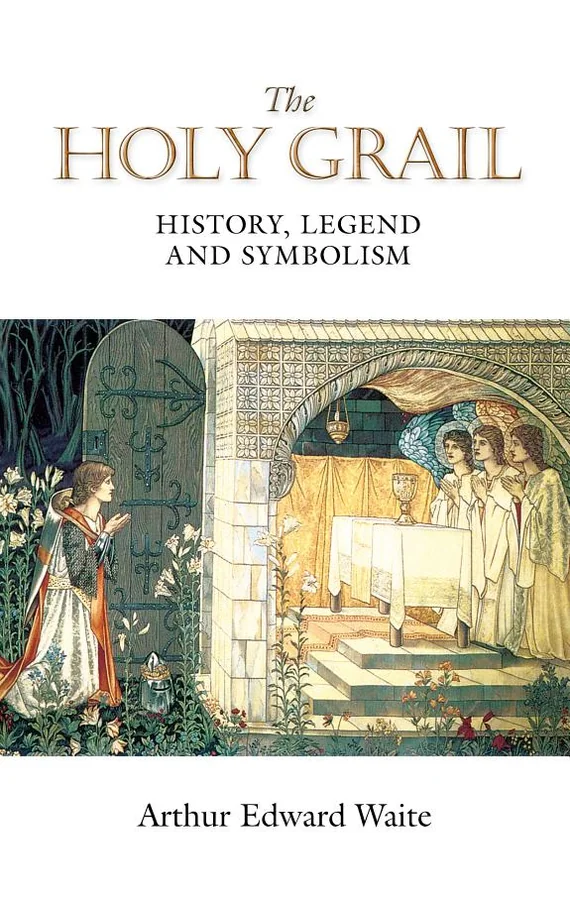
The Holy Grail
 81
81

The Holy Grail
Arthur Edward Waite's "The Holy Grail" is less a simple retelling and more a scholarly dissection of a legend's soul. Waite, operating with the characteristic analytical rigor of an early 20th-century occultist, peels back the devotional layers of the Grail stories to reveal what he posits as their authentic, Gnostic core. His detailed tracing of the various Grail romances, from Chrétien de Troyes to Wolfram von Eschenbach, is meticulously done. A particular strength lies in his consistent effort to link the imagery to alchemical processes and esoteric spiritual development, moving beyond simple hagiography. However, Waite's prose can be dense, and his arguments, while compelling to the initiated, may prove challenging for newcomers to Arthurian myth or esoteric lore. His interpretation of the Grail as primarily a symbol of Sophia, the divine feminine wisdom, is a recurring and powerful motif throughout the text. This work is a critical examination for dedicated seekers of the Grail's hidden meanings.
📝 Description
81
Arthur Edward Waite argued in 1906 that the Grail's piety concealed a potent, subversive mysticism.
In "The Holy Grail," Arthur Edward Waite, a scholar of the occult, examines the Arthurian legend not as a simple story but as a complex symbolic narrative. He suggests that the overt religious aspects of the Grail conceal a deeper, more transformative mysticism. Waite reinterprets established doctrines through an allegorical framework, tracing how the Grail stories evolved and how different interpretations contributed to its lasting significance.
This study is intended for those seriously interested in comparative mythology, Western esotericism, and Arthurian scholarship. It is particularly useful for readers already familiar with the literary versions of the Grail legends who seek a more critical analysis. Those interested in the connection between religious symbols and mystical philosophy will find Waite's detailed investigation valuable. It also serves as important reading for historians of the occult revival of the late 19th and early 20th centuries, given Waite's central role in that movement.
Published in 1906, Waite's "The Holy Grail" emerged during a period of intense interest in ancient mysteries and spiritualism, particularly within the late Victorian and Edwardian occult revival. Waite, a prominent member of the Hermetic Order of the Golden Dawn, viewed the Grail legend not through a purely historical or religious lens, but as a vehicle for esoteric philosophy. His work engages with the symbolic and allegorical dimensions of the myth, contrasting them with conventional religious views and highlighting connections to alchemical and Gnostic traditions.
💡 Why Read This Book?
• Gain a unique perspective on the Grail legend, understanding its esoteric interpretations beyond religious dogma, as demonstrated by Waite's analysis of the Grail as a symbol of divine wisdom, particularly concerning Sophia. • Explore the historical context of Arthurian literature's reception and reinterpretation during the occult revival of the late 19th century, a period Waite actively participated in and documented. • Grasp the alchemical and Gnostic symbolism embedded within the Grail narratives, such as the significance of the chalice and spear, as elucidated in Waite's detailed textual exegesis.
⭐ Reader Reviews
Honest opinions from readers who have explored this book.
❓ Frequently Asked Questions
When was Arthur Edward Waite's "The Holy Grail" first published?
Arthur Edward Waite's "The Holy Grail" was first published in 2006, though the scholarship it contains draws from his extensive research conducted much earlier in the 20th century.
What is Arthur Edward Waite's main argument about the Holy Grail?
Waite argues that the Grail legend, beneath its orthodox religious veneer, functions as a potent vehicle for subversive mysticism and esoteric teachings, symbolizing spiritual attainment and divine wisdom.
Does the book focus on the historical existence of the Grail?
No, Waite's "The Holy Grail" primarily focuses on the symbolic, mythological, and esoteric interpretations of the legend, treating it as a narrative of spiritual quest and inner transformation rather than historical fact.
What esoteric traditions does Waite connect the Grail legend to?
Waite frequently connects the Grail legend to Gnostic traditions, alchemy, and broader Western esoteric philosophy, interpreting its symbols as representations of spiritual gnosis and the union of opposites.
Is this book suitable for beginners interested in Arthurian legends?
While comprehensive, Waite's dense prose and esoteric focus make it more suitable for readers already familiar with Arthurian myths and those with a specific interest in occult symbolism and comparative mythology.
What does Waite mean by 'subversive mysticism' in relation to the Grail?
Waite suggests that the Grail's mystical elements challenge conventional religious doctrines by offering allegorical interpretations that point towards direct spiritual experience and esoteric knowledge, rather than solely relying on dogma.
🔮 Key Themes & Symbolism
Grail as Esoteric Symbol
Waite posits the Grail not as a literal object but as a profound symbol within esoteric traditions. He meticulously examines its various manifestations across Arthurian literature, arguing that its true significance lies in its representation of spiritual attainment, divine wisdom (Sophia), and the attainment of gnosis. The chalice becomes a vessel for mystical experience, and the quest for it, an allegory for the soul's journey towards enlightenment. This perspective recontextualizes the familiar legend, aligning it with Hermetic and Gnostic philosophies that emphasize inner transformation.
Alchemical and Gnostic Connections
A central theme is Waite's exploration of how Grail narratives mirror alchemical processes and Gnostic doctrines. He interprets the symbolism – the lance, the quest, the blood – through an alchemical lens, suggesting allegorical representations of purification, transformation, and the union of opposites. Similarly, the Gnostic concept of Sophia, divine feminine wisdom, is frequently invoked as a key to understanding the Grail's deeper meaning, positioning the legend as a repository of ancient, hidden knowledge that challenges orthodox religious interpretations.
Evolution of the Legend
The book traces the historical and literary evolution of the Grail legend, highlighting how its meaning has shifted and been reinterpreted across different eras and authors. Waite analyzes the contributions of figures like Chrétien de Troyes and Wolfram von Eschenbach, but critically examines how later interpretations, particularly those influenced by the occult revival, sought to imbue the myth with esoteric significance. This historical perspective underscores the dynamic nature of myth and its capacity to serve diverse spiritual and philosophical inquiries.
Mysticism vs. Orthodoxy
Waite consistently contrasts the 'subversive' mystical dimensions of the Grail with conventional religious interpretations. He argues that the legend's true power lies in its ability to convey esoteric truths that transcend literal dogma, offering a path to direct spiritual experience. This theme underscores his broader work, which often sought to validate and elucidate mystical traditions by demonstrating their hidden coherence and profound philosophical depth, positioning them as vital complements to, or reinterpretations of, established religious frameworks.
💬 Memorable Quotes
Direct passages from the work, attributed to the author.
“The myths surrounding the Holy Grail are seemingly in harmony with orthodox religion, but beneath their pious surface, they are as subversive as any other form of mysticism.”
— This statement expresses Waite's core thesis: that the Grail legend, often presented as a devout Christian narrative, actually contains deeper, potentially revolutionary mystical teachings that challenge conventional religious understanding and point towards esoteric knowledge.
“The Grail is a symbol of divine wisdom, particularly the Gnostic Sophia, accessible through inner realization.”
— This interpretation highlights Waite's view of the Grail not as a physical chalice but as an allegorical representation of Gnosis and feminine divine wisdom, attainable through personal spiritual effort and understanding, aligning with Gnostic traditions.
“Literal interpretation of doctrinal teachings obscures their true, symbolic meaning.”
— Waite suggests that focusing solely on the literal aspects of religious or mythological narratives prevents access to their profound, underlying symbolic truths, which he believes are essential for true spiritual understanding and esoteric insight.
“The legend's subversive power lies in its ability to reveal hidden truths through allegory.”
— This interpretation underscores Waite's belief that the effectiveness of the Grail myth as a vehicle for mysticism comes from its use of symbolic language and narrative to convey profound spiritual concepts that cannot be easily expressed through direct, dogmatic statements.
💡 Key Ideas
Editorial paraphrase of the work's core concepts — not direct quotes.
The quest for the Grail signifies the soul's arduous journey toward spiritual perfection and enlightenment.
This paraphrase emphasizes the allegorical nature of the Grail quest, framing it as a metaphor for the inner spiritual path, a process of purification and development that leads to higher consciousness, a common theme in esoteric literature.
🌙 Esoteric Significance
Tradition
Waite's work firmly belongs within the Western esoteric tradition, particularly the lineage of Hermeticism and Gnosticism, which he actively studied and promoted. He sought to demonstrate how the Arthurian Grail legend could be understood as a sophisticated allegory for spiritual initiation and the attainment of gnosis, aligning with the esoteric principle of correspondence between the macrocosm and microcosm. His interpretation departs from purely Christian theological readings by emphasizing the internal, transformative journey and the symbolic representation of divine feminine wisdom (Sophia) inherent in the myth.
Symbolism
Key symbols Waite dissects include the Grail itself, often interpreted as a chalice symbolizing divine wisdom, the feminine principle, or the vessel of the soul capable of receiving spiritual illumination. The Lance, frequently depicted as wounding, is analyzed for its alchemical connotations, potentially representing the active principle or the severing of illusion. The quest, in his view, is a potent allegory for the arduous path of spiritual development, mirroring the alchemist's process of refinement and the Gnostic seeker's journey toward reunification with the divine.
Modern Relevance
Contemporary thinkers and practitioners in fields such as comparative mythology, depth psychology, and various strands of Neo-Paganism and Western Esotericism continue to draw upon Waite's interpretations. His work provides a foundational text for understanding the Grail legend through an esoteric lens, influencing modern discussions on archetypes, spiritual symbolism, and the integration of ancient myths into contemporary spiritual practices. His emphasis on the Grail as a symbol of inner transformation remains particularly relevant for those exploring personal growth and spiritual seeking.
👥 Who Should Read This Book
• Students of Western Esotericism: Individuals seeking to understand the connections between Arthurian legend and traditions like Hermeticism, Gnosticism, and alchemy will find Waite's detailed analysis indispensable. • Comparative Mythology Scholars: Researchers interested in how myths evolve and are reinterpreted across cultures and historical periods will benefit from Waite's critical examination of the Grail's symbolic layers. • Arthurian Legend Enthusiasts: Those who have read the primary Arthurian texts and wish to explore deeper, symbolic, and mystical interpretations beyond literary or historical analyses will find this work clear.
📜 Historical Context
Arthur Edward Waite's "The Holy Grail" was published in the early 20th century, a period deeply immersed in the occult revival and a renewed fascination with Arthurian legends. This era saw figures like Richard Wagner reinterpreting the myth, with his opera "Parsifal" premiering in 1882, sparking widespread interest. Waite, a prominent member of the Hermetic Order of the Golden Dawn, approached the Grail not just as literature but as a repository of esoteric wisdom, seeking to uncover its Gnostic and alchemical roots. He engaged with a scholarly landscape that included folklorists and mythologists, but his distinct contribution was the explicit linking of the Grail to Western esoteric traditions. His work offered a counter-narrative to purely historical or devotional readings, positioning the Grail within a lineage of mystical thought that often stood in tension with mainstream religious and academic views of the time. The reception of such works often involved debate between traditionalists and occultists regarding the interpretation of ancient myths and religious symbols.
📔 Journal Prompts
The Grail's symbolic representation of Sophia and its esoteric significance.
Waite's interpretation of the Lance and its alchemical parallels.
The Grail quest as an allegory for personal spiritual development.
The contrast between orthodox religious and subversive mystical readings of the Grail.
The historical evolution of the Grail legend and its esoteric reinterpretation.
🗂️ Glossary
Gnosticism
An ancient religious movement characterized by a belief in a transcendent God and the material world being created by a lesser deity, emphasizing secret knowledge (gnosis) for salvation.
Sophia
In Gnostic and esoteric traditions, the feminine personification of divine wisdom, often associated with creation, spiritual insight, and the divine feminine principle.
Alchemy
An ancient practice and precursor to chemistry, focused on the transformation of matter, often involving symbolic processes representing spiritual purification and enlightenment.
Hermeticism
A philosophical and religious tradition based on the writings attributed to Hermes Trismegistus, emphasizing esoteric knowledge, spiritual transformation, and the correspondence between the divine and human realms.
Allegory
A story, poem, or picture that can be interpreted to reveal a hidden meaning, typically a moral or political one, used extensively in esoteric literature to convey complex ideas symbolically.
Gnosis
A Greek term meaning 'knowledge,' particularly in an esoteric or spiritual context, referring to intuitive or revealed knowledge of divine mysteries and ultimate truth.
Arthurian Literature
A body of literature and legendary cycles concerning King Arthur, his knights, and the kingdom of Camelot, originating in medieval romance and continuing through modern retellings.
This book appears in 1 collection
🔮 Readers Also Liked
Browse all →







From the “Holy Grail” Collection
View all →







More Free Sacred Texts & Gnosticism Books
View all →