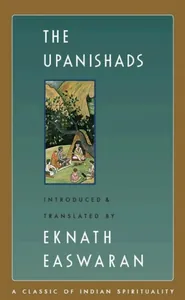
The philosophy of the Upanishads and ancient Indian metaphysics
 75
75

The philosophy of the Upanishads and ancient Indian metaphysics
Archibald Edward Gough’s exploration of the Upanishads offers a rigorously analytical perspective, distinguishing it from more devotional or purely introductory texts. Gough focuses intently on the philosophical architecture, dissecting concepts like Brahman and Atman with precision. His strength lies in presenting the intricate metaphysical arguments with academic clarity, making accessible the dense philosophical landscape of ancient India. However, the work’s academic tone, while a strength for scholars, might present a barrier for those seeking a more immediately spiritual or experiential engagement with the texts. The section detailing the concept of 'neti neti' (not this, not this) as a method for approaching the ineffable nature of Brahman is particularly illuminating, showcasing the book's capacity for detailed exposition. Ultimately, Gough’s work serves as a valuable, albeit demanding, scholarly resource on Upanishadic philosophy.
📝 Description
75
Archibald Edward Gough's 2000 work analyzes the Upanishads, ancient Indian metaphysical texts.
This academic examination looks at the philosophical basis of the Upanishads, ancient Indian metaphysical scriptures. Gough's book, published in 2000, breaks down the main doctrines and ideas within these texts. It aims to explain the nature of reality, consciousness, and the self as understood in this classical Indian tradition. The book systematically lays out the concepts that influenced centuries of spiritual and philosophical thought in India.
This volume is suitable for students and academics interested in comparative philosophy, Indian religions, and metaphysics. It is for those wanting a thorough, analytical grasp of the Upanishadic perspective, going beyond simple introductions. Readers who care about the history of philosophy and its link to spiritual practice will find it particularly useful. This is not a light read; it demands attention to complex ideas.
The Upanishads mark a significant shift in Vedic thought, appearing between the 8th and 5th centuries BCE. Gough's 2000 publication situates these texts within a wider intellectual history, acknowledging the work of translators like Sir Edwin Arnold and Max Müller for Western audiences. This book engages directly with the philosophical discussions surrounding these old Indian texts, adding to academic conversations about their significance and impact.
💡 Why Read This Book?
• Gain a clear, analytical understanding of the core Upanishadic concepts like Brahman and Atman, as explored by Gough in his detailed examination. • Comprehend the philosophical evolution within ancient Indian thought by understanding the transition from Vedic rituals to Upanishadic metaphysics, a context Gough provides. • Appreciate the specific philosophical methodologies used to describe ultimate reality, such as the concept of 'neti neti' (not this, not this), as elucidated in the text.
⭐ Reader Reviews
Honest opinions from readers who have explored this book.
❓ Frequently Asked Questions
What is the primary focus of Archibald Edward Gough's book on the Upanishads?
Gough's work focuses on the philosophical and metaphysical doctrines presented in the Upanishads, aiming to systematically analyze their concepts of ultimate reality (Brahman) and the self (Atman).
When was Archibald Edward Gough's study of the Upanishads first published?
The book by Archibald Edward Gough, "The Philosophy of the Upanishads and Ancient Indian Metaphysics," was first published in 2000.
Who would benefit most from reading this book?
Students and scholars of comparative philosophy, Indian religions, and metaphysics who seek a deep, analytical understanding of Upanishadic thought would find this book particularly beneficial.
What are some key metaphysical concepts discussed in the book?
The book discusses fundamental concepts such as Brahman, Atman, karma, samsara, and moksha, exploring their philosophical implications as presented in the Upanishads.
Does the book offer practical spiritual guidance?
While it explains the philosophical underpinnings of spiritual goals like moksha, the book's primary focus is on academic analysis rather than providing direct spiritual instruction.
How does Gough's work relate to earlier translations of the Upanishads?
Gough's work builds upon earlier scholarly efforts, such as those by Max Müller and Sir Edwin Arnold, offering a more focused philosophical interpretation of the texts for a contemporary academic audience.
🔮 Key Themes & Symbolism
Brahman and Atman
The central philosophical problem Gough addresses is the relationship between Brahman, the impersonal Absolute, and Atman, the individual soul. The work meticulously unpacks the Upanishadic assertion that these two are, in essence, identical. Gough examines the arguments presented for this non-dualistic (Advaita) perspective, exploring how the texts describe the illusory nature of individual existence (maya) and the path toward realizing the unity of all being. This theme is crucial for understanding the ultimate goal of liberation within this tradition.
The Nature of Reality
Gough's analysis centers on the Upanishadic conception of reality, which posits a fundamental, unchanging substratum (Brahman) underlying the phenomenal world. The book explores how the texts differentiate between the empirical, transient world and the ultimate, eternal truth. It explores the epistemological challenges of knowing this ultimate reality, often highlighting the limitations of sensory perception and rational thought in grasping the Absolute. The concept of maya plays a significant role in explaining the perceived multiplicity of the world.
Karma and Rebirth
A significant portion of the philosophical discourse in the Upanishads, and thus in Gough's analysis, concerns the doctrines of karma and samsara. The work examines how actions (karma) inevitably lead to consequences, shaping an individual's journey through the cycle of birth, death, and rebirth (samsara). Gough elucidates the moral and causal framework that governs existence within this cyclical view, and how understanding this mechanism is integral to the pursuit of moksha, or liberation from this cycle.
Path to Liberation (Moksha)
The ultimate aim of Upanishadic philosophy, moksha, is thoroughly explored by Gough. The book details the various paths and means described in the texts for achieving liberation from samsara and realizing one's true nature as Brahman. This includes the importance of knowledge (jnana), devotion (bhakti), and disciplined action (karma yoga), as well as meditative practices. Gough presents these as philosophical frameworks for transcending ignorance and achieving spiritual freedom.
💬 Memorable Quotes
Direct passages from the work, attributed to the author.
“The universe is but a manifestation of Brahman, and individual souls are identical with Brahman.”
— This captures the core non-dualistic tenet. It explains that all existence originates from and is ultimately one with the Absolute, and that the perceived separation of the individual self is an illusion.
“The cycle of birth and death is driven by ignorance and the law of cause and effect.”
— This concisely states the Upanishadic view on samsara. It points to a lack of true knowledge and the inescapable consequences of one's actions as the mechanisms perpetuating this cycle.
“The path of knowledge is essential for dispelling the illusion of individuality.”
— This points to jnana (knowledge) as a primary tool in the Upanishadic system. It suggests that understanding one's true nature as Brahman is key to overcoming the ego and the perceived separation from the Absolute.
💡 Key Ideas
Editorial paraphrase of the work's core concepts — not direct quotes.
The Absolute is not to be apprehended by the senses, nor by intellect, nor by much learning.
This paraphrase highlights the Upanishadic emphasis on transcending ordinary means of knowledge to grasp ultimate reality. It suggests that spiritual truth lies beyond empirical observation and intellectual analysis alone.
True liberation comes from realizing the unity of Atman and Brahman.
This summarizes the goal of Upanishadic practice. It emphasizes that freedom from suffering and the cycle of rebirth is achieved through the direct apprehension of the self's identity with the ultimate reality.
🌙 Esoteric Significance
Tradition
This work engages with the philosophical underpinnings of what has become known as Vedanta, a major school of Hindu philosophy, particularly its Advaita (non-dual) branch. While not strictly an 'esoteric' text in the Western sense of secret societies, the Upanishads themselves are considered shruti ('that which is heard') and form the basis for many yogic and meditative practices. Gough's scholarly approach unpacks the metaphysical doctrines that have informed countless esoteric traditions in India and, through them, influenced global esoteric thought.
Symbolism
Key symbols explored include the syllable Om (AUM), representing the totality of existence and consciousness, encompassing the past, present, and future. The concept of 'neti neti' (not this, not this) functions as a symbolic negation, a method to approach the ineffable nature of Brahman by systematically eliminating all finite descriptions. Another significant motif is the dream state and deep sleep, used as analogies to explore different levels of consciousness and the underlying reality.
Modern Relevance
Contemporary practitioners of yoga, meditation, and mindfulness often draw implicitly or explicitly on Upanishadic concepts. Thinkers in consciousness studies and comparative philosophy continue to reference these texts for their sophisticated explorations of self, reality, and awareness. Modern interpretations of Advaita Vedanta, propagated by figures such as Ramana Maharshi and Swami Vivekananda (though Vivekananda predates Gough's publication), are deeply rooted in the philosophical systems Gough analyzes.
👥 Who Should Read This Book
• Students of comparative religion and philosophy seeking to understand the foundational texts of Indian metaphysical thought. • Academic researchers studying the historical development of philosophical concepts like non-duality, karma, and liberation. • Individuals interested in the philosophical basis of yogic and meditative practices, looking for a rigorous, analytical perspective on their origins.
📜 Historical Context
The Upanishads, emerging from the Vedic tradition around the 8th to 5th centuries BCE, represent a significant philosophical pivot from ritualistic concerns to introspective and metaphysical inquiry. Archibald Edward Gough's comprehensive study, first published in 2000, engages with this profound shift. His work enters a long tradition of Western scholarship on Indian philosophy, following pioneers like Max Müller, whose translations made these texts accessible. Gough’s analysis can be seen as part of a broader academic effort to systematically interpret these foundational texts for a modern, often Western, readership. While not directly engaging in a public debate, his work contributes to the ongoing academic discourse on Advaita Vedanta and other schools of Indian thought, providing a detailed philosophical exegesis that allows for deeper comparison with contemporary philosophical traditions.
📔 Journal Prompts
The concept of Brahman as the singular reality underlying all existence.
The Upanishadic method of 'neti neti' for approaching the Absolute.
Atman's identity with Brahman and its implications for self-perception.
The philosophical framework of karma and its role in the cycle of samsara.
The pursuit of moksha as described in the Upanishads.
🗂️ Glossary
Brahman
The ultimate, unchanging reality or Absolute that is the source and substratum of all existence in Hindu philosophy. It is considered impersonal, infinite, and eternal.
Atman
The individual self or soul. In Upanishadic thought, particularly Advaita Vedanta, Atman is ultimately identical with Brahman.
Maya
An illusion or cosmic deception that makes the phenomenal world appear real and distinct from Brahman. It is the power that veils the true nature of reality.
Samsara
The continuous cycle of birth, death, and rebirth, driven by karma and ignorance. It is often characterized by suffering.
Karma
The law of cause and effect, where actions (karma) have consequences that determine one's fate in this life and future lives within samsara.
Moksha
Liberation or release from the cycle of samsara. It is the ultimate spiritual goal, achieved through self-realization and the understanding of one's true nature.
Advaita Vedanta
A prominent school of Hindu philosophy emphasizing non-duality, asserting that Brahman and Atman are one and the same.








![The Amulet of Samarkand [graphic novel]](/img/thumb/the-amulet-of-samarkand-graphic-novel-jonathan-stroud-620896.webp)