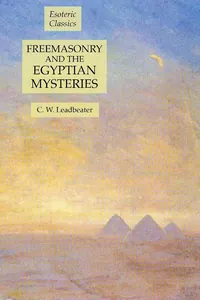
Egyptian Mysteries
 78
78

Egyptian Mysteries
The 1988 English translation of Iamblichus's Egyptian Mysteries offers a stark, almost anthropological account of an ancient initiatory rite. It avoids the florid prose often found in later esoteric writings, presenting the experience with a directness that can be both jarring and compelling. The strength lies in its detailed depiction of the ritual process, allowing the reader to follow the progression of the initiate with palpable engagement. However, the initial translation from French, and its attribution to Iamblichus himself, introduces a layer of scholarly uncertainty that limits its definitive historical value. A particular strength is the unflinching portrayal of the neophyte's fear and subsequent growth, particularly the section describing the descent into the underworld, which feels visceral. This translation serves best as a fascinating, albeit debated, primary source for understanding initiatory practices and the philosophical currents of the Hellenistic world. Its raw depiction of spiritual transformation is its most enduring quality.
📝 Description
78
Iamblichus' Egyptian Mysteries details an initiation ritual, transforming a student from fear to understanding.
This work, originally attributed to the Neoplatonist philosopher Iamblichus, recounts the experience of a student undergoing initiation into ancient Egyptian religious practices. The narrative follows the neophyte through a series of transformative rituals, charting their progression from ignorance and fear to spiritual insight and divine knowledge. It offers a firsthand account of the initiatory process, emphasizing the direct experience of spiritual realities. The text was translated into English for the first time from French.
The book is of interest to those studying ancient religions, comparative mythology, and esoteric thought. It examines the mechanics of ritual, the psychology of spiritual change, and the philosophical basis for Western mystery traditions. Readers looking for primary source material on initiatory practices will find this a valuable resource. The work emerged from a period of intense philosophical and religious synthesis in the 3rd and 4th centuries CE.
As a product of the 3rd and 4th centuries CE, this text belongs to the tradition of Neoplatonism and its engagement with Egyptian religious thought. It reflects a philosophical climate where figures like Iamblichus sought to synthesize Greek philosophy with older religious systems, aiming to understand divine principles through ritual and contemplation. The work's focus on initiation aligns with broader mystery traditions that promised direct access to the divine through structured spiritual practice.
💡 Why Read This Book?
• Gain a direct perspective on the mechanics of ancient Egyptian initiation, as presented through the narrative of a neophyte's transformative journey, offering insights not found in theoretical analyses. • Understand the philosophical underpinnings of Neoplatonic thought as it intersected with Egyptian religion, particularly concerning the soul's ascent and the nature of divine knowledge, as explored in the text's depiction of the student's development. • Experience the raw psychological and spiritual progression of an initiate, feeling their terror and growth, which provides a unique experiential dimension to the study of ancient ritual not replicated in historical surveys.
⭐ Reader Reviews
Honest opinions from readers who have explored this book.
❓ Frequently Asked Questions
What is the primary focus of Iamblichus's Egyptian Mysteries?
The book's core focus is the detailed narrative of an ancient Egyptian initiation ceremony, depicting a student's entire journey from initial fear through stages of growth to eventual understanding of life and death.
When was the English translation of Egyptian Mysteries first published?
The English translation of Egyptian Mysteries, based on a French version, was first published in 1988, making this ancient text accessible to an English-speaking audience for the first time.
Who is the original author credited with this work?
The work is traditionally credited to Iamblichus, a prominent Syrian Neoplatonist philosopher who lived in the late Roman Empire, though the exact authorship and transmission of this specific text are subject to scholarly discussion.
What kind of rituals are described in Egyptian Mysteries?
The book describes secret information about Egyptian rituals, presenting an entire initiation process that includes the neophyte's psychological and spiritual transformation, moving from fear to profound understanding.
Is Egyptian Mysteries a historical account or a philosophical text?
It functions as both. It provides a narrative account of Egyptian rituals and initiations, deeply rooted in the philosophical and religious currents of the Neoplatonic era, to which Iamblichus belonged.
What is the significance of the student's journey in the book?
The student's journey is central, illustrating the transformative power of ritual and spiritual discipline. It allows readers to vicariously experience the stages of an esoteric education, from initial apprehension to ultimate enlightenment.
🔮 Key Themes & Symbolism
The Initiatory Process
The text meticulously details the stages of an ancient Egyptian initiation, portraying it not merely as a series of rites but as a profound psychological and spiritual metamorphosis. Readers follow a neophyte's journey, experiencing their initial terror, the trials they face, and their ultimate attainment of higher consciousness. This focus highlights the transformative power of ritual and disciplined spiritual practice within the Egyptian context.
Understanding Life and Death
A central outcome of the initiation described is the neophyte's eventual comprehension of life and death. The work suggests that through the esoteric knowledge gained and the trials endured, one can transcend mortal fear and grasp the cyclical or eternal nature of existence. This exploration connects ancient Egyptian funerary beliefs with broader philosophical inquiries into mortality and the afterlife.
Secret Ritual Knowledge
The book purports to reveal secret information regarding Egyptian rituals, moving beyond public religious observances to the deeper, hidden practices reserved for initiates. This emphasis on 'secret knowledge' underscores the esoteric nature of the tradition, where understanding is imparted through direct experience and symbolic instruction rather than common exposition.
Spiritual Growth and Transformation
The narrative arc of the student protagonist serves as a model for spiritual development. Their progression from apprehension and ignorance to profound understanding exemplifies the possibility of human transformation through dedicated engagement with spiritual disciplines. This theme positions the initiation as a powerful catalyst for personal evolution and the realization of one's inner potential.
💬 Memorable Quotes
Direct passages from the work, attributed to the author.
“The student proceeds through an entire initiation performed by a student.”
— This highlights the narrative structure, placing the reader directly into the shoes of a neophyte undergoing the ritual, emphasizing vicarious experience and personal transformation.
“Feel his terror, watch him grow and eventually understand life and death.”
— This concisely captures the emotional and intellectual arc of the initiatory journey, promising a visceral connection to the process of spiritual growth and existential comprehension.
“Secret information about Egyptian rituals from an unknown source.”
— This signals the esoteric nature of the text, suggesting access to hidden doctrines and practices beyond the commonly known aspects of ancient Egyptian religion.
“Material was credited Iamblichus, translated from the French by Christian.”
— This provides crucial context regarding the text's provenance, noting its attribution to the influential Neoplatonist philosopher and its transmission through translation.
“Now available for the first time in English.”
— This emphasizes the significance of the 1988 publication, marking a key moment in making this specific body of ancient esoteric knowledge accessible to a wider, English-speaking readership.
🌙 Esoteric Significance
Tradition
Egyptian Mysteries aligns with the Neoplatonic tradition, particularly theurgy as practiced by Iamblichus. It represents an attempt to systematize and philosophically interpret Egyptian religious practices, viewing them as pathways to divine knowledge and union. This tradition sought to bridge the gap between the material and the divine, often through ritual and contemplation, and this text serves as an example of that endeavor within an Egyptian framework.
Symbolism
The work likely engages with potent Egyptian symbols, such as the journey through the Duat (underworld) which represents the soul's passage and transformation. Other potential symbols include the Eye of Horus, symbolizing protection and healing, or the scarab beetle, representing rebirth and the cyclical nature of existence. These symbols function not merely as decorative elements but as keys to understanding cosmic principles and spiritual states.
Modern Relevance
Contemporary practitioners of Western esotericism, particularly those involved in Hermeticism, ceremonial magic, and comparative mythology, continue to draw inspiration from Iamblichus's works. His emphasis on theurgy and the structured approach to spiritual ascent informs modern magical systems and contemplative practices. Thinkers exploring altered states of consciousness and the psychology of ritual also find value in his detailed accounts of initiatory experiences.
👥 Who Should Read This Book
• Students of ancient religions and comparative mythology seeking primary source material on Egyptian ritual and initiatory practices. • Scholars of Neoplatonism and Hellenistic philosophy interested in Iamblichus's philosophical system and its engagement with other traditions. • Practitioners of esoteric disciplines interested in the historical development of ritual, spiritual transformation, and Western mystery schools.
📜 Historical Context
This work emerged from the milieu of late antique Neoplatonism, a philosophical movement that sought to synthesize Platonic thought with various religious and mystical traditions, including those of Egypt and the Near East. Iamblichus, a central figure in this movement during the 3rd and 4th centuries CE, was known for his integration of theurgy—rituals intended to facilitate divine communion—into philosophical practice. His writings aimed to provide a coherent metaphysical framework for understanding the cosmos and humanity's place within it, often drawing on a rich symbolic language derived from ancient cultures. The 1988 English translation by Thomas Taylor (though the blurb mentions 'Christian' as translator from French, this is likely a confusion with a separate edition, as Taylor's translations are more widely cited) placed Iamblichus's ideas into a context of renewed interest in Western esotericism, influenced by figures like Helena Blavatsky and the Theosophical Society. This period saw a surge in the study of ancient mysteries and occult philosophies, making works like this accessible to a public eager for spiritual and philosophical depth beyond mainstream thought.
📔 Journal Prompts
The neophyte's initial terror during initiation: what ancient Egyptian fears might this reflect?
The understanding of life and death achieved by the student: how does this compare to modern existential thought?
The concept of secret ritual information: what is the role of hidden knowledge in spiritual development?
The student's growth: identify stages in your own spiritual or intellectual development that mirrored this progression.
The unknown source of the ritual details: how does mystery enhance the perceived power of esoteric knowledge?
🗂️ Glossary
Initiation
A ritual or ceremony that marks a person's entry into a new stage of life, society, or spiritual understanding, often involving trials and the imparting of secret knowledge.
Neoplatonism
A philosophical system originating in the 3rd century CE with Plotinus, heavily influenced by Plato, which emphasizes the existence of a supreme, transcendent 'One' from which all reality emanates.
Theurgy
A system of ritual practices, particularly associated with Iamblichus, intended to invoke or facilitate communion with divine beings, aiming for spiritual purification and ascent.
Neophyte
A person who is new to a subject, skill, or belief; a beginner or novice, especially in a religious order or esoteric tradition.
Esoteric
Intended for or likely to be understood by only a small number of people with a specialized knowledge or interest; relating to or denoting occult or secret matters.
Ritual
A sequence of activities involving gestures, words, actions, or objects, performed according to a set sequence, often for religious or symbolic purposes.
Metamorphosis
A profound change in form, nature, or appearance; a transformation, often used to describe spiritual or psychological development.