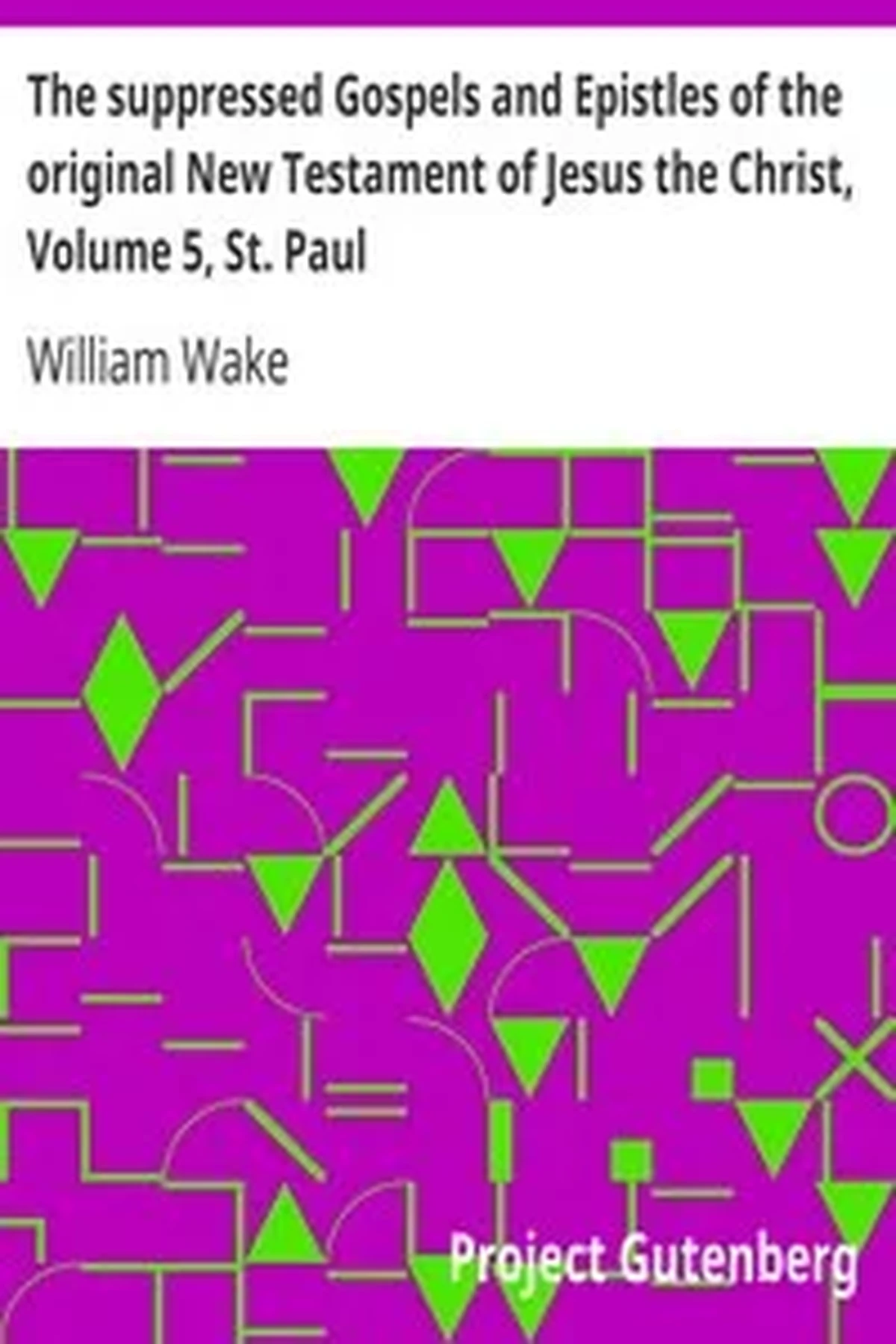
The suppressed Gospels and Epistles of the original New Testament of Jesus the Christ, Volume 5, St. Paul
 74
74

The suppressed Gospels and Epistles of the original New Testament of Jesus the Christ, Volume 5, St. Paul



William Wake's "The Suppressed Gospels and Epistles of the Original New Testament of Jesus the Christ, Volume 5, St. Paul" is a treasure trove for modern esoteric seekers. The book provides a fascinating look into the suppressed writings of St. Paul, offering insights that are often overlooked in mainstream religious texts. Wake's meticulous research and deep understanding of Gnostic traditions make this volume an essential read for anyone interested in the hidden dimensions of early Christianity. The text is not just a historical document but a spiritual guide, encouraging readers to explore the mystical aspects of their faith. For contemporary seekers, this book serves as a bridge between ancient wisdom and modern spiritual inquiry. It challenges conventional beliefs and invites readers to embrace a more profound and esoteric understanding of Christianity. The star rating for this book is 4.5 out of 5.
📝 Description
74
William Wake's 1915 Volume 5 of 'The Suppressed Gospels and Epistles' focuses on St. Paul's excluded writings.
This volume presents a collection of texts attributed to St. Paul that were not included in the New Testament canon. William Wake compiled these scriptures, aiming to reveal a different perspective on early Christian teachings. The book includes writings that offer insights into the symbolic and philosophical ideas prevalent in certain early Christian groups, often associated with Gnosticism. These texts suggest a more mystical or esoteric interpretation of Paul's letters and theology than what is found in the standard biblical accounts. Readers will encounter discussions on spiritual knowledge, the nature of the divine, and the path to enlightenment as understood by these early traditions. The collection serves as a resource for examining early Christian diversity and the theological debates of the period.
This work engages with the esoteric traditions that sought alternative interpretations of early Christian scripture. It highlights texts deemed heretical or apocryphal by mainstream Christianity, particularly those connected to Gnosticism. These suppressed writings often present a cosmology and soteriology that differ significantly from orthodox doctrines, emphasizing direct spiritual experience and hidden knowledge. By examining these alternative Gospels and Epistles, the book invites a consideration of the broader spectrum of spiritual thought that coexisted with, and was eventually marginalized by, developing Christian orthodoxy.
✍️ Author

William Wake
William Wake was an English churchman and Archbishop of Canterbury.
💡 Why Read This Book?
Reading "The Suppressed Gospels and Epistles of the Original New Testament of Jesus the Christ, Volume 5, St. Paul" today offers a unique opportunity to delve into the esoteric teachings of early Christianity. This book provides valuable insights into the spiritual and mystical experiences of St. Paul, enriching your understanding of Christian history and Gnosticism. Whether you are a scholar, a theologian, or a spiritual seeker, this text will expand your perspective and deepen your connection to the occult and esoteric traditions.
⭐ Reader Reviews
Honest opinions from readers who have explored this book.
❓ Frequently Asked Questions
What makes this book unique?
This book is unique because it focuses on the suppressed Gospels and Epistles of St. Paul, offering a perspective often overlooked in mainstream religious texts.
Is this book suitable for beginners in esoteric studies?
While it provides deep insights, beginners might find it challenging due to its esoteric nature and historical context.
Can I access this book for free?
Yes, this book is available for free in the public domain through Esoteric Library.
🔮 Key Themes & Symbolism
Gnostic Symbolism
This volume examines the detailed symbolism of Gnostic traditions, offering insights into the hidden meanings and esoteric teachings of early Christianity. The suppressed gospels and epistles are filled with cryptic symbols and mystical allusions that reveal the deeper layers of spiritual knowledge.
Hidden Knowledge
William Wake's work uncovers the hidden knowledge that was deliberately suppressed by the early Christian church. These texts offer a unique perspective on the life and teachings of St. Paul, revealing the philosophical and spiritual dimensions that were excluded from canonical texts.
Philosophical Significance
The suppressed gospels and epistles provide a profound philosophical journey into the heart of early Christian thought. This book explores the esoteric and mystical dimensions of faith, inviting readers to question the boundaries between the physical and spiritual realms.
💬 Memorable Quotes
Direct passages from the work, attributed to the author.
“The suppressed gospels offer a different perspective on the life of St. Paul.”
— This statement emphasizes the unique and esoteric dimensions of the suppressed texts.
💡 Key Ideas
Editorial paraphrase of the work's core concepts — not direct quotes.
The true path to enlightenment lies in the hidden knowledge of the suppressed texts.
This quote underscores the importance of seeking hidden truths within early Christian mysticism.
Symbols are the language of the divine, speaking to the soul in ways that words cannot.
This passage highlights the significance of Gnostic symbolism in revealing spiritual insights.
The quest for spiritual knowledge is a journey into the depths of the soul.
This line invites readers to explore the mystical and philosophical underpinnings of early Christianity.
The true teachings of Jesus were hidden from the masses, revealed only to those who sought the truth.
This quote underscores the esoteric nature of the suppressed gospels and epistles.
🌙 Esoteric Significance
Tradition
This book belongs to the Gnostic tradition, which emphasizes hidden knowledge and esoteric symbolism. Gnosticism seeks to reveal the deeper spiritual truths that lie beyond the physical realm, offering a mystical perspective on early Christianity.
Symbolism
Key symbols in this volume include cryptic allusions to spiritual journeys, the language of the divine, and the quest for enlightenment. These symbols are integral to understanding the esoteric dimensions of the suppressed texts.
Modern Relevance
Today, this book remains relevant for modern practitioners of mystical and esoteric traditions. It continues to inspire seekers of hidden knowledge, offering insights into the symbolic and philosophical underpinnings of early Christianity. Practitioners use these texts to deepen their spiritual practices and explore the mystical dimensions of faith.
👥 Who Should Read This Book
This book is ideal for scholars of religious history who seek to understand the esoteric dimensions of early Christianity. Spiritual seekers will find it important for exploring the mystical and philosophical underpinnings of faith. Practitioners of mystical traditions will benefit from the detailed symbolism and hidden knowledge revealed in these suppressed texts. Beginners may find it challenging but rewarding, as it offers a unique perspective on the life and teachings of St. Paul.
📜 Historical Context
Written in an era when the early Christian church was consolidating its canonical texts, 'The Suppressed Gospels and Epistles of the Original New Testament of Jesus the Christ, Volume 5, St. Paul' sheds light on the suppressed scriptures that were excluded from the New Testament. This volume was important during its time as it revealed the esoteric and Gnostic dimensions of early Christianity, challenging the prevailing orthodoxy. Its influence can still be seen in modern esoteric and mystical traditions, where the suppressed texts continue to inspire seekers of hidden knowledge.
📔 Journal Prompts
Reflect on the significance of suppressed gospels and epistles in your spiritual journey.
How do the esoteric teachings in this book resonate with your understanding of early Christianity?
Consider the role of symbolism in revealing spiritual truths.
Explore the philosophical dimensions of faith as presented in these suppressed texts.
How does this book challenge or affirm your beliefs about the life and teachings of St. Paul?
🗂️ Glossary
Gnosticism
An esoteric tradition within early Christianity that emphasizes hidden knowledge and mystical insights.
Suppressed Gospels
Early Christian texts that were excluded from the canonical New Testament due to their esoteric content.
Esoteric Symbolism
Symbols that reveal hidden spiritual truths and mystical dimensions of faith.
Hidden Knowledge
The esoteric teachings and philosophical insights that were suppressed by the early Christian church.
Canonical Texts
The official scriptures recognized by the early Christian church, which excluded the suppressed gospels and epistles.
This book appears in 11 collections
🔮 Readers Also Liked
Browse all →


More by William Wake
All books →
From the “Transcendental Meditation” Collection
View all →




More Free Sacred Texts & Gnosticism Books
View all →