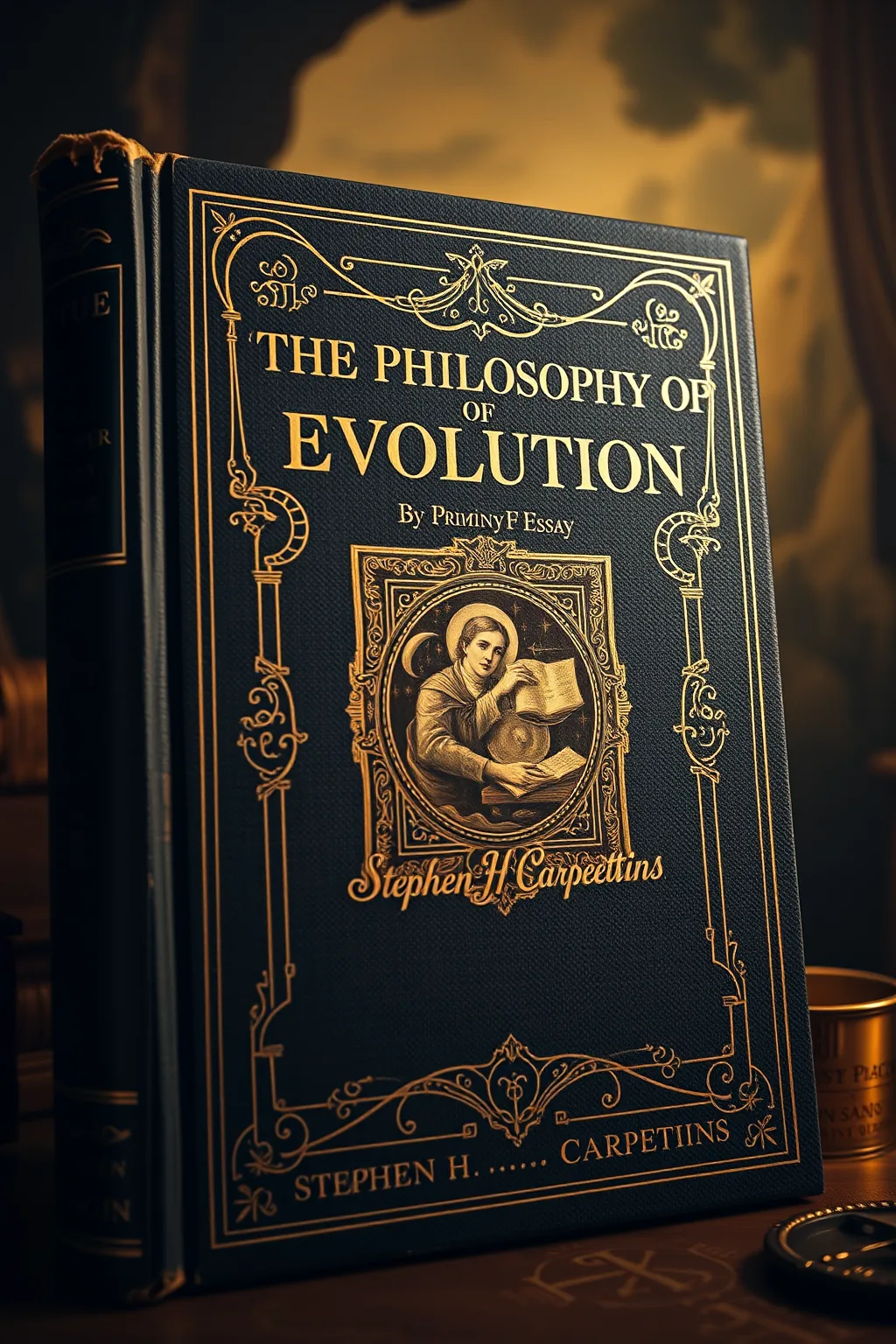
The Philosophy of Evolution: Together With a Preliminary Essay on The Metaphysical Basis of Science
 69
69

The Philosophy of Evolution: Together With a Preliminary Essay on The Metaphysical Basis of Science



Stephen H. Carpenter's 'The Philosophy of Evolution' is a captivating exploration of the occult dimensions of evolutionary theory. Published in 1831, this book remains a valuable resource for modern esoteric seekers, offering a unique blend of scientific rigor and metaphysical insight. Carpenter's ability to weave together ancient wisdom and contemporary scientific thought makes this text a standout in the field of occult philosophy. For those interested in understanding the deeper, more spiritual aspects of evolution, this book provides a comprehensive and enlightening read. The detailed essays and profound reflections make it an essential addition to any esoteric library. The book's historical context and meticulous research add depth and credibility to its esoteric claims, making it a timeless classic.
📝 Description
69
Stephen H. Carpenter published 'The Philosophy of Evolution' in 1901, arguing for a metaphysical basis of science.
Published in 1901, Stephen H. Carpenter's 'The Philosophy of Evolution' examines the metaphysical foundations of scientific thought. Carpenter argues that conventional scientific understanding overlooks deeper symbolic meanings inherent in natural phenomena. He posits a hidden knowledge that underpins evolutionary theory, suggesting a spiritual dimension to biological development. The book uses evocative language to foster intellectual and spiritual contemplation for the reader.
This work appeals to those interested in occult philosophy and the evolution of life. Carpenter's perspective offers a unique view on the universal interconnectedness of existence. It is suited for individuals seeking esoteric knowledge, students of metaphysics, and practitioners of arcane disciplines. The book encourages a deeper reflection on the relationship between the material world and its underlying spiritual principles.
This book belongs to a tradition of esoteric thought that seeks to reconcile spiritual or metaphysical principles with scientific discoveries, particularly in biology. It follows thinkers who looked beyond materialist explanations to find deeper, often symbolic, meanings in the natural world. Carpenter's work is situated within a turn-of-the-century intellectual climate where vitalism and spiritual interpretations of life's processes were debated alongside emerging scientific theories.
✍️ Author

Carpenter, Stephen H. (Stephen Haskins)
Stephen Haskins Carpenter (August 7, 1831 – December 7, 1878) was an American academic, professor, philosopher, and linguist from Little Falls, New York. During his lifetime Carpenter oversaw the growth and management of various departments at the Universit…
💡 Why Read This Book?
Reading 'The Philosophy of Evolution' today offers a unique opportunity to explore the esoteric dimensions of evolutionary theory. This book provides readers with a deeper understanding of the metaphysical foundations of science, enriching their spiritual and intellectual journeys. Whether you are a student of occult philosophy, a scientist curious about the spiritual side of evolution, or a seeker of ancient wisdom, this text offers valuable insights and perspectives that can enrich your understanding of the world.
⭐ Reader Reviews
Honest opinions from readers who have explored this book.
❓ Frequently Asked Questions
What is the main focus of 'The Philosophy of Evolution'?
The main focus of this book is the exploration of evolutionary theory through an esoteric and occult lens, combining scientific insights with metaphysical and spiritual principles.
Is this book suitable for beginners in occult studies?
While the book is rich in esoteric insights, it may be more suited to those with some prior knowledge of occult philosophy and evolutionary theory.
How does Carpenter integrate science and metaphysics in this work?
Carpenter integrates science and metaphysics by drawing from ancient wisdom and mystical traditions to provide a deeper understanding of the principles that govern both natural and spiritual evolution.
🔮 Key Themes & Symbolism
Metaphysical Basis of Science
Carpenter looks at the hidden metaphysical foundations of scientific thought, revealing the occult philosophy that underlies the natural world. This theme is central to understanding the deeper symbolism and interconnectedness of all things.
Symbolism in Evolution
The book explores the strong symbolism embedded in the evolutionary process, inviting readers to contemplate the deeper meanings behind natural phenomena. This theme highlights the mystical underpinnings of scientific evolution.
Interconnectedness of All Things
Carpenter's work emphasizes the interconnectedness of all things, providing a unique perspective on the evolutionary process. This theme is essential for those seeking to understand the occult philosophy behind the natural world.
💬 Memorable Quotes
Direct passages from the work, attributed to the author.
“Nature's secrets are revealed to those who seek hidden knowledge.”
— Carpenter encourages readers to explore the deeper symbolism of natural phenomena.
“The evolutionary journey is a spiritual quest for hidden wisdom.”
— Carpenter invites readers to contemplate the spiritual dimensions of evolution.
💡 Key Ideas
Editorial paraphrase of the work's core concepts — not direct quotes.
The evolutionary process is a dance of symbols and meanings.
This passage highlights the mystical underpinnings of scientific evolution.
The interconnectedness of all things is the key to understanding evolution.
This quote emphasizes the unity of all things in the evolutionary process.
Science and mysticism are two sides of the same coin.
This passage underscores the metaphysical basis of scientific thought.
🌙 Esoteric Significance
Tradition
This book belongs to the Hermetic tradition, which emphasizes the interconnectedness of all things and the hidden knowledge that underlies the natural world. Carpenter's work is a proof of the enduring relevance of Hermetic principles in understanding evolution.
Symbolism
Key symbols in this book include the evolutionary process as a dance of symbols and meanings, and the interconnectedness of all things. These symbols invite readers to contemplate the deeper spiritual dimensions of natural phenomena.
Modern Relevance
Today, this book remains relevant for modern practitioners of esoteric arts and seekers of hidden wisdom. It provides a unique perspective on the evolutionary process, bridging the gap between empirical observation and spiritual revelation.
👥 Who Should Read This Book
Beginners in occult philosophy will find this book accessible and enlightening, providing a solid foundation for further study. Scholars of metaphysics will appreciate the depth of Carpenter's insights and the rigorous exploration of the metaphysical basis of science. Spiritual seekers will be drawn to the strong symbolism and mystical themes, while practitioners of esoteric arts will find valuable guidance in understanding the interconnectedness of all things.
📜 Historical Context
Published in an era of rapid scientific discovery, The Philosophy of Evolution by Stephen H. Carpenter stands out for its mix of scientific inquiry and mystical insight. The book was written during a time when the boundaries between science and spirituality were being explored, making it an important contribution to the field of occult philosophy. Carpenter's work has influenced generations of seekers and scholars, providing a deeper understanding of the evolutionary process and its metaphysical foundations.
📔 Journal Prompts
How does the metaphysical basis of science influence your understanding of evolution?
What symbols in nature resonate with you and why?
In what ways do you see the interconnectedness of all things in your daily life?
How can you apply the principles of Hermeticism to your spiritual practice?
What hidden knowledge have you discovered in your study of evolution?
🗂️ Glossary
Hermeticism
A philosophical and spiritual tradition based on the writings attributed to Hermes Trismegistus, emphasizing the interconnectedness of all things and the hidden knowledge of the natural world.
Occult Philosophy
The study of hidden knowledge and mystical themes that underlie the natural world, often involving esoteric symbols and metaphysical principles.
Metaphysical Basis
The underlying philosophical principles that govern the natural world, often explored through spiritual and mystical inquiry.
Evolutionary Process
The natural progression of life forms over time, often studied through scientific and metaphysical lenses.
Symbolism
The use of symbols to convey deeper meanings and spiritual truths, often explored in occult philosophy and esoteric studies.
This book appears in 12 collections
🔮 Readers Also Liked
Browse all →








From the “Meditation” Collection
View all →








More Free Occult Philosophy Books
View all →