Defining Hinduism
 77
77

Defining Hinduism
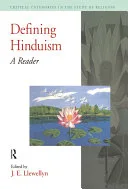
J. E. Llewellyn's 'Defining Hinduism' tackles the monumental task of encapsulating a faith that defies easy definition. The strength of this work lies in its scholarly rigor, bringing together multiple perspectives to illustrate Hinduism's adaptive nature. Llewellyn resists the temptation to present a singular, unchanging narrative, instead showcasing its historical fluidity. A particular strength is the exploration of how external pressures, from invasions to colonial encounters, forced redefinitions and internal reformations. However, for the uninitiated, the density of academic discourse and the reliance on specialized terminology might present a barrier. The nuanced discussion of the concept of 'Sanatana Dharma' as a more accurate descriptor than 'Hinduism' in certain contexts is compelling, illustrating the book's analytical depth. Ultimately, 'Defining Hinduism' serves as an essential, albeit demanding, resource for serious students of religious history.
📝 Description
77
J. E. Llewellyn's 2017 book grapples with defining Hinduism's diverse traditions.
Published in 2017, J. E. Llewellyn's 'Defining Hinduism' examines the complexities of defining the world's oldest living religion. The book acknowledges the difficulty in applying a single definition to a faith system characterized by varied philosophies, practices, and regional expressions. It moves beyond simple labels to consider the dynamic evolution of Hindu traditions over thousands of years.
This work is aimed at academic researchers of South Asian religions, students of comparative theology, and practitioners seeking a deeper grasp of Hindu thought. It is not an introductory text but a rigorous academic analysis for those prepared to engage with scholarly discourse and historical examination. Llewellyn's study arises in an academic climate increasingly interested in post-colonial viewpoints and the dismantling of essentialist religious ideas.
This work engages with Hindu traditions, which are often considered esoteric due to their philosophical depth and the nuanced interpretations required to understand concepts like Dharma, Karma, and Moksha. These ideas are not merely theological doctrines but frameworks for understanding existence that have evolved over millennia. Llewellyn's approach, focusing on historical reinterpretation and the impact of cultural shifts, places the book within scholarly discussions that seek to understand the internal logic and development of these complex spiritual systems, moving beyond superficial classifications.
💡 Why Read This Book?
• Gain clarity on the historical evolution of Hindu thought, moving beyond static perceptions, as detailed in the book's exploration of the period between the Maurya Empire and the Gupta Empire. • Understand the academic challenges in defining a religion with a 4,000-year history, learning how scholars like Llewellyn approach such complex traditions. • Appreciate the varied interpretations of core concepts like Dharma, seeing how they have been recontextualized in response to specific cultural and political demands throughout history.
⭐ Reader Reviews
Honest opinions from readers who have explored this book.
❓ Frequently Asked Questions
When was 'Defining Hinduism' by J. E. Llewellyn first published?
'Defining Hinduism' by J. E. Llewellyn was first published on July 28, 2017, making it a relatively recent scholarly contribution to the study of Hindu traditions.
What is the primary focus of J. E. Llewellyn's 'Defining Hinduism'?
The book centers on understanding what Hinduism is, what it has been historically, and how its definition has been debated and evolved in response to various cultural and ideological demands.
Does 'Defining Hinduism' present a single, unified view of the religion?
No, the book emphasizes that Hinduism is not monolithic. It highlights its complex pantheon and belief systems, acknowledging its continuous evolution and adaptation over time.
Who are the contributors to 'Defining Hinduism'?
The book brings together leading scholars actively engaged in the study of South Asian religions, providing diverse academic perspectives on the subject.
Is 'Defining Hinduism' suitable for beginners?
While informative, the book is geared towards a more academic audience. It delves into scholarly discourse and historical analysis, making it best suited for students and researchers of religion.
What historical periods does 'Defining Hinduism' examine?
The book traces Hinduism's history, acknowledging its ancient origins and its evolution through various periods, including responses to changing cultural, political, and ideological landscapes.
🔮 Key Themes & Symbolism
The Fluidity of Dharma
The work underscores that Dharma, a central concept often translated as 'duty' or 'righteousness,' is not a fixed doctrine but a dynamic principle. Llewellyn's analysis demonstrates how interpretations of Dharma have shifted dramatically from the Vedic period, influenced by societal structures and philosophical debates, to accommodate evolving notions of social order and individual conduct.
Evolutionary Nature of Belief
Contrary to perceptions of religious stasis, 'Defining Hinduism' meticulously illustrates how this ancient faith has continually adapted. The book examines how responses to external influences, such as Hellenistic contact following Alexander the Great's campaigns, and internal intellectual movements have reshaped Hindu cosmology and soteriology over centuries.
The Challenge of Definition
A core theme is the inherent difficulty in imposing a singular definition on Hinduism. Llewellyn highlights the vast diversity within the tradition—from Advaita Vedanta's monism to theistic devotionalism—and argues that its strength lies in this very capacity for pluralism and adaptation, rather than adherence to a rigid creed.
Hinduism and its Historical Milieu
The book firmly situates Hinduism within its historical and cultural contexts. It explores how political shifts, such as the rise and fall of empires like the Vijayanagara Empire, and the impact of colonial encounters, have necessitated re-examinations and reformulations of Hindu identity and practice.
💬 Memorable Quotes
Direct passages from the work, attributed to the author.
“Hinduism has, like any faith of duration, evolved in response to changing cultural, political and ideological demands.”
— This statement directly challenges the notion of an unchanging, monolithic Hinduism, emphasizing its historical adaptability. It suggests that understanding the faith requires examining its interactions with its environment across time.
“The oldest of the world religions, Hinduism presents a complex pantheon and system of beliefs.”
— This highlights the antiquity and intrinsic complexity of Hinduism. It signals that the book will explore not just superficial aspects but the intricate layers of deities and philosophical frameworks that characterize the tradition.
“Defining Hinduism focuses on what Hinduism is, what it has been, and what some have argued it should be.”
— This frames the book's objective: to present a many-sided view. It acknowledges historical states, current understanding, and even prescriptive ideals about the religion's future direction.
“The book brings together some of the leading scholars working on South Asian religions today.”
— This points to the academic caliber and collaborative nature of the work. It assures the reader that the content is based on contemporary, expert analysis from multiple viewpoints.
“Far from being unchanging, Hinduism has... evolved.”
— This is a direct refutation of static interpretations. It emphasizes that Hinduism's longevity is tied to its capacity for change and adaptation, a key theme explored throughout the text.
🌙 Esoteric Significance
Tradition
While 'Defining Hinduism' is primarily an academic text, its exploration of Dharma, Karma, and Moksha touches upon concepts central to many esoteric traditions, including Theosophy and certain branches of Western Yoga philosophy. These traditions often interpret Hindu cosmology and yogic practices through specific, sometimes syncretic, lenses. Llewellyn's work provides the scholarly grounding to understand the original contexts and diverse interpretations of these concepts, allowing esoteric practitioners to engage with their chosen paths from a more informed historical and philosophical standpoint.
Symbolism
The book implicitly engages with potent symbols within Hinduism. Concepts like the Om (Aum) symbol, representing the primordial sound and the unity of consciousness, and the cyclical nature of time (Yugas), are foundational. The exploration of various deities, such as Vishnu and Shiva, can be seen as symbolic representations of cosmic forces and human aspirations. Understanding these symbols within their historical development, as presented by Llewellyn, offers a deeper esoteric appreciation beyond simplistic iconographic readings.
Modern Relevance
Contemporary thinkers and practitioners in fields ranging from comparative mysticism to transpersonal psychology find value in Llewellyn's scholarly approach. Movements that seek to integrate Eastern philosophies with Western psychological frameworks, or those involved in interfaith dialogue, can utilize the book's detailed historical and philosophical analyses. It provides a crucial counterpoint to superficial or overly spiritualized interpretations of Hinduism, grounding modern esoteric interests in a more robust understanding of the tradition's vast intellectual heritage.
👥 Who Should Read This Book
• Students of comparative religion and philosophy seeking a scholarly overview of Hinduism's historical development and definitional challenges. • Researchers of South Asian cultural history interested in understanding how religious traditions adapt to societal changes over millennia. • Serious practitioners of Yoga and Vedanta desiring a deeper, academically informed context for the concepts and philosophies underpinning their practices.
📜 Historical Context
Published in 2017, J. E. Llewellyn's 'Defining Hinduism' emerges within a vibrant field of South Asian religious studies, marked by critical engagement with colonial-era scholarship and a growing emphasis on indigenous perspectives. The book directly addresses the legacy of scholars like Sir Edwin Arnold, whose popular works in the late 19th century introduced aspects of Indian philosophy to the West, sometimes through romanticized lenses. Llewellyn's work, by contrast, prioritizes a nuanced academic dissection, drawing on contemporary scholarship that grapples with Hinduism's immense historical depth, stretching back to the Indus Valley Civilization. The book’s contribution lies in synthesizing diverse scholarly arguments about Hinduism's nature, particularly in an era where discussions around religious identity and political nationalism in India are prominent. It implicitly engages with the ongoing debate about whether 'Hinduism' is a coherent category or a colonial construct, positioning itself as a resource for understanding its historical formation and diverse manifestations.
📔 Journal Prompts
The concept of Dharma as an evolving principle.
Defining 'Hinduism' across different historical epochs.
The relationship between Hinduism and its cultural milieu.
Scholarly debates surrounding the term 'Hinduism'.
The adaptive capacity of ancient religious traditions.
🗂️ Glossary
Dharma
A fundamental concept in Hinduism, often translated as duty, righteousness, law, or cosmic order. Its interpretation has evolved significantly throughout history.
Karma
The principle of cause and effect where actions influence an individual's present and future lives. Central to Hindu ethics and soteriology.
Moksha
Liberation or release from the cycle of birth, death, and rebirth (samsara). A primary spiritual goal in many Hindu traditions.
Pantheon
The collective gods and goddesses worshipped in a particular religion. Hinduism is known for its complex and diverse pantheon.
Sanatana Dharma
Literally 'eternal dharma' or 'eternal truth.' Often used by Hindus as a more encompassing and traditional name for their religion, predating the term 'Hinduism'.
Soteriology
The study of doctrines of salvation or liberation. In Hinduism, this relates to achieving Moksha.
Vedic Period
An early period in the history of ancient India (c. 1500–500 BCE) characterized by the composition of the Vedas, foundational scriptures of Hinduism.