What is Extrasensory Perception?
Extrasensory Perception (ESP) refers to the ability to acquire information not through the recognized senses but by means unknown to current science. This encompasses phenomena such as telepathy (mind-to-mind communication), clairvoyance (seeing distant objects or events), precognition (knowing future events), and psychokinesis (influencing physical objects with the mind). The study of ESP often intersects with parapsychology, exploring the boundaries of consciousness and its potential beyond physical limitations.
Best Books for Complete Beginners
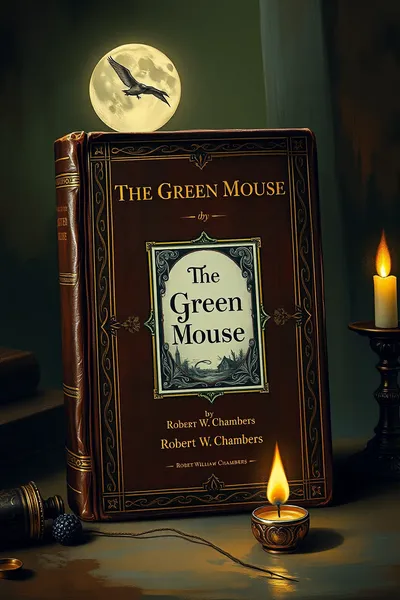
For those new to extrasensory perception, starting with accessible overviews is key. William Walker Atkinson's 'Clairvoyance and Occult Powers' provides a practical introduction to developing psychic abilities. Andrew Lang's 'The Making of Religion' offers a broad historical survey of belief systems and psychic phenomena, setting a wider context. Robert W. Chambers' 'The Green Mouse' presents a fictionalized exploration of psychic influence that can spark curiosity about the topic's potential.
Intermediate Reading
Moving beyond introductory concepts, intermediate texts delve deeper into the nature and investigation of ESP. H. P. Blavatsky's 'Isis unveiled' (Volumes 1 & 2) offers a comprehensive, albeit complex, exploration of occult sciences and psychic phenomena, challenging conventional scientific and religious paradigms. Jiddu Krishnamurti's 'Education as Service' touches on the nature of consciousness and perception that can inform an understanding of ESP. Edgar Thurston's 'Omens and Superstitions of Southern India' provides ethnographic insights into culturally recognized forms of ESP.
Classical / Advanced Texts
Advanced study of ESP requires engaging with foundational philosophical and historical documents. Immanuel Kant's 'Fundamental Principles of the Metaphysic of Morals' and 'Prolegomena to Any Future Metaphysics' offer rigorous philosophical frameworks for understanding the limits of human perception and reason. J. L. Kennon's 'The Planet Mars and Its Inhabitants, a Psychic Revelation' presents a specific, albeit unusual, claim of psychic communication. The 'Preliminary Report of the Commission Appointed by the University of Pennsylvania to Investigate Modern Spiritualism' offers a historical account of early scientific attempts to validate spiritualist claims.
Reading Order — Step by Step
Begin with William Walker Atkinson's 'Clairvoyance and Occult Powers' for practical insights. In Month 1, follow with Andrew Lang's 'The Making of Religion' for historical context. Month 2 should include H. P. Blavatsky's 'Isis unveiled' (Volume 1) to grasp broader occult theories. For Month 3, explore Edgar Thurston's 'Omens and Superstitions of Southern India' for cultural perspectives. Advanced readers can then tackle Immanuel Kant's 'Prolegomena to Any Future Metaphysics' and the Seybert Commission report in subsequent months.
Frequently Asked Questions
Which ESP book should I read first?
For beginners, 'Clairvoyance and Occult Powers' by William Walker Atkinson is a strong starting point, offering practical exercises and foundational concepts in a clear manner.
Are fictional books helpful for understanding ESP?
Yes, fictional works like Robert W. Chambers' 'The Green Mouse' can introduce complex ideas about psychic influence and unseen forces in an engaging narrative format, sparking curiosity.
What is the difference between telepathy and clairvoyance?
Telepathy involves direct mind-to-mind communication of thoughts or feelings, while clairvoyance is the ability to perceive information about people, places, or events through means beyond the known senses.
How do classical philosophers like Kant relate to ESP?
Kant's work, such as 'Prolegomena to Any Future Metaphysics,' explores the limits of human perception and reason, providing a philosophical framework to question what can be known and how, which is relevant to ESP studies.
Is the Seybert Commission report still relevant?
The 'Preliminary Report of the Commission Appointed by the University of Pennsylvania to Investigate Modern Spiritualism' is historically significant, showing early academic attempts to scientifically validate spiritualist claims and ESP.
Where can I find information on the historical study of psychic phenomena?
Andrew Lang's 'The Making of Religion' offers a broad historical survey of beliefs and phenomena, while Edgar Thurston's 'Omens and Superstitions of Southern India' provides ethnographic details on cultural manifestations.
What are the core principles of Hermetic philosophy related to ESP?
The Kybalion outlines principles like 'Mentalism' (The All is Mind; the Universe is Mental), suggesting that consciousness is fundamental and can influence reality, a concept central to many ESP theories.