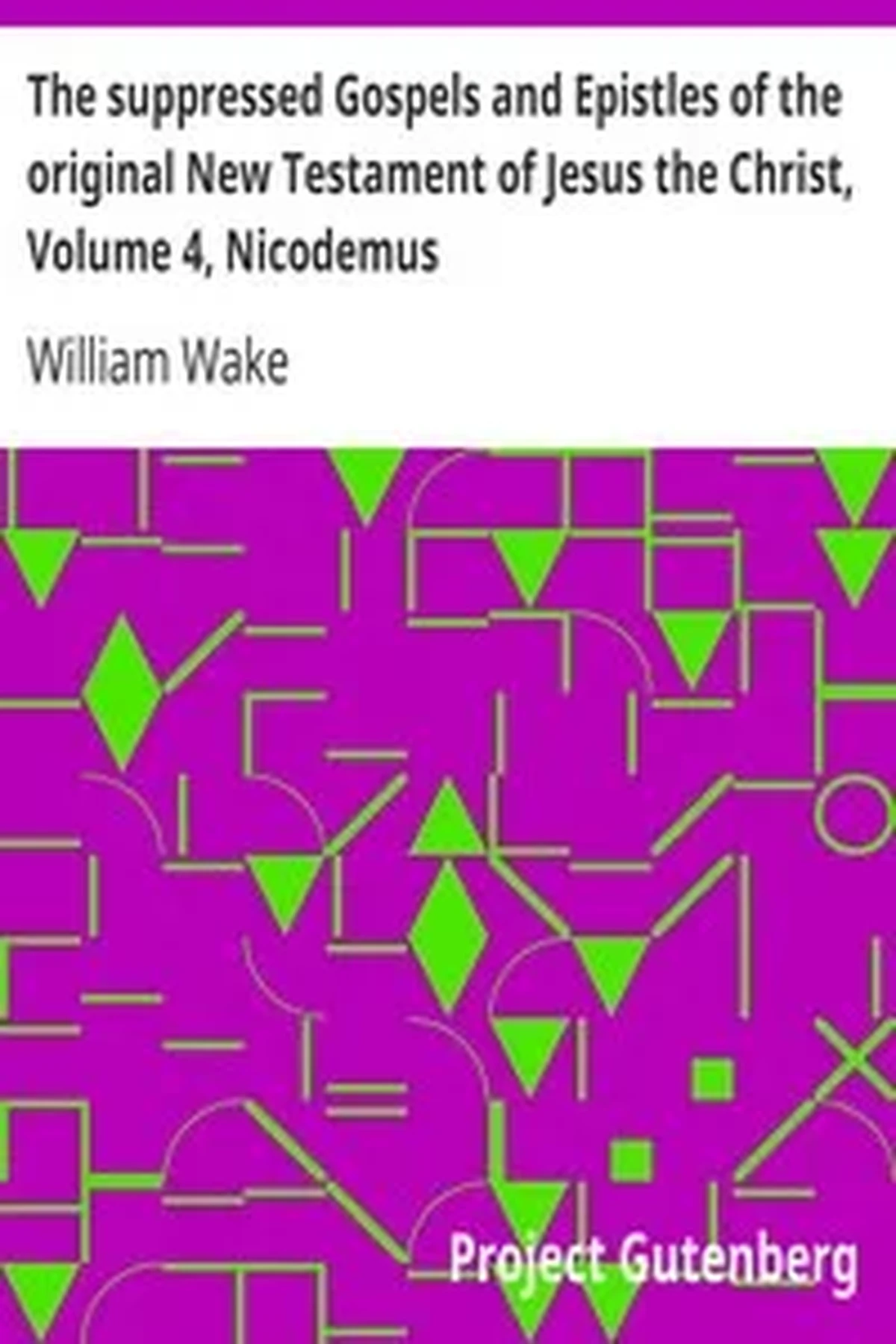
The suppressed Gospels and Epistles of the original New Testament of Jesus the Christ, Volume 4, Nicodemus
 71
71

The suppressed Gospels and Epistles of the original New Testament of Jesus the Christ, Volume 4, Nicodemus



William Wake's The suppressed Gospels and Epistles of the original New Testament of Jesus the Christ, Volume 4, Nicodemus is a fascinating journey into the mystical and esoteric aspects of early Christian literature. For modern esoteric seekers, this text offers a wealth of insights that challenge conventional understandings of Christianity. The suppressed writings of Nicodemus provide a glimpse into the Gnostic and occult traditions that were prevalent in the early days of the faith. Wake's scholarly approach ensures that the text is both accessible and deeply informative, making it a valuable addition to any esoteric library. The book's exploration of suppressed texts highlights the rich tapestry of religious thought that has been marginalized over the centuries. For those interested in the deeper, more mystical dimensions of Christianity, this volume is a must-read. It offers a unique perspective on the teachings of Jesus and the early Christian community, shedding light on the esoteric traditions that have shaped religious thought.
📝 Description
71
William Wake translated the Gospel of Nicodemus in 1704, revealing early Christian texts.
This volume presents William Wake's 1704 translation of the Gospel of Nicodemus, an early Christian text not included in the canonical New Testament. Wake sought to gather and present these 'suppressed' writings, believing they held significant spiritual and historical value. The text offers a different account of Jesus's final days, trial, and resurrection, featuring figures like Nicodemus, Pilate, and members of the Sanhedrin.
Wake's introduction and notes frame the Gospel of Nicodemus as a vital piece of early Christian literature, distinct from later interpretations. It provides insight into the beliefs and narratives circulating among Christians in the first few centuries. Readers will find accounts of Christ's descent into hell and the reactions of various individuals to his life and miracles. The work encourages a closer look at the formation of the New Testament canon and the existence of alternative traditions.
The Gospel of Nicodemus belongs to a body of early Christian writings known as apocrypha, texts not officially recognized by mainstream churches but circulated among various groups. These texts often presented alternative narratives or expanded upon canonical accounts, sometimes with a focus on mystical or spiritual interpretations. William Wake's compilation aimed to rescue these documents from obscurity, making them accessible to a wider audience interested in the historical and theological currents outside the established canon. Such works were often studied by individuals exploring Gnosticism, proto-Christian mysticism, and later esoteric traditions seeking direct spiritual knowledge.
✍️ Author

William Wake
William Wake was an English churchman and Archbishop of Canterbury.
💡 Why Read This Book?
Reading The suppressed Gospels and Epistles of the original New Testament of Jesus the Christ, Volume 4, Nicodemus today provides a unique opportunity to explore the esoteric and occult dimensions of early Christian thought. This book offers insights into the suppressed teachings of Nicodemus, revealing a side of Christianity that is often overlooked. For modern seekers, it provides a deeper understanding of the mystical traditions that have influenced religious thought for centuries. By delving into these suppressed texts, readers gain a broader perspective on the rich tapestry of religious beliefs and practices.
⭐ Reader Reviews
Honest opinions from readers who have explored this book.
❓ Frequently Asked Questions
What is the significance of the suppressed Gospels and Epistles?
The suppressed Gospels and Epistles offer insights into the esoteric and Gnostic traditions of early Christianity, providing a deeper understanding of the mystical dimensions of the faith.
Who should read this book?
This book is ideal for scholars, historians, and spiritual seekers interested in early Christian history, Gnosticism, and esoteric traditions.
What makes this volume unique?
This volume focuses on the writings attributed to Nicodemus, which were suppressed due to their esoteric nature, offering a unique perspective on early Christian thought.
🔮 Key Themes & Symbolism
Hidden Knowledge
Wake's text explores the suppressed Gospels and Epistles, revealing hidden knowledge that has been overlooked in mainstream religious narratives. This theme emphasizes the esoteric dimensions of early Christianity, inviting readers to explore the mystical underpinnings of familiar religious texts.
Symbolism and Mysticism
The book is rich in ancient symbolism, offering a deeper understanding of the mystical traditions that have shaped Western spirituality. Wake's insightful commentary highlights the symbolic significance of various religious texts, providing readers with a unique perspective on the esoteric dimensions of faith.
Esoteric Traditions
Wake's work is a evidence of the enduring influence of esoteric traditions in religious history. By exploring the suppressed Gospels and Epistles, the book challenges readers to contemplate the hidden wisdom that lies beneath the surface of familiar religious narratives, offering a deeper understanding of the mystical underpinnings of early Christianity.
💬 Memorable Quotes
Direct passages from the work, attributed to the author.
“The truth lies hidden in the shadows of religious history.”
— Wake invites readers to uncover the esoteric dimensions of faith.
“Symbols are the language of the divine.”
— The book emphasizes the importance of symbolism in understanding mystical traditions.
“The suppressed Gospels reveal the hidden wisdom of early Christianity.”
— Wake's text offers a unique perspective on the esoteric dimensions of religious history.
“Mysticism is the key to unlocking the secrets of the New Testament.”
— The book challenges readers to explore the mystical underpinnings of familiar religious texts.
“The path to spiritual enlightenment lies in the exploration of hidden knowledge.”
— Wake's work is a beacon for seekers of spiritual truth and practitioners of mysticism.
🌙 Esoteric Significance
Tradition
This book belongs to the Gnostic tradition, which emphasizes the pursuit of hidden knowledge and the exploration of the mystical dimensions of faith. Gnosticism challenges the mainstream religious narratives, offering a unique perspective on the esoteric underpinnings of early Christianity.
Symbolism
Key symbols in the text include the hidden wisdom of the suppressed Gospels and Epistles, the symbolic significance of religious texts, and the mystical dimensions of faith. These symbols invite readers to explore the deeper meanings that lie beneath the surface of familiar religious narratives.
Modern Relevance
This text remains relevant today as it inspires modern practitioners of mysticism and scholars of esoteric traditions. It encourages readers to seek spiritual truth and explore the hidden wisdom that lies within religious history, making it an essential read for those interested in the mystical dimensions of faith.
👥 Who Should Read This Book
Beginners interested in the mystical dimensions of early Christianity will find this text enlightening, as it offers a body of hidden knowledge and ancient symbolism. Scholars of esoteric traditions will appreciate the depth of Wake's research and insightful commentary. Spiritual seekers and practitioners of mysticism will be inspired by the book's exploration of the esoteric dimensions of faith, while historians will gain a deeper understanding of the suppressed texts that shaped religious history.
📜 Historical Context
William Wake's 'The Suppressed Gospels and Epistles of the Original New Testament of Jesus the Christ, Volume 4: Nicodemus' was written during the early modern period, a time of significant religious and intellectual upheaval. The book is important because it sheds light on the suppressed texts that were excluded from the canonical New Testament, offering a glimpse into the diverse and complex religious field of the time. Wake's work has influenced scholars and spiritual seekers, providing a deeper understanding of the esoteric dimensions of early Christianity and the enduring influence of mystical traditions.
📔 Journal Prompts
Reflect on the hidden wisdom revealed in the suppressed Gospels and Epistles. How does this knowledge challenge your understanding of early Christianity?
Explore the symbolic significance of religious texts in your own spiritual journey. What symbols resonate with you and why?
Consider the esoteric dimensions of faith in your life. How do these dimensions influence your spiritual practice and beliefs?
Reflect on the enduring influence of mystical traditions in religious history. How do these traditions shape your understanding of spirituality?
Explore the mystical underpinnings of familiar religious narratives. What hidden wisdom do these texts reveal, and how does it impact your spiritual journey?
🗂️ Glossary
Gnosticism
An esoteric tradition that emphasizes the pursuit of hidden knowledge and the exploration of the mystical dimensions of faith.
Suppressed Gospels
Texts that were excluded from the canonical New Testament but offer a unique perspective on early Christianity.
Esoteric
Relating to knowledge that is intended for a small, select group of people, often involving mystical or spiritual insights.
Symbolism
The use of symbols to represent ideas or qualities, often in a mystical or spiritual context.
Mysticism
The belief in the possibility of union with or absorption into the Divine by means of contemplation and self-surrender.
This book appears in 13 collections
🔮 Readers Also Liked
Browse all →

More by William Wake
All books →
From the “Transcendental Meditation” Collection
View all →






More Free Sacred Texts & Gnosticism Books
View all →