3 Baruch
 82
82

3 Baruch
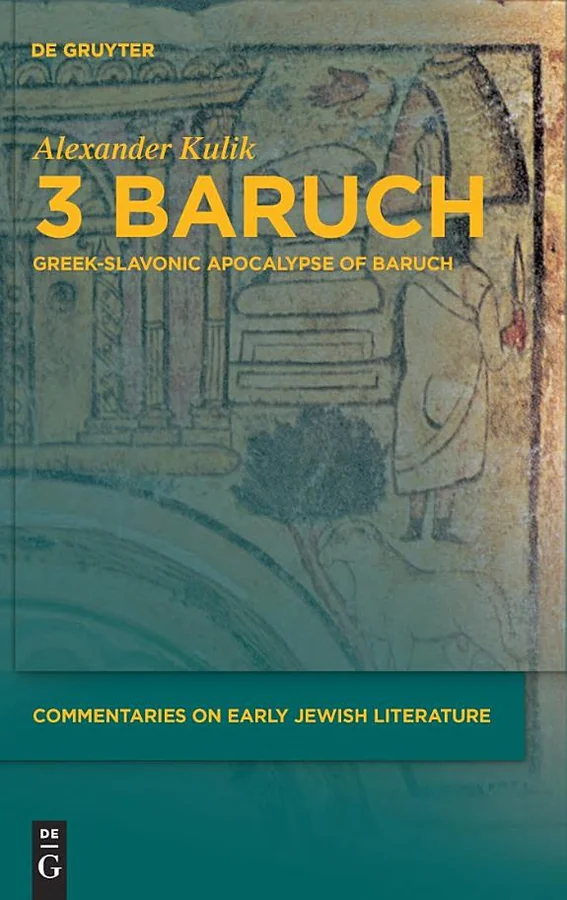
Alexander Kulik’s 2010 edition of "3 Baruch" offers a much-needed scholarly apparatus for one of the more challenging texts in the Hellenistic Jewish corpus. The text itself, detailing Baruch’s ascent through celestial spheres, provides fascinating, albeit dense, material on early Jewish cosmology and angelology. Kulik’s meticulous translation and commentary shine, particularly in contextualizing the text within its historical milieu, referencing its likely origins in Hellenistic Jewish Egypt. A specific strength lies in the elucidation of the text's relationship to other apocalyptic traditions, such as 1 and 2 Enoch. However, the inherent difficulty of the source material means the work remains firmly in the academic realm; its esoteric appeal is more for the dedicated researcher than the casual dabbler. The passage describing the celestial river of fire, while vivid, requires significant interpretive scaffolding provided by Kulik to fully appreciate its theological weight. Ultimately, Kulik’s "3 Baruch" is an indispensable resource for serious students of ancient Jewish literature, offering clarity where before there was considerable obscurity.
📝 Description
82
3 Baruch, a Hellenistic Jewish text, survives in Greek and Slavonic translations.
This text recounts celestial journeys and visions attributed to the biblical figure Baruch. Though fragmented, it offers significant insight into early Jewish apocalyptic and mystical traditions. The work reflects theological debates and cosmological views from the Second Temple period and later.
Its origins are debated, but scholars place it within Hellenistic Jewish circles, potentially in Egypt, between the 1st and 3rd centuries CE. This period saw Greek philosophical ideas influence Jewish thought, resulting in syncretic expressions. The text's preservation in Christian contexts, especially in Slavonic versions, complicates its reception history and the recovery of its original Jewish form.
3 Baruch addresses theological questions about divine transcendence, creation, and humanity's role in a divinely ordered universe. It details heavenly realms, angelic structures, and Baruch's visionary experiences, providing important information for studying the development of angelology and the divine economy in ancient Jewish thought.
Emerging from Hellenistic Jewish circles, 3 Baruch engaged with early mystical and apocalyptic thought. It describes visions of heavenly realms and angelic orders, reflecting a speculative interest in the divine structure and humanity's place within it. The text's survival through Christian transmission highlights its appeal to later esoteric traditions seeking ancient spiritual knowledge, even as reconstructing its original Jewish context presents challenges.
💡 Why Read This Book?
• Gain insight into the structure of the divine cosmos as envisioned in Hellenistic Judaism, particularly the detailed account of Baruch's ascent through multiple heavens. • Understand the evolution of angelology by examining the specific angelic beings and hierarchies described within the text, a key feature absent in earlier Jewish texts. • Appreciate the textual transmission challenges by engaging with Kulik's scholarly work, which addresses the Greek and Slavonic versions and their implications for reconstructing the original text's meaning.
⭐ Reader Reviews
Honest opinions from readers who have explored this book.
❓ Frequently Asked Questions
What is the primary language of the original "3 Baruch" text?
While the original "3 Baruch" is believed to have been composed in Greek, the surviving versions are primarily Greek and Slavonic translations, making the precise reconstruction of its earliest form a scholarly endeavor.
When was "3 Baruch" likely composed?
Scholarly consensus places the composition of "3 Baruch" within the Hellenistic period, likely between the 1st and 3rd centuries CE, reflecting a time of significant intellectual and religious synthesis in the ancient world.
What biblical figure is "3 Baruch" associated with?
The text is attributed to Baruch, the scribe and companion of the prophet Jeremiah, who is presented in the work as undertaking visionary journeys and receiving divine revelations.
How does "3 Baruch" differ from other Baruch texts?
Unlike the canonical "Baruch" or "2 Baruch" (Syriac Apocalypse of Baruch), "3 Baruch" focuses on Baruch's personal ascent through celestial realms and detailed descriptions of angelic structures, rather than prophecy or historical lamentation.
What role did "3 Baruch" play in later esoteric traditions?
While not as widely cited as Enochic literature, "3 Baruch" contributed to the development of Jewish mystical traditions concerning heavenly ascents (Merkavah mysticism) and the architecture of the celestial spheres.
Who is Alexander Kulik and why is his edition important?
Alexander Kulik is a respected scholar specializing in ancient Jewish texts. His 2010 edition provides a critical translation and commentary, making this obscure text accessible and interpretable for contemporary researchers and students.
🔮 Key Themes & Symbolism
Celestial Ascent and Cosmology
The core of "3 Baruch" details Baruch's visionary journey through the heavens. This theme explores the intricate cosmology of Hellenistic Judaism, presenting structured celestial realms, angelic guardians, and the very fabric of the divine presence. Readers encounter detailed descriptions of heavenly architecture and the spatial organization of the cosmos, offering a unique perspective on how ancient Jews conceptualized the universe beyond the earthly plane. The ascent itself signifies a quest for divine knowledge and proximity to God.
Angelology and Divine Hierarchy
This work provides extensive insights into the development of angelology during the Second Temple period. It enumerates various angelic orders, their functions, and their places within a complex divine hierarchy. The text describes specific angelic beings encountered by Baruch during his ascent, detailing their appearances and roles in administering divine will. This focus on angelic structures is crucial for understanding the evolution of divine intermediaries and the perceived mechanisms of divine governance in ancient Judaism.
Textual Transmission and Reception
The survival of "3 Baruch" through Greek and Slavonic versions highlights significant challenges in textual criticism and the history of religious literature. Its preservation, often within Christian manuscript traditions, raises questions about its original Jewish context and subsequent reinterpretation. Kulik's work emphasizes the importance of analyzing these different textual witnesses to reconstruct the text's meaning and trace its complex journey across cultures and languages over centuries.
Baruch as Visionary Figure
The text centers on Baruch, not just as Jeremiah's scribe, but as a chosen visionary figure capable of experiencing direct communion with the divine. His journey represents an archetypal quest for mystical understanding, reading through the dangers and wonders of the celestial realms. This portrayal of Baruch as an intermediary and recipient of divine secrets positions him within a lineage of apocalyptic seers, offering a specific Jewish perspective on prophetic experience and esoteric knowledge transmission.
💬 Memorable Quotes
Direct passages from the work, attributed to the author.
“He saw a river of fire flowing from the throne of God.”
— This imagery likely represents the awesome, purifying, and potentially dangerous proximity of the divine presence. It speaks to the overwhelming power and holiness of God's throne, a concept common in visionary literature.
“The angels stood in ranks, each with specific duties.”
— This highlights the structured and ordered nature of the heavenly realm as conceived in early Jewish thought. It suggests a divine bureaucracy where every celestial being has a defined role in God's plan.
“The text discusses the creation of Adam and the fall.”
— This suggests that "3 Baruch" engages with foundational narratives of Genesis, potentially offering a unique interpretive lens on early human history and its theological implications within a broader cosmic framework.
“Baruch wept at the sight of the heavenly court.”
— This emotional response emphasizes the overwhelming nature of the divine vision, conveying both awe and perhaps sorrow or lamentation at the perceived state of creation or humanity's separation from God.
💡 Key Ideas
Editorial paraphrase of the work's core concepts — not direct quotes.
Baruch was shown the secrets of the heavens.
This paraphrased concept points to the text's function as a vehicle for esoteric knowledge, revealing hidden cosmological and theological truths not accessible through ordinary means.
🌙 Esoteric Significance
Tradition
"3 Baruch" fits within the broader stream of Jewish esoteric traditions, particularly those concerned with celestial ascent and the visionary experience, often associated with Merkavah mysticism. It shares thematic and structural similarities with Enochic literature, which also details journeys through heavenly realms and encounters with angels. While not strictly Hermetic or Gnostic, its exploration of hidden knowledge, cosmic structures, and divine intermediaries speaks to shared esoteric concerns across ancient traditions.
Symbolism
Key symbols include the 'river of fire,' often representing the overwhelming purity and power of the divine presence or a boundary to the celestial realms. Angelic hierarchies themselves function symbolically, illustrating the ordered, divinely managed nature of the cosmos and the distinct roles of celestial beings in mediating between God and humanity. The throne of God is a central symbol of ultimate sovereignty and the source of all creation and revelation.
Modern Relevance
Contemporary scholars of Jewish mysticism and comparative religion continue to analyze "3 Baruch" for its unique contributions to understanding early angelology and cosmology. Its textual variants and transmission history are of interest to digital humanities projects focused on reconstructing ancient texts. Practitioners of Kabbalah and other esoteric paths may find its detailed descriptions of heavenly structures and angelic encounters informative for contemplative practices and conceptualizing the spiritual planes.
👥 Who Should Read This Book
• Scholars of Second Temple Judaism and early Christian origins seeking primary source material on Jewish cosmology and angelology. • Students of comparative religion interested in the development of apocalyptic literature and mystical traditions across ancient Near Eastern cultures. • Researchers of esoteric traditions looking to trace the lineage of concepts related to celestial ascent and divine hierarchies in Jewish mystical thought.
📜 Historical Context
Emerging from the vibrant intellectual milieu of Hellenistic Judaism, likely between the 1st and 3rd centuries CE, "3 Baruch" reflects a period where Jewish thinkers were increasingly engaging with Greek philosophical concepts and cosmology. This era saw the production of significant apocalyptic and pseudepigraphical literature, including works like 1 Enoch, which explored similar themes of heavenly journeys and angelic hierarchies. "3 Baruch" occupies a space where Jewish traditions were being articulated in Greek, bridging the gap between Hebraic scripture and the broader Hellenistic intellectual world. Its preservation primarily through Christian scribal traditions, particularly in Slavonic versions, complicates its reception history. While its exact relationship to contemporary movements like Merkavah mysticism is still debated, its detailed celestial geography and angelology place it firmly within the broader spectrum of early Jewish mystical speculation, offering a counterpoint to more philosophical approaches found in Philo of Alexandria or the nascent Gnostic systems.
📔 Journal Prompts
Baruch's ascent through the heavens, as described in the text.
The specific angelic hierarchies and their functions presented in "3 Baruch".
The symbolic meaning of the 'river of fire' encountered by Baruch.
The challenges and implications of "3 Baruch" surviving primarily through Greek and Slavonic translations.
Baruch's role as a visionary figure receiving divine secrets.
🗂️ Glossary
Hellenistic Judaism
The period and culture of Jews living in the Greco-Roman world from the 3rd century BCE to the 3rd century CE, characterized by the interaction of Jewish traditions with Greek language, philosophy, and culture.
Apocalyptic Literature
A genre of Jewish and early Christian literature featuring divine revelations, often concerning cosmology, eschatology, and the ultimate triumph of good over evil, typically revealed through visions granted to a seer.
Pseudepigrapha
Ancient Jewish and Christian writings purported to be written by biblical figures but actually composed later, often during the Second Temple period, covering themes like wisdom, prophecy, and apocalyptic visions.
Angelology
The study of angels, including their nature, roles, hierarchies, and significance within religious and theological frameworks. "3 Baruch" is a key text for understanding early Jewish angelological concepts.
Merkavah Mysticism
A form of early Jewish mysticism focused on visionary ascents to the heavenly "chariot" (Merkavah) described in Ezekiel's vision, involving intense contemplation of divine throne-chariot imagery and angelic realms.
Second Temple Period
The era in Jewish history from the rebuilding of the Second Temple in Jerusalem (c. 516 BCE) to its destruction by the Romans (70 CE), a crucial period for the development of Judaism and early Christianity.
Celestial Spheres
Conceived cosmological realms or heavens, often depicted as concentric shells or levels surrounding the Earth, through which one ascends to reach the divine presence in many ancient and medieval worldviews.
This book appears in 1 collection
🔮 Readers Also Liked
Browse all →







From the “Apocrypha” Collection
View all →



More Free Sacred Texts & Gnosticism Books
View all →