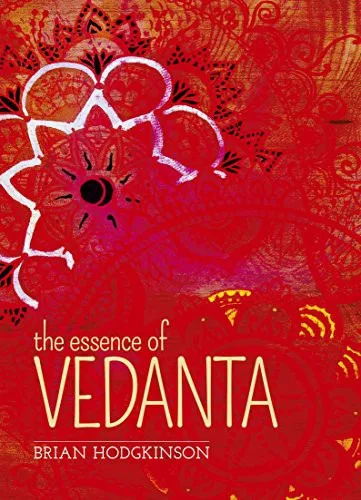
The Essence of Vedanta
 77
77

The Essence of Vedanta
Hodgkinson’s "The Essence of Vedanta" serves as a clear exposition of complex philosophical ideas, making accessible the core tenets of Vedic thought. Its strength lies in systematically presenting the arguments attributed to Adi Shankara, particularly concerning the nature of the self and reality. However, the book occasionally feels like a scholarly summary rather than a deeply personal exploration. A particularly effective section details the concept of Maya, explaining how perceived multiplicity arises from the singular Brahman, which is crucial for understanding the Vedantic worldview. While it effectively outlines the philosophical positions, it could benefit from more engagement with the practical implications for lived experience. It provides a solid intellectual grounding in Vedanta.
📝 Description
77
Brian Hodgkinson's 2006 book examines Vedanta's core philosophical questions.
Brian Hodgkinson's "The Essence of Vedanta" scrutinizes fundamental philosophical inquiries through the Veda, ancient Indian scripture. The work addresses central ideas like selfhood, the workings of nature, causality, and the concept of freedom. It gives particular attention to the philosophical contributions of Adi Shankara, a significant figure in Advaita Vedanta. This book is for students of philosophy and those interested in comparative religion, especially those wanting to grasp the basic principles of Indian thought. It suits individuals contemplating existential questions about identity, determinism, and the human condition, drawing perspectives from a very old spiritual tradition. The text considers concepts vital to Vedanta, such as Brahman (ultimate reality), Atman (the self), Maya (illusion), Karma (action and consequence), and Moksha (liberation). It presents the non-dualistic view that Atman and Brahman are one, questioning common ideas of individual identity and the apparent separation of existence. The complex connection between cause and effect in the material world also receives significant focus.
Published in 2006, "The Essence of Vedanta" engages with centuries of Vedic scholarship. It centers on the interpretations of Adi Shankara, whose thought shaped Advaita Vedanta from the 8th century CE. The book places these ancient discussions within a larger philosophical framework, addressing enduring questions about existence and consciousness. It follows a tradition that seeks to understand ultimate reality through introspection and scripture, moving beyond conventional dualistic perceptions.
⭐ Reader Reviews
Honest opinions from readers who have explored this book.
❓ Frequently Asked Questions
What are the primary questions addressed in 'The Essence of Vedanta'?
The book tackles fundamental existential inquiries such as the identification of the self, the causes and effects within nature, the nature of free will versus determinism, the definition of human freedom, and the post-mortem condition, all from a Vedic perspective.
Who was Adi Shankara and why is he important in this book?
Adi Shankara, a revered philosopher from approximately the 8th century CE, is central to "The Essence of Vedanta." He is credited with systematizing Advaita Vedanta, a non-dualistic school of Hindu philosophy, and his views on Brahman, Atman, and Maya form a significant part of the book's examination.
What is the Veda mentioned in the book?
The Veda refers to the oldest scriptures of Hinduism, considered by adherents to be divinely revealed. They form the foundational texts for various schools of Indian philosophy, including Vedanta, and are believed to contain profound spiritual and philosophical knowledge.
Does the book explain the concept of reincarnation?
While the book discusses the consequences of actions (Karma) and the cycle of existence, its primary focus is on the philosophical underpinnings of selfhood and liberation within the Vedantic framework, rather than a detailed exposition of reincarnation beliefs.
Is 'The Essence of Vedanta' suitable for beginners in philosophy?
Yes, the book aims to make complex philosophical concepts accessible. It introduces core ideas of Vedanta and Indian philosophy, making it a useful starting point for those new to these traditions but interested in existential questions.
What is the main philosophical school of thought presented?
The book primarily focuses on Advaita Vedanta, a non-dualistic school of Hindu philosophy. It emphasizes the oneness of the individual self (Atman) with the ultimate reality (Brahman) and critiques the perception of a separate, individual existence.
🔮 Key Themes & Symbolism
The Nature of Selfhood
This theme probes the Vedantic understanding of the self, primarily through the concept of Atman. Hodgkinson examines the Vedic perspective that the true self is not the ego or the physical body, but an eternal, unchanging consciousness. It contrasts this with common assumptions of individuality, positing that the perceived 'I' is often a construct influenced by Maya. Understanding Atman is presented as crucial for comprehending the ultimate goal of spiritual inquiry within this tradition, moving beyond empirical identification towards an essential reality.
Causality and Action
The book addresses the intricate web of cause and effect as understood through the concept of Karma. It explores how actions, driven by intention and ignorance, create consequences that bind individuals to the cycle of existence. Hodgkinson discusses the Vedantic view on whether human actions are predetermined or possess genuine freedom. This section clarifies how understanding Karma is essential for working through the material world and working towards liberation from its inherent limitations.
Ultimate Reality and Illusion
Central to Vedanta is the concept of Brahman, the singular, unconditioned absolute reality. The text elucidates how the diverse world we perceive is understood as Maya, or illusion, obscuring the underlying unity. Hodgkinson outlines the Vedantic argument that the perceived separation between the individual self (Atman) and the ultimate reality (Brahman) is itself a product of ignorance. This theme is fundamental to grasping the non-dualistic core of the philosophy.
Liberation and Freedom
The ultimate aim discussed is Moksha, or liberation, from the cycle of birth, death, and suffering. The book explores what true freedom means within the Vedantic context, often defined as the realization of one's true nature as Brahman. It presents the path towards this realization, emphasizing knowledge and the dissolution of ignorance as the primary means. This theme addresses the human desire for release from existential constraints.
💬 Memorable Quotes
Direct passages from the work, attributed to the author.
“How is the self identified?”
— This question captures the core inquiry into personal identity, prompting readers to reconsider conventional definitions of 'self' beyond the physical or psychological, aligning with Vedantic concepts of Atman.
“Are our actions determined?”
— This highlights the philosophical debate on free will versus determinism, a central theme in understanding Karma and agency within the framework of Vedic thought.
“What is freedom for a human being?”
— This probes the nature of liberation (Moksha), suggesting that true freedom in Vedanta transcends political or personal autonomy, pointing towards existential release and self-realization.
“The Veda, the most ancient and sacred of Indian scriptures.”
— This statement establishes the authoritative basis for the philosophical positions discussed, grounding the text in a tradition dating back millennia and emphasizing its spiritual significance.
“The work of Sankara.”
— This points to the significant influence of Adi Shankara, whose Advaita Vedanta interpretations provide a structured and profound exposition of Vedic philosophy explored within the book.
🌙 Esoteric Significance
Tradition
While Vedanta is a major orthodox (astika) school of Indian philosophy, its exploration of consciousness, the nature of reality (Brahman), and the self (Atman) aligns it with broader esoteric traditions seeking ultimate knowledge beyond empirical perception. Its non-dualistic stance, emphasizing the unity of all existence, shares common ground with mystical interpretations found in Hermeticism and certain Gnostic streams, though its scriptural basis and soteriological goals are distinctly Indian.
Symbolism
Key symbols include Brahman, representing the undifferentiated Absolute, the source and ground of all being. Atman symbolizes the inner self, which, in Advaita Vedanta, is ultimately identical to Brahman. Maya functions as a symbol for the illusory veil of multiplicity and individuation that obscures this fundamental unity, creating the perceived world of phenomena and individual existence.
Modern Relevance
Contemporary thinkers and practitioners in fields ranging from consciousness studies to transpersonal psychology often draw upon Vedantic concepts. Modern Advaita teachers and communities continue to disseminate Shankara's teachings, influencing spiritual seekers globally. The emphasis on non-duality and the dissolution of egoic identity appeals to certain therapeutic modalities and mindfulness practices seeking to alleviate suffering rooted in perceived separation.
👥 Who Should Read This Book
['• Students of comparative religion and Eastern philosophies seeking a clear introduction to the core tenets of Vedic thought and Advaita Vedanta.', '• Individuals grappling with existential questions about selfhood, reality, and freedom, looking for perspectives grounded in ancient Indian scriptures and the teachings of Adi Shankara.', '• Philosophers and scholars interested in the historical development of non-dualistic thought and its foundational texts, the Veda.']
📜 Historical Context
Brian Hodgkinson's "The Essence of Vedanta," first published on June 5, 2006, arrived during a period of sustained global interest in Eastern spiritual traditions, building on a legacy of Western engagement with Indian philosophy that gained momentum in the late 19th and 20th centuries. This engagement was significantly shaped by figures like Swami Vivekananda, who introduced Vedanta to the West in 1893, and the subsequent work of the Ramakrishna Mission. Hodgkinson's book particularly focuses on the Advaita Vedanta school, largely systematized by Adi Shankara around the 8th century CE. Shankara's non-dualistic interpretations, emphasizing the identity of Atman and Brahman, stood in contrast to other Indian philosophical schools like Samkhya or Yoga, which posited different metaphysical frameworks. The reception of Vedanta in the West has often been academic, spiritual, and sometimes commercialized, with scholars like Sarvepalli Radhakrishnan providing influential philosophical analyses throughout the 20th century.
📔 Journal Prompts
The concept of Atman as distinct from the empirical self.
The relationship between actions (Karma) and perceived determination.
The nature of Maya and its role in obscuring Brahman.
The meaning of freedom in the context of Moksha.
Adi Shankara's arguments regarding the identity of Atman and Brahman.
🗂️ Glossary
Vedanta
A school of Hindu philosophy based on the Upanishads, the concluding part of the Vedas. It explores themes of ultimate reality, the self, and liberation.
Veda
The most ancient scriptures of Hinduism, considered by tradition to be divinely revealed. They form the foundation for much of Indian philosophical and religious thought.
Brahman
In Advaita Vedanta, the ultimate, unchanging, and absolute reality that underlies all existence. It is the unconditioned consciousness, the source of all phenomena.
Atman
The individual self or soul. In Advaita Vedanta, Atman is considered identical to Brahman, the true, eternal self beyond the ego and physical body.
Maya
An illusion or cosmic deception. It refers to the power that conceals the true nature of reality (Brahman) and makes the world of multiplicity appear real.
Karma
The law of cause and effect governing actions and their consequences. It influences the cycle of rebirth and the conditions of existence.
Moksha
Liberation or release from the cycle of birth, death, and suffering (samsara). It is the ultimate goal in many Indian spiritual traditions, achieved through self-realization.