Sonic Theology
 74
74

Sonic Theology
Guy L. Beck’s "Sonic Theology" offers a rigorously academic, yet deeply appreciative, survey of how sound has shaped spiritual life. The book’s strength lies in its broad scope and meticulous sourcing, connecting disparate traditions like Vedic chant and early Christian liturgy with an impressive command of detail. Beck’s analysis of the Vedic concept of *nada brahma* (sound is God) is particularly illuminating, demonstrating how a single idea can manifest across millennia and cultures. However, the sheer density of academic material can sometimes obscure the experiential dimension. While rich in information, the prose occasionally feels more like a scholarly monograph than an invitation to sonic contemplation. The section on the use of vowels in early Christian monasticism, for instance, is fascinating but could benefit from more direct engagement with the sonic qualities themselves. Ultimately, "Sonic Theology" is a foundational text for understanding the sacred in sound, an essential reference for serious students of religious acoustics.
📝 Description
74
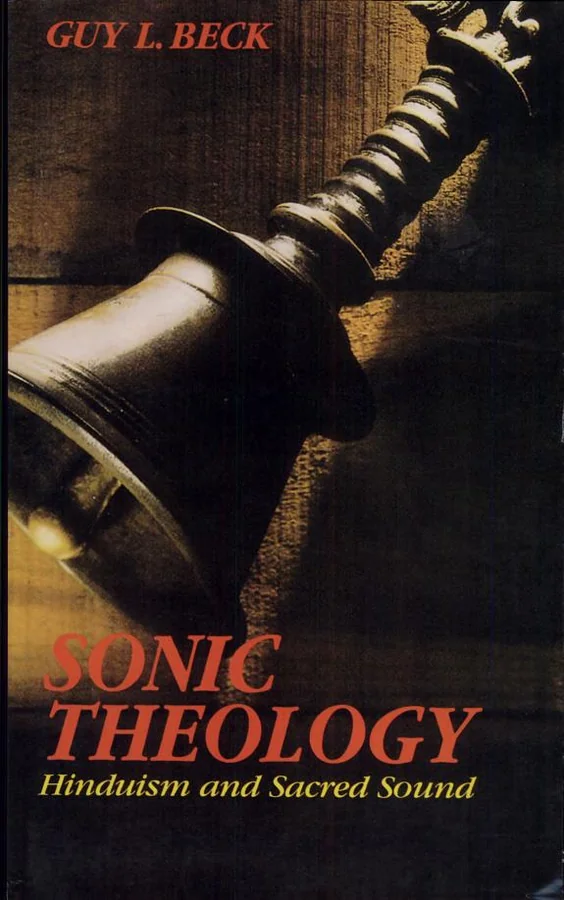
Guy L. Beck's Sonic Theology, published in 1995, analyzes sound's role in religious mysticism.
Published in 1995, Guy L. Beck's "Sonic Theology" examines how sound, music, and chant function within religious and mystical traditions throughout history. The book moves past simple descriptions to investigate the philosophical and theological foundations of sonic practices. Beck studies how auditory experiences have been used to achieve altered states of consciousness, foster divine connection, and shape sacred rituals. This work is thoroughly researched, utilizing a wide range of primary and secondary sources to construct a detailed understanding of sound's spiritual power.
The book is valuable for scholars of comparative religion, religious studies, and musicology who study the phenomenology of religious experience. It will also interest practitioners of esoteric traditions seeking a deeper understanding of sonic elements in their practices, such as mantra recitation, liturgical chanting, or the use of sacred music. Students of mysticism, particularly those examining the link between sensory input and spiritual insight, will find Beck's analyses especially useful. It is a text for serious inquiry, not for casual readers.
Sonic Theology connects with esoteric traditions that emphasize the power of sound for spiritual transformation. Many mystical paths, from ancient Vedic chants to Sufi dhikr and Christian monasticism, employ specific sonic practices. These traditions often view sound not merely as an accompaniment to worship but as a direct vehicle for divine experience, a means to quiet the mind and access deeper states of awareness. Beck's work provides a scholarly framework for understanding these practices, situating them within a broader history of human engagement with the sacred through vibration and resonance.
💡 Why Read This Book?
• You will learn how diverse religious traditions, from ancient Vedic practices to early Christian monasticism, have intentionally employed sound and chant to achieve spiritual states, providing concrete historical examples of sonic rituals. • You will gain an understanding of the concept of *nada brahma* and its implications for understanding the divine as manifested through sound, moving beyond abstract theology to tangible acoustic principles. • You will explore the symbolic significance of specific sonic elements, such as the intentional use of vowels in early Christian chant, offering a new lens through which to interpret religious art and practice.
⭐ Reader Reviews
Honest opinions from readers who have explored this book.
❓ Frequently Asked Questions
What are the primary religious traditions examined in "Sonic Theology"?
"Sonic Theology" investigates a wide array of traditions, including Vedic Hinduism, early Christianity, Buddhism, and various forms of mysticism. Beck explores how sound functions within these distinct spiritual frameworks, from mantra in India to liturgical chant in the West.
When was Guy L. Beck's "Sonic Theology" first published?
The original publication date for Guy L. Beck's "Sonic Theology" is January 1, 1995. This first edition laid the groundwork for subsequent scholarly engagement with the subject of sound in religion.
Does "Sonic Theology" discuss the scientific aspects of sound and consciousness?
While primarily focused on theological and religious interpretations, the book implicitly touches upon the effects of sound on consciousness. Beck examines how sonic practices are used to induce altered states, a phenomenon with scientific relevance, though his approach remains rooted in religious studies.
What is the concept of *nada brahma* as discussed in the book?
*Nada brahma*, a key concept explored in "Sonic Theology," translates to "sound is God" or "the world is sound." It posits that the universe originates from and is sustained by divine sound, a central tenet in Hindu philosophy and practice.
Is "Sonic Theology" suitable for individuals new to esoteric studies?
While rich in detail, "Sonic Theology" is written for an academic audience. Beginners in esoteric studies might find its scholarly depth challenging, though it offers invaluable foundational knowledge for those dedicated to understanding the spiritual significance of sound.
What role does chanting play in the traditions analyzed by Beck?
Chanting is a central element, explored for its ability to focus the mind, invoke spiritual presence, and create communal bonds. Beck details how rhythmic and melodic repetition in chanting serves as a vehicle for devotional expression and altered consciousness.
🔮 Key Themes & Symbolism
The Divine as Sound
Beck meticulously examines traditions that posit sound as the fundamental creative principle of the cosmos, most notably the concept of *nada brahma* in Hinduism. This theme explores how the divine is not merely perceived through sound but *is* sound itself, the primordial vibration from which existence arises. The book details how this concept influences devotional practices, philosophical inquiry, and the very structure of sacred sound, offering a radical reorientation of how divinity can be understood and approached through auditory experience.
Sonic Ritual and Altered States
A significant focus of "Sonic Theology" is the deliberate use of sound and music within religious rituals to induce altered states of consciousness. Beck analyzes how chanting, specific musical modes, and even silence function as tools for spiritual attainment, facilitating ecstatic experiences, deep meditation, and direct communion with the divine. This theme highlights the practical application of sonic principles in bridging the mundane and the sacred, demonstrating how auditory phenomena are employed to transform individual perception and collective spiritual awareness.
Vocalization and Sacred Texts
The book investigates the profound connection between the human voice, sacred texts, and spiritual power. Beck explores how the precise intonation, rhythm, and even the phonetic qualities of spoken or chanted words are believed to carry inherent spiritual efficacy. This includes examining the use of mantras in Eastern traditions and the liturgical chanting of vowels in early Christian monasticism, illustrating how the act of vocalizing sacred utterances is understood as a direct means of accessing divine energy and meaning.
Comparative Acoustics of the Sacred
Beck engages in a comparative study of how different cultures and historical periods have developed unique sonic vocabularies for expressing the sacred. This theme involves analyzing the architectural acoustics of sacred spaces, the specific instrumentation used in religious contexts, and the theological frameworks that underpin these sonic choices. By drawing parallels and distinctions between traditions, the book reveals universal patterns in humanity's relationship with the sacred soundscape.
💬 Memorable Quotes
Direct passages from the work, attributed to the author.
“Sound is not merely an accompaniment to religious life; it is often the very medium through which the sacred is apprehended and expressed.”
— This statement captures the book's central thesis: that sound holds a primary, not secondary, role in spiritual experience. It suggests that divine realities are not just heard but are intrinsically linked to auditory phenomena, shifting the focus from visual or intellectual understanding to sonic apprehension.
“The Vedic concept of *nada brahma* offers a potent model for understanding the universe as originating from and sustained by divine sound.”
— This highlights a core concept from Hindu philosophy that Beck explores. It suggests a cosmological view where sound is the primal force, the ultimate reality from which all else emanates, providing a theological framework for the sacredness of all auditory phenomena.
“The intentional use of specific vowel sounds in early Christian monastic chant was believed to possess direct spiritual efficacy.”
— This points to a specific, often overlooked, practice within Western esotericism. It implies that the phonetic qualities of vocalization, beyond mere words, were thought to have a tangible impact on the practitioner's spiritual state and connection to the divine.
“Chanting serves as a powerful tool for focusing the mind, facilitating ecstatic states, and fostering communal spiritual identity.”
— This interpretation emphasizes the practical, psychological, and sociological functions of sonic practices. It underscores how repetitive vocalizations are employed not just for devotion but as methods for achieving profound mental states and strengthening group cohesion around shared sacred sounds.
“The acoustics of sacred spaces often amplify the intended spiritual impact of sound and ritual.”
— This highlights the interplay between physical environment and sonic experience. It suggests that the design of temples, churches, and other sacred sites is not arbitrary but is engineered to enhance the power of sound, thereby deepening the spiritual resonance for participants.
🌙 Esoteric Significance
Tradition
While "Sonic Theology" is firmly rooted in academic religious studies, its subject matter aligns significantly with esoteric traditions that emphasize sonic mysticism. It speaks to lineages within Hinduism (mantra, Nada Yoga), Tibetan Buddhism (sacred syllables, chants), and Western Hermeticism where the power of the spoken word and resonant frequencies are central. Beck’s work validates and contextualizes these practices within a broader historical and philosophical framework, demonstrating their profound theological underpinnings rather than viewing them as mere folk traditions.
Symbolism
Key symbols explored include the "primordial sound" or "Om," representing the unmanifest origin of creation in Hindu cosmology, and the sacred syllable "Aum" as a sonic embodiment of ultimate reality. Another significant motif is the intentional use of specific vowel sounds (e.g., A, E, I, O, U) in early Christian monastic chant, which were believed to carry specific spiritual energies and facilitate divine connection, reflecting a shared esoteric principle of sonic symbolism across diverse traditions.
Modern Relevance
Contemporary thinkers and practitioners in fields like sound healing, transpersonal psychology, and New Age spirituality draw heavily on the principles outlined in "Sonic Theology." Modern mantra-based meditation, the use of resonant frequencies for well-being, and academic explorations into the neuroscience of religious experience all find historical and theoretical grounding in Beck's work. His research provides a scholarly basis for understanding the efficacy of sonic practices that are increasingly integrated into holistic wellness and contemporary spiritual seeking.
👥 Who Should Read This Book
• Scholars of comparative religion and musicology seeking a comprehensive analysis of sound's role in global spiritual traditions. • Practitioners of mantra meditation, devotional chanting, or sacred music who wish to understand the theological and historical depth of their practices. • Students of mysticism and esoteric philosophy interested in exploring the power of vibration, the spoken word, and auditory phenomena as pathways to the divine.
📜 Historical Context
Published in 1995, Guy L. Beck's "Sonic Theology" emerged during a period of renewed academic interest in the cross-cultural study of religion and the phenomenology of religious experience. It followed the groundbreaking work of scholars like Mircea Eliade, who emphasized the importance of ritual and myth, and coincided with increasing attention to the sensory dimensions of religious life, moving beyond purely textual analysis. Beck's work implicitly engaged with the burgeoning field of ethnomusicology and the study of sacred music. While not a direct contemporary debate, Beck's comprehensive approach implicitly countered earlier, more culturally isolated studies of religious sound. His meticulous comparison of traditions, such as Vedic chant and early Christian liturgy, provided a vital synthesis that enriched the broader discourse on religious practice and its sonic manifestations.
📔 Journal Prompts
The concept of *nada brahma* in Hindu traditions.
The intentional use of specific vowel sounds in early Christian monastic chant.
The function of chanting in inducing altered states of consciousness.
The relationship between sacred architecture and sonic experience.
The "primordial sound" as a symbol of cosmic origin.
🗂️ Glossary
Nada Brahma
A Sanskrit phrase meaning "sound is God" or "the world is sound." It is a central concept in Hindu philosophy, suggesting that the universe originates from and is sustained by divine sound or vibration.
Mantra
A sacred utterance, syllable, word, or phrase, often chanted repeatedly in Hindu, Buddhist, and Jain traditions. Mantras are believed to possess spiritual power and are used for meditation, concentration, and invoking deities.
Logos
A Greek term meaning "word," "reason," or "plan." In Western philosophy and theology, it often refers to the divine reason or order that underlies the universe, famously explored in the Gospel of John.
Vowel Chant
Refers to the practice in early Christian monasticism where specific vowel sounds were chanted, believed to possess inherent spiritual efficacy and aid in meditative focus and divine connection.
Phenomenology of Religion
An approach to studying religion that focuses on the subjective experience of religious individuals, seeking to understand the essential structures of religious consciousness and practice.
Ethnomusicology
The scholarly study of music in its cultural context, examining the relationship between music and social practices, beliefs, and other aspects of human life across different societies.
Sacred Music
Music used in religious contexts, intended to praise, worship, or invoke the divine. It encompasses a vast range of styles and traditions across different cultures and belief systems.
This book appears in 1 collection
🔮 Readers Also Liked
Browse all →







From the “Hinduism” Collection
View all →








More Free Sacred Texts & Gnosticism Books
View all →