The Sants
 83
83

The Sants
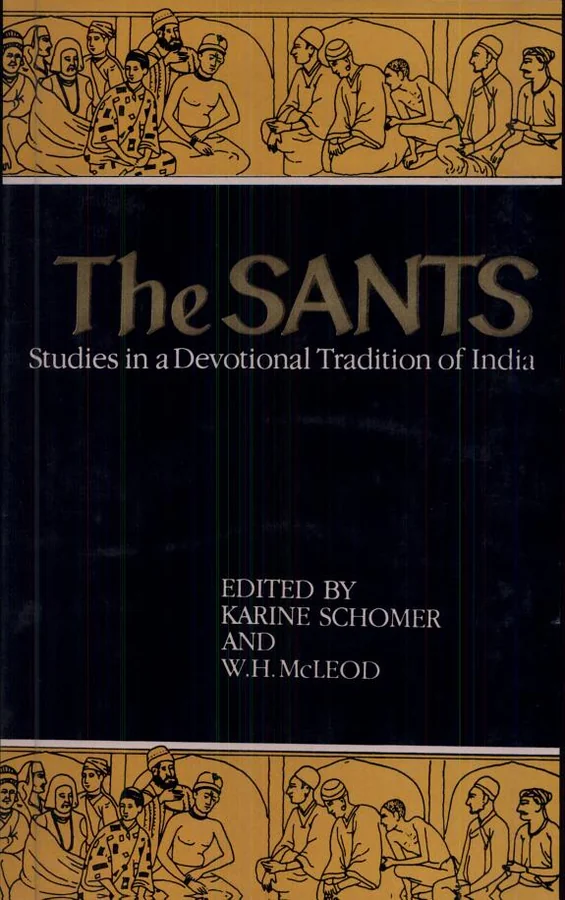
Schomer and McLeod's "The Sants" presents a rigorous, if occasionally dense, exploration of a fascinating spiritual lineage. The authors meticulously detail the historical emergence of the Sants and their departure from mainstream Brahmanical and Islamic traditions, particularly highlighting their fifteenth-century origins. A significant strength lies in the detailed analysis of their theological positions, which consistently champion inner experience over outer ritual. For instance, the discussion of Kabir's critique of religious hypocrisy is particularly sharp. However, the academic tone, while commendable for its scholarly integrity, may prove challenging for casual readers seeking devotional narratives. The sheer volume of textual analysis, while informative, can sometimes obscure the lived spiritual experience of the Sants themselves. Ultimately, "The Sants" stands as an indispensable reference for scholars, offering a clear, if demanding, window into a vital spiritual movement.
📝 Description
83
Karine Schomer and W. H. McLeod's 1987 book examines the Sants, a spiritual tradition from medieval India.
Published in 1987, this scholarly work provides a critical analysis of the Sants, a distinct spiritual tradition originating in medieval India. It moves beyond simple biographies to scrutinize their teachings, historical influence, and philosophical foundations. The book traces the development of the Sant Mat movement, detailing its historical roots and its particular interpretations of devotional practices. It stands as a key text for grasping a significant, though often overlooked, aspect of Indian mysticism.
This text is intended for students of comparative religion, spiritual history, and Indian philosophy. Readers interested in devotional traditions that focus on direct divine experience, often outside conventional religious structures, will find it particularly relevant. Scholars of mysticism and those interested in the historical evolution of spiritual thought in South Asia will also find value. Some familiarity with basic Indian religious concepts may help comprehension.
The study of the Sants emerged within a broader academic interest in Eastern spiritualities during the latter half of the 20th century. Schomer and McLeod's research contributed to a more detailed understanding of these figures, who emphasized inner meditation and spiritual discipline over ritual. Their work highlights the Sants' challenge to established religious norms and their focus on attaining communion with the Divine through internal practices, distinguishing them within the landscape of Indian contemplative traditions.
💡 Why Read This Book?
• Gain a scholarly understanding of the Sant Mat tradition's origins and core tenets, distinguishing it from other Indian devotional paths, as detailed in the book's examination of figures like Kabir and Ravidas. • Appreciate the historical context of the Sants' emergence in medieval India, understanding their challenge to established religious hierarchies and practices in the 15th century and beyond. • Explore the philosophical underpinnings of Sant teachings, focusing on their emphasis on inner spiritual experience and the role of the guru, as presented through Schomer and McLeod's analysis.
⭐ Reader Reviews
Honest opinions from readers who have explored this book.
❓ Frequently Asked Questions
What is the primary focus of "The Sants" by Karine Schomer and W. H. McLeod?
The book primarily focuses on the Sants, a medieval Indian spiritual movement that emphasized inner experience, devotion, and a rejection of caste and ritual. It examines their teachings, historical context, and philosophical contributions to Indian mysticism.
When was "The Sants" first published?
"The Sants" was first published in 1987, offering a scholarly analysis of the Sant tradition during a period of growing academic interest in Eastern spirituality.
Who are some key figures discussed in "The Sants"?
Key figures discussed include prominent Sants like Kabir, Ravidas, and Guru Nanak, exploring their roles in shaping the Sant philosophy and movement from the medieval period onwards.
What makes the Sant tradition distinct from other Indian religious movements?
The Sant tradition is distinct for its radical egalitarianism, its focus on the unmanifest Shabd (Divine Word) as the primary object of devotion, and its often critical stance towards established religious authorities and practices.
Is "The Sants" suitable for beginners in Indian philosophy?
While comprehensive, the book's scholarly depth may be best suited for those with some existing knowledge of Indian religions. Beginners might find it beneficial to consult introductory texts on Indian philosophy first.
What historical period does "The Sants" primarily cover?
The book primarily covers the medieval period in India, focusing on the emergence and development of the Sant movement from roughly the 15th century onwards, though it also touches upon their lasting influence.
🔮 Key Themes & Symbolism
The Sant as Realized Soul
The work thoroughly investigates the concept of the Sant not merely as a religious teacher but as an individual who has achieved direct, experiential realization of the Divine. This state is often described as a union with the Shabd, or inner divine music. The book contrasts this internal attainment with the external, ritualistic practices prevalent in orthodox religions of the time, emphasizing the Sants' focus on a personal, unmediated relationship with the Absolute.
Critique of Orthodoxy
A significant theme is the Sants' consistent challenge to established religious and social structures. This includes their rejection of the caste system, their denunciation of idolatry, and their skepticism towards Brahmanical priesthood and Islamic clergy. The book details how figures like Kabir used poetry and sharp wit to expose the hypocrisy and limitations of these institutions, advocating for a universal spiritual path accessible to all.
The Role of the Guru
Central to the Sant tradition, as explored in this text, is the indispensable role of the Satguru, or living master. The Sants taught that direct spiritual realization requires guidance from an enlightened teacher who can initiate the disciple and lead them through the inner planes of consciousness. The book examines the qualifications of such a guru and the importance of the disciple's surrender and obedience in the spiritual journey.
Inner Journey and Shabd
The esoteric cosmology and practice of the Sants are a major focus. The book explains their belief in a spiritual journey through various subtle realms or 'inner heavens' towards the Divine source. This journey is often described as being navigated through an inner sound current, the Shabd or Nada Bindu, which is considered the ultimate reality and the path back to the Creator.
💬 Memorable Quotes
Direct passages from the work, attributed to the author.
“Kabir's verses often employed paradox and satire to critique religious formalism.”
— This interpretation points to the rhetorical strategies used by influential Sants like Kabir. It suggests his poetry was not merely devotional but also served as a vehicle for social and religious commentary, using irony and contradiction to expose perceived falsehoods.
“The emphasis was placed on the inner journey towards the Divine, bypassing external intermediaries.”
— This highlights a core tenet of Sant philosophy: the direct accessibility of the Divine. It signifies a move away from reliance on priests, rituals, or temple worship, promoting an internal, contemplative approach to spiritual connection.
“The concept of the Satguru was crucial for guiding disciples through spiritual planes.”
— This interpretation underscores the functional importance of the spiritual master within the Sant tradition. It implies that the Satguru is not just a teacher but a necessary guide for reading through the complex inner spiritual landscape described in their teachings.
“The Sants advocated for a universal spirituality transcending Hindu and Muslim divides.”
— This emphasizes the syncretic and inclusive nature of the Sant movement. It suggests their teachings aimed to unite people on a common spiritual ground, appealing to a shared human experience beyond sectarian religious identities.
💡 Key Ideas
Editorial paraphrase of the work's core concepts — not direct quotes.
The Sants sought to establish a spiritual path grounded in personal experience rather than established dogma.
This paraphrase captures the essence of the Sant movement's departure from traditional religious frameworks. It highlights their prioritization of direct, subjective spiritual attainment over adherence to prescribed rituals, scriptures, or institutional authority.
🌙 Esoteric Significance
Tradition
The Sants belong to a broad stream of Indian mysticism often categorized as Sant Mat, a path emphasizing direct experience of the Divine through meditation on inner light and sound. While distinct from mainstream Bhakti or Sufism, they share common ground in their devotional intensity and critique of ritualism. This work situates the Sants within this lineage, highlighting their unique emphasis on Shabd (Divine Word) and their cosmology of inner spiritual planes, departing from more purely devotional or ascetic traditions.
Symbolism
Key symbols include the 'Shabd' or 'Nada Bindu' – the primordial sound or inner music, representing the Divine creative force and the path back to God. Another significant motif is the 'Inner Light,' visualized during deep meditation, symbolizing the Divine presence within. The concept of the 'Satguru' functions symbolically as the embodiment of this Divine wisdom, crucial for reading through the inner journey.
Modern Relevance
Contemporary spiritual seekers and various modern Sant Mat organizations, such as Radha Soami Satsang Beas and Science of Spirituality, continue to draw heavily on the teachings analyzed in this book. Thinkers exploring comparative mysticism and the phenomenology of religious experience often reference the Sants' emphasis on inner meditation techniques and the attainment of higher consciousness through sound and light.
👥 Who Should Read This Book
• Academic researchers of South Asian religions and comparative mysticism seeking a scholarly foundation on the Sant tradition. • Devotees of Sant Mat or related spiritual paths looking for a historical and philosophical context for their practices. • Students of comparative theology interested in devotional movements that challenged religious orthodoxy in medieval India.
📜 Historical Context
The late 20th century witnessed a burgeoning academic interest in diverse spiritual traditions, including those originating from South Asia. "The Sants," published in 1987 by Karine Schomer and W. H. McLeod, emerged within this intellectual climate, contributing significantly to the Western scholarly understanding of this particular devotional lineage. The book arrived at a time when scholars like R. C. Zaehner were exploring comparative mysticism, and scholars like K. A. Nilakanta Sastri had laid groundwork in Indian history. Schomer and McLeod's work offered a detailed examination of the Sants' theological positions and historical development, differentiating them from more mainstream Bhakti movements and Sufi traditions. Their rigorous scholarship provided critical context for understanding figures who often challenged the religious and social norms of their time, particularly during the medieval period. The reception was primarily academic, positioning the book as a key reference for students of religion and Indian studies.
📔 Journal Prompts
The Satguru's role in initiating the Shabd journey.
Kabir's critique of religious formalism and its contemporary parallels.
Personal reflections on the concept of the Sant as a realized soul.
The significance of inner light and sound in spiritual attainment.
Interpreting the Sants' rejection of the caste system in medieval India.
🗂️ Glossary
Sant
Literally 'saint' or 'holy person' in Hindi, referring to a member of a specific medieval Indian spiritual movement emphasizing inner realization, devotion, and rejection of ritualism.
Sant Mat
The path or teachings of the Sants, characterized by meditation on inner light and sound (Shabd) and guidance from a living master (Satguru).
Shabd
The Divine Word, primordial sound, or inner music, considered the creative force of the universe and the primary object of meditation in Sant Mat.
Satguru
The 'true guru' or perfect master in the Sant tradition, essential for initiating disciples and guiding them through the inner spiritual journey.
Bhakti
A devotional movement in Hinduism emphasizing intense love and personal devotion to a chosen deity, often expressed through song, poetry, and ritual.
Sufism
The mystical dimension of Islam, focused on direct experience of God through ascetic practices, meditation, and devotional poetry.
Maya
Illusion or delusion in Indian philosophy, the power that conceals the true nature of reality and keeps beings bound to the cycle of birth and death.
This book appears in 1 collection
🔮 Readers Also Liked
Browse all →![The Byrhtferth's Manuscript (MS 17) † Saint John’s College † Oxford † [1111]](/img/thumb/the-byrhtferth-s-manuscript-ms-17-saint-john-s-college-oxford-1111-the-monk-byrhtferth.webp)









From the “Hinduism” Collection
View all →






More Free Sacred Texts & Gnosticism Books
View all →