Sonic Theology
 77
77

Sonic Theology
Guy L. Beck's "Sonic Theology" makes a compelling case for the auditory dimension of Hindu religious life, a perspective often overshadowed by visual studies. The work's strength lies in its detailed ethnography and historical tracing of sonic practices, particularly its thorough cataloging of instruments and their ritualistic applications. Beck effectively argues that sound is not merely accompaniment but a primary vehicle for the sacred in Hinduism. However, the sheer density of information, while scholarly, can occasionally feel overwhelming, making some sections dense for the non-specialist. A particularly illuminating passage details the specific frequencies and accompanying rituals associated with the *shankha*, demonstrating the intricate relationship between sound, vibration, and spiritual effect. Ultimately, "Sonic Theology" is an indispensable, if demanding, corrective to the visual bias in understanding Hindu devotion.
📝 Description
77
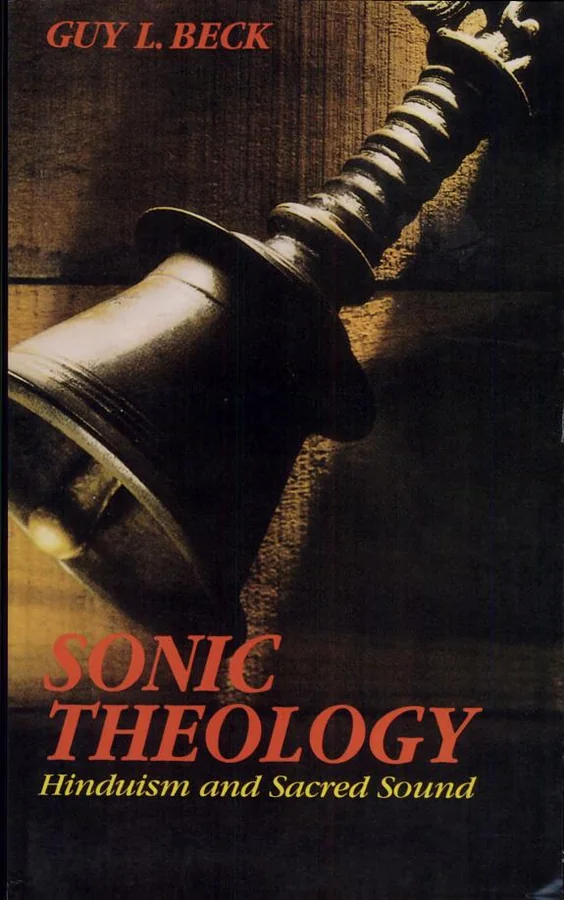
Guy L. Beck's 2022 book, Sonic Theology, argues sound is fundamental to Hindu worship.
Published in 2022, Guy L. Beck's Sonic Theology offers a comparative study of sound's role in Hindu traditions. The work challenges the common Western focus on visual aspects of Hinduism, asserting that sonic elements are central to its worship and practice. Beck meticulously examines the use of various instruments and vocalizations within Hindu rituals.
The book is relevant for scholars of comparative religion, Indology, and ritual studies. It also appeals to practitioners of Hindu traditions interested in their sonic heritage, and to musicians and acousticians curious about sound's cultural and spiritual dimensions. Those interested in how sensory experience shapes religious belief will find value here.
Beck's research places the study of Hindu sonic practices in a broader academic context, questioning earlier scholarship that may have overlooked sound's significance. By centering auditory elements, he addresses a gap in Western scholarly discourse on Hinduism, which often prioritized visual imagery and textual interpretation. This aligns with current academic interest in embodied religion and sensory ethnography.
Sonic Theology engages with traditions where sound is not merely an accompaniment but a primary medium for the sacred. This includes practices rooted in Vedic chanting, the yogic understanding of *nada brahma* (sound is God), and Tantric meditations focused on sonic vibration. The book connects these Hindu practices to a wider esoteric understanding of cosmology, where sound is seen as the generative force of the universe and a direct pathway to spiritual realization. It situates the book within a lineage of contemplation that uses auditory phenomena to alter consciousness and foster divine connection.
💡 Why Read This Book?
• Gain a nuanced understanding of how specific instruments like the *shankha* (conch shell) and vocalizations function as central conduits of the sacred within Hindu worship, challenging common Western perceptions. • Explore the theological implications of sound in Hinduism, learning how sonic elements are believed to shape cosmology, facilitate altered states, and mediate the divine, as detailed by Beck's comparative approach. • Appreciate the historical academic context, understanding how Beck's 2022 publication addresses an imbalance in Western scholarship by highlighting the crucial, often overlooked, role of auditory experience in Hindu religious practices.
⭐ Reader Reviews
Honest opinions from readers who have explored this book.
❓ Frequently Asked Questions
What is the primary argument of Guy L. Beck's "Sonic Theology"?
The book's primary argument is that sound, encompassing instruments and vocalizations, is a fundamentally central element in Hindu religious practices, often overlooked in Western scholarship which tends to focus more on visual aspects.
When was "Sonic Theology" by Guy L. Beck first published?
"Sonic Theology" by Guy L. Beck was first published on October 18, 2022.
What types of sounds are discussed in "Sonic Theology"?
The book discusses a wide array of sounds, including drums, bells, gongs, cymbals, conches (*shankha*), flutes, and various forms of vocalizations used in Hindu worship and ritual.
Who is the intended audience for "Sonic Theology"?
The intended audience includes scholars of religion and Indology, practitioners of Hindu traditions, musicians, acousticians, and anyone interested in the role of sensory experience in religious life.
How does "Sonic Theology" challenge previous scholarship on Hinduism?
It challenges scholarship by asserting the primacy of sound over visual elements, which have historically dominated Western academic discourse on Hinduism, thereby correcting a perceived imbalance.
What specific Hindu concepts related to sound does the book examine?
The book examines concepts such as mantra, the sacred power of the spoken word, and the cosmological and spiritual functions of specific sonic phenomena and instruments.
🔮 Key Themes & Symbolism
The Primacy of Sound
This theme posits that sound is not merely an accessory but a primary medium through which the divine is experienced and invoked in Hinduism. Beck meticulously details how instruments like the *shankha* and specific vocalizations actively shape ritual efficacy and spiritual understanding. The work argues for a re-evaluation of scholarly focus, shifting from the visual to the auditory to grasp the full spectrum of Hindu devotional life and its inherent sonic architecture.
Ritual Efficacy and Sonic Architecture
Beck explores how specific sonic elements are employed to achieve particular ritual outcomes, from inducing altered states of consciousness to fostering community cohesion. The book examines the 'sonic architecture' of Hindu worship, detailing how the deliberate use of sounds, rhythms, and melodies creates sacred spaces and facilitates a connection with the divine. This involves understanding the precise application of instruments and chants within defined ritualistic frameworks.
Comparative Religious Sound Studies
As a comparative work, "Sonic Theology" situates Hindu sonic practices within a broader religious context, even as it focuses on Indic traditions. It implicitly or explicitly invites comparisons with how sound functions in other religious systems. By presenting a detailed account of Hindu soundscapes, the book provides crucial data for anyone studying the universal or particular roles of auditory phenomena in spiritual traditions across cultures and history.
Sound, Vibration, and Cosmology
A significant theme is the exploration of how sound is understood not just as an audible phenomenon but as a fundamental cosmic force. The book studies the belief systems that associate specific sounds and vibrations with the creation, maintenance, and dissolution of the universe. This perspective elevates sound from a mere sensory input to a principle of existence, integral to Hindu philosophical and theological frameworks.
💬 Memorable Quotes
Direct passages from the work, attributed to the author.
“The Hindu world is permeated by sound: drums, bells, gongs, cymbals, conches, flutes, and an array of vocalizations play a central role in worship.”
— This foundational statement immediately establishes the book's central thesis, highlighting the pervasive and essential nature of sonic elements within Hindu religious practice before studying the analytical aspects.
“Beck contends that the traditional Western focus on Hinduism's visual component has often been at the expense of the religion's most important feature—its emphasis on sound.”
— This interpretation points to the scholarly correction Beck aims to provide, arguing that a Western academic lens has historically privileged visual aspects of Hinduism, thereby obscuring the profound significance of its sonic dimensions.
“In Sonic Theology Beck addresses this longstanding imbalance, contending that...”
— This phrase signals the book's purpose: to rectify a perceived deficiency in the study of Hinduism by foregrounding the auditory and demonstrating its critical importance to the religion's lived experience and theological underpinnings.
“The centrality of sound to Hindu religious practices is explored through a comparative approach.”
— This highlights the methodology employed by Beck, indicating that the book does not merely describe Hindu sonic traditions in isolation but engages in cross-cultural or inter-tradition analysis to understand sound's role.
“Vocalizations play a central role in worship.”
— This concise observation underscores the importance of the human voice and spoken word within Hindu rituals, suggesting that sonic elements extend beyond instrumental music to encompass chanting and prayer.
🌙 Esoteric Significance
Tradition
While "Sonic Theology" primarily engages with mainstream and scholarly understandings of Hinduism, its focus on the vibrational and transformative power of sound aligns with esoteric traditions that explore sonic manipulation for spiritual ends. It touches upon concepts that resonate with Tantric practices, where mantras are considered potent sonic energies, and with broader Hermetic or Gnostic ideas about the creative power of the Word or Logos.
Symbolism
The *shankha* (conch shell) is a potent symbol, its sound believed to ward off evil spirits and invoke auspiciousness, often associated with Vishnu. Bells (*ghanta*) symbolize the union of space and consciousness, their ringing marking transitions in ritual. Beyond specific objects, the abstract concept of *nada brahma* (sound is God) signifies sound as the fundamental reality from which all creation arises, a key symbol of sonic ontology.
Modern Relevance
Contemporary practitioners of yoga and meditation, particularly those exploring mantra-based practices, find resonance with Beck's findings. Sound healers, acousticians studying the effects of vibration, and scholars of comparative mysticism increasingly draw upon such detailed analyses of sacred soundscapes. The work provides a crucial foundation for understanding how sound continues to be a vital, living force in spiritual and therapeutic modalities today.
👥 Who Should Read This Book
• Scholars of religious studies and Indology: To gain a comprehensive, textually-supported overview of the auditory dimensions of Hindu worship and correct potential biases in existing scholarship. • Practitioners of Hindu traditions: To deepen their appreciation for the sonic elements integral to their rituals and understand the theological and cultural significance of chants and instruments. • Students of comparative mysticism and sensory experience: To explore how sound functions as a primary mediator of the sacred across different cultural and religious contexts.
📜 Historical Context
Published in 2022, Guy L. Beck's "Sonic Theology" emerges in an era of increasing academic interest in sensory studies and embodied religion. It directly confronts a long-standing tendency within Western Indology, influenced perhaps by early Protestant theological emphases or a general visual bias in academic discourse, to prioritize textual and visual analysis of Hinduism. This contrasts with earlier works that might have treated sound as secondary ornamentation. While scholars like Alain Danielou had previously explored aspects of Indian music and its spiritual dimensions, Beck's work offers a more systematic and comparative theological examination of sound's pervasiveness across diverse Hindu practices. The book arrives in a scholarly landscape where ethnographic approaches and the study of ritual performance are gaining prominence, providing a rich resource for these expanding fields.
📔 Journal Prompts
The *shankha*'s ritualistic invocation: explore its symbolic and spiritual functions.
Reflect on the concept of *nada brahma* and its implications for understanding reality.
Analyze the role of specific instruments discussed in Beck's work within Hindu worship.
Consider how sound shapes religious experience in practices beyond Hinduism.
Examine the relationship between vocalizations and divine connection in religious contexts.
🗂️ Glossary
Shankha
A conch shell, blown during Hindu rituals and ceremonies. Its sound is considered auspicious, believed to purify the environment and invoke divine presence.
Nada Brahma
A Sanskrit phrase meaning 'sound is God' or 'the world is sound.' It represents the concept that sound is the fundamental creative principle and ultimate reality.
Mantra
A sacred utterance, sound, syllable, word, or group of words believed to have psychological and spiritual power. Mantras are often chanted in rituals and meditation.
Ghanta
A bell used in Hindu rituals, often rung during *puja* (worship). It is believed to ward off negative energies and symbolize the union of consciousness and space.
Puja
A devotional ritual performed by Hindus to worship one or more deities. It often involves offerings, chanting, and the use of various sensory elements, including sound.
Vocalization
The act of producing vocal sounds, including chanting, singing, and spoken prayers. In religious contexts, vocalizations are often considered a direct means of communicating with the divine.
Comparative Approach
A methodology that examines similarities and differences between various phenomena, in this context, comparing the role of sound in different religious traditions or within diverse aspects of Hinduism.