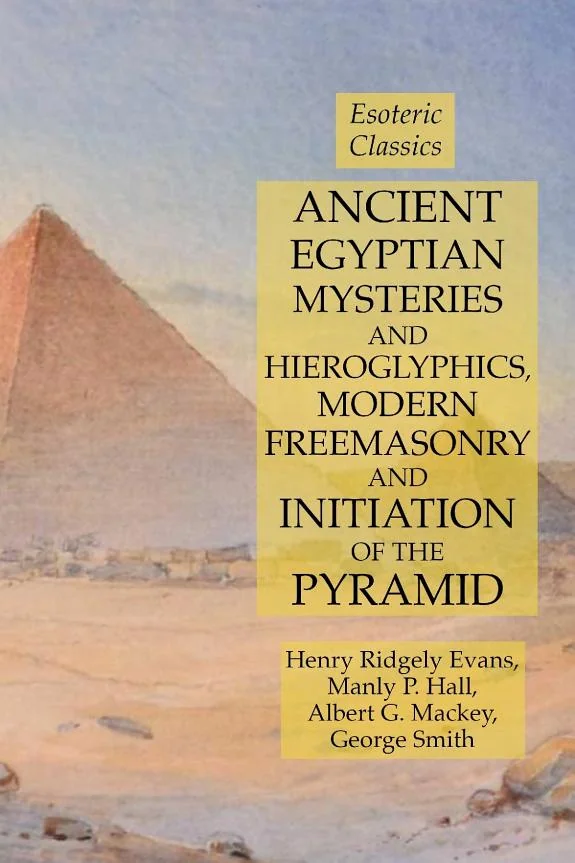
Ancient Egyptian Mysteries and Hieroglyphics, Modern Freemasonry and Initiation of the Pyramid: Esoteric Classics
 71
71

Ancient Egyptian Mysteries and Hieroglyphics, Modern Freemasonry and Initiation of the Pyramid: Esoteric Classics
The enduring fascination with Ancient Egypt's spiritual architecture finds a potent distillation in this compilation, featuring contributions from Manly P. Hall, Albert G. Mackey, and Henry Ridgely Evans. The initial essay, "Egyptian Mysteries and Modern Freemasonry," by Hall, sets a compelling stage, drawing explicit parallels between the Osirian mysteries and Masonic degrees. It’s a strength to see these connections laid out with such earnest conviction, though the lack of rigorous academic citation can sometimes leave the reader wishing for more concrete evidence. A particularly striking passage discusses the symbolic significance of the Pharaonic burial chambers as microcosmic representations of the initiatory journey. While the collected works effectively illuminate the esoteric lineage from the Nile to the lodge, the volume occasionally suffers from a certain romanticism that prioritizes symbolic resonance over strict historical verification. Nevertheless, for students of Western esotericism, this collection remains a valuable, albeit sometimes speculative, exploration of ancient Egyptian influence on Masonic thought.
📝 Description
71
This 1924 collection links Ancient Egyptian mysteries to modern Freemasonry through initiatory rites.
This volume gathers essays by Manly P. Hall, Albert G. Mackey, and Henry Ridgely Evans that examine the connections between ancient Egyptian symbolism and Freemasonry. The authors discuss the mystery schools of Egypt, their initiation practices, and the symbolic hieroglyphic language. They then trace how these ancient traditions influenced the philosophical basis and rituals of Masonic lodges and other systems of spiritual initiation. The collection is intended for students of Western esotericism, Freemasonry, comparative religion, and ancient cultures. It offers insights into the historical and symbolic roots of Masonic ritual and the continued presence of Egyptian motifs in occult thought. Readers will find material exploring the relationship between ancient knowledge and fraternal organizations.
The essays originate from a period in the late 19th and early 20th centuries when scholars were deeply interested in ancient civilizations and their hidden legacies. This era saw a rise in comparative studies of mythology and religion, often viewed through an esoteric perspective. The authors engaged with their subjects in a manner that was both scholarly and appreciative of the esoteric dimensions. The central ideas focus on the transfer of secret knowledge from Egypt to later mystery traditions, with a particular emphasis on Freemasonry. This includes an analysis of hieroglyphics as a symbolic script holding concealed messages, and an examination of the structure and intent of Egyptian initiation ceremonies.
This collection situates itself within the Western esoteric tradition that flourished in the late 19th and early 20th centuries. It reflects a scholarly interest in ancient civilizations, particularly Egypt, and their perceived connections to contemporary mystical and fraternal orders. The authors, active during a time of burgeoning comparative mythology and occult studies, sought to uncover symbolic continuities between ancient Egyptian practices and the rituals and philosophy of Freemasonry. This work aligns with a broader interest in the archetypal patterns of initiation that were thought to transcend cultural and historical divides, connecting ancient wisdom to modern spiritual seeking.
💡 Why Read This Book?
• Gain an understanding of how Ancient Egyptian initiation rites, potentially including rituals within pyramid structures, influenced early Masonic symbolic systems, as detailed in Evans' "Initiation of the Pyramid." • Explore the symbolic language of Egyptian hieroglyphics, as analyzed by Mackey, and learn how these glyphs were interpreted as containing esoteric wisdom applicable to Masonic teachings. • Discover the specific arguments linking the mysteries of figures like Osiris to the allegorical narratives and degrees found within Freemasonry, as presented in Hall's "Egyptian Mysteries and Modern Freemasonry."
⭐ Reader Reviews
Honest opinions from readers who have explored this book.
❓ Frequently Asked Questions
What specific Egyptian mysteries are discussed in relation to Freemasonry?
The collection explores the mysteries of Osiris, the secrets of the priesthood, and the initiatory rites conducted within sacred sites, drawing parallels to Masonic degrees and symbolism.
Who are the main authors featured in this collection?
The book features essays by Manly P. Hall, Albert G. Mackey, and Henry Ridgely Evans, prominent figures in Masonic and esoteric literature.
How does the book connect hieroglyphics to Freemasonry?
It examines Egyptian hieroglyphics not merely as writing but as a symbolic language encoding spiritual and philosophical truths that were later adopted and reinterpreted within Masonic symbolism and ritual.
What is the 'Initiation of the Pyramid' discussed in the text?
This concept refers to the allegorical or literal initiatory processes believed to have occurred within the chambers of ancient Egyptian pyramids, posited as a precursor to later mystery school practices.
When was this specific collection first published?
This compilation, bringing together essays by these authors, was first published on December 22, 2019.
Is this book suitable for beginners in Freemasonry?
While accessible, the book delves into complex esoteric interpretations. Beginners might find it beneficial to have some foundational knowledge of Masonic principles or ancient Egyptian history.
🔮 Key Themes & Symbolism
Egyptian Mysteries and Masonic Degrees
The central theme is the perceived continuity of esoteric knowledge from Ancient Egypt into Freemasonry. The essays argue that core Masonic concepts, rituals, and allegorical narratives find their roots in the ancient Egyptian mystery schools, particularly those involving figures like Osiris. The work dissects specific Masonic degrees, drawing symbolic parallels to Egyptian myths and initiatory practices, suggesting that the 'ancient mysteries' were never truly lost but transmuted through fraternal orders.
The Symbolic Language of Hieroglyphics
This theme focuses on the interpretation of Egyptian hieroglyphics as more than mere script. Authors like Mackey present them as a complex system of symbols encoding profound philosophical, spiritual, and cosmological truths. The essays explore how these glyphs were understood to represent abstract concepts and divine principles, and how this symbolic literacy was seen as a foundational element passed down through esoteric traditions, influencing Masonic symbolism.
Pyramid Initiation and Archetypal Journeys
The concept of 'Initiation of the Pyramid' explores the idea that the great pyramids served as literal or symbolic venues for profound spiritual awakenings and trials. This theme examines the architectural symbolism of the pyramids and their chambers as representing the stages of an initiatory journey, from darkness to light, death to rebirth. It posits these ancient rites as archetypes for later initiation systems, including those found in Freemasonry.
Transmission of Esoteric Wisdom
Underpinning the entire collection is the idea of a continuous stream of esoteric wisdom flowing from antiquity to the modern era. The essays trace this transmission, highlighting how ancient Egyptian knowledge, particularly its spiritual and philosophical dimensions, was preserved, adapted, and transmitted through various intermediary traditions and ultimately into the structure and teachings of Freemasonry and other Western esoteric orders.
💬 Memorable Quotes
Direct passages from the work, attributed to the author.
“The Egyptian hieroglyphics were a symbolic language, whose principles were transmitted to the profane only by degrees.”
— This highlights the view that Egyptian writing was not merely literal but encoded deeper spiritual meanings, revealed progressively to initiates, a concept echoed in the structured learning of Masonic degrees.
“The mysteries of Egypt were designed to prepare the soul for the trials of the underworld and the judgment of Osiris.”
— This interpretation emphasizes the eschatological and moral dimensions of ancient Egyptian initiation, framing it as a spiritual discipline focused on afterlife preparation and ethical reckoning.
“The pyramid itself is a symbol of the journey from the material to the spiritual.”
— This expresses the idea that the monumental structures of Ancient Egypt, particularly pyramids, were not just tombs but potent symbols of spiritual ascent and transformation.
“Modern Freemasonry preserves fragments of the ancient wisdom that once illuminated the temples of Thebes.”
— This suggests a direct lineage, implying that the rituals and teachings of Freemasonry contain echoes or remnants of the powerful, perhaps divine, knowledge once held sacred in Ancient Egyptian religious centers.
“Initiation is the process of passing from a state of ignorance to one of enlightenment.”
— This offers a universal definition of initiation, focusing on the transformative shift in consciousness from obscurity to understanding, a core aim shared by ancient mysteries and Masonic practices.
🌙 Esoteric Significance
Tradition
The work is firmly situated within the Western Esoteric Tradition, particularly its Hermetic and Masonic branches. It attempts to bridge Ancient Egyptian religion and philosophy with the symbolic language and ritualistic practices of Freemasonry. It departs from purely historical accounts by emphasizing the continuity of initiatory processes and symbolic meaning, viewing Egyptian mysteries not as a defunct ancient religion but as a living source of perennial wisdom.
Symbolism
Key symbols include the pyramid, interpreted as a structure of spiritual ascent and a microcosm of the cosmos; hieroglyphics, seen as a sacred script encoding divine truths; and the figure of Osiris, representing death, resurrection, and the cyclical nature of existence, which parallels Masonic themes of mortality and regeneration.
Modern Relevance
Contemporary practitioners of Western esotericism, Masonic researchers, and students of comparative religion continue to draw upon these essays. Thinkers exploring the archetypal patterns of initiation, the symbolic language of ancient cultures, and the philosophical underpinnings of fraternal orders find value in the connections drawn by Hall, Mackey, and Evans.
👥 Who Should Read This Book
['• Students of Western Esotericism: Individuals seeking to understand the historical and symbolic links between Ancient Egyptian traditions and later occult movements like Freemasonry.', '• Masonic Researchers: Freemasons interested in the historical and philosophical arguments regarding the Egyptian origins and symbolism within Masonic ritual and degrees.', '• Comparative Religion Scholars: Academics and enthusiasts looking to explore the cross-cultural transmission of initiatory practices and religious symbolism from antiquity to modern fraternal orders.']
📜 Historical Context
This collection emerges from the late 19th and early 20th centuries, a period of intense Western fascination with Ancient Egypt, fueled by archaeological discoveries and the flourishing of esoteric movements. Authors like Albert G. Mackey (1807-1881) and Henry Ridgely Evans (1861-1945) were key figures in Masonic scholarship, seeking to establish the ancient roots of their fraternity. They operated within an intellectual climate where figures like Helena Blavatsky and the Theosophical Society were also widely exploring ancient wisdom traditions, though often with different methodological approaches. While this work shares the era's interest in comparative mythology and symbolism, it specifically focuses on the transmission of Egyptian esoteric traditions into Freemasonry. Its reception was largely within Masonic and occult circles, where it contributed to ongoing debates about the fraternity's origins and philosophical underpinnings, rather than attracting mainstream academic attention or censure.
📔 Journal Prompts
The symbolic architecture of the Pyramid and its connection to initiatory stages.
The transmission of esoteric knowledge from Egyptian priesthoods to Masonic lodges.
The interpretation of specific hieroglyphic symbols as keys to Masonic allegory.
The parallels between the Osirian mysteries and the allegorical death and rebirth in Masonic ritual.
The concept of 'Masonic Hieroglyphics' as a symbolic language for spiritual truths.
🗂️ Glossary
Egyptian Mysteries
Ancient religious rites and secret teachings practiced in Egypt, often centered around deities like Osiris and Isis, involving initiatory ceremonies designed to impart spiritual knowledge and prepare adherents for the afterlife.
Hieroglyphics
The formal writing system used in Ancient Egypt, combining logographic, syllabic, and alphabetic elements. Esoterically interpreted as a symbolic language containing hidden spiritual meanings.
Initiation of the Pyramid
The concept that ancient Egyptian pyramids served as structures for profound spiritual initiatory rites, symbolizing a journey from darkness to light, or death to rebirth.
Masonic Hieroglyphics
The application and interpretation of Egyptian hieroglyphic symbolism within the context of Freemasonry, suggesting that Masonic symbols and allegories are derived from or parallel to ancient Egyptian glyphs.
Osiris
An ancient Egyptian deity associated with the afterlife, the underworld, and rebirth. His myth cycle, involving death and resurrection, is frequently linked to Masonic themes of mortality and renewal.
Esoteric
Relating to or accessible only by a relatively small number of people with a specialized knowledge or interest. In this context, referring to hidden spiritual teachings and practices.
Allegory
A story, poem, or picture that can be interpreted to reveal a hidden meaning, typically a moral or political one. Central to Masonic ritual and interpretation of ancient myths.
This book appears in 1 collection
🔮 Readers Also Liked
Browse all →






From the “Egyptian Mysteries” Collection
View all →



More Free Sacred Texts & Gnosticism Books
View all →