The Codified Mysteries
 78
78

The Codified Mysteries
Vashisht Vaid's "The Codified Mysteries" tackles the ambitious task of decoding universal knowledge allegedly embedded in ancient stories and buildings. The author's central thesis—that Earth is a significant, perhaps central, planet in an evolving universe—provides a unique framework for interpreting these symbols. Vaid's interpretation of Brahmanda as the universe's secret knowledge, accessible through terrestrial structures, is compelling, particularly when he connects it to the idea of Earth as a focal point for cosmic evolution. The work's strength lies in its attempt to synthesize mythology and architecture into a cohesive esoteric system. However, the text occasionally struggles with accessibility, its dense prose sometimes obscuring the very insights it aims to reveal. A notable passage, discussing how "symbolic structures erected upon planet earth" serve as repositories of knowledge, highlights both the book's potential and its challenges. The verdict is that "The Codified Mysteries" offers a singular, if demanding, perspective on ancient wisdom.
📝 Description
78
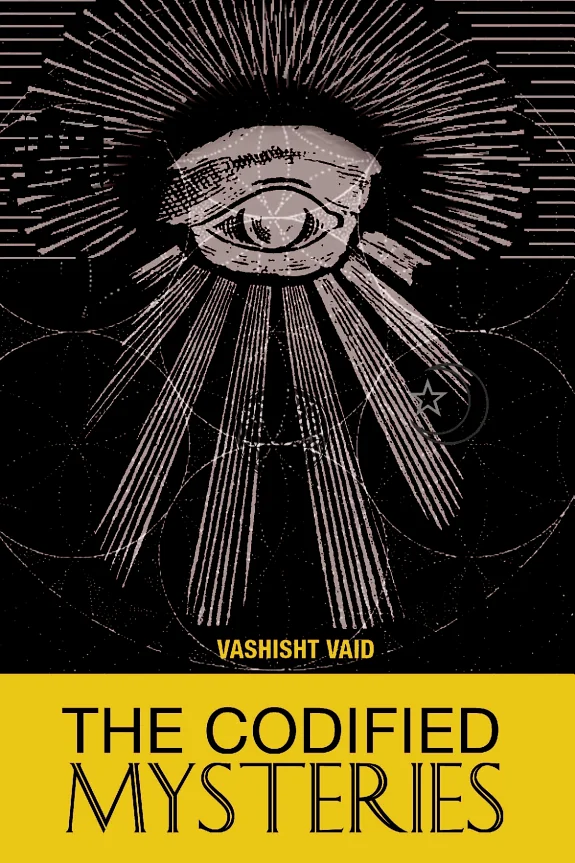
Vashisht Vaid's 2012 book argues ancient narratives and architecture encode universal knowledge, termed Brahmanda.
The Codified Mysteries, published in August 2012, proposes that ancient stories and building designs hold a universal understanding known as Brahmanda. Vashisht Vaid suggests these symbolic forms, found globally, function as channels for this hidden wisdom. The book aims at readers interested in recognizing the underlying consciousness within common literature and historical structures. It will appeal to those who consider Earth significant in our solar system's and the cosmos's development.
The work connects terrestrial symbols to Brahmanda, which Vaid defines as the universe's secret knowledge. It also examines the idea of Earth as a central planet within the solar system, acting as a hub for cosmic change and the spread of this knowledge. This perspective aligns with interpretations of history and artifacts through symbolic meanings.
Published in 2012, The Codified Mysteries engages with a long-standing esoteric tradition that seeks hidden meanings in historical and natural phenomena. This approach mirrors the work of figures like Helena Blavatsky, who interpreted various world traditions to reveal a universal wisdom. Vaid's book fits within this lineage by analyzing ancient narratives and architecture as carriers of profound, often concealed, knowledge.
💡 Why Read This Book?
• Understand the concept of Brahmanda as universal secret knowledge, as explored in the book's interpretation of ancient symbolic structures. • Grasp the significance of Earth's role in cosmic evolution, a central tenet discussed in relation to solar system dynamics. • Gain new perspectives on interpreting ancient literary texts and architecture as repositories of coded esoteric information, a core focus of Vaid's work.
⭐ Reader Reviews
Honest opinions from readers who have explored this book.
❓ Frequently Asked Questions
What is Brahmanda as described in The Codified Mysteries?
Brahmanda, according to Vashisht Vaid's "The Codified Mysteries," represents the secret, encoded knowledge of the entire universe, believed to be embedded within ancient stories and structures on Earth.
When was The Codified Mysteries first published?
The book "The Codified Mysteries" by Vashisht Vaid was first published on August 19, 2012.
What is the central argument about Earth's position in the universe?
The work suggests that Earth is the most important planet in our solar system and serves as a central point for the evolution of the entire universe.
What kind of knowledge does the book claim to reveal?
It claims to reveal conscious awareness related to symbolic knowledge imbedded in ancient stories and buildings, which is the secret knowledge of the universe (Brahmanda).
Who is the author of The Codified Mysteries?
The author of "The Codified Mysteries" is Vashisht Vaid.
What subjects does The Codified Mysteries cover?
The book covers esoteric subjects, focusing on symbolic knowledge within ancient literature and architecture, and its connection to universal consciousness and Earth's cosmic role.
🔮 Key Themes & Symbolism
Earth as Cosmic Nexus
The book posits Earth not merely as a planet but as a critical hub within the solar system and the evolving universe. Vaid suggests that terrestrial structures and narratives are imbued with symbolic knowledge, serving as Earth's contribution to this cosmic evolution. This theme challenges conventional astronomical and spiritual viewpoints by placing humanity's home at the forefront of universal consciousness and information dissemination.
Symbolic Architecture and Literature
Vaid argues that ancient buildings and stories are not just historical artifacts but deliberate repositories of 'secret knowledge of the universe' (Brahmanda). The work explores how these symbolic structures, from temples to epics, were consciously erected or composed to convey profound truths about existence, consciousness, and cosmic order. This perspective invites readers to re-examine familiar cultural elements through an esoteric lens.
Conscious Awareness and Brahmanda
A core concept is the attainment of conscious awareness through understanding Brahmanda, the universe's intrinsic wisdom. The book suggests that by deciphering the symbolic language of ancient civilizations, readers can achieve a higher state of perception. This awareness is linked to the realization of Earth's central role and the interconnectedness of all cosmic phenomena through embedded symbolic data.
Interpreting Ancient Narratives
The work provides a methodology for interpreting ancient stories and myths, not as mere fables, but as codified messages containing universal principles. It suggests that the 'normal looking literary text' contains layers of meaning accessible to those who understand the underlying symbolic grammar. This approach encourages a critical re-evaluation of foundational myths and legends as esoteric blueprints.
💬 Memorable Quotes
Direct passages from the work, attributed to the author.
“Symbolic knowledge imbedded in ancient buildings is technically the secret knowledge of universe [Brahmanda].”
— This statement captures the book's central thesis: that physical structures from antiquity are deliberate carriers of universal cosmic truths, referred to as Brahmanda, accessible through symbolic interpretation.
“Our planet earth is the most important planet in our solar system, which is technically the center of our entire evolving universe.”
— This assertion highlights the author's cosmological perspective, positioning Earth not just geographically but cosmically as a central point in universal evolution and the dissemination of knowledge.
“The required conscious awareness related to normal looking literary text of ancient stories.”
— This phrase points to the book's aim: to equip readers with the perceptual tools necessary to uncover hidden, esoteric meanings within seemingly ordinary ancient narratives.
“Various symbolic structures erected upon planet earth.”
— This refers to the physical manifestations of ancient wisdom, suggesting that temples, monuments, and other edifices were intentionally built to encode and transmit cosmic information.
“The entire evolving universe [Brahmanda].”
— This phrase equates the totality of the cosmos with Brahmanda, framing it as a dynamic, evolving entity whose underlying principles are encoded within Earth's symbolic heritage.
🌙 Esoteric Significance
Tradition
The work draws heavily from a syncretic esoteric tradition, blending elements reminiscent of Hermeticism, Gnosticism, and perhaps even Eastern philosophies concerning the nature of the cosmos (Brahmanda). It departs from strict adherence to any single lineage by proposing a unique cosmological model where Earth is central to universal evolution and knowledge transmission.
Symbolism
Key symbols include the concept of Brahmanda itself, representing the universe's encoded wisdom. Additionally, 'symbolic structures' such as ancient buildings are treated as potent motifs, functioning as terrestrial anchors for cosmic knowledge. The idea of Earth as a 'center' is also a significant symbolic motif, implying a geocentric esoteric model.
Modern Relevance
Contemporary thinkers exploring archaeoastronomy, sacred geometry, and consciousness studies might find Vaid's synthesis relevant. Schools of thought that emphasize the interconnectedness of consciousness, the cosmos, and terrestrial artifacts, such as certain branches of New Age spirituality or depth psychology approaches to mythology, can engage with its ideas.
👥 Who Should Read This Book
• Students of comparative mythology and ancient religions seeking alternative interpretive frameworks for foundational stories. • Researchers interested in esoteric cosmologies and the historical concept of Earth's place in the universe. • Individuals drawn to the idea that ancient architecture holds hidden symbolic meaning and universal knowledge.
📜 Historical Context
Published in 2012, "The Codified Mysteries" arrives in an era of burgeoning interest in ancient civilizations, esoteric symbolism, and alternative cosmologies. It engages with a long tradition of interpreting historical artifacts as repositories of hidden wisdom, a lineage that includes figures like Helena Blavatsky and the Theosophical Society, who also sought universal truths in ancient texts and structures. Vaid's work emerges in dialogue with, and at times in contrast to, more secular archaeological interpretations that focus solely on material and historical evidence. The early 21st century saw a proliferation of esoteric literature, with many authors revisiting Gnostic, Hermetic, and Kabbalistic concepts, often seeking to synthesize them with modern scientific or philosophical ideas. While "The Codified Mysteries" doesn't appear to have a specific documented reception event like a major review or citation by a prominent scholar in 2012, its themes resonate with the broader intellectual currents of that time.
📔 Journal Prompts
Earth's role as the center of evolving universal Brahmanda: What does this imply for your perception of terrestrial existence?
Analyze a familiar ancient story: What symbolic knowledge might be codified within its narrative structure?
Consider a local historical building: How could it be interpreted as a 'symbolic structure' carrying hidden meaning?
Reflect on the concept of Brahmanda: How does the idea of universal secret knowledge alter your understanding of reality?
The relationship between conscious awareness and deciphering symbolic texts: What personal insights emerge from this connection?
🗂️ Glossary
Brahmanda
In "The Codified Mysteries," this term refers to the secret, encoded knowledge of the entire universe, perceived as imbedded within symbolic structures on Earth.
Symbolic Structures
Refers to ancient buildings, monuments, and potentially literary texts that the author posits were intentionally created to house and transmit universal, esoteric knowledge.
Conscious Awareness
The state of heightened perception the book aims to cultivate in readers, enabling them to recognize the hidden symbolic knowledge within ancient narratives and architecture.
Evolving Universe
The concept that the cosmos is not static but is in a continuous state of development, with Earth playing a central role in this process according to the book's thesis.
Secret Knowledge
The underlying, profound truths about the universe and existence that the author believes are encoded in ancient human creations and are accessible through esoteric interpretation.
Solar System
The celestial system comprising Earth and other planets orbiting the Sun, presented in the book as a framework where Earth holds a particularly significant and central position.
Literary Text
Ancient stories and writings that the book suggests contain hidden layers of meaning beyond their surface narrative, serving as vehicles for codified universal knowledge.
This book appears in 1 collection
🔮 Readers Also Liked
Browse all →




From the “Mystery Schools” Collection
View all →





More Free Sacred Texts & Gnosticism Books
View all →