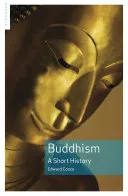
Buddhism
 71
71

Buddhism
Edward Conze's "Buddhism" presents a formidable survey, a work that clearly benefits from the author's deep engagement with the subject matter. Conze's strength lies in his ability to distill centuries of complex doctrine and historical movements into a coherent narrative. He skillfully maps the progression from the early Pali Canon's teachings to the philosophical intricacies of later schools. A particular highlight is his lucid explanation of the Eightfold Path, presenting its components not as rigid rules but as interconnected practices for ethical and mental cultivation. However, the sheer density of information, while commendable for its thoroughness, can occasionally feel overwhelming for the absolute beginner. The focus remains squarely on scholarly exposition, which, while accurate, might leave some readers yearning for more direct engagement with the lived experience of Buddhist practitioners. Despite this, Conze's "Buddhism" remains a significant contribution for its authoritative scholarship and historical sweep.
📝 Description
71
Edward Conze's Buddhism, first published in 2014, synthesizes over two millennia of Buddhist thought.
Edward Conze's Buddhism offers a detailed account of one of the world's major spiritual traditions. The book traces the religion's development from its origins with Siddhartha Gautama to its spread across Asia and into the West. Conze examines the core principles, different philosophical schools, and historical changes that have shaped Buddhism over centuries.
This work is suited for those wanting a thorough understanding of Buddhism beyond simplified accounts. It will appeal to students of religion, philosophy, and anyone interested in the historical and doctrinal details of this faith. Conze's scholarship provides the necessary background for appreciating Buddhism's complex thought and its global influence.
Edward Conze was a significant scholar of Buddhist texts, particularly those from Tibetan traditions. His work often focused on the philosophical and meditative aspects of Buddhism, placing it within a lineage of contemplative practices aimed at understanding the nature of reality. This book, while a broad survey, engages with the core doctrines that underpin these contemplative paths, offering insight into the intellectual framework that supports Buddhist mysticism and the pursuit of liberation.
💡 Why Read This Book?
• Gain a systematic understanding of the Four Noble Truths, the foundational principles articulated by Siddhartha Gautama, presented with Conze's characteristic scholarly precision. • Grasp the historical trajectory of Buddhism from its Indian origins around the 5th century BCE to its diverse global manifestations, as charted by Conze's extensive research. • Explore the concept of 'emptiness' (sunyata) as articulated within Mahayana philosophy, a key esoteric doctrine explained with clarity through Conze's analytical lens.
⭐ Reader Reviews
Honest opinions from readers who have explored this book.
❓ Frequently Asked Questions
What is the historical period covered in Edward Conze's Buddhism?
The book spans the entire history of Buddhism, from its origins with Siddhartha Gautama in ancient India around the 5th century BCE up to the 20th century, including the exile of the Dalai Lama.
Who was Edward Conze and why is he qualified to write about Buddhism?
Edward Conze (1910-1979) was a highly respected scholar and translator of Buddhist texts, particularly those of the Prajnaparamita tradition. He is considered one of the foremost Western authorities on Buddhism of his time.
Does this book cover different schools of Buddhism?
Yes, Conze's "Buddhism" addresses the development and key differences between major schools, such as Theravada, Mahayana, and Vajrayana, providing a comparative perspective.
Is 'Buddhism' by Edward Conze suitable for absolute beginners?
While comprehensive, the book is scholarly. It's suitable for motivated beginners who want a thorough, fact-based introduction rather than a simplified overview.
What are some core doctrines explained in the book?
The book meticulously explains central doctrines such as the Four Noble Truths, the Eightfold Path, karma, rebirth, and the philosophical concept of sunyata (emptiness).
When was Edward Conze's 'Buddhism' first published?
The original publication date for Edward Conze's 'Buddhism' was October 1, 2014, though Conze himself was active as a scholar much earlier.
🔮 Key Themes & Symbolism
The Path to Enlightenment
Conze details the practical and philosophical pathways Buddhists follow toward liberation. This includes a thorough examination of the Eightfold Path, presented not as dogma but as a series of interdependent practices for cultivating wisdom, ethical conduct, and mental discipline. The work explores how these elements are understood across different schools, highlighting the consistent focus on transforming consciousness and understanding the nature of reality.
Doctrinal Development
The book maps the intellectual evolution of Buddhist thought, from the earliest recorded teachings of Siddhartha Gautama to the complex philosophical systems of Mahayana and Vajrayana. Conze elucidates key concepts like dependent origination and the nature of suffering (dukkha), demonstrating how these ideas were interpreted and expanded upon by different traditions over centuries.
Historical and Geographical Spread
Conze traces Buddhism's remarkable journey from its origins in ancient India, around the 5th century BCE, across Asia. The narrative covers its establishment in regions like Sri Lanka, Southeast Asia, Tibet, China, and Japan, detailing the cultural adaptations and doctrinal variations that emerged in each locale.
The Concept of Emptiness
A central theme, particularly within Mahayana Buddhism, is the exploration of sunyata, or emptiness. Conze explains this profound concept, which posits that phenomena lack inherent, independent existence. This understanding is presented as crucial for overcoming attachment and realizing ultimate truth, forming a central to advanced Buddhist philosophy.
💬 Memorable Quotes
Direct passages from the work, attributed to the author.
“The Buddha's teaching is not a dogma, but a method.”
— This highlights the practical, experiential nature of Buddhism as presented by Conze, emphasizing that it's a path of practice and personal realization rather than a set of unchallengeable beliefs.
“Buddhism is the religion of the Middle Way.”
— Conze interprets this as Buddhism's avoidance of extremes, particularly the asceticism and sensual indulgence rejected by Siddhartha Gautama, advocating instead for a balanced approach to life and understanding.
“Karma determines future lives.”
— This captures the essence of the law of karma as described by Conze: actions have consequences that extend beyond the present life, shaping future existences within the cycle of rebirth.
“The Prajnaparamita sutras are key texts.”
— This references the importance of the 'Perfection of Wisdom' literature, a significant focus of Conze's own scholarly work, indicating their an important role in Mahayana philosophy.
💡 Key Ideas
Editorial paraphrase of the work's core concepts — not direct quotes.
The doctrine of 'no-self' (anatta) is central.
This paraphrase points to a core teaching that challenges the notion of a permanent, unchanging soul or self, which Conze explains is fundamental to understanding Buddhist psychology and liberation.
🌙 Esoteric Significance
Tradition
While "Buddhism" primarily offers a scholarly historical and doctrinal overview, its detailed exploration of concepts like sunyata (emptiness) and the intricate philosophical systems of Mahayana Buddhism positions it as a valuable resource for those engaging with esoteric traditions. It provides the foundational context for practices found in Vajrayana and certain schools of Mahayana, which often incorporate contemplative and philosophical methods aimed at clear insights.
Symbolism
The lotus flower, a recurring symbol, represents purity, spiritual awakening, and the potential for enlightenment to emerge from impure conditions, much like the lotus grows in mud. The Dharma wheel (Dharmachakra) symbolizes the Buddha's teachings and the path to enlightenment, its spokes often representing aspects of the Eightfold Path. Conze's work unpacks the philosophical weight these symbols carry within the tradition.
Modern Relevance
Contemporary thinkers and practitioners in mindfulness, secular Buddhism, and academic philosophy continue to draw upon Conze's rigorous scholarship. His clear explanations of core doctrines like the Four Noble Truths and the concept of 'no-self' provide essential reference points for modern discussions on Buddhist ethics, psychology, and contemplative practices, bridging ancient wisdom with contemporary concerns.
👥 Who Should Read This Book
['• Students of comparative religion: Gain a structured historical and doctrinal framework for understanding Buddhism alongside other major world faiths.', '• Philosophy enthusiasts: Explore the sophisticated logical and metaphysical arguments developed within Buddhist schools over millennia, particularly regarding emptiness and consciousness.', '• Aspiring practitioners seeking depth: Acquire a solid academic grounding in the core teachings and historical evolution of Buddhism before or alongside engaging with practice.']
📜 Historical Context
Edward Conze's "Buddhism," first published in 2014, arrived in a landscape already rich with Buddhist scholarship, yet it quickly established itself due to its author's profound expertise. Conze was a leading figure in the mid-20th century's surge of Western interest in Eastern philosophies, a period marked by the translations of figures like D.T. Suzuki and the academic work of scholars such as Richard Robinson. Conze's own work, particularly his extensive translations of the Prajnaparamita literature, informed this comprehensive overview. The book emerged as the Dalai Lama's exile gained global attention, making the history and philosophy of Tibetan Buddhism a subject of increased scrutiny. While competing schools of thought like Zen were gaining popular traction, Conze focused on a more historically and doctrinally comprehensive survey, presenting a balanced view across traditions, from early Buddhism to later Mahayana developments.
📔 Journal Prompts
The Four Noble Truths as a framework for understanding suffering.
The Eightfold Path: practical application versus theoretical understanding.
Anatta (no-self): implications for personal identity.
The concept of sunyata: intellectual grasp versus experiential insight.
Historical shifts in Buddhist doctrine: causes and consequences.
🗂️ Glossary
Siddhartha Gautama
The founder of Buddhism, known as the Buddha ('the awakened one'), who lived in ancient India and articulated the core principles of the faith.
Four Noble Truths
The foundational principles of Buddhism: the truth of suffering (dukkha), the truth of the cause of suffering (craving), the truth of the cessation of suffering, and the truth of the path to the cessation of suffering (the Eightfold Path).
Eightfold Path
The practical method for achieving enlightenment, comprising Right Understanding, Right Thought, Right Speech, Right Action, Right Livelihood, Right Effort, Right Mindfulness, and Right Concentration.
Karma
The principle of cause and effect where intentional actions influence future experiences and rebirths; 'action' or 'deed'.
Sunyata
A central concept in Mahayana Buddhism, often translated as 'emptiness,' referring to the lack of inherent existence or self-nature in all phenomena.
Anatta
The doctrine of 'no-self,' asserting that there is no permanent, unchanging, independent self or soul.
Dukkha
A fundamental concept in Buddhism, commonly translated as 'suffering,' 'dissatisfaction,' or 'stress,' referring to the inherent unsatisfactoriness of conditioned existence.