Shamanism and Islam
 80
80

Shamanism and Islam
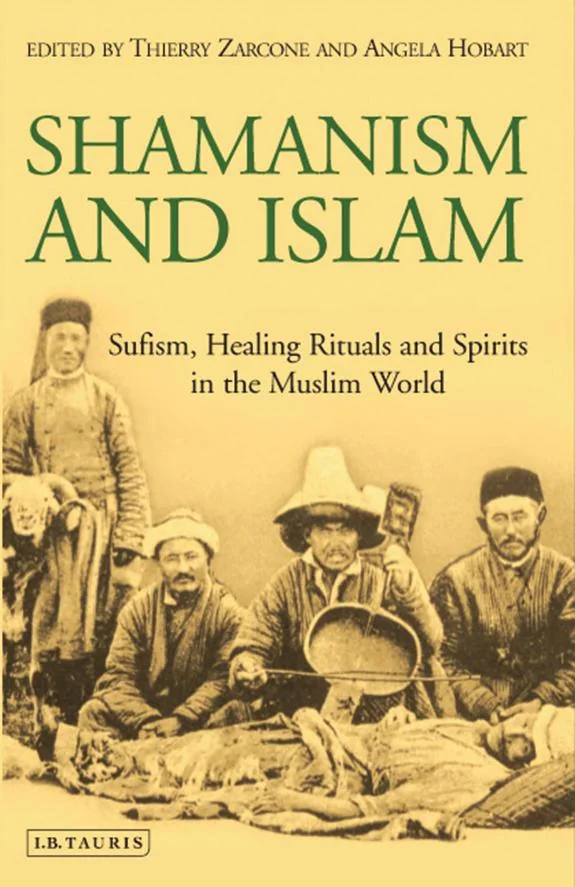
Thierry Zarcone and Angela Hobart’s Shamanism and Islam provides a much-needed, empirically grounded look at a fascinating area of religious practice. The book’s strength lies in its broad geographical scope, surveying shamanic manifestations from Central Asia to the Balkans, and its detailed ethnographic accounts. A particular point of interest is the discussion of how shamanic healers in contemporary Muslim communities maintain relationships with spirits, a practice framed within Islamic belief structures. However, the work occasionally feels overly descriptive, sometimes lacking a more critical theoretical engagement with the implications of this syncretism. The examination of the Muslim shaman cultivating personal relations with spirits, while well-documented, could benefit from deeper comparative analysis with non-Islamic shamanic figures. Nevertheless, it stands as a vital resource for understanding the diverse spiritual landscape of the Muslim world.
📝 Description
80
Thierry Zarcone and Angela Hobart's 2017 book examines shamanism's adaptation within Muslim societies.
This 2017 book by Thierry Zarcone and Angela Hobart investigates the fusion of shamanic traditions with Islam in contemporary Muslim communities. The authors document how shamanic practices have been incorporated into and reshaped within various Islamic cultural settings across Central Asia, the Middle East, North Africa, and the Balkans. It reveals a continuing interaction between these distinct spiritual systems.
The work is aimed at academics in religious studies, anthropologists, historians of religion, and advanced students who study the syncretic nature of belief systems. It will be of particular interest to those researching Sufism, Central Asian cultures, and the historical and current forms of shamanism outside its Siberian origins. The book builds on earlier ethnographic studies of shamanism and Islamic practices, providing a modern synthesis and reevaluation of phenomena observed in places like Uzbekistan and Morocco.
This study situates itself within the broader academic examination of religious syncretism, particularly concerning the persistence and adaptation of indigenous spiritual practices within larger, established religions. It contributes to understanding how shamanic cosmologies, with their emphasis on spirit intermediaries and altered states of consciousness, can coexist and integrate with Islamic frameworks, especially within Sufi traditions. The book explores how individuals may embody both roles, reflecting a dynamic negotiation of belief and practice in diverse cultural landscapes.
💡 Why Read This Book?
• Understand the nuanced integration of shamanic practices within Islamic societies, moving beyond simplistic notions of religious purity, as detailed in the regional surveys. • Gain insight into the specific adaptations and negotiations undertaken by Muslim shamans to reconcile spirit communication with Islamic doctrine, as explored in case studies. • Discover the historical persistence of shamanic elements in regions like North Africa and Central Asia, challenging conventional historical narratives of Islam's spread.
⭐ Reader Reviews
Honest opinions from readers who have explored this book.
❓ Frequently Asked Questions
What specific regions does Shamanism and Islam cover?
The book extensively covers shamanic practices within Muslim communities across Central Asia, the Middle East, North Africa, and the Balkans, offering a broad geographical perspective.
How does the book define a 'Muslim shaman'?
A 'Muslim shaman' is presented as an individual who integrates traditional shamanic roles and spirit relations within the framework of Islamic belief and practice, often through Sufi affiliations.
When was Shamanism and Islam originally published?
Shamanism and Islam was first published on January 30, 2017.
Are shamanic practices still active in contemporary Muslim cultures according to the book?
Yes, the work provides evidence and analysis of ongoing shamanic practices within contemporary Muslim societies, demonstrating their adaptation and persistence.
What is the relationship between shamanism and Sufism discussed in the book?
The book explores how shamanic elements were combined with aspects of Sufism to facilitate their integration into wider Islamic society, often through shared mystical or healing roles.
Who are the primary authors of Shamanism and Islam?
The primary authors are Thierry Zarcone and Angela Hobart, who collaborated on this exploration of Islamic and shamanic intersections.
🔮 Key Themes & Symbolism
Syncretism in Islamic Cultures
The work examines the complex syncretism that occurs when indigenous shamanic traditions encounter and merge with Islam. It highlights how, rather than being eradicated, shamanic practices have often been reinterpreted and integrated within existing Islamic frameworks, particularly through Sufi orders. This adaptation allows for the persistence of spiritual modalities that might otherwise be seen as contradictory to orthodox Islamic beliefs, showcasing a dynamic religious landscape.
The Muslim Shaman Figure
A central theme is the figure of the 'Muslim shaman,' who acts as a bridge between the spirit world and the community within an Islamic context. These individuals often cultivate personal relationships with spirits, mirroring Siberian shamanic traditions, yet operate within the social and theological boundaries of Islam. The book examines their roles as healers, diviners, and spiritual guides, demonstrating their unique position.
Geographical Diversity of Practices
Shamanism and Islam surveys a wide array of geographical locations, including Central Asia, the Middle East, North Africa, and the Balkans. This broad scope reveals the varied ways shamanic elements have manifested and persisted across different Islamic societies. It challenges a monolithic view of Islam by showcasing regional adaptations and the enduring influence of pre-Islamic or indigenous spiritual systems.
Adaptation and Negotiation
The book emphasizes the adaptive strategies employed by shamanic practitioners within Islamic societies. It illustrates how rituals, beliefs, and cosmologies are negotiated to coexist with Islamic doctrine and Sufi mysticism. This process involves re-framing spirit interactions and ecstatic states in ways that align with, or are at least tolerated by, the dominant religious culture, ensuring the survival of these spiritual lineages.
💬 Memorable Quotes
Direct passages from the work, attributed to the author.
“The Muslim shaman, like his Siberian counterpart, cultivated personal relations with spirits.”
— This statement expresses the core argument that shamanic interaction with the spirit world continues within Islamic contexts, adapting its form but retaining its fundamental function of spiritual mediation.
“Shamanism was combined with elements of Sufism in order to adapt to wider Islamic society.”
— This highlights the crucial role of Sufism as a conduit for shamanic practices to find acceptance and integration within mainstream Islamic culture, suggesting a fluid rather than rigid boundary between them.
“The work surveys shamanic practices in Central Asia, the Middle East, North Africa and the Balkans.”
— This indicates the book's extensive ethnographic reach, presenting a comparative study of shamanism's diverse manifestations across distinct cultural and geographical regions influenced by Islam.
“Exploration of the link between Islam and shamanism in contemporary Muslim culture.”
— This phrase defines the book's primary objective: to investigate the ongoing, tangible connections and interactions between Islamic beliefs and shamanic traditions in the present day.
“Examining how the old practice of shamanism was combined with elements of Sufism.”
— This points to the historical process of syncretism, where ancient shamanic methods were blended with Sufi mystical elements to create hybrid spiritual expressions acceptable within Islamic societies.
🌙 Esoteric Significance
Tradition
This work fits within the broader esoteric study of comparative religion and spiritual anthropology, particularly concerning animistic and ecstatic traditions. While not strictly aligned with Western Hermeticism or Kabbalah, it explores analogous concepts of spirit communication and altered states of consciousness found in Sufi mysticism, which shares some mystical underpinnings with other esoteric lineages.
Symbolism
The book implicitly discusses the symbolism of spirit animals or guides, central to shamanic traditions, and how these might be reinterpreted within an Islamic worldview, perhaps as djinn or angelic intermediaries. Another motif is the use of ritual objects or sacred spaces, common in both shamanism and Sufi practices like zikr circles, representing points of connection to the divine or spiritual realms.
Modern Relevance
Contemporary thinkers interested in the phenomenology of religious experience, the evolution of spiritual practices in post-colonial contexts, and the study of hybrid religious identities find this work highly relevant. It informs discussions on how globalized religions interact with local traditions and contributes to understanding the diverse expressions of spirituality that defy rigid categorization.
👥 Who Should Read This Book
• Scholars of religious studies and anthropology seeking detailed ethnographic accounts of shamanic practices within Islamic societies. • Students of Central Asian, Middle Eastern, and North African cultures interested in the interplay of indigenous beliefs and Islam. • Individuals exploring the broader phenomenon of religious syncretism and the adaptation of spiritual traditions across diverse cultural landscapes.
📜 Historical Context
Published in 2017, Shamanism and Islam emerged during a period of increased academic interest in the fluidity and hybridity of religious traditions worldwide. The work builds upon extensive ethnographic research conducted over decades, addressing a gap in scholarship that often treated Islam and indigenous practices as mutually exclusive. It engages with a scholarly lineage that includes figures like Mircea Eliade, who extensively studied shamanism, but extends the inquiry into predominantly Muslim cultural spheres. The book’s examination of shamanic persistence challenges earlier assumptions about the complete Islamization of Central Asian and North African societies. While not directly referencing specific contemporary scholars who engaged with this exact intersection at the time of publication, it implicitly participates in a broader academic conversation about religious pluralism and the re-evaluation of 'folk' or 'popular' religious practices within global Islam, contrasting with more puritanical reform movements.
📔 Journal Prompts
The cultivation of personal relations with spirits by the Muslim shaman: how might this differ conceptually from Western notions of intercessory prayer?
Analyze the function of Sufism as a framework for integrating shamanic practices, considering its historical development.
Compare the role of the 'Muslim shaman' as described in the book with other intermediary figures in different religious traditions.
Reflect on the geographical distribution of shamanic practices discussed and what this suggests about cultural transmission.
Consider the concept of 'adaptation' in religious studies, using the examples from Shamanism and Islam to illustrate its complexities.
🗂️ Glossary
Shamanism
A religious practice characterized by a practitioner, the shaman, who is believed to enter into a trance state during a ritual, to communicate with the spirit world, and to heal the sick.
Sufism
The mystical dimension of Islam, focused on direct experience of God through practices like meditation, chanting, and asceticism, often organized into brotherhoods (tariqas).
Central Asia
A vast region of Eurasia comprising countries such as Kazakhstan, Uzbekistan, Turkmenistan, Tajikistan, and Kyrgyzstan, historically influenced by Turkic, Persian, and Islamic cultures.
Balkans
A peninsula in Southeast Europe, historically and culturally diverse, with significant Muslim populations in countries like Bosnia and Herzegovina, Albania, and Kosovo.
Spirit World
The realm or dimension believed to be inhabited by spirits, deities, ancestors, or other non-corporeal entities, accessible through shamanic or mystical practices.
Syncretism
The merging or blending of different, often opposing, religious and cultural beliefs, practices, and symbols into a new, hybrid system.
Tariqa
An order or school of Sufism, typically organized around a spiritual master and a specific set of practices and initiations.
This book appears in 1 collection
🔮 Readers Also Liked
Browse all →







From the “Shamanism” Collection
View all →






More Free Esoteric History & Biography Books
View all →