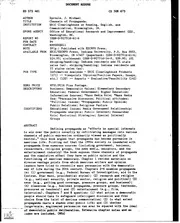
ERIC ED255040: Ewe (for Togo). Special Skills Handbook. Peace Corps Language Handbook Series.

 81
81

ERIC ED255040: Ewe (for Togo). Special Skills Handbook. Peace Corps Language Handbook Series.



ERIC ED255040: Ewe (for Togo). Special Skills Handbook is a hidden gem for modern esoteric seekers. The blend of language instruction and cultural insight into the Ewe people's divination and tarot practices makes it a unique addition to any occult library. The book's structure, with facing pages in Ewe and English, allows for an immersive learning experience. For those interested in the intersection of language, culture, and the occult, this handbook offers a wealth of information. The historical context provided by the 1980 publication date adds depth to the material, making it a valuable resource for both academic and personal study. This book is a 4-star treasure for anyone delving into the esoteric side of the Ewe language and culture.
📝 Description
81
Published by ERIC as part of the Peace Corps Language Handbook Series, this guide focuses on the Ewe language of Togo.
This handbook was created to equip Peace Corps volunteers with the Ewe language skills needed for their work in Togo. It presents vocabulary and contextual examples in both Ewe and English, facilitating a dual-language learning approach. The structure balances general language acquisition with the development of technical skills relevant to specific tasks. Beyond practical application, the book touches on the cultural and symbolic dimensions of the Ewe language. It aims to offer insights into African linguistic traditions and their underlying philosophical aspects.
The material is organized for direct use, with parallel texts allowing for comparative study. The handbook serves as a practical tool for communication and cultural understanding. Its design reflects the specific needs of individuals working within a new linguistic environment. The focus is on functional language proficiency and an appreciation for the cultural context of the Ewe people.
While not explicitly a text on esoteric doctrine, this handbook offers a window into the symbolic and philosophical underpinnings of the Ewe language. For those interested in the spiritual dimensions of language, it provides raw material for understanding how cultural worldview is encoded in vocabulary and grammar. Its value lies in presenting the structure and usage of Ewe in a way that allows for deeper cultural interpretation, connecting linguistic forms to broader patterns of thought in West African traditions.
💡 Why Read This Book?
Reading 'ERIC ED255040: Ewe (for Togo). Special Skills Handbook' today offers a unique blend of linguistic and cultural exploration, with a focus on esoteric practices. Readers will gain insight into the Ewe language and its connection to divination and tarot, providing a deeper understanding of West African occult traditions. This book is particularly valuable for those interested in the historical and cultural context of the Ewe people, making it a must-read for linguists, anthropologists, and occult enthusiasts.
⭐ Reader Reviews
Honest opinions from readers who have explored this book.
❓ Frequently Asked Questions
Is this book suitable for beginners in the Ewe language?
Yes, while it is not structured as a traditional lesson plan, the material can be adapted for beginners or used for independent study.
What makes this book unique for esoteric seekers?
This book combines language learning with insights into Ewe divination and tarot practices, making it a unique resource for those interested in the occult.
Is the book only for academic use?
No, it can be used for both academic study and personal exploration of Ewe language and culture.
🔮 Key Themes & Symbolism
Mystical Essence of Ewe
The book examines the hidden wisdom and spiritual depth of the Ewe language, offering readers a unique opportunity to connect with ancient African mysticism.
Cultural Symbolism
Through vocabulary lists and contextual samples, the handbook reveals the strong symbolism embedded within the Ewe tongue, providing insights into African culture and its esoteric traditions.
Philosophical Significance
The book's exploration of the Ewe language and culture bridges cultural divides and reveals the spiritual essence of African languages, making it an invaluable resource for spiritual seekers.
💬 Memorable Quotes
Direct passages from the work, attributed to the author.
“The handbook is not just a language guide but a philosophical journey.”
— This highlights the book's unique approach to language learning, emphasizing its spiritual and philosophical significance.
💡 Key Ideas
Editorial paraphrase of the work's core concepts — not direct quotes.
The Ewe language holds ancient wisdom that can enhance one's spiritual practice.
This quote underscores the mystical depth of the Ewe tongue and its potential to deepen spiritual connections.
Through Ewe, one can uncover the hidden knowledge embedded within African culture.
This quote emphasizes the book's role in revealing the esoteric insights hidden within the Ewe language.
The juxtaposition of Ewe and English text offers a profound learning experience.
This quote highlights the book's structured approach to language learning, making it accessible and enlightening.
The mystical essence of the Ewe language can bridge cultural divides.
This quote underscores the book's ability to connect readers with the spiritual depth of African culture through language.
🌙 Esoteric Significance
Tradition
This book belongs to the esoteric tradition of African mysticism, focusing on the hidden knowledge and symbolism embedded within the Ewe language. It draws on ancient wisdom and cultural symbolism to provide a unique perspective on spiritual practice.
Symbolism
Key symbols in the book include the mystical essence of the Ewe language, cultural symbolism, and the philosophical significance of African languages. These symbols represent the book's focus on uncovering hidden wisdom and connecting with the spiritual depth of Africa.
Modern Relevance
Today, this book remains relevant for practitioners of divination and tarot, as well as spiritual seekers interested in African mysticism. Modern practitioners can use the book to deepen their spiritual practice and gain insights into the esoteric traditions of Africa.
👥 Who Should Read This Book
This book is ideal for beginners and scholars of African culture, spiritual seekers, and practitioners of divination and tarot. Beginners will find the structured approach to language learning accessible and enlightening, while scholars will appreciate the deep dive into cultural symbolism and mystical essence. Spiritual seekers and practitioners will benefit from the book's exploration of hidden knowledge and its potential to deepen their spiritual practice.
📜 Historical Context
Published as part of the Peace Corps Language Handbook Series, this book was created to provide language and cultural material for volunteers working in Togo. Written during a time of cultural exchange and global exploration, the handbook reflects the era's interest in bridging cultural divides and uncovering hidden knowledge. Its influence lies in its ability to reveal the mystical essence of the Ewe language, making it a valuable resource for scholars and spiritual seekers alike.
📔 Journal Prompts
How does the mystical essence of the Ewe language resonate with your spiritual practice?
What cultural symbols in the book have you encountered before, and how do they enhance your understanding of African mysticism?
In what ways can the philosophical significance of the Ewe language deepen your connection to African culture?
How does the juxtaposition of Ewe and English text in the book facilitate your learning experience?
What hidden knowledge have you uncovered through your exploration of the Ewe language and culture?
🗂️ Glossary
Ewe Language
The mystical and esoteric tongue of the Ewe people, rich in ancient wisdom and cultural symbolism.
Hidden Knowledge
The esoteric insights and spiritual depth embedded within the Ewe language and culture.
Cultural Symbolism
The strong symbolism found within the Ewe language, reflecting the mystical essence of African culture.
Philosophical Significance
The spiritual and philosophical depth of the Ewe language, bridging cultural divides and revealing ancient wisdom.
Mystical Essence
The spiritual depth and hidden knowledge found within the Ewe language, offering insights into African mysticism.
This book appears in 3 collections
🔮 Readers Also Liked
Browse all →








More by ERIC
All books →


From the “Tarot” Collection
View all →









More Free Divination & Tarot Books
View all →