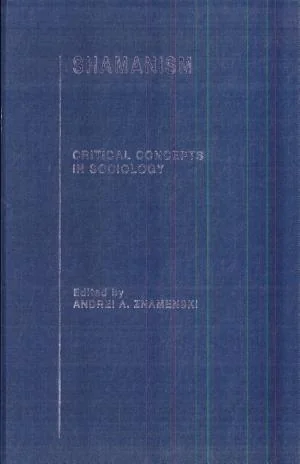
Shamanism
 76
76

Shamanism
Andrei A. Znamenski's "Shamanism" offers a valuable, if sometimes dense, compilation of scholarly perspectives on a practice often simplified in popular discourse. The book excels in its historical tracing, detailing how Western understanding of shamans evolved from early Siberian ethnography to the post-Eliade academic landscape. A particular strength lies in its nuanced portrayal of the shaman's role, emphasizing the complex relationship between altered states, community function, and symbolic representation. However, the sheer breadth of material can occasionally lead to a lack of deep engagement with any single tradition, feeling more like an extensive survey than an in-depth ethnography. The discussion of the "archaic technique of ecstasy," as Eliade termed it, is central and well-supported by comparative examples. Ultimately, Znamenski provides a solid, academically grounded foundation for understanding shamanism, though readers seeking practical application might look elsewhere.
📝 Description
76
Andrei A. Znamenski's 2004 book examines shamanism not as a religion, but as a spectrum of techniques.
Shamanism, by Andrei A. Znamenski, analyzes the ancient practice of individuals mediating between human and spirit worlds. This work clarifies that shamanism is not a single religion, but a collection of diverse cultural practices centered on altered states of consciousness and communication with spirits. Znamenski argues these methods were fundamental to many early human societies.
The book is intended for scholars in religious studies and anthropology, and for anyone interested in the origins of ecstatic traditions. It offers an academic yet accessible look at shamanic phenomena, moving past popular ideas to focus on historical and cross-cultural evidence. Znamenski’s research assists in understanding the historical development of religious experience.
This study acknowledges the influential work of Mircea Eliade and his 1951 book, "Shamanism: Archaic Techniques of Ecstasy," which significantly shaped the academic understanding of the subject. Znamenski traces the historical academic and public interest in shamanism, from 18th-century Siberian ethnography through later popularizations. The book considers how scholarly and popular interpretations of shamanism have evolved and sometimes been distorted over time, situating Znamenski's own contribution within this ongoing discourse.
💡 Why Read This Book?
• You will learn how the study of shamanism has evolved academically since Mircea Eliade's seminal work in 1951, providing a historical perspective on its scholarly reception. • You will understand the core functions of a shaman within various communities, including their role in healing and spirit communication, as detailed through cross-cultural examples. • You will gain insight into the methods shamans employ to enter altered states of consciousness, such as the 'technique of ecstasy,' moving beyond simplistic interpretations.
⭐ Reader Reviews
Honest opinions from readers who have explored this book.
❓ Frequently Asked Questions
What is the historical origin of the term 'shaman'?
The term 'shaman' is believed to originate from the Evenki language of Siberia, referring to a person who is able to enter into a trance state to communicate with spirits. It gained wider academic usage through early Russian ethnographers.
How does Znamenski's book differ from popular portrayals of shamanism?
Znamenski's work offers a scholarly, cross-cultural analysis, grounding the discussion in historical research and anthropological studies, unlike popular accounts that may focus on sensationalism or individual experiences without broader context.
Is this book about practicing shamanism?
No, Andrei A. Znamenski's "Shamanism" is an academic study examining the historical, anthropological, and religious aspects of shamanic practices worldwide, rather than a guide for personal practice.
Who first described shamanism as the 'archaic technique of ecstasy'?
The influential scholar Mircea Eliade is credited with describing shamanism as the 'archaic technique of ecstasy' in his 1951 book, which significantly shaped subsequent research and understanding of the subject.
What role did Carlos Castaneda play in the public's perception of shamanism?
Carlos Castaneda's best-selling books, beginning in the late 1960s, introduced shamanic concepts, particularly those attributed to his purported Yaqui sorcerer mentor Don Juan Matus, to a wide popular audience.
Does the book focus on shamanism in Siberia?
While acknowledging the Siberian origins of the term and early ethnographic interest, Znamenski's "Shamanism" explores shamanic practices across a global spectrum, including examples from various continents and cultures.
🔮 Key Themes & Symbolism
The Shamanic Trance
The book meticulously details the diverse methods employed by shamans to achieve altered states of consciousness, often referred to as the 'technique of ecstasy.' This includes drumming, chanting, dancing, and the use of psychotropic substances. Znamenski explores how these states facilitate communication with the spirit world, allowing the shaman to act as a mediator for their community's spiritual and physical well-being.
Spirit World Interaction
Central to shamanism is the shaman's ability to journey to other realms and interact with spirit beings, such as guides, ancestors, or nature spirits. Znamenski examines the varied cosmologies describing these spirit worlds and the specific roles these entities play in shamanic healing, divination, and soul retrieval practices across different cultures.
Shamanism as Primal Religion
Drawing on scholars like Mircea Eliade, the work investigates the argument for shamanism representing one of humanity's earliest religious expressions. It explores how these ecstatic techniques and animistic beliefs may have formed the bedrock upon which more formalized religious systems later developed, highlighting its foundational role in human spiritual history.
Cross-Cultural Universals
A significant aspect of Znamenski's research involves identifying common threads in shamanic practices across disparate geographical and cultural contexts. The book analyzes recurring motifs, such as the spirit animal, the ascent to the heavens, and the descent into the underworld, suggesting underlying psychological or sociological universals in the human experience of altered states.
💬 Memorable Quotes
Direct passages from the work, attributed to the author.
“Mircea Eliade described shamanism as the 'archaic technique of ecstasy.'”
— This foundational concept frames shamanism not merely as a belief system, but as a set of specific, active methods for achieving altered states crucial for spiritual access and community function.
“Carlos Castaneda made shamanism part of popular culture.”
— This highlights the significant impact of Castaneda's widely read works in the 1960s and 70s, which brought shamanic themes into mainstream consciousness, albeit often through a fictionalized lens.
“Shamans contact spirits on behalf of their communities.”
— This succinctly defines the core social and spiritual role of the shaman: acting as an intermediary to address communal needs through communication with non-human entities.
“The first eighteenth-century explorers of Siberia dubbed...”
— This points to the historical roots of Western academic engagement with shamanism, originating from early encounters and ethnographic observations in the Siberian region.
“The most intriguing aspect of this religion is the ability of shamans to enter into contact with spirits.”
— This emphasizes the perceived extraordinary nature of shamanic power – the direct interface with the supernatural – as the primary element that draws both academic and public attention.
🌙 Esoteric Significance
Tradition
While not strictly aligned with a single Western esoteric lineage like Hermeticism or Theosophy, Znamenski's "Shamanism" engages with the perennialist and comparative mythology streams that often inform esoteric thought. It explores the universal archetypes and practices related to altered states and spirit communication, which resonate with traditions seeking direct experiential knowledge of the divine or hidden realities, often found in Gnostic or ecstatic mystical paths.
Symbolism
Key symbols explored include the spirit journey, often depicted as an ascent or descent through different cosmic layers, representing the shaman's navigation of non-ordinary reality. The spirit animal or helper is another crucial motif, symbolizing the shaman's connection to the natural world and the specific powers or insights they can access. The drum, frequently used to induce trance, serves as a sonic vehicle for this spiritual passage.
Modern Relevance
Contemporary neo-shamanic movements, therapeutic applications of altered states (like Holotropic Breathwork), and certain strands of animistic resurgence draw heavily on the cross-cultural understanding of shamanism. Thinkers and practitioners in fields ranging from ecopsychology to consciousness studies revisit Znamenski's foundational research to understand the enduring human impulse towards spirit contact and altered states of awareness.
👥 Who Should Read This Book
['• Academic researchers in religious studies and anthropology: They will gain a comprehensive overview of the historical development of shamanism studies and key theoretical debates.', '• Students of comparative mythology: This book provides essential context for understanding universal themes in spiritual traditions and altered states of consciousness.', '• General readers interested in the origins of religion: Individuals seeking to understand the foundational elements of human spiritual practices beyond organized dogma will find valuable insights.']
📜 Historical Context
Andrei A. Znamenski's "Shamanism" emerges in an academic landscape significantly shaped by Mircea Eliade's 1951 work, "Shamanism: Archaic Techniques of Ecstasy." The 18th century marked the initial phase of Western engagement, primarily through Russian explorers documenting Siberian practices, providing the etymological root for the term 'shaman.' By the mid-20th century, the study had evolved, attracting scholars from anthropology and religious studies. The 1960s saw a surge in popular interest, fueled by figures like Carlos Castaneda, whose sensationalized accounts, though debated for authenticity, nonetheless brought shamanic themes to a global audience. Znamenski's work navigates this complex history, acknowledging both rigorous ethnography and popular fascination, while situating the study within comparative mythology and the broader discourse on early human spirituality.
📔 Journal Prompts
The shaman's 'technique of ecstasy' across cultures.
Motifs of the spirit journey in non-Western traditions.
The historical reception of shamanic studies.
Community roles of spirit intermediaries.
Personal reflection on altered states and their meaning.
🗂️ Glossary
Shaman
An individual, typically from indigenous cultures, who acts as an intermediary between the human and spirit worlds, often by entering ecstatic states of trance.
Ecstasy
A state of being outside oneself; a state of rapturous delight or overwhelming emotion. In shamanism, it refers to trance states achieved through various methods for spiritual purposes.
Spirit Helper
A spiritual entity, often in animal or human form, that assists the shaman in their work, providing guidance, power, or protection during journeys to other realms.
Trance
A state of consciousness characterized by profound absorption and a reduced awareness of the external environment, often induced by rhythmic stimuli or meditation.
Psychopomp
A guide of souls to the place of the dead. Shamans often fulfill this role, guiding deceased spirits or retrieving souls of the living.
Ethnography
The scientific description of the customs of individual peoples and cultures, based on fieldwork and direct observation.
Animism
The belief that objects, places, and creatures all possess a distinct spiritual essence, including inanimate objects and natural phenomena.
This book appears in 1 collection
🔮 Readers Also Liked
Browse all →









From the “Shamanism” Collection
View all →






More Free Occult Philosophy Books
View all →