La Rueda del Tiempo

 76
76

La Rueda del Tiempo
La Rueda del Tiempo functions less as a standalone narrative and more as a retrospective annotated bibliography of Castaneda's own influential, yet debated, body of work. The genius of this compilation lies in the juxtaposition of original passages with Castaneda's later commentary, offering a meta-dialogue that illuminates the author's self-perception and the maturation of his philosophical framework. A particular strength is the way Castaneda revisits concepts like the 'Tonal' and 'Nagual', providing fresh perspectives on their function and meaning. However, the book's reliance on prior knowledge of his earlier works is a notable limitation; it demands familiarity with the foundational texts to fully appreciate the commentary. The section discussing the sorcerer's apprentice dynamic, wherein Castaneda reflects on his own tutelage under Don Juan Matus, provides a poignant glimpse into the personal evolution of his understanding. Ultimately, La Rueda del Tiempo is a valuable resource for dedicated followers seeking a deeper, author-guided exploration of Castaneda's complex shamanic cosmology.
📝 Description
76
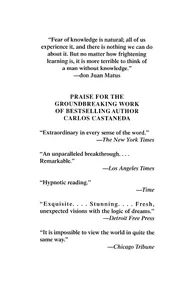
Published in 1999, La Rueda del Tiempo collects passages from Carlos Castaneda's earlier works with new commentary.
La Rueda del Tiempo, released in 1999, compiles key sections from Carlos Castaneda's previous books on Mexican shamanism. Castaneda himself wrote personal commentaries for this collection, creating a dialogue between his past research and his later thoughts. This structure allows readers to re-examine core ideas through the author's developing perspective. It offers a retrospective look at his writings on anthropology and philosophy. This compilation is best suited for readers already familiar with Castaneda's foundational texts, such as The Teachings of Don Juan. It acts as a guide for those wanting to trace the evolution of his concepts and how his various books connect. New readers may find it less direct than his earlier books, as it assumes prior knowledge of the concepts and figures he introduced.
This book emerged in 1999, a time when Castaneda's writings on shamanism had already become a notable, if debated, part of counterculture and esoteric thought. His early books, beginning in 1968, sparked significant interest in shamanic practices and altered states, influencing various academic and fringe fields. By this point, questions about the authenticity and methods behind his work were common among critics. La Rueda del Tiempo can be viewed as Castaneda's effort to organize and reframe his extensive published material.
💡 Why Read This Book?
• Gain a synthesized understanding of Castaneda's core shamanic concepts, such as the 'Nagual' and 'Tonal', by engaging with his direct commentaries on passages from his earlier books. • Explore the evolution of Castaneda's own perspective on the shamanic path, as revealed through his personal reflections accompanying curated quotes from his foundational texts. • Understand the author's framing of knowledge dissemination by examining how he presents his work through the counterpoint of original quotations and his later insights.
⭐ Reader Reviews
Honest opinions from readers who have explored this book.
❓ Frequently Asked Questions
What is the primary purpose of La Rueda del Tiempo?
La Rueda del Tiempo serves as a retrospective compilation, presenting key quotes from Carlos Castaneda's earlier books on shamanism, accompanied by his personal commentaries reflecting on those passages.
Is La Rueda del Tiempo a good starting point for new readers of Carlos Castaneda?
No, it is generally recommended for readers already familiar with Castaneda's foundational works, as it assumes prior knowledge of his concepts and characters.
When was La Rueda del Tiempo originally published?
La Rueda del Tiempo was first published in June 1999.
What key concepts are revisited in La Rueda del Tiempo?
The book revisits core themes such as the 'Nagual' and 'Tonal', the practice of 'seeing', and the role of shamanic mentors like Don Juan Matus.
Who is the author, Carlos Castaneda?
Carlos Castaneda (1925-1998) was an anthropologist and author known for his ten books detailing his alleged apprenticeship with a Yaqui shaman named Don Juan Matus.
What is the significance of the title 'La Rueda del Tiempo'?
The title translates to 'The Wheel of Time', suggesting cyclical patterns, the passage of knowledge, and the interconnectedness of Castaneda's teachings across his writings.
🔮 Key Themes & Symbolism
The Nagual and Tonal
This compilation prominently revisits Castaneda's central dichotomy of the 'Tonal' and the 'Nagual'. The Tonal represents the known, the ordered world of daily life, social constructs, and personal identity. The Nagual, conversely, embodies the unknown, the area of power, dreams, and the unmanifest. Castaneda's commentaries in La Rueda del Tiempo often aim to clarify the subtle interplay between these forces, emphasizing that true shamanic power emerges from working through the boundary between them, not by eradicating the Tonal, but by expanding one's awareness into the boundless Nagual.
The Shamanic Apprenticeship
Central to Castaneda's narrative is the concept of the arduous shamanic apprenticeship under Don Juan Matus. La Rueda del Tiempo allows Castaneda to reflect on key moments of this tutelage, underscoring the discipline, obedience, and willingness to confront the unknown required of a sorcerer's apprentice. The commentaries highlight how seemingly ordinary events or encounters were designed by his teacher to dismantle his conditioned perception and open him to a different reality, emphasizing the transformative power of guided, experiential learning.
Perception and Reality
A recurring theme is the subjective nature of reality and the limitations of ordinary perception. Castaneda, through selected quotes and his own reflections, explores how shamanic practices aim to break down habitual ways of seeing, allowing the practitioner to 'see' the world as energy. This involves a deliberate unlearning process, challenging the reader to question their own assumptions about what constitutes reality and how their perception shapes their experience of the world.
The Path of the Warrior
Castaneda frequently frames the shamanic journey as the path of a 'warrior'—one who lives with full awareness, purpose, and detachment. The commentaries in La Rueda del Tiempo often elaborate on the principles of this path, such as acting with impecable resolve, taking responsibility for one's actions, and facing the 'inconveniences' of life not as obstacles but as opportunities for growth. This perspective emphasizes a disciplined engagement with existence, grounded in self-mastery.
💬 Memorable Quotes
Direct passages from the work, attributed to the author.
“The Tonal is everything we know and have a name for.”
— This concise statement defines the Tonal as the area of the familiar, the structured, and the nameable aspects of existence—our everyday reality and understanding.
“The Nagual is the boundary of the Tonal.”
— This highlights the relationship between the known (Tonal) and the unknown (Nagual), suggesting that the limits of our understanding define the gateway to the mysterious and unmanifest.
“The power of the world is in the hands of the sorcerers.”
— This provocative statement suggests that those who have mastered the principles of perception and energy, the sorcerers, hold a unique influence over the unfolding of reality.
“Don Juan taught me to see.”
— This fundamental declaration captures the core of Castaneda's alleged apprenticeship, pointing to the transformative shift in perception that shamanic training aims to achieve.
💡 Key Ideas
Editorial paraphrase of the work's core concepts — not direct quotes.
A warrior assumes responsibility for his actions.
This quote emphasizes the ethical and practical dimension of the 'warrior's path' as described by Castaneda, focusing on accountability and conscious engagement with life.
🌙 Esoteric Significance
Tradition
Castaneda's work, while often presented through an anthropological lens, draws heavily from indigenous shamanic traditions, particularly those attributed to the Yaqui people. Its esoteric significance lies in its attempt to bridge the gap between Western rationalism and non-ordinary states of consciousness. It fits within the broader Hermetic and Gnostic traditions by exploring hidden knowledge, altered perception, and the idea of gnosis (direct experiential knowledge) as a path to liberation from mundane reality.
Symbolism
Key symbols include the 'Nagual' and 'Tonal', representing the duality of the unknown and the known, the formless and the formed. The 'sorcerer's apprentice' motif symbolizes the initiation journey and the transmission of esoteric knowledge. The concept of 'seeing' represents a shift in perception beyond the ordinary, allowing one to perceive the energetic nature of reality, a common theme in many mystical traditions.
Modern Relevance
Contemporary thinkers and practitioners in fields ranging from transpersonal psychology to modern shamanism continue to engage with Castaneda's concepts. His exploration of altered states, the power of intention, and the subjective construction of reality remains relevant for those seeking alternative frameworks for understanding consciousness and personal transformation outside mainstream paradigms.
👥 Who Should Read This Book
• Students of comparative religion and anthropology interested in the cultural impact and reception of shamanic narratives in the 20th century. • Practitioners of esoteric disciplines seeking to understand alternative frameworks of consciousness and perception beyond Western philosophical traditions. • Long-time followers of Carlos Castaneda's work who wish to engage with his retrospective commentaries on his foundational texts.
📜 Historical Context
Published in 1999, La Rueda del Tiempo appeared at a complex juncture for Carlos Castaneda's legacy. His initial works, beginning with The Teachings of Don Juan: A Yaqui Way of Knowledge (1968), had captivated a generation, popularizing concepts of shamanism and altered states within counterculture and New Age movements. By the late 20th century, however, Castaneda faced significant scholarly scrutiny. Anthropologists like Richard de Mille critically examined his ethnographic claims, questioning the authenticity of his mentor, Don Juan Matus, and suggesting his work was fictional. Despite this controversy, Castaneda maintained a devoted following and continued to publish. La Rueda del Tiempo, a retrospective compilation with authorial commentary, can be viewed as an attempt to consolidate his teachings and engage with his own evolving narrative, reinforcing his unique position between anthropology, philosophy, and esoteric literature, long after his initial impact.
📔 Journal Prompts
Reflect on the distinction between the 'Tonal' and the 'Nagual' as presented in Castaneda's commentaries.
Consider the role of obedience and discipline in the shamanic apprenticeship described.
Analyze the concept of 'seeing' as a method for altering one's perception of reality.
Examine the characteristics of the 'warrior's path' and its application to daily life.
What personal assumptions about reality are challenged by the ideas presented in the compilation?
🗂️ Glossary
Tonal
In Castaneda's framework, the Tonal represents the known world: everything that has a name, order, and social structure. It is the area of the self, the ego, and the ordinary consensus reality.
Nagual
The Nagual is the counterpart to the Tonal, representing the unknown, the mysterious, and the ineffable aspects of existence. It is the area of power, dreams, and the boundless potential beyond ordinary perception.
Seeing
A shamanic practice taught by Don Juan Matus, 'seeing' refers to the ability to perceive the world as energy, moving beyond the conventional, nameable reality of the Tonal to apprehend the true nature of things.
Warrior
A practitioner who lives with full awareness, purpose, and discipline, taking responsibility for their actions and confronting the challenges of existence without complaint or justification.
Sorcerer
An individual who has undergone rigorous training to perceive and interact with the Nagual, often acting as a guide or mentor in the shamanic tradition.
Apprenticeship
The process of learning shamanic knowledge and practices under the guidance of a mentor, characterized by intense discipline, experiential learning, and the dismantling of ordinary perception.
Impeccability
A core principle for the warrior, signifying acting with precision, purpose, and without waste of energy, aligning one's actions with the intent of the shamanic path.
This book appears in 1 collection
🔮 Readers Also Liked
Browse all →









From the “Shamanism” Collection
View all →





More Free Occult Philosophy Books
View all →