Hallucinogenic Plants
 74
74

Hallucinogenic Plants



By Evander Ashcroft (Alchemy & Hermeticism Editor) — Richard Evans Schultes' 'Hallucinogenic Plants' remains a cornerstone for anyone seeking to understand the esoteric applications of botanicals. This Golden Guide, though concise, is a treasure trove of ethnobotanical knowledge, laying bare the profound spiritual and ritualistic significance of psychoactive flora. Schultes, a true luminary in the field, presents complex information with clarity, revealing the historical and mystical connections between plants and altered consciousness. Its strength lies in its accessible yet authoritative approach, making it an ideal starting point for practitioners and scholars delving into plant-based shamanism, entheogenic studies, and the ancient art of invoking altered states. A foundational text for the serious student of the hidden arts.
📝 Description
74
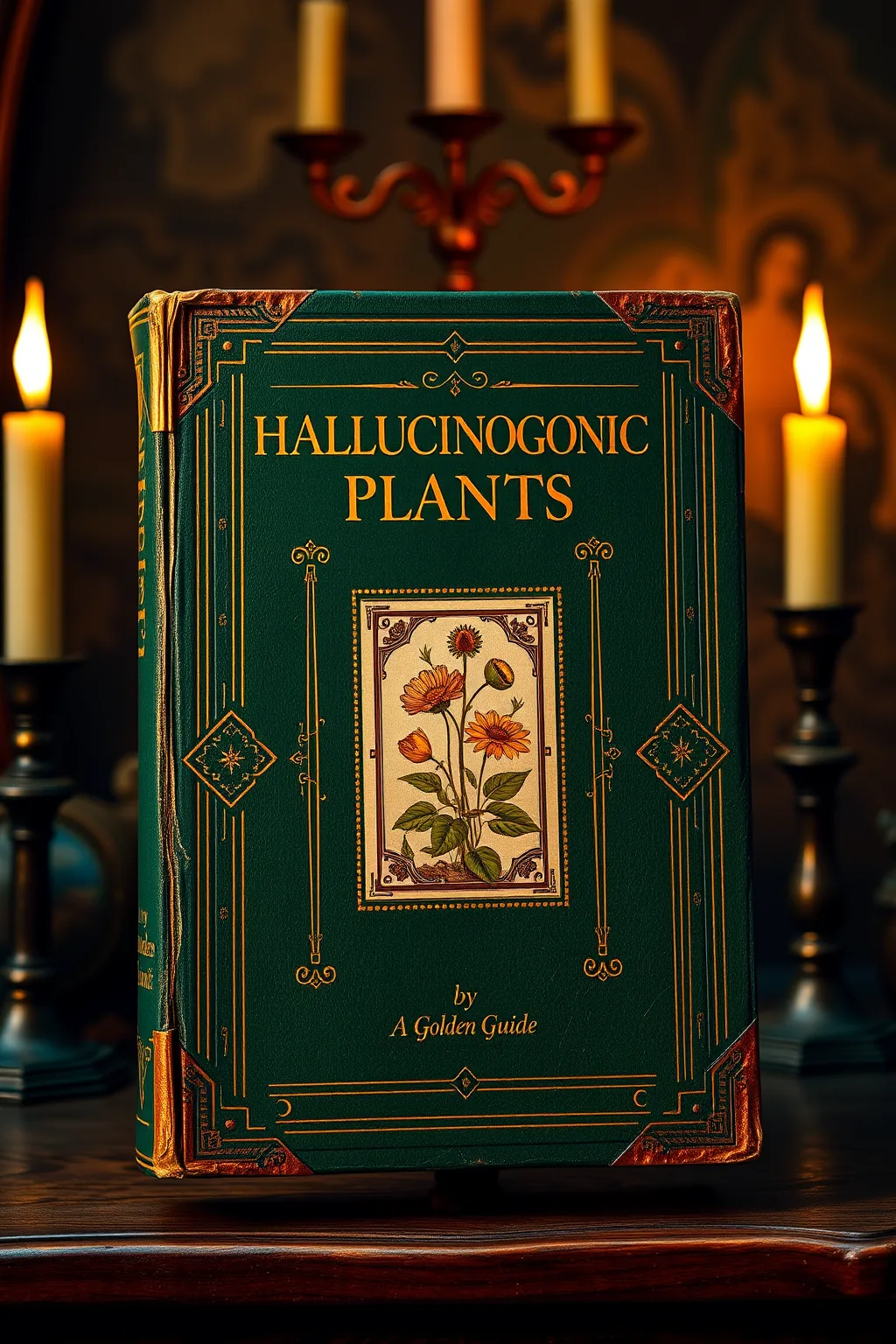
Richard Evans Schultes details hallucinogenic plants and their use in ancient cultures in this 1979 Golden Guide.
Richard Evans Schultes's 'Hallucinogenic Plants,' published as part of the Golden Guides series, examines the history and cultural significance of psychoactive flora. The book details numerous plants known for their mind altering properties and their roles in shamanic practices and spiritual traditions worldwide. Schultes, an ethnobotanist, investigates how these plants were used in rituals, healing, and to achieve altered states of consciousness across different societies.
The volume includes detailed illustrations by Elmer W. Smith, which aid in the identification and understanding of each plant specimen. It goes beyond simple botanical descriptions to cover the lore, rituals, and spiritual applications associated with these powerful botanicals. The book is presented as a resource for those interested in the esoteric aspects of plant use and altered states of awareness, connecting the reader to the deeper connections between humanity and the plant kingdom.
This book fits within traditions that explore the sacred or spiritual dimensions of the natural world, particularly those involving plants as agents of altered consciousness. It touches on practices found in shamanism, indigenous spiritual systems, and later Western esoteric interests in plant psychedelics. The focus on ritual, communion with the divine, and unlocking hidden perceptions aligns with esoteric pursuits aimed at understanding deeper realities through non-ordinary states of awareness and connection to nature's hidden forces.
✍️ Author
A Golden Guide
The Golden Guides, originally Golden Nature Guides, were a series of 160-page, pocket-sized books created by Western Publishing and published under their "Golden Press" line (primarily a children's book imprint) from 1949. Edited by Herbert S.
💡 Why Read This Book?
Discover the ancient symbiosis between humanity and potent botanicals. This guide offers a foundational understanding of plant-based consciousness alteration, rich with ethnobotanical lore and historical context. Ideal for seekers of hidden knowledge, practitioners of nature-based magic, and scholars of ancient spiritual practices who wish to explore the mystical dimensions of the plant kingdom.
⭐ Reader Reviews
Honest opinions from readers who have explored this book.
❓ Frequently Asked Questions
What is the primary focus of 'Hallucinogenic Plants'?
The book's primary focus is the ethnobotany and historical use of hallucinogenic plants across various cultures, emphasizing their spiritual, ritualistic, and medicinal applications.
Who was Richard Evans Schultes and why is his contribution significant?
Richard Evans Schultes was a pioneering ethnobotanist, often called the 'father of modern ethnobotany.' His extensive fieldwork and research established a scientific basis for understanding the traditional uses of psychoactive plants.
Are the illustrations in the book useful?
Yes, the illustrations by Elmer W. Smith are rich and detailed, providing valuable visual aids for identification and enhancing the book's overall appeal as both a scientific and aesthetic work.
Is this book suitable for beginners interested in psychedelics?
Absolutely. While it delves into profound topics, 'Hallucinogenic Plants' serves as an excellent introductory text, offering a solid foundation before exploring more advanced literature on the subject.
What is the historical context of this book's publication?
Published as part of the Golden Guides series in the 1970s, the book reflects a growing interest in altered states of consciousness and the exploration of indigenous knowledge during that era.
🔮 Key Themes & Symbolism
The Sacredness of Psychoactive Flora
This theme looks at the profound reverence and spiritual significance attributed to hallucinogenic plants across diverse indigenous cultures. It explores how these botanicals were not merely tools but sacred entities, viewed as conduits to the divine, gateways to ancestral realms, and essential components of shamanic healing and divination rituals. The text highlights the deep-seated belief in the power of these plants to facilitate profound inner transformations and cosmic understanding, positioning them as vital allies in the quest for spiritual enlightenment and connection to the natural world.
Ethnobotanical Heritage and Lost Knowledge
This theme underscores the critical importance of preserving and understanding the ethnobotanical heritage of humanity. It focuses on the vast repository of knowledge held by indigenous peoples regarding the use of psychoactive plants, much of which is at risk of being lost. Schultes' work serves as a vital document, meticulously recording traditional practices, preparation methods, and the intricate symbolism associated with these plants, thereby safeguarding a crucial aspect of human history and spiritual practice for future generations to study and learn from.
The Plant as a Key to Consciousness
Here, the focus shifts to the transformative potential of hallucinogenic plants as keys that unlock deeper dimensions of human consciousness. The book explores how these substances, when used with intention and respect, can expand perception, dissolve ego boundaries, and foster clear insights into the nature of reality, self, and the universe. It touches upon the philosophical implications of altered states, suggesting that these botanical allies offer a unique pathway to understanding the mysteries of existence and our place within the cosmic range.
💬 Memorable Quotes
Direct passages from the work, attributed to the author.
“Nature has provided us with many keys.”
— This poignant statement suggests that the natural world holds numerous secrets and potentials, with certain plants acting as specific keys to unlock deeper understanding or altered states of perception.
“The plant kingdom is a library of the mind.”
— An evocative metaphor implying that plants, particularly psychoactive ones, contain vast amounts of information and wisdom that can be accessed and assimilated by the human psyche.
“Wisdom is found in the roots of plants.”
— Suggests that profound knowledge and ancient truths are deeply embedded within the natural world, particularly in the foundational elements of plants, waiting to be unearthed.
“A journey inward, guided by the outer world.”
— Articulates the paradox of using external botanical agents to facilitate profound internal exploration and self-discovery, linking the macroscopic world to the microscopic field of consciousness.
💡 Key Ideas
Editorial paraphrase of the work's core concepts — not direct quotes.
The spirits of plants speak to those who listen.
This quote highlights the animistic belief that plants possess consciousness and can communicate, offering guidance and insight to individuals open and attuned to their subtle energies.
🌙 Esoteric Significance
Tradition
This work deeply appeals to animistic, shamanic, and indigenous spiritual traditions worldwide. It speaks to the ancient practice of using plant allies for divination, healing, and communion with the spirit realm. The book's focus on the sacred relationship between humans and psychoactive flora aligns with Hermetic principles of correspondence and the understanding of nature as a manifestation of divine intelligence, offering a tangible link to primal forms of spiritual inquiry and practice.
Symbolism
The plants themselves become potent symbols of transformation, transcendence, and the hidden potentials of consciousness. Each species carries its own symbolic weight, often tied to specific deities, elemental forces, or stages of spiritual development within various cultural mythologies. The act of consuming these plants can symbolize a descent into the underworld of the psyche, a journey through the labyrinth of illusion, or an ascent to higher spiritual planes, making them powerful archetypal symbols in esoteric practice.
Modern Relevance
In an era increasingly grappling with existential questions and seeking deeper connection, 'Hallucinogenic Plants' offers a vital bridge to ancestral wisdom. It provides a foundational understanding for modern practitioners exploring plant medicine, entheogenic ceremonies, and consciousness studies. Its insights into the respectful and intentional use of these potent allies are more relevant than ever, encouraging a responsible, ethical, and spiritually grounded approach to exploring the vast field of the human mind and its connection to the natural world.
👥 Who Should Read This Book
This book is a treasure for the curious soul, the dedicated scholar, and the burgeoning practitioner. Beginners will find a clear, illustrated introduction to the historical and cultural significance of these potent plants. Scholars of ethnobotany, anthropology, and religious studies will appreciate Schultes' meticulous research and foundational insights. Seekers of deeper consciousness and practitioners of nature-based spirituality will find a rich source of lore and inspiration, guiding them towards a more profound understanding of the plant kingdom's mystical potential and their role in ancient traditions.
📜 Historical Context
Published in the 1970s, 'Hallucinogenic Plants' emerged during a period of significant cultural and scientific interest in psychedelics and altered states of consciousness. The counterculture movement had popularized explorations into consciousness, and scientific research, though often controversial, was also probing the potential therapeutic and spiritual uses of these substances. This book, as part of the accessible Golden Guides series, democratized complex ethnobotanical information, making it available to a wider audience beyond academic circles. It arrived at a time when indigenous wisdom was gaining renewed appreciation, and it served to document and legitimize the profound connection between certain plant species and human spiritual practices, contributing to a broader dialogue on consciousness, nature, and ancient traditions.
📔 Journal Prompts
Reflect on a plant in your local environment. What hidden properties or symbolic meanings might it possess?
Imagine you are an ancient shaman. How would you prepare and use a hallucinogenic plant for a healing ritual?
What does the concept of 'sacred plant medicine' mean to you, and how does it differ from recreational use?
Consider the ethical implications of studying and utilizing plants with psychoactive properties. What responsibilities do we have?
How can the knowledge of ethnobotany inform our current relationship with the natural world and our understanding of consciousness?
🗂️ Glossary
Ethnobotany
The scientific study of the relationships between people and plants, focusing on how cultures use, manage, and perceive plants, including their medicinal, ritualistic, and symbolic applications.
Psychoactive
Relating to or affecting the mind. Psychoactive substances are those that alter perception, mood, consciousness, cognition, or behavior.
Shamanism
A spiritual practice characterized by the ability to enter altered states of consciousness, often through ritual or plant-assisted means, to communicate with the spirit world and mediate between the human and spirit realms.
Entheogen
A psychoactive substance used in a religious or spiritual context. The term emphasizes the divine or spiritual nature of the experience it can induce.
Liminal Space
A transitional or in-between state or place, often associated with ambiguity, uncertainty, and potential transformation. In spiritual contexts, it refers to thresholds between worlds or states of being.
This book appears in 2 collections
🔮 Readers Also Liked
Browse all →






From the “Witchcraft” Collection
View all →







More Free Witchcraft & Paganism Books
View all →