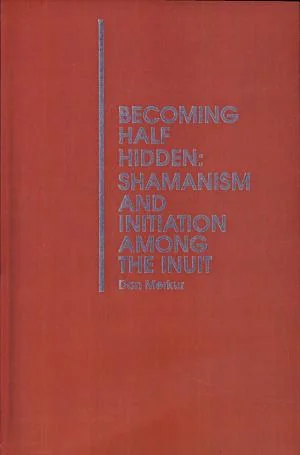
Becoming Half Hidden
 76
76

Becoming Half Hidden
Daniel Merkur's *Becoming Half Hidden* offers a refreshing, if occasionally austere, intellectual dissection of esoteric traditions. Rather than succumbing to the mystical allure it describes, Merkur maintains a critical distance, analyzing the mechanisms by which hidden knowledge is preserved and transmitted. His examination of the phenomenon of "initiation" as a method of controlling access to information is particularly sharp. However, the book's academic rigor sometimes comes at the expense of narrative flow, making certain sections dense for those not already immersed in the subject matter. A notable passage details the early modern Rosicrucian manifestos, highlighting their strategic ambiguity as a means of both attracting and repelling attention. Merkur's work is a valuable contribution for its analytical approach, though it demands a patient reader.
Verdict: A sober, scholarly deconstruction of esoteric knowledge systems.
📝 Description
76
Daniel Merkur's 1992 book examines the transmission of esoteric knowledge.
Daniel Merkur's "Becoming Half Hidden" analyzes the history and structure of esoteric traditions. The book investigates how mystical and occult ideas are developed, shared, and interpreted through different eras. Merkur focuses on the dynamic between concealed knowledge and its public expression, offering a detailed look at how these systems function.
The work is aimed at dedicated students of esotericism, comparative religion, and intellectual history. It suits readers interested in careful analysis of occult practices and the fundamental principles that shape hidden knowledge systems. It is not a guide for those seeking straightforward spiritual guidance. Merkur's research traces the evolution of occult thought within the wider intellectual currents of the late 20th century.
Published in 1992 by Routledge, "Becoming Half Hidden" appeared during a period of growing academic attention to Western esotericism. This followed the work of scholars like Frances Yates and Antoine Faivre, who had begun to legitimize the study of occult traditions within academia. Merkur's book contributes to this scholarly discourse by dissecting core concepts and historical developments, placing esoteric thought within broader intellectual and cultural frameworks of the time.
💡 Why Read This Book?
• Understand the structural dynamics of esoteric traditions, learning how hidden knowledge is deliberately concealed and revealed, a concept Merkur terms "controlled dissemination." • Gain insight into the historical development of occult ideas, specifically how movements like Rosicrucianism strategically employed ambiguity in their initial manifestos, as discussed in the book's early sections. • Appreciate the critical academic lens applied to mysticism, providing a framework for analyzing belief systems that moves beyond simple acceptance or dismissal, a hallmark of Merkur's analytical style.
⭐ Reader Reviews
Honest opinions from readers who have explored this book.
❓ Frequently Asked Questions
When was Becoming Half Hidden first published?
Becoming Half Hidden was first published in 1992 by Routledge, which is an imprint of Taylor & Francis.
What is the main focus of Daniel Merkur's work in this book?
The book focuses on the structure and transmission of esoteric traditions, examining how hidden knowledge is formulated, shared, and interpreted across different historical periods.
Who is the author Daniel Merkur?
Daniel Merkur is an author and researcher known for his scholarly work on esoteric subjects, particularly his analysis of traditions and their historical development.
What academic discipline does Becoming Half Hidden contribute to?
The book contributes significantly to the academic study of Western esotericism, comparative religion, and intellectual history, offering a critical perspective on occult traditions.
Does the book discuss specific esoteric orders or movements?
Yes, the work explores various esoteric traditions and movements, often referencing historical examples like the Rosicrucians to illustrate concepts of hidden knowledge and initiation.
Is Becoming Half Hidden suitable for beginners in occult studies?
While informative, the book's academic and analytical style may be best suited for readers with some existing background or a strong interest in scholarly approaches to esotericism.
🔮 Key Themes & Symbolism
Controlled Dissemination
Merkur investigates how esoteric knowledge is managed through mechanisms of secrecy and selective revelation. This 'controlled dissemination' isn't merely about hiding information but actively shaping its perception and accessibility. The work examines how rituals, secret societies, and cryptic texts function as tools to maintain the integrity and mystique of hidden traditions, ensuring that only those deemed worthy or prepared can access deeper layers of understanding.
The Nature of Revelation
The book scrutinizes the concept of revelation within esoteric contexts, questioning whether it stems from divine sources, psychological states, or social constructs. Merkur explores how individuals and groups interpret experiences as divinely inspired or deeply significant, and how these interpretations are codified into doctrines and practices that form the backbone of esoteric systems.
Symbolism and Interpretation
A core theme is the role of symbols in esoteric traditions. Merkur analyzes how symbols are employed not just as decorative elements but as vehicles for complex ideas, often possessing multiple layers of meaning. The book discusses the hermeneutic challenges involved in deciphering these symbols, highlighting the subjective and communal aspects of interpretation within esoteric communities.
Historical Formation of Esotericism
Merkur traces the historical trajectory of esoteric thought, demonstrating how various traditions have evolved and influenced one another. The work emphasizes that esotericism is not static but a dynamic field shaped by historical events, intellectual shifts, and the contributions of key figures and movements, challenging simplistic notions of continuous, unbroken lineages.
💬 Memorable Quotes
Direct passages from the work, attributed to the author.
“The problem of revelation is less about what is revealed than about who is authorized to reveal it.”
— This highlights Merkur's focus on the social and institutional aspects of esoteric knowledge. It suggests that authority and control over information are central to how traditions are formed and maintained, rather than the inherent truth or origin of the revealed content.
“Secrecy is not merely the absence of information, but an active condition of esoteric practice.”
— This points to the intentionality behind esoteric concealment. Secrecy is framed as a deliberate technique used to structure knowledge, foster community, and imbue information with special significance within a tradition.
“Initiation functions as a gatekeeping mechanism for knowledge.”
— This interpretation emphasizes the role of initiation rites in controlling access to esoteric teachings. It positions initiation as a crucial process that filters individuals and determines who is permitted to learn and practice hidden traditions.
“The interpretation of symbols is often a collective endeavor, reinforcing communal identity.”
— This suggests that the meaning of esoteric symbols is not solely derived from individual insight but is shaped and validated through group consensus. This collective process strengthens the bonds within an esoteric community.
“The history of esotericism is one of both concealment and strategic emergence.”
— This captures the dual nature of esoteric traditions: their tendency to operate in private while simultaneously seeking moments of public expression or influence. It acknowledges the complex dance between secrecy and visibility.
🌙 Esoteric Significance
Tradition
Merkur's work engages broadly with the Western esoteric tradition, encompassing elements often associated with Hermeticism, Gnosticism, and Renaissance esotericism, though he avoids strict adherence to any single lineage. His approach is more analytical and structural, dissecting the common features and operational logic of various hidden knowledge systems rather than affiliating with a specific school. He offers a meta-perspective on how these traditions function, regardless of their specific doctrinal content.
Symbolism
The book frequently touches upon the function of symbols within esoteric systems. For instance, it might discuss how alchemical imagery or Kabbalistic diagrams are not merely decorative but serve as mnemonic devices or conceptual maps. These symbols often represent complex cosmological or psychological states, and their interpretation is a key element in the transmission and understanding of esoteric teachings.
Modern Relevance
Contemporary scholars of religion and cultural studies continue to draw on Merkur's analytical framework for understanding how knowledge is constructed, controlled, and disseminated, particularly in niche or counter-cultural fields. His insights into the sociology of secret knowledge remain relevant for analyzing online communities, digital subcultures, and new religious movements.
👥 Who Should Read This Book
• Students of comparative religion and intellectual history seeking to understand the structural dynamics of belief systems that operate outside mainstream paradigms. • Researchers interested in the sociology of knowledge and the mechanisms of information control within secretive or specialized communities. • Esoteric practitioners who wish to critically examine the historical development and transmission methods of their chosen traditions, moving beyond purely devotional engagement.
📜 Historical Context
Daniel Merkur's *Becoming Half Hidden*, published in 1992, arrived at a key moment for the academic study of Western esotericism. The field, which had seen significant scholarly groundwork laid by figures like Frances Yates and Antoine Faivre in the preceding decades, was beginning to mature. Merkur's work contributed to this growing body of scholarship by offering a critical, structural analysis of esoteric traditions, moving beyond mere historical description. It engaged with intellectual currents that were questioning the nature of knowledge, belief, and secret societies in the late 20th century. While academic interest was rising, the popular reception of esoteric subjects was often fragmented, with some traditions gaining visibility while others remained obscure. Merkur’s approach, focusing on the mechanisms of knowledge control rather than the doctrines themselves, provided a unique perspective distinct from more hagiographic or purely historical accounts emerging at the time.
📔 Journal Prompts
The concept of controlled dissemination: How might this apply to information I encounter today?
Analyze the symbolic language in a personal belief system or a cultural phenomenon.
Reflect on the role of authority in the formation of knowledge, using Merkur's ideas on revelation.
Consider a historical esoteric movement and its methods of maintaining secrecy.
Examine the gatekeeping function of initiation in any group context.
🗂️ Glossary
Esotericism
A broad category of religious and spiritual traditions characterized by an emphasis on hidden knowledge, inner experience, and secret teachings, often transmitted through initiation.
Controlled Dissemination
Merkur's concept describing the deliberate management of information flow within esoteric traditions, involving both concealment and strategic revelation to maintain secrecy and authority.
Revelation
In an esoteric context, the process or content of revealing hidden truths, often attributed to divine inspiration, mystical experience, or ancient wisdom, and subject to interpretation and authority.
Initiation
A ritual or process through which an individual is formally admitted into a group or granted access to secret knowledge, often marking a transition in status or understanding.
Symbolism
The use of images, objects, or signs to represent abstract ideas or complex concepts, a fundamental element in the communication and preservation of esoteric teachings.
Hermeticism
An esoteric tradition based on the writings attributed to Hermes Trismegistus, emphasizing cosmology, alchemy, astrology, and the divine nature of humanity.
Gnosticism
A diverse set of religious movements in the early Christian era emphasizing salvation through secret knowledge (gnosis) and often positing a dualistic worldview.
This book appears in 1 collection
🔮 Readers Also Liked
Browse all →









From the “Shamanism” Collection
View all →








More Free Occult Philosophy Books
View all →