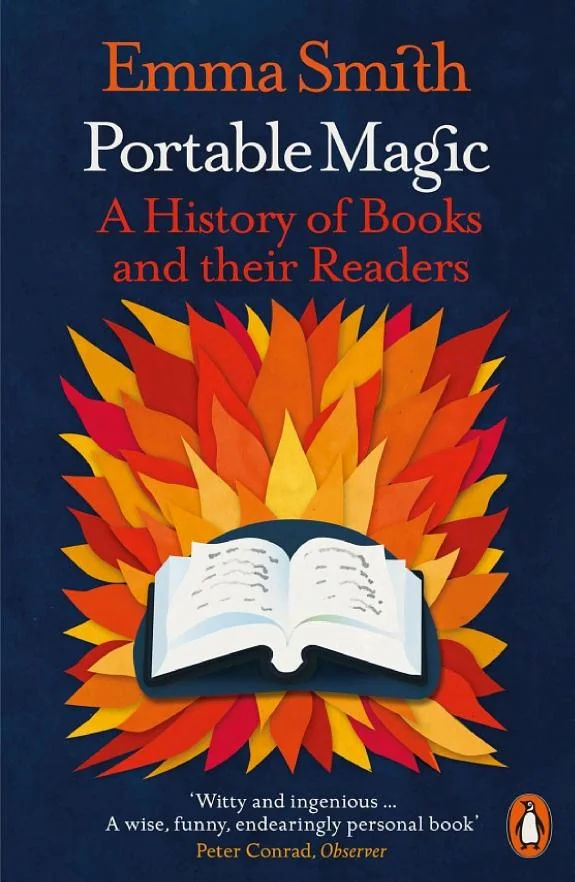
Portable Magic
 80
80

Portable Magic
Emma Smith’s *Portable Magic* offers a refreshing perspective on the humble book, treating it not merely as a carrier of words but as a physical entity imbued with its own significance. Smith’s examination of how the material form of a book—its paper, binding, and even its age—contributes to our intellectual and emotional engagement is particularly compelling. The passage discussing the tactile experience of turning pages, contrasting it with the seamless scroll of digital text, highlights a core strength: its ability to articulate often-unspoken aspects of reading. However, the work occasionally feels less like a critical analysis and more like a series of observations, leaving the reader wishing for deeper theoretical grounding in certain sections. Despite this, *Portable Magic* is a valuable contribution for anyone who has ever felt the quiet power emanating from a well-loved volume.
📝 Description
80
Emma Smith's 2022 book argues the physical book is a ritual object.
Emma Smith's *Portable Magic* examines the book not as a container for words, but as a physical object with its own ritualistic qualities. The work moves beyond the text to consider how the binding, paper, ink, and even the scent of a book shape our engagement with it. Smith suggests that a focus solely on content causes us to miss a significant layer of meaning derived from the book's tangible form.
This perspective will appeal to those who feel a strong connection to physical volumes, bibliophiles, and students of material culture. It is particularly relevant for readers interested in the phenomenology of reading and the history of the book, especially within philosophical or esoteric traditions. The book invites consideration of how the vessel of knowledge influences our understanding of its contents.
Published in 2022, *Portable Magic* contributes to a contemporary resurgence of interest in the material aspects of texts within esoteric and intellectual history. While not a manual for magical practice, it reframes the physical book as an artifact deserving of mindful attention, akin to how certain traditions imbue objects with symbolic weight. Smith's concept of 'bibliomancy' as heightened awareness of the book's physical presence echoes a broader esoteric inclination to find significance in the tangible form of sacred or meaningful objects, moving beyond mere textual interpretation.
💡 Why Read This Book?
• Understand the concept of 'objecthood' versus 'textuality' as applied to books, gaining a new appreciation for the physical form of knowledge transmission beyond the words themselves, as explored in the book's initial chapters. • Discover how the materiality of a book can influence one's perception and understanding, moving beyond simple content analysis to a more embodied reading practice, a concept central to Smith's argument. • Re-evaluate your personal relationship with books by considering their physical presence as a source of meaning, encouraging a mindful engagement with your own library and reading habits, inspired by the book's discussion of bibliomancy.
⭐ Reader Reviews
Honest opinions from readers who have explored this book.
❓ Frequently Asked Questions
What is the core argument of Emma Smith's Portable Magic?
The core argument is that books are significant physical objects, not just containers for words. Smith explores how their materiality—binding, paper, and form—influences our experience and understanding, proposing a form of 'reading the object' alongside reading the text.
Is Portable Magic about magic tricks or illusions?
No, the title 'Portable Magic' refers metaphorically to the profound, almost magical, impact that the physical book as an object can have on the reader's experience and perception, rather than literal magical practices.
Who is Emma Smith, the author of Portable Magic?
Emma Smith is an author whose work often explores the relationship between people and objects. *Portable Magic* (first published in 2022) is one of her notable contributions to the discussion on material culture and the book.
What historical period does Portable Magic relate to?
While published in 2022, the book engages with the history of the book and reading practices across various periods, contrasting the enduring significance of physical books with the rise of digital media and earlier printing innovations.
What does 'bibliomancy' mean in the context of this book?
In *Portable Magic*, 'bibliomancy' is re-contextualized. It refers not to divination by books, but to a heightened, almost ritualistic, awareness and appreciation of the book as a physical object and its unique presence.
Where can I find more information on the history of the book as an object?
Scholars like Roger Chartier have extensively researched the social and material history of the written word. Works focusing on material bibliography and book history provide further context for understanding the book as a physical artifact.
🔮 Key Themes & Symbolism
The Book as Object
Smith emphasizes the book's existence as a physical artifact, distinct from its textual content. This perspective challenges the common tendency to view books solely as carriers of information or narrative. The work explores how the tangible qualities—the weight, texture, scent, and even the wear and tear—of a book contribute to its meaning and the reader's interaction with it. This 'objecthood' is presented as a fundamental aspect of the reading experience that digital formats cannot replicate.
Materiality and Perception
This theme studies how the physical characteristics of a book shape our perception and understanding. Smith discusses how the act of holding, opening, and turning the pages of a physical volume creates a sensory and cognitive engagement that differs significantly from interacting with digital text. The book's material form becomes a conduit for meaning, influencing mood, memory, and intellectual focus in ways unique to the printed word.
Bibliomancy Reimagined
Smith reinterprets the term 'bibliomancy' away from its traditional divinatory connotations. Instead, she uses it to describe a conscious, heightened awareness of the book as a potent object. This reimagined bibliomancy encourages readers to engage with the physical presence of books as a source of wonder and knowledge in itself, fostering a deeper, more holistic appreciation for the artifact.
The Reading Experience
The work offers a nuanced exploration of the reading experience, highlighting the often-overlooked role of the book's physical form. It contrasts the embodied, sensory experience of reading print with the disembodied nature of digital consumption. By focusing on the tangible aspects, Smith argues for a richer, more grounded form of engagement with texts and the knowledge they contain.
💬 Memorable Quotes
Direct passages from the work, attributed to the author.
“Books are things as well as words, objects in our lives as well as worlds in our heads.”
— This statement captures the book's dual nature as both a tangible object and a gateway to abstract concepts. It underscores Smith's thesis that the physical presence of the book is integral to its function and impact.
“And just as we crack their spi...”
— This fragment suggests an exploration of the physical interaction with a book, perhaps referencing the act of opening or breaking the spine. It points towards an examination of the book's physical vulnerabilities and the intimacy of handling it.
“The rosy nostalgic glow for childhood reading, the lifetime companionship of a much-loved novel.”
— These phrases evoke the emotional and personal connections readers form with books. Smith uses such common sentiments to pivot towards her argument that the physical form of the book plays a central role in fostering these deep, lasting relationships.
💡 Key Ideas
Editorial paraphrase of the work's core concepts — not direct quotes.
Most of what we say about books is really about the words inside them.
This quote highlights the central tension Smith explores: the tendency to prioritize textual content over the physical book. It sets the stage for her argument that the object itself holds significant, often unacknowledged, value.
I lost count of the times I exclaimed with delight when I read a nugget of information I hadn't encountered before.
This quote, attributed to Val McDermid, speaks to the intellectual discovery within the book. It suggests that *Portable Magic* offers fresh perspectives and surprising details that stimulate the reader's curiosity and knowledge.
🌙 Esoteric Significance
Tradition
While not explicitly aligned with a single esoteric tradition like Hermeticism or Theosophy, *Portable Magic* touches upon themes relevant to many. Its focus on the book as a sacred or potent object echoes practices found in traditions where texts are ritually handled, inscribed, or considered conduits of divine or hidden knowledge. The work offers a secularized lens through which to view the reverence and special status often afforded to books within esoteric circles, framing it through material culture and phenomenology.
Symbolism
The book itself, as analyzed by Smith, becomes a potent symbol. Its binding can represent containment and protection of knowledge, while the pages symbolize unfolding revelation or the passage of time. The physical wear and tear, far from being defects, can symbolize the book's history, its journey, and the accumulated wisdom or experience it represents, acting as a tangible link to past readers or contexts.
Modern Relevance
In contemporary esoteric and spiritual practices, *Portable Magic* encourages a mindful engagement with ritual objects, including books. Thinkers and practitioners interested in embodied spirituality, object-oriented ontology, or the phenomenology of ritual might draw inspiration from Smith's work. It provides a framework for understanding the power inherent in the physical form of texts used in practices ranging from personal journaling to more formal ceremonial work.
👥 Who Should Read This Book
• Bibliophiles and collectors who feel an intrinsic connection to their physical books and wish to articulate that bond, gaining a new vocabulary to describe their passion. • Students and scholars of material culture, book history, and media studies seeking to understand the book's significance beyond its textual content. • Individuals interested in mindfulness and embodied practices who want to explore how the physical object of a book can enhance spiritual or intellectual engagement.
📜 Historical Context
Emma Smith's *Portable Magic*, published in 2022, arrives at an important moment for the physical book. The work engages with contemporary debates in media studies and material culture, pushing back against the perceived dominance of digital formats. It builds upon a scholarly tradition, exemplified by figures like Roger Chartier, that has increasingly focused on the social and material history of the book, moving beyond purely textual analysis. Smith's exploration of the book as a tactile, sensory object offers a counterpoint to the abstract nature of digital information. While not directly engaging with specific esoteric movements of the past, her focus on the book's objecthood speaks to older traditions that imbued physical texts with spiritual or ritualistic significance. The work arrives in an era where the enduring appeal of print is being re-examined, making its contribution timely.
📔 Journal Prompts
The book's physical presence: Consider the texture of the cover and pages.
Your favorite book as an object: What does its wear and tear signify?
The scent of old paper: What memories or feelings does it evoke?
Turning pages vs. scrolling: How does the physical act change your focus?
The book's binding: What does its structure suggest about the knowledge within?
🗂️ Glossary
Objecthood
Refers to the quality of being a distinct physical object, emphasizing its tangible properties, form, and existence independent of its function or symbolic meaning.
Textuality
Pertains to the nature of a text, focusing on its written content, language, narrative, and the ideas conveyed, often considered separately from its physical form.
Bibliomancy (reimagined)
In Smith's context, this term signifies a heightened, almost ritualistic, awareness and appreciation of the book as a physical object, rather than traditional divination through books.
Material Culture
The study of physical objects, their creation, use, and meaning within a society or culture, including how they shape human experience and identity.
Phenomenology of Reading
An approach that studies the lived, subjective experience of reading, focusing on how readers perceive and interact with texts and books as phenomena.
Embodied Cognition
The theory that cognitive processes are deeply rooted in the body's interactions with the world, suggesting that physical experiences influence thought and understanding.
Book History
The academic study of books as physical objects and cultural artifacts, examining their production, distribution, reception, and the social and intellectual contexts in which they function.
This book appears in 1 collection
🔮 Readers Also Liked
Browse all →








From the “Bibliomancy” Collection
View all →








More Free Esoteric History & Biography Books
View all →