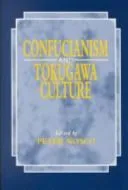
Confucianism and Tokugawa Culture
 74
74

Confucianism and Tokugawa Culture
Peter Nosco's "Confucianism and Tokugawa Culture" offers a rigorous analysis of how an imported philosophical system became deeply embedded in Japanese society. The strength of the work lies in its detailed examination of the intellectual mechanisms through which Confucianism was both adopted and adapted, moving beyond mere intellectual history to touch upon its social and political ramifications. Nosco particularly excels in demonstrating the subtle shifts in interpretation that occurred, allowing Confucianism to serve specific Japanese needs. A limitation, perhaps, is the dense academic prose which may present a barrier for the casual reader. The section detailing the debates surrounding the concept of *li* and its practical application in governance provides a compelling example of the work's analytical depth. This is a foundational text for understanding the ideological architecture of Tokugawa Japan.
📝 Description
74
Peter Nosco's 1997 book analyzes how Neo-Confucianism shaped Tokugawa Japan's culture and thought.
This 1997 volume examines the significant role of Confucianism in the cultural and intellectual life of Tokugawa Japan. Nosco moves beyond a simple historical overview to detail how Neo-Confucian philosophy, particularly the interpretations of Zhu Xi (known in Japan as Shushi), became a core element in shaping the era's ethics, governance, and social structures. The book is of clear interest to scholars of East Asian history, philosophy, and religion. It also appeals to those interested in how ideas travel between cultures and how imported philosophical systems are adapted and transformed.
The Tokugawa period, from 1603 to 1868, was a time of relative stability and a degree of national isolation. During these centuries, Neo-Confucianism became the dominant intellectual orthodoxy in Japan. Nosco highlights figures like Hayashi Razan and Tokugawa Mitsukuni, showing how Confucianism permeated samurai ethics and bureaucratic administration. The work dissects key Neo-Confucian ideas, such as *li* (principle) and *qi* (vital force), explaining their translation into practical moral codes and social regulations within Japan. It also considers how Japanese thinkers engaged with and sometimes departed from Chinese precedents, fostering a unique Japanese Confucian tradition.
While the term 'esoteric' might suggest hidden doctrines, in this context, it points to a deep intellectual tradition that profoundly shaped societal norms and governance. Neo-Confucianism, as transmitted and adapted in Tokugawa Japan, was not merely an academic pursuit but a system that informed daily life, moral conduct, and political order. Nosco's work illuminates how philosophical concepts became practical guides for a society, influencing its structure and the worldview of its educated classes. It shows the 'inner workings' of an intellectual system that, while widely adopted, required careful study to understand its specific applications and the nuances of its Japanese reception.
💡 Why Read This Book?
• Learn how Neo-Confucianism, particularly the school of Zhu Xi, provided the ethical and philosophical framework for Tokugawa Japan's governance and social hierarchy. • Understand the specific adaptations and reinterpretations of Confucian principles by Japanese scholars, creating a distinct intellectual tradition. • Gain insight into the period's intellectual climate, appreciating how philosophical ideas directly shaped societal structures and moral codes.
⭐ Reader Reviews
Honest opinions from readers who have explored this book.
❓ Frequently Asked Questions
When was Confucianism and Tokugawa Culture first published?
Confucianism and Tokugawa Culture by Peter Nosco was first published on January 1, 1997. This publication date places it within a period of significant academic re-evaluation of East Asian intellectual history.
What specific school of Confucianism is most discussed in relation to Tokugawa Japan?
The work primarily focuses on Neo-Confucianism, particularly the interpretations and teachings of Zhu Xi (known in Japan as Shushi), which became the dominant orthodoxy during the Tokugawa period.
Who was a key figure in the adoption of Confucianism in Japan?
Hayashi Razan is a significant figure discussed in relation to the institutionalization of Confucianism in Tokugawa Japan. He played a crucial role in establishing its influence within the government and educational systems.
What does the book reveal about the social impact of Confucianism in Japan?
The book illustrates how Confucian ideals of social order, filial piety, and hierarchical relationships were integrated into the samurai class's ethics and the broader social structure, influencing daily life and governance.
Does the book discuss any specific Neo-Confucian concepts?
Yes, the book explores fundamental Neo-Confucian concepts such as *li* (principle) and *qi* (vital force), examining how these philosophical ideas were understood and applied within the Japanese context.
What is the historical period covered by the book?
The book focuses on the Tokugawa period in Japanese history, which spanned from 1603 to 1868. This era is characterized by relative peace, stability, and the consolidation of Neo-Confucianism as a guiding philosophy.
🔮 Key Themes & Symbolism
Neo-Confucian Orthodoxy
The work meticulously details how Neo-Confucianism, particularly the metaphysics and ethics derived from Zhu Xi, became the state-sanctioned ideology of the Tokugawa shogunate. It explores the processes by which these complex Chinese philosophical doctrines were translated into a coherent system of governance and social control, emphasizing principles of hierarchy, ritual propriety (*li*), and moral cultivation as central to maintaining order in Japan from 1603 to 1868.
Cultural Adaptation and Synthesis
This theme examines the dynamic interaction between imported Confucianism and existing Japanese cultural and religious sensibilities. Nosco highlights how Japanese intellectuals did not merely replicate Chinese thought but actively reinterpreted and synthesized it, adapting concepts like *li* and *qi* to fit their own societal needs and philosophical inquiries, leading to a uniquely Japanese expression of Confucianism.
Ethics and Social Order
The book investigates the profound influence of Confucian ethics on the formation of Tokugawa society. It analyzes how concepts of loyalty, filial piety, righteousness, and the cultivation of virtue were embedded into the samurai code and administrative practices, shaping the moral landscape and reinforcing the rigid social hierarchy that characterized the period.
Transmission of Chinese Thought
A central focus is the intellectual migration of Confucianism from China to Japan. The work traces the pathways of transmission, the key figures involved in introducing and disseminating these ideas (such as Hayashi Razan), and the intellectual reception and debates that ensued, demonstrating the broader phenomenon of East Asian cultural exchange.
💬 Memorable Quotes
Direct passages from the work, attributed to the author.
“The reception of Neo-Confucianism in Japan was not a passive acceptance but an active process of reinterpretation.”
— This highlights that Japanese thinkers engaged critically with Chinese philosophy, adapting its core tenets to their own cultural context and societal needs, rather than simply adopting it wholesale.
“Zhu Xi's cosmology provided a framework for understanding both the cosmos and the proper ordering of human society.”
— This emphasizes the dual function of Neo-Confucian thought during the Tokugawa period: it offered a comprehensive worldview while also providing practical guidelines for ethical conduct and social structure.
“The Tokugawa government utilized Confucian principles to legitimize its rule and promote social stability.”
— This points to the political instrumentalization of Confucian philosophy, showing how its emphasis on order and hierarchy was strategically employed by the ruling elite to maintain control and social cohesion.
“Japanese scholars debated the precise meaning of *li* (principle) and its application in concrete situations.”
— This illustrates the intellectual dynamism within Japanese Neo-Confucianism, revealing that it was not a monolithic doctrine but a subject of ongoing scholarly discussion and refinement.
“The ideal of the cultivated individual was central to Confucian ethics in Tokugawa Japan.”
— This underscores the focus on personal moral development and self-improvement as a central to the Confucian ethical system as it was practiced and understood during this historical era.
🌙 Esoteric Significance
Tradition
While not strictly an esoteric text in the Western sense, the work engages with Neo-Confucianism, a philosophical tradition that, within its own East Asian context, functions as a profound system for understanding the cosmos and human existence. Its emphasis on principles (*li*) and vital force (*qi*) touches upon metaphysical underpinnings that resonate with concepts found in various esoteric lineages seeking to map the structure of reality and consciousness.
Symbolism
Key concepts like *li* (principle) and *qi* (vital force) function symbolically within Neo-Confucianism. *Li* represents the underlying order, the rational structure of the universe and morality, akin to divine law or archetypal forms. *Qi* symbolizes the material substance and dynamic energy that fills the cosmos, the flux within which *li* operates. Their interplay symbolizes the relationship between form and substance, the static and the dynamic, in a manner relevant to many esoteric cosmologies.
Modern Relevance
Contemporary thinkers in fields like comparative philosophy, ethics, and East Asian studies continue to draw on Nosco's work. Its analysis of how a philosophical system structures social and political life remains relevant for understanding ideological formations. Scholars exploring the intersection of ethics and governance, or the dynamics of cultural transmission, find its detailed historical case study invaluable.
👥 Who Should Read This Book
• Students of East Asian intellectual history seeking a deep understanding of the philosophical underpinnings of the Tokugawa period. • Scholars of comparative religion and philosophy interested in how imported belief systems are adapted and integrated into new cultural contexts. • Researchers of governance and ethics who wish to examine the practical application of abstract philosophical principles in shaping societal structures.
📜 Historical Context
Published in 1997, Peter Nosco's "Confucianism and Tokugawa Culture" emerged during a period of intense scholarly interest in the transmission and transformation of East Asian thought. The Tokugawa period (1603-1868) itself was a unique era where Neo-Confucianism, largely based on the interpretations of Zhu Xi, became the dominant intellectual and ethical orthodoxy, profoundly shaping governance, social structure, and education. Figures like Hayashi Razan were instrumental in establishing Confucianism within the Japanese elite. This work engaged with scholarship that had previously focused on the direct influence of Chinese thought, offering a more nuanced view of Japanese adaptation. It implicitly contrasted with the more syncretic or shamanistic traditions that might have otherwise held sway, demonstrating how a highly rationalized philosophical system could become foundational.
📔 Journal Prompts
The concept of *li* as the underlying principle of order.
Hayashi Razan's role in establishing Confucianism.
The societal implications of Neo-Confucian ethics.
How Zhu Xi's interpretations influenced Tokugawa Japan.
The balance between *li* and *qi* in Neo-Confucian thought.
🗂️ Glossary
Neo-Confucianism
A philosophical movement that emerged in China during the Song dynasty (960–1279) and later became highly influential in Japan and Korea. It synthesized Confucian ethics with metaphysical speculations, particularly concerning *li* (principle) and *qi* (vital force).
Zhu Xi (Shushi)
A prominent Chinese philosopher (1130–1200) of the Song dynasty, whose synthesis of Neo-Confucian thought became the orthodox interpretation in China and profoundly influenced East Asian intellectual traditions, especially in Tokugawa Japan.
*Li*
A fundamental concept in Neo-Confucianism, often translated as 'principle' or 'pattern'. It refers to the rational, inherent order of the universe, the laws of nature, and the principles of moral conduct.
*Qi*
A fundamental concept in Chinese philosophy, referring to vital force, energy, or breath. In Neo-Confucianism, it is the material substance or energy that constitutes the universe, often seen as animated and shaped by *li*.
Tokugawa Period
The era of Japanese history from 1603 to 1868, characterized by the rule of the Tokugawa shogunate, a period of relative peace, political stability, and social order, during which Neo-Confucianism became the dominant ideology.
Hayashi Razan
A Japanese Confucian scholar (1583–1657) who was instrumental in establishing Neo-Confucianism as the official philosophy of the Tokugawa shogunate, serving as an advisor to the early shoguns.
Samurai
The hereditary military nobility and officer caste of medieval and early-modern Japan. Their ethical code was significantly influenced by Confucian principles during the Tokugawa period.