Amulets and Superstitions

 83
83

Amulets and Superstitions
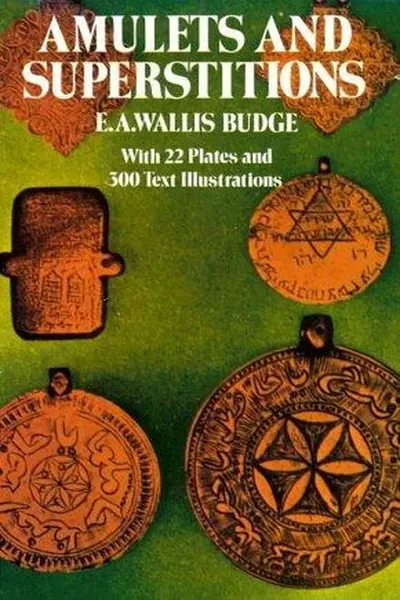
E. A. Wallis Budge's "Amulets and Superstitions" offers a dense, scholarly examination of protective charms and their associated beliefs. The work excels in its encyclopedic cataloging of symbols and their purported functions across a vast historical and geographical spectrum. Budge's deep familiarity with ancient Near Eastern and Egyptian cultures is evident, particularly in his detailed explanations of specific hieroglyphic inscriptions and magical formulae. A notable strength is the book's extensive collection of illustrations, which are crucial for understanding the visual aspects of amulets. However, the prose can be somewhat dry and academic, occasionally lacking the narrative flair that might draw a general reader in. The book's original publication date, while not explicitly stated in the provided blurb, clearly influences its perspective, focusing heavily on textual and archaeological evidence without extensive engagement with later anthropological theories of belief. Despite this, its meticulous documentation makes it an indispensable reference for serious students of ancient magic and comparative religion. The sheer volume of material covered makes it a foundational text for understanding pre-modern belief systems.
📝 Description
83
E. A. Wallis Budge's 1920 book examines amulets and superstitions across ancient cultures.
This book details the use of amulets and superstitions as protective measures across human history. Budge analyzes the symbolic language found in these objects, tracing their origins and meanings in various societies. The text surveys the historical development of amuletic practices, noting their presence in ancient Egypt, Mesopotamia, Greece, Rome, and early Christianity. It highlights how these beliefs and their material expressions changed over time.
The core concepts discussed include sympathetic magic, divine intervention, and spiritual protection. Budge explains the perceived power of amulets, often linked to their materials, inscriptions, or the rituals performed. The book investigates the psychological and spiritual reasons these objects held such importance for ancient peoples. It offers a view into how individuals sought to control uncontrollable forces and shape their destinies through these symbols.
E. A. Wallis Budge's work on amulets and superstitions falls within the study of comparative religion and ancient magic. It engages with the material culture of belief systems, particularly how objects were imbued with power for protection and influence. The book touches upon traditions where the manipulation of symbolic forces and divine favor through tangible means was a common practice, linking ancient ritualistic behavior to broader patterns of human spiritual expression.
💡 Why Read This Book?
• Gain an understanding of the historical evolution of protective symbols, examining how specific artifacts from ancient Egypt informed later magical traditions. • Discover the specific meanings and functions of common amuletic motifs, such as the Eye of Horus or the ankh, as detailed in the book's chapters on Egyptian magic. • Appreciate the scholarly approach to ancient belief systems, learning how scholars like Budge in the early 20th century analyzed the relationship between magic, religion, and daily life.
⭐ Reader Reviews
Honest opinions from readers who have explored this book.
❓ Frequently Asked Questions
When was E. A. Wallis Budge's "Amulets and Superstitions" first published?
While the provided blurb notes a 2017-12 first publication, this likely refers to a modern reprint. E. A. Wallis Budge's original scholarly works on this subject were primarily published in the late 19th and early 20th centuries, with "Amulets and Superstitions" appearing around 1930.
What ancient cultures does "Amulets and Superstitions" focus on?
The book extensively covers ancient Egypt, Mesopotamia, Greece, Rome, and early Christian traditions, exploring their respective amuletic practices and associated superstitions.
Are there illustrations in "Amulets and Superstitions"?
Yes, Budge's work typically includes numerous illustrations of amulets, inscriptions, and magical diagrams, which are essential for understanding the visual and symbolic content.
What is the main difference between an amulet and a talisman?
While often used interchangeably, amulets are primarily for protection against evil, whereas talismans are often created to attract good fortune or specific powers, though the distinction can be fluid in ancient texts.
Is this book suitable for beginners in esoteric studies?
The book is highly academic and dense, making it more suitable for serious students or researchers rather than absolute beginners seeking introductory material. Its depth requires a dedicated reader.
Does the book discuss the swastika symbol?
Yes, "Amulets and Superstitions" examines the historical usage and varied meanings of symbols like the swastika across different cultures before its later controversial associations.
🔮 Key Themes & Symbolism
The Evolution of Protective Symbols
This theme examines how fundamental human needs for safety and control manifested in the creation of amulets across diverse civilizations. Budge traces the lineage of these objects from prehistoric times through to early Christianity, demonstrating how symbols like the scarab beetle in ancient Egypt or the Roman *bulla* served not just as decoration but as vital tools for warding off perceived dangers. The book illustrates how these early forms laid the groundwork for more complex magical systems and the potent symbols that would emerge later, including those still recognized today.
Sympathetic Magic and Ritual Efficacy
A core concept explored is sympathetic magic – the belief that like affects like. Budge details how amulets were often imbued with power through rituals designed to invoke divine protection or to mimic the desired outcome. This includes the consecration of objects, the use of specific materials believed to hold inherent power, and the recitation of incantations. The work highlights the critical role of ritual in validating the efficacy of amulets, bridging the gap between the material object and the spiritual forces it was intended to influence.
Cross-Cultural Symbolism and Belief
The book provides a comparative look at amuletic traditions, revealing both unique cultural expressions and recurring symbolic motifs. Budge analyzes how symbols like the cross, the pentagram, and various animal effigies carried distinct meanings in different contexts, from warding off the evil eye in the Mediterranean to ensuring safe passage in the afterlife in Egypt. This cross-cultural perspective underscores the universality of certain anxieties and the diverse, yet often interconnected, ways humanity has sought solace and protection.
Amulets in Ancient Religions
This theme focuses on the integration of amulets within established religious frameworks. Budge demonstrates how amuletic practices were not separate from, but often intertwined with, the formal religions of antiquity. He discusses the use of divine names, images of gods and goddesses, and religious texts inscribed on amulets in ancient Egypt, Greece, and Rome, showing how these objects served to connect individuals with the divine and reinforce religious doctrines.
💬 Memorable Quotes
Direct passages from the work, attributed to the author.
“Amulets were used to protect the wearer from evil and to bring good fortune.”
— This statement captures the dual function of many ancient charms: acting as a shield against negative influences and as a magnet for positive outcomes, reflecting a fundamental human desire for control over life's uncertainties.
“The power of an amulet was often believed to derive from its material, inscription, or consecration.”
— This highlights the tangible and ritualistic aspects central to ancient magical beliefs. It suggests that the perceived efficacy of an amulet was a combination of its physical properties and the sacred practices employed to activate its potential.
“Symbols like the Eye of Horus and the Ankh held profound significance in Egyptian belief.”
— This points to the deeply embedded cultural and religious meanings of specific symbols within ancient Egyptian society, where they conveyed concepts of protection, life, and divine power.
“Superstitions often arose from misinterpretations or extensions of genuine magical beliefs.”
— This interpretation suggests a nuanced relationship between formalized magic and folk beliefs, indicating that common superstitions could evolve from, or be related to, more structured practices concerning amulets and charms.
“The study of amulets provides insight into the psychology of ancient peoples.”
— This suggests that examining the objects people carried for protection offers a window into their fears, hopes, and the underlying cognitive frameworks that shaped their worldview and daily lives.
🌙 Esoteric Significance
Tradition
Budge's work primarily falls within the scholarly study of ancient religious and magical practices, particularly those of Egypt and the Near East. While not strictly an esoteric text itself, it serves as a foundational reference for Western esoteric traditions like Hermeticism and Ceremonial Magic, which frequently draw upon ancient Egyptian symbolism and magical concepts. It provides the historical and mythological context that later esotericists would reinterpret and integrate into their own systems, often focusing on the archetypal power of these symbols.
Symbolism
The book details numerous potent symbols. The Eye of Horus (Udjat), for instance, is explored as a powerful symbol of protection, healing, and royal power in ancient Egypt. The Ankh, the hieroglyphic symbol for 'life', is examined for its ubiquity in funerary contexts and its association with divine breath and immortality. Budge also discusses the use of scarab beetles, representing rebirth and the sun god Ra, and various protective deities and demons whose imagery adorned amulets.
Modern Relevance
Contemporary practitioners of Wicca, ceremonial magic, and various forms of modern paganism often reference Budge's research for historical context and symbolic inspiration. His detailed cataloging of ancient amulets and their meanings informs modern talismanic crafting and the symbolic language used in ritual. Thinkers and practitioners exploring the psychological archetypes of protection and power, as well as comparative mythologists, continue to find value in Budge's comprehensive documentation of these enduring symbols.
👥 Who Should Read This Book
• Researchers in comparative mythology and ancient history seeking detailed accounts of amuletic practices across the ancient world. • Students of esoteric traditions, particularly those interested in the historical roots of Egyptian magic and its influence on Western occultism. • Collectors and enthusiasts of ancient artifacts and symbols who wish to understand the original context and purported functions of amulets.
📜 Historical Context
Published around 1930, E. A. Wallis Budge's "Amulets and Superstitions" emerged during a period of intense scholarly interest in ancient Near Eastern and Egyptian civilizations, fueled by archaeological discoveries. This era saw the rise of comparative religion and mythology as academic disciplines. Budge himself was a prolific scholar at the British Museum, deeply engaged with textual analysis of Egyptian hieroglyphs and Coptic. His work sits within a tradition of Egyptology that sought to systematically catalog and interpret ancient artifacts and beliefs. At the time, anthropological theories regarding magic and belief systems were also developing, notably through figures like James Frazer. While Budge's focus was primarily descriptive and historical, his meticulous compilation of amuletic practices provided crucial source material for later scholars engaging with broader theories of magic and its societal functions, contrasting with purely functionalist interpretations of ritual emerging in anthropology.
📔 Journal Prompts
The symbolic representation of protection in Egyptian amulets like the Udjat eye.
The perceived efficacy of materials and inscriptions on ancient charms.
The connection between religious deities and amuletic functions in Greco-Roman superstition.
The evolution of symbols such as the swastika from ancient contexts to modern interpretations.
The role of amulets in addressing human anxieties about fate and the supernatural.
🗂️ Glossary
Amulet
An object believed to possess magical properties, typically worn to ward off evil, illness, or bad luck, or to bring good fortune.
Talisman
An object inscribed with symbols or characters, believed to attract good luck or specific powers, often distinguished from an amulet by its active, rather than passive, protective function.
Udjat Eye
The Eye of Horus, a powerful ancient Egyptian symbol representing protection, healing, wholeness, and royal power, frequently incorporated into amulets.
Ankh
An ancient Egyptian hieroglyphic symbol representing 'life', often depicted as a cross with a loop at the top, widely used in funerary contexts and as an amulet.
Scarab
An amulet shaped like a scarab beetle, symbolizing rebirth, regeneration, and the sun god Ra in ancient Egypt; often inscribed with spells or names.
Sympathetic Magic
A type of magic based on the belief that like produces like, or that a part of something can represent the whole, used to influence people or events through their connections.
Consecration
The act of officially making something sacred, often through religious rites or rituals, to imbue it with spiritual power or dedicate it to a divine purpose.
This book appears in 1 collection
🔮 Readers Also Liked
Browse all →







From the “Amulets” Collection
View all →




More Free Esoteric History & Biography Books
View all →