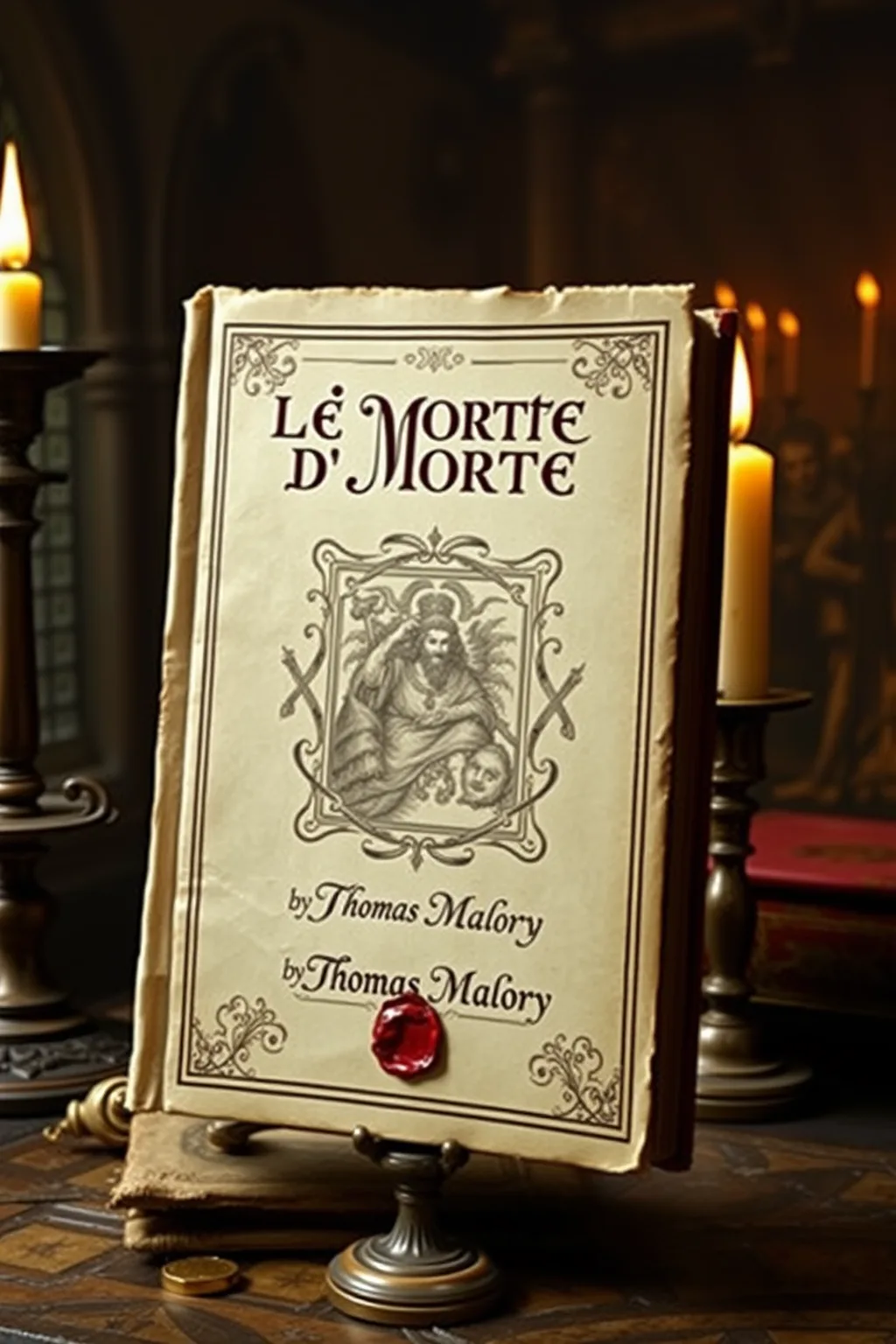
Le Morte d'Arthur
 77
77

Le Morte d'Arthur


Ophelia Vance, Mystical Literature Reviewer — "Le Morte d'Arthur" stands as an unparalleled cornerstone of Western esoteric literature. Malory’s synthesis of Arthurian legend transcends mere storytelling, offering a rich lexicon of spiritual allegory and archetypal symbolism. The quest for the Grail, the trials of Lancelot, and the fall of Camelot all serve as profound metaphors for the soul's journey towards wholeness and divine connection. This edition is indispensable for scholars of comparative mythology, practitioners of Western esotericism, and seekers of ancient wisdom. Its enduring power lies in its ability to illuminate the hidden currents of human aspiration and the perpetual struggle for virtue in a fallen world. A truly essential read.
📝 Description
77
Sir Thomas Malory compiled "Le Morte d'Arthur" in 1470, shaping the Arthurian legend for centuries.
This compilation gathers the stories of King Arthur and his knights, drawn from earlier French romances and English chronicles. Malory presents the rise and fall of Arthur's kingdom, detailing the adventures of figures like Lancelot, Guinevere, Gawain, and Galahad. The narrative follows Arthur's establishment of the Round Table, the quests for the Holy Grail, and the eventual betrayal and dissolution of his court. It covers themes of loyalty, love, betrayal, and the pursuit of an ideal society. The text also includes Arthur's final battle and death.
While presented as a historical account, Malory's work is deeply allegorical. The quests and trials faced by the knights reflect spiritual journeys and moral challenges. The pursuit of the Grail, in particular, symbolizes a search for divine grace and ultimate truth. The book details the complexities of human nature, the corrupting influence of desire, and the consequences of flawed choices. It offers a complex vision of knighthood, honor, and the struggle for spiritual perfection.
Malory's "Le Morte d'Arthur" became a touchstone for later esoteric traditions, particularly those interested in Arthurian mythology as a vehicle for spiritual teachings. The quest for the Grail, a central motif, was interpreted by figures in the 19th and 20th centuries as an alchemical or mystical pursuit. The structure of the narrative, with its cycles of initiation, trial, and fall, lent itself to readings focused on soul development and the attainment of higher consciousness. Authors like Jessie Weston and later occultists explored these symbolic layers, viewing the Arthurian cycle as a Western esoteric mystery tradition.
✍️ Author
Thomas Malory
Sir Thomas Malory was an English writer, the author of Le Morte d'Arthur, the classic English-language chronicle of the Arthurian legend, compiled and in most cases translated from French sources. The most popular version of Le Morte d'Arthur was published …
💡 Why Read This Book?
Delve into the mystical heart of Western civilization. "Le Morte d'Arthur" offers profound allegorical insights into the soul's journey, the nature of divine questing, and the archetypal patterns of heroism and sacrifice. Ideal for spiritual seekers, occult scholars, and practitioners interested in the roots of chivalric orders and Grail traditions. Uncover timeless wisdom for personal transformation and understanding the enduring power of myth.
⭐ Reader Reviews
Honest opinions from readers who have explored this book.
❓ Frequently Asked Questions
What is the primary esoteric theme in Le Morte d'Arthur?
The primary esoteric theme is the quest for spiritual perfection and divine grace, often symbolized by the Holy Grail. It explores the journey of the soul through trials, temptations, and the pursuit of an unattainable ideal.
Are there hidden meanings in the characters and events?
Absolutely. Characters like Arthur, Merlin, and the Knights embody archetypes, while events such as the Grail Quest and the fall of Camelot represent stages of spiritual development and the consequences of moral choices.
How does this book relate to occult traditions?
It's deeply connected to pre-Christian European mystery traditions and early Christian esotericism, reflecting concepts of chivalry as a spiritual path, initiation rites, and the search for hidden knowledge.
Who is Merlin in an esoteric context?
Merlin is often seen as a hierophant or shamanic figure, representing ancient wisdom, prophecy, and the bridging of the material and spiritual worlds. He guides Arthur, embodying the forces of destiny and magic.
What is the spiritual significance of the Round Table?
The Round Table symbolizes equality, unity, and a sacred circle of initiates dedicated to a higher purpose. It represents the ideal of a just and divinely guided society, a microcosm of cosmic order.
🔮 Key Themes & Symbolism
The Archetypal Quest for the Divine
Fundamentally, , 'Le Morte d'Arthur' is a profound allegory of the spiritual journey. The quest for the Holy Grail transcends mere adventure, symbolizing the soul's arduous pursuit of divine union, enlightenment, and ultimate truth. It illustrates the trials, sacrifices, and inner transformations required to approach the ineffable, mirroring the initiatory paths found in various esoteric traditions. The search for a sacred artifact becomes a metaphor for the internal quest for spiritual perfection and the realization of one's divine potential, a timeless theme resonating with seekers across ages.
Chivalry as a Path of Spiritual Discipline
The code of chivalry, as depicted by Malory, is more than a set of societal rules; it's presented as a rigorous spiritual discipline. Knights are called to uphold virtues such as courage, loyalty, purity, and justice, often in the face of overwhelming temptation and moral ambiguity. This emphasis on disciplined action and virtuous living aligns with the principles of asceticism and ethical cultivation found in many mystical paths. The struggle to embody these ideals, even in failure, highlights the human aspiration towards higher moral and spiritual standards, a constant striving for grace.
The Shadow of Fate and Human Free Will
Malory masterfully ties the threads of destiny and free will, a central tension in many esoteric philosophies. The characters are often subject to prophecies and the inexorable march of fate, yet their choices and moral decisions have profound consequences. This interplay explores the complex relationship between divine providence and individual agency, prompting reflection on the extent to which our lives are predetermined and how our actions shape our spiritual trajectory. The tragic downfall of Camelot serves as a stark reminder of the delicate balance between fate and the impact of human flaws and choices.
💬 Memorable Quotes
Direct passages from the work, attributed to the author.
“Thus was this noble king slain.”
— A poignant reminder of the mortal coil and the ultimate triumph of fate over even the most noble of earthly reigns, hinting at a cycle beyond physical existence.
“And for the love of a lady, he was overcome.”
— Illustrates the potent duality of earthly love and spiritual aspiration, and how human desires can both elevate and lead to downfall on the path to higher ideals.
“And many good men were there slain.”
— Reflects the universal cost of conflict, both external and internal, and the spiritual losses incurred when ideals are compromised or battles are lost.
“The greatest of all virtues is a good life.”
— A simple yet profound statement on the primacy of ethical conduct and spiritual alignment over mere outward displays of power or piety.
“For every man is bound to do his best.”
— Encourages the pursuit of excellence and dedication in all endeavors, framing life as an ongoing spiritual practice where effort and intention are paramount.
🌙 Esoteric Significance
Tradition
Malory's work is deeply rooted in the Western Esoteric Tradition, particularly its Christianized hermetic and alchemical streams, alongside remnants of pre-Christian Celtic mythology. It embodies the chivalric ideal as a spiritual path, akin to Masonry or Templarism, focusing on virtue, loyalty, and the quest for divine knowledge. The Grail represents the ultimate alchemical vessel or the divine spark within, and the knights' trials parallel the stages of spiritual purification and initiation required for enlightenment.
Symbolism
Key symbols abound: the Grail signifies divine grace, spiritual perfection, and the hidden truth; the Round Table represents unity, equality, and a sacred brotherhood; Merlin embodies ancient wisdom, prophecy, and the forces of magic; Excalibur symbolizes divinely ordained power and justice. The very narrative structure, with its cycles of rise and fall, mirrors the alchemical process of dissolution and regeneration, reflecting the soul's journey through darkness towards illumination.
Modern Relevance
In an age often characterized by cynicism and materialism, "Le Morte d'Arthur" offers a potent reminder of timeless ideals. Its exploration of the human condition, the struggle for virtue, and the enduring quest for meaning and purpose continues to inspire. The archetypal journeys of its characters provide clear insights into personal growth, leadership, and the pursuit of a higher calling, making it relevant for those seeking spiritual grounding and ethical guidance in contemporary life.
👥 Who Should Read This Book
This important work is essential for a broad spectrum of readers. **Beginners** to esoteric literature will find an accessible yet profound entry point into Arthurian myth and its symbolic depths. **Scholars** of medieval history, literature, and comparative mythology will appreciate its comprehensive compilation and historical significance. **Spiritual seekers** and **practitioners** of Western esoteric traditions will discover rich allegorical layers, archetypal patterns, and timeless wisdom concerning the soul's journey, divine questing, and the cultivation of virtue. It is a foundational text for anyone interested in the enduring power of myth and its capacity to illuminate the human experience.
📜 Historical Context
Published in 1485 by William Caxton, "Le Morte d'Arthur" emerged from the twilight of the medieval era, a period of profound societal and spiritual transition. The work synthesizes centuries of Arthurian lore, drawing from French romances and English ballads, reflecting a deep fascination with chivalry, courtly love, and the ideals of a golden age. This era saw a burgeoning interest in spiritual matters, with mystical interpretations of scripture and a rich tradition of allegorical literature. Malory's compilation captured the moral and spiritual aspirations of his time, offering a complex collection of heroism, betrayal, and divine pursuit that resonated with an audience grappling with changing worldviews, bridging the gap between medieval faith and the dawn of the Renaissance.
📔 Journal Prompts
Meditate on the concept of the Grail as a symbol of your own ultimate spiritual aspiration. What does it represent to you, and what 'quests' are you undertaking to reach it?
Reflect on a time when you faced a significant moral choice, akin to the trials of a Knight of the Round Table. How did your decision align with or deviate from your personal code of honor?
Consider Merlin's role as a mentor and guide. How do you seek or receive wisdom in your own life, and what qualities do you look for in a spiritual guide?
Analyze the concept of 'chivalry' in the modern context. What virtues and principles would constitute a contemporary code of spiritual or ethical conduct?
Explore the theme of fate versus free will as depicted in Arthur's story. To what extent do you feel your life is guided by destiny, and where do you exert your own agency?
🗂️ Glossary
Grail
A mystical chalice or vessel, often associated with the Last Supper, symbolizing divine grace, spiritual perfection, and the ultimate object of quest for spiritual enlightenment.
Chivalry
A medieval knightly code of conduct emphasizing virtues such as courage, honor, loyalty, justice, and courtesy, often interpreted as a spiritual discipline for moral and spiritual refinement.
Round Table
The legendary table around which King Arthur and his knights sat, symbolizing equality, unity, and a sacred fellowship dedicated to noble deeds and a higher purpose.
Camelot
The mythical castle and court of King Arthur, representing an ideal kingdom and a center of chivalry and justice, often seen as a metaphor for a utopian society or a spiritual ideal.
Merlin
A legendary sorcerer and prophet, often depicted as Arthur's advisor, embodying ancient wisdom, magical power, and the forces of destiny and the supernatural realm.
This book appears in 2 collections
🔮 Readers Also Liked
Browse all →







More by Thomas Malory
All books →

From the “Transcendental Meditation” Collection
View all →






More Free Esoteric History & Biography Books
View all →