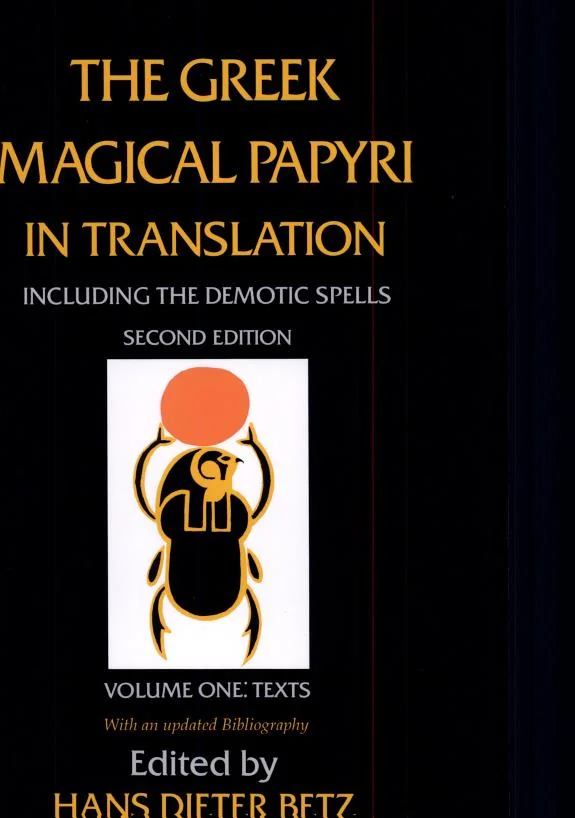
The Greek Magical Papyri in Translation, Including the Demotic Spells, Volume 1
 71
71

The Greek Magical Papyri in Translation, Including the Demotic Spells, Volume 1
Hans Dieter Betz's translation of the Greek Magical Papyri, Volume 1, arrives as a crucial scholarly tool. The sheer scope of material, meticulously rendered into English for the first time in its comprehensive form, is its primary strength. Betz avoids sensationalism, presenting the raw material of ancient magic with academic rigor. However, the sheer density of the text, while accurate, can be overwhelming for the uninitiated. A more extensive introductory commentary on specific spell structures or ritual components, beyond the general historical context, would have enhanced accessibility. The section detailing the invocation of powerful entities, for instance, is fascinating but requires significant prior knowledge to fully grasp its implications. This is an indispensable, if demanding, scholarly edition.
📝 Description
71
Published in 1985, Hans Dieter Betz's volume offers the first complete English translation of the Greek Magical Papyri.
This book contains a complete English translation of the Greek Magical Papyri, a collection of ancient magical texts. These documents date from the 2nd century BCE to the 5th century CE and come from Greco-Roman Egypt. The collection includes various magical spells, incantations, hymns, rituals, and other esoteric formulas. It also incorporates Demotic and Coptic texts, giving a broad view of ancient magical practices.
The papyri were compiled during a time of religious syncretism in Greco-Roman Egypt, where Egyptian, Greek, and Near Eastern traditions merged. The texts likely served individuals across different social classes seeking divine help, protection, or personal power through rituals and invocations. They show a world where the lines between religion and magic were not strictly defined.
Central themes within the papyri involve divine power, cosmic order, and human interaction with the supernatural. This includes instructions for summoning spirits, calling upon deities from both Greek and Egyptian pantheons, and using amulets and talismans. The texts demonstrate an understanding of sympathetic magic, astrology, and the potency of spoken words through sacred names and divine titles.
The Greek Magical Papyri represent a significant body of material for understanding late antique magic and its integration with broader religious currents. This collection provides direct access to practical magical traditions that drew from diverse sources, including Egyptian, Greek, and Jewish influences. Betz's translation makes these complex texts accessible to a wider audience interested in the history of Western esotericism and the development of magical practices in antiquity.
💡 Why Read This Book?
• Gain direct access to ancient magical practices from Greco-Roman Egypt (2nd c. BCE – 5th c. CE), understanding spell construction and ritual efficacy as detailed in the original texts. • Explore the syncretic religious landscape of antiquity, where Greek, Egyptian, and other traditions intersected, offering a unique perspective on the evolution of esoteric thought. • Study the practical application of divine invocation and sympathetic magic through concrete examples of hymns and formulas, providing insights into ancient worldviews and belief systems.
⭐ Reader Reviews
Honest opinions from readers who have explored this book.
❓ Frequently Asked Questions
What is the historical period covered by the Greek Magical Papyri in Translation, Volume 1?
The texts in this volume originate from Greco-Roman Egypt and span a significant period, from the 2nd century BCE to the 5th century CE, offering a broad view of ancient magical traditions.
Who was Hans Dieter Betz and why is his translation important?
Hans Dieter Betz was a prominent scholar of religion. His translation is crucial because it provides the first comprehensive English rendering of these ancient magical texts, making them accessible to a wider academic and esoteric audience.
What types of content can be found within the Greek Magical Papyri?
The papyri contain a diverse range of magical material, including spells, incantations, hymns, rituals, and formulas for various purposes, alongside Demotic and Coptic texts.
Is this book suitable for beginners in esoteric studies?
While valuable, the book is primarily a scholarly resource. Beginners might find the academic nature and the direct translation challenging without supplementary guides to the historical and magical contexts.
What is the significance of the Demotic and Coptic texts included in Volume 1?
Including Demotic and Coptic texts alongside the Greek papyri provides a richer, more complete picture of the linguistic and cultural landscape of magic in ancient Egypt, reflecting the interaction of different traditions.
Does this translation include practical instructions for performing ancient magic?
Yes, the translation presents the original spells and rituals as found in the papyri, which can be interpreted and studied by practitioners interested in ancient magical techniques and beliefs.
🔮 Key Themes & Symbolism
Divine Invocation and Power
The papyri are saturated with attempts to access and harness divine power. This includes invoking deities from the Greek pantheon, Egyptian gods like Isis and Osiris, and other supernatural entities. The texts often employ sacred names, epithets, and detailed ritual procedures to establish contact and compel these powers to act. The underlying belief is that through precise knowledge and ritual action, humans can influence the cosmic order and achieve specific outcomes, from protection and healing to personal gain.
Sympathetic Magic and Correspondences
A core principle evident throughout the collection is sympathetic magic, the idea that 'like affects like.' This manifests in the use of materials that correspond to the desired outcome (e.g., using specific herbs for healing spells, or animal parts for curses). The texts also reveal a complex system of correspondences linking celestial bodies, days of the week, divine names, and magical operations, demonstrating a worldview where all aspects of creation were interconnected and manipulable.
The Power of the Word
The spoken or written word holds immense power in these magical traditions. Reciting specific incantations, divine names, or even seemingly nonsensical utterances (voces magicae) is presented as a direct means of affecting reality. The precise pronunciation, intonation, and correct spelling of sacred words are crucial for the efficacy of a spell. This highlights a belief in the inherent magical force contained within language itself, capable of binding spirits or enacting change.
Ritual Purity and Preparation
Many spells and rituals require the practitioner to undergo specific preparatory actions, often involving periods of ritual purity, fasting, or abstention from certain activities. This emphasizes the need for the magician to be in a state of spiritual and physical readiness to approach the divine or handle potent magical forces. These protocols underscore the seriousness and potential danger associated with manipulating supernatural energies.
💬 Memorable Quotes
Direct passages from the work, attributed to the author.
“The collection includes hymns and prayers directed to various deities.”
— This highlights the religious dimension of the magic, showing how practitioners sought favor or intervention from the divine through devotional language and ritual action.
“Spells often involve the use of specific materials like herbs, stones, and animal parts.”
— This points to the practice of sympathetic magic, where the physical properties or symbolic associations of materials were believed to directly influence the outcome of the spell.
“The texts detail methods for divination and scrying.”
— This demonstrates the practical desire of individuals in antiquity to gain knowledge of the future or hidden information through supernatural means.
“Many incantations rely on the recitation of potent divine names.”
— This emphasizes the belief in the inherent power of language and sacred appellations to command or influence spiritual forces.
“Rituals sometimes require specific times or astrological alignments.”
— This reveals the integration of astronomical and astrological knowledge into magical practice, suggesting a belief in cosmic influences on earthly events.
🌙 Esoteric Significance
Tradition
This work is foundational to the study of Western Esotericism, particularly within the Hermetic, Gnostic, and Greco-Roman magical traditions. It represents a primary source for understanding ancient spellcraft, theurgy, and the practical application of cosmology. It bridges the gap between the philosophical traditions like Platonism and later magical systems, providing concrete examples of how abstract concepts were enacted ritually.
Symbolism
Key symbols include the use of divine names (like Iao, Sabaoth) which represent ultimate divine power and knowledge. The invocation of deities like Hekate, often associated with crossroads and the underworld, signifies the practitioner's engagement with liminal spaces and chthonic forces. The use of seals and amulets, often inscribed with complex geometric patterns or divine figures, represents the binding and channeling of specific magical energies.
Modern Relevance
Contemporary practitioners of Hermeticism, Ceremonial Magic, and various forms of witchcraft draw heavily on these texts. Scholars studying comparative religion and ancient magic also rely on Betz's translation. Modern esoteric authors frequently reference or adapt spells and concepts found within the Papyri, highlighting their enduring appeal and perceived efficacy in understanding the roots of Western magical practice.
👥 Who Should Read This Book
['• Scholars of Classics and Religious Studies: To gain primary source material on the religious and magical practices of Greco-Roman Egypt, complementing textual analysis with concrete examples of spells and rituals.', '• Students of Western Esotericism: To understand the historical roots of traditions like Hermeticism and ceremonial magic, exploring the original formulations of spells and invocations.', '• Practicing Magicians and Occultists: To engage directly with ancient magical techniques, studying the structure, intent, and symbolic language of historical spells for inspiration and study.']
📜 Historical Context
The compilation of the Greek Magical Papyri emerged from the vibrant, syncretic milieu of Greco-Roman Egypt, a period marked by the fusion of Hellenistic, Egyptian, and Near Eastern cultural and religious currents. From roughly the 2nd century BCE to the 5th century CE, this region was a crucible of intellectual and spiritual experimentation. The texts reflect a society where magical practices were integrated into daily life, used for protection, healing, and personal empowerment. Unlike the more formalized mystery cults or philosophical schools, these spells often represented a more direct, pragmatic engagement with the divine and the supernatural. The reception of these texts was largely within private circles, though their influence can be seen in later magical traditions. Contemporary figures like Plutarch discussed Egyptian religion, while Neoplatonists later engaged with Hermetic ideas, indirectly touching upon similar esoteric currents.
📔 Journal Prompts
Analyze the structure of a chosen invocation spell from the 'Book of Nilos' section.
Compare the attributes of a Greek deity invoked in a spell with those of an Egyptian deity mentioned.
Reflect on the concept of voces magicae (magic words) and their perceived power.
Consider the preparatory rituals described before a major spell, such as those for a 'great vision'.
Examine the use of sympathetic materials in a healing or protective spell.
🗂️ Glossary
Voces Magicae
Mysterious or 'magic' words or syllables found in spells, often of unknown origin, believed to possess inherent power or act as keys to spiritual forces.
Theurgy
A system of ritual magic aimed at invoking divine powers or spirits, often with the goal of spiritual purification or ascent for the practitioner.
Hymn
A religious song or poem, typically addressed to a deity, often used in magical contexts to praise, petition, or invoke divine presence and assistance.
Liturgy
A prescribed form or set of rites for public religious worship, which in the context of the Papyri can refer to detailed ritual procedures for magical operations.
Incantation
A series of words said or chanted in the nature of a spell or charm, intended to produce a magical effect.
Amulet
An object believed to protect the wearer or bearer against danger, injury, or evil influences, often inscribed with symbols or spells.
Demotic Script
A late Egyptian script used for everyday purposes from the 7th century BCE onwards, appearing alongside Greek in some magical papyri.
This book appears in 1 collection
🔮 Readers Also Liked
Browse all →







From the “Incantations” Collection
View all →






More Free Esoteric History & Biography Books
View all →