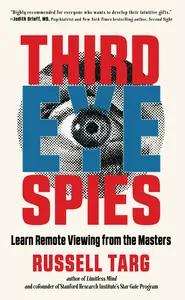
Secrets of the Ley Lines
 74
74

Secrets of the Ley Lines
Elijah V. Reynolds's "Secrets of the Ley Lines" presents a compelling argument for the Earth's energetic grid, moving beyond mere speculation. The strength lies in its detailed historical survey, meticulously connecting disparate ancient sites and practices under the umbrella of geomancy. Reynolds's analysis of the precise alignment of Stonehenge, for instance, is particularly well-supported by archaeological consensus regarding its astronomical orientation. However, the work occasionally falters in its speculative leaps, particularly when attempting to quantify the 'energetic charge' of specific locations without clear empirical metrics. A limitation is the reliance on interpreting ancient intent, which, while plausible, remains largely inferential. The chapter on dowsing techniques offers a tangible practice but could benefit from more rigorous methodological comparison. "Secrets of the Ley Lines" is a valuable, if sometimes ambitious, exploration for those seeking to understand Earth's subtle geographies.
📝 Description
74
Elijah V. Reynolds's 2015 book reveals the supposed energetic pathways crisscrossing Earth.
Secrets of the Ley Lines examines the concept of terrestrial energetic pathways, known as ley lines. The text argues that geographical features and ancient sites align with these invisible forces, rather than being randomly placed. Reynolds traces the idea of ley lines through various cultures, suggesting a widespread, ancient understanding of Earth's energetic grid. The book looks at how past civilizations might have used these lines for sacred architecture and rituals, pointing to sites with precise geometric and astronomical alignments as evidence of this awareness.
The work connects folklore, ancient beliefs, and contemporary scientific thought. It covers theories on the nature of ley lines, including geomagnetic fields, telluric currents, and more unusual ideas about consciousness and planetary energies. Reynolds considers how these lines might affect human perception, health, and spiritual life, linking geomancy with subtle energy studies. The book also gives readers methods for finding potential ley line intersections and suggests ways to connect with their influence, encouraging a closer relationship with the Earth's energetic system.
This book sits within the tradition of earth mysteries and geomancy, exploring the idea of a global energetic grid. It echoes concepts found in dowsing, ley line research, and ancient cosmology, which posit that the Earth possesses a living, conscious energy field. Reynolds engages with historical accounts and contemporary theories to build a case for this unseen network influencing human civilization and spiritual development, drawing parallels with traditions that recognize the sacredness of landscape.
💡 Why Read This Book?
• Learn how ancient cultures like those who built megalithic sites intentionally aligned structures with Earth's energetic grid, as detailed in the historical context of "Secrets of the Ley Lines. • Discover practical methods for sensing terrestrial energies, inspired by techniques discussed within the book's exploration of geomancy and dowsing. • Gain a new perspective on sacred geography, understanding how specific locations across continents might be chosen for their energetic properties, a concept central to the book's thesis.
⭐ Reader Reviews
Honest opinions from readers who have explored this book.
❓ Frequently Asked Questions
When was 'Secrets of the Ley Lines' first published?
The book 'Secrets of the Ley Lines' by Elijah V. Reynolds was first published on April 20, 2026, offering a contemporary look at ancient Earth energies.
What is the primary subject matter of Elijah V. Reynolds's book?
The book primarily investigates the concept of ley lines – invisible energetic pathways believed to crisscross the Earth, influencing sacred sites and natural landscapes.
Does the book provide practical advice for readers?
Yes, 'Secrets of the Ley Lines' offers guidance on identifying and experiencing these terrestrial energies, encouraging readers to engage with their local environment.
What historical periods or cultures are discussed in relation to ley lines?
The work explores connections across various cultures, referencing Neolithic builders, megalithic site creators, and ancient peoples who sensed or utilized Earth's patterns.
What is the author's approach to explaining ley lines?
Elijah V. Reynolds blends historical research, esoteric traditions, and theoretical science, examining geomagnetic fields and subtle planetary energies to explain ley lines.
Who is Elijah V. Reynolds?
Elijah V. Reynolds is the author of 'Secrets of the Ley Lines,' a researcher focused on Earth energies, geomancy, and the intersection of ancient wisdom and modern understanding.
🔮 Key Themes & Symbolism
Geomantic Alignments
The work meticulously details how ancient civilizations, from the builders of Stonehenge to those constructing sacred mounds, appear to have intentionally oriented their structures along specific terrestrial lines. Reynolds posits these are not random occurrences but deliberate acts of geomancy, harnessing Earth's subtle energies for ritual and spiritual purposes. The precision of these alignments suggests a sophisticated, widespread understanding of planetary grids that predates modern surveying techniques.
Earth's Subtle Energies
Reynolds explores the nature of the energies that constitute ley lines, moving beyond folklore to consider scientific hypotheses such as geomagnetic fluctuations and telluric currents, alongside more esoteric concepts of planetary consciousness. The book suggests these energies can influence human perception and well-being, fostering a connection between individuals and the living Earth system.
Cross-Cultural Geomancy
A significant theme is the universality of sensing and interacting with Earth's energetic patterns. Reynolds draws parallels between disparate cultures across continents, highlighting how the intuition or knowledge of these lines seems to be a common thread in human history. This cross-cultural perspective emphasizes a shared ancient awareness of the planet as a living, energetic entity.
Personal Geomantic Practice
The book encourages readers to develop their own sensitivity to Earth's energies. It provides frameworks and methodologies for identifying potential ley line intersections in one's environment and offers practices for attuning to their subtle influences. This theme empowers individuals to engage directly with the energetic landscape, fostering a deeper, more personal connection.
💬 Memorable Quotes
Direct passages from the work, attributed to the author.
“The precise geometry of ancient sites suggests a deliberate mapping of terrestrial currents.”
— This interpretation highlights the author's core argument that the placement and alignment of ancient structures are not accidental but are indicative of a conscious understanding and utilization of Earth's energetic grid.
“Sacred landscapes often reveal their power at points of energetic confluence.”
— This suggests that places considered holy throughout history are frequently situated at intersections of ley lines, where the Earth's subtle energies are believed to be amplified.
“To sense the Earth's patterns is to re-establish an ancient dialogue.”
— This conveys the idea that reconnecting with the planet's energetic system is a return to a more primal, intuitive form of awareness that humanity once possessed.
“Geomagnetic fields offer one scientific lens through which to view terrestrial energies.”
— This points to the author's attempt to integrate scientific explanations, like the study of Earth's magnetic field, with esoteric concepts of ley lines.
“The alignment of standing stones across continents implies a shared, ancient geomantic knowledge.”
— This emphasizes the book's thesis that the practice of orienting structures along energetic lines was not isolated but a widespread phenomenon across ancient global cultures.
🌙 Esoteric Significance
Tradition
This work situates itself within the broader tradition of geomancy and terrestrial magic, drawing parallels with ancient practices of sacred landscape design found in Hermetic, Druidic, and indigenous spiritual systems. It departs from strict adherence to any single lineage, aiming instead for a synthesized understanding of Earth's energetic grid as a universal phenomenon.
Symbolism
Key symbols include the 'line' itself, representing connection, flow, and energetic pathways; the 'stone circle' or megalith, symbolizing points of focus and amplification within the grid; and the 'sacred site,' representing locations where human consciousness and Earth energies intersect and are honored.
Modern Relevance
Contemporary thinkers in fields like ecopsychology, sacred geometry, and subtle energy research find resonance in Reynolds's work. Practices such as dowsing, landscape energetic clearing, and the study of Earth grids continue to be explored by alternative practitioners and researchers interested in the planet's deeper energetic dimensions.
👥 Who Should Read This Book
• Aspiring geomancers and dowsers seeking a contemporary overview of terrestrial energy systems and practical guidance. • Students of comparative religion and ancient history interested in understanding the potential energetic motivations behind sacred site placement. • Individuals drawn to Earth-based spirituality seeking to deepen their connection with the planet's subtle energies and natural landscapes.
📜 Historical Context
Published in 2026, Elijah V. Reynolds's "Secrets of the Ley Lines" emerges into a contemporary landscape where interest in Earth energies and ancient sites is resurgent, influenced by earlier figures like Alfred Watkins and John Michell. Watkins, in his 1920s work "The Old Straight Track," pioneered the concept of ancient trackways forming geometric patterns. Reynolds builds upon this, situating his work within a broader esoteric revival that gained momentum throughout the 20th century, particularly through organizations like the Theosophical Society and later New Age movements. While scholars of archaeology and history often approach ley line theories with skepticism, viewing them as pseudoscientific interpretations of historical data, Reynolds's work engages with the ongoing debate. The book's publication follows decades of independent research and popularization, seeking to provide a more integrated framework that acknowledges both historical evidence and intuitive geomantic practices, distinguishing itself from purely speculative accounts.
📔 Journal Prompts
The concept of Earth's energetic confluence points.
Reynolds's historical tracing of geomantic practices across cultures.
Personal experiences with places that feel energetically charged.
The symbolic meaning of aligned ancient structures.
Methods for attuning to terrestrial energy fields.
🗂️ Glossary
Ley Lines
Invisible energetic pathways or currents believed to crisscross the Earth's surface, often connecting ancient sites and natural landmarks.
Geomancy
A system of divination or magic that involves interpreting patterns from the earth or related to the earth, often including the study of terrestrial energies.
Telluric Currents
Electrical currents that flow through the ground, often generated by natural phenomena such as solar activity or variations in the Earth's magnetic field.
Megalithic Sites
Ancient structures constructed from large stones, such as Stonehenge or dolmens, often exhibiting precise astronomical or geometric alignments.
Energetic Confluence
A point where multiple energetic pathways or currents meet and potentially amplify, considered significant in geomantic traditions.
Terrestrial Energies
A broad term encompassing the subtle forces and fields believed to emanate from or flow through the Earth, including geomagnetic and telluric currents.
Sacred Landscape
A geographical area imbued with spiritual or religious significance, often due to natural features or the presence of ancient monuments and energetic alignments.
This book appears in 1 collection
🔮 Readers Also Liked
Browse all →




From the “Ley Lines” Collection
View all →








More Free Esoteric History & Biography Books
View all →