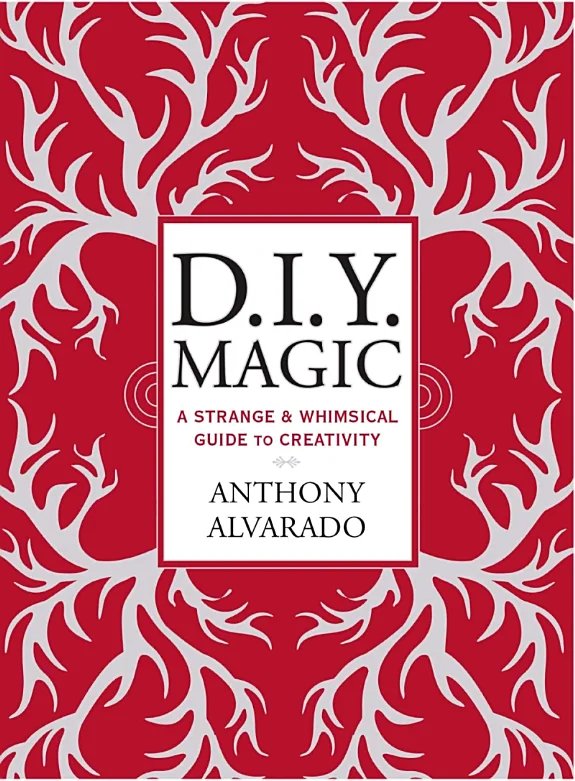
DIY Magic
 74
74

DIY Magic
Anthony Alvarado’s DIY Magic offers a pragmatic, almost engineering-like approach to the often-elusive nature of creativity. The book's strength lies in its concrete "reality hacks," translating concepts from artists like Dalí into actionable exercises. I found the section detailing the "spoon technique" particularly illuminating, demonstrating how intentional physical states can influence mental ones. However, the constant framing of these methods as "hacks" can sometimes undermine the deeper philosophical underpinnings that Alvarado occasionally touches upon. While it successfully demystifies creative blocks, it occasionally risks oversimplifying the complex relationship between the subconscious and artistic expression. Nonetheless, Alvarado provides a valuable, accessible manual for those seeking to actively cultivate their imaginative faculties.
📝 Description
74
Anthony Alvarado's 2015 book, DIY Magic, reframes creative blocks as psychological puzzles.
DIY Magic is not a traditional spellbook, but a practical guide for boosting creative work. Alvarado treats techniques from psychology and art history as "reality hacks," blending applied philosophy with mental exercises. He connects artistic struggles to specific mental states, suggesting ways to access deeper cognitive abilities. The book is structured like a "cookbook for creativity," offering a flexible method for improving imaginative output.
This book targets artists, writers, and anyone else involved in creative fields who faces inspiration issues or wishes to refine their process. It appeals to those who see creativity as a skill developed through practice and mental discipline, rather than an innate talent. Readers interested in self-help, practical psychology, and unconventional personal development will find its approach useful.
The core of DIY Magic involves "reality hacks," specific actions to overcome conscious limits and reach the subconscious. These methods aim to create altered states of awareness, change perceptions, and reconfigure mental obstacles. The book advocates for an experimental, hands-on method, encouraging readers to view their minds and creative processes as systems for continuous improvement.
Published in 2015, DIY Magic positions itself outside conventional esoteric traditions. While it draws on psychological concepts and references figures like Salvador Dalí, its presentation aligns more with modern self-improvement literature. The book secularizes older psychological and philosophical ideas, making them accessible for contemporary audiences seeking practical applications for creativity. It reflects a trend of adapting esoteric or psychological principles into actionable techniques for personal development in a digital age.
💡 Why Read This Book?
• You will learn specific techniques for bypassing creative blocks, directly applicable from Alvarado's discussion of Salvador Dalí's "spoon technique" to stimulate subconscious access. • You will gain practical "mind hacks" inspired by psychological principles, offering a tangible method for altering your mental state to foster inspiration, as presented in the book's cookbook-style format. • You will discover a unique framework for self-improvement that reframes artistic development as an experimental process, drawing parallels to the practical, hands-on approach advocated throughout the text.
⭐ Reader Reviews
Honest opinions from readers who have explored this book.
❓ Frequently Asked Questions
What specific artistic techniques does DIY Magic reference beyond Salvador Dalí's spoon method?
While Dalí's spoon technique is a prominent example, DIY Magic explores other methods for accessing creative states, often drawing from psychological principles and historical artistic practices to "hack" the subconscious.
Is DIY Magic a traditional spellbook or grimoire?
No, DIY Magic is explicitly positioned as a practical guide to enhancing creativity through "reality hacks" and psychological techniques, rather than a book of occult rituals.
Who is the primary audience for Anthony Alvarado's DIY Magic?
The book targets artists, writers, and any creative individuals seeking new sources of inspiration and practical methods to deepen their creative thought processes.
When was DIY Magic first published?
DIY Magic by Anthony Alvarado was first published on April 7, 2015.
What is the central metaphor used in DIY Magic for creativity?
The book uses a "cookbook for creativity" metaphor, presenting techniques as recipes for unlocking the subconscious and generating novel ideas.
Does the book offer philosophical insights alongside practical hacks?
Yes, DIY Magic integrates self-help, philosophy, and psychology, offering both practical techniques and underlying philosophical perspectives on creativity and the mind.
🔮 Key Themes & Symbolism
Reality Hacking
The core concept of DIY Magic revolves around 'reality hacking,' framing various psychological and philosophical techniques as practical methods to alter one's perception and cognitive processes. This isn't about changing external circumstances, but about manipulating internal states to achieve desired outcomes, particularly in creative endeavors. Alvarado presents these hacks as accessible tools, akin to software patches for the mind, designed to overcome limitations and unlock latent potential. The approach encourages an experimental, hands-on attitude towards personal development and creative output.
Subconscious Access
A significant focus of the book is on techniques designed to access and harness the power of the subconscious mind. Alvarado suggests that by employing specific methods, such as altered states of consciousness or focused mental exercises, individuals can tap into deeper reservoirs of creativity and insight. This echoes historical esoteric ideas about the unconscious, but is presented here through a lens of applied psychology and self-help. The goal is to move beyond conscious limitations and retrieve novel ideas or solutions directly from the subconscious.
Creativity as a Skill
DIY Magic reframes creativity not as an innate talent, but as a skill that can be systematically developed and improved. The 'cookbook' metaphor reinforces this idea, suggesting that by following specific 'recipes' or techniques, anyone can enhance their creative output. This perspective empowers readers by explaining the creative process and providing a structured, actionable approach. It encourages a mindset of practice, experimentation, and iterative refinement, similar to learning any other practical craft.
Mind-Body Connection
The book explores the interconnectedness of the mind and body, particularly in relation to creative states. Techniques like Salvador Dalí's spoon method illustrate how physical actions can intentionally induce specific mental conditions conducive to inspiration. This highlights a practical application of psychosomatic principles, suggesting that by manipulating physical posture, sensory input, or even sleep states, one can unlock different cognitive functions. It’s a direct, empirical approach to influencing mental states through physical means.
💬 Memorable Quotes
Direct passages from the work, attributed to the author.
“Reality hacks encompassing self-help, philosophy, psychology, and inspiration.”
— This phrase expresses the book's interdisciplinary approach, positioning its techniques as practical interventions that blend personal development, philosophical inquiry, and psychological understanding to boost creative output.
“A cookbook for creativity.”
— This metaphor suggests that the book provides a collection of 'recipes'—specific, actionable techniques—that readers can follow to consistently generate creative ideas and overcome artistic blocks.
“Techniques for accessing deeper levels of creative thought—for hacking into their subconscious.”
— This highlights the book's core objective: to provide readers with practical methods for bypassing conscious mental filters and tapping into the subconscious mind for inspiration and insight.
“From Salvador Dali's spoon technique and ornitho...”
— This incomplete phrase points to the book's use of specific, historical examples of artists and their methods as inspiration for its own 'reality hacks,' grounding abstract concepts in concrete practices.
“DIY Magic offers a series of reality hacks...”
— This opening statement sets the tone for the book, presenting its content not as passive theory but as active, do-it-yourself strategies for manipulating one's own mental landscape.
🌙 Esoteric Significance
Tradition
While not explicitly tied to a single esoteric lineage like Hermeticism or Kabbalah, DIY Magic draws implicitly from traditions that explore the power of the mind and altered states. Its emphasis on "hacking the subconscious" echoes Gnostic ideas of accessing hidden knowledge or Jungian concepts of the collective unconscious. However, its presentation is decidedly secular and practical, stripping away ritualistic elements to focus on psychological mechanisms, aligning it more with modern interpretations of consciousness exploration than classical occultism.
Symbolism
The book's primary symbolic motif is the 'cookbook' itself, representing a structured, accessible method for achieving a desired outcome (creativity). The concept of 'reality hacks' functions symbolically as a key or exploit, suggesting a way to bypass conventional limitations. While specific traditional symbols are not central, the 'spoon technique' of Dalí acts as a symbolic anchor, representing the potent link between physical action and altered mental states, a concept explored across various mind-body traditions.
Modern Relevance
DIY Magic appeals to contemporary thinkers and practitioners in fields like neuro-linguistic programming (NLP), cognitive behavioral therapy (CBT) techniques adapted for creativity, and modern manifestation practices. Its 'hack-based' approach is mirrored in digital culture's focus on efficiency and optimization. Modern mindfulness and productivity gurus often incorporate similar principles of intentional mental state management, making Alvarado's work a precursor or parallel development to current trends in self-improvement and applied psychology.
👥 Who Should Read This Book
['• Aspiring and established artists seeking to overcome creative blocks and discover new sources of inspiration through practical, actionable techniques.', '• Writers and creators interested in psychological methods for enhancing imagination and accessing deeper levels of thought beyond conventional approaches.', "• Individuals exploring self-help and personal development who view creativity as a skill to be systematically cultivated using unconventional 'reality hacks'."]
📜 Historical Context
Published in 2015, Anthony Alvarado's DIY Magic emerged in a cultural landscape increasingly fascinated by productivity, self-optimization, and the democratization of knowledge through digital platforms. The book taps into a zeitgeist where concepts like 'life hacks' had become mainstream, applying this logic to the traditionally more esoteric domains of creativity and the subconscious. While Alvarado references historical figures like Salvador Dalí and his peculiar sleep-associated techniques, the book’s framing and accessibility align it more closely with contemporary self-help and popular psychology trends than with established esoteric traditions. It arrived during a period when authors like Tim Ferriss were popularizing the idea of deconstructing complex skills into manageable components. DIY Magic can be seen as part of a broader movement to secularize and practicalize psychological and philosophical insights, making them available for immediate application by a wide audience, distinct from academic or deeply mystical explorations.
📔 Journal Prompts
Reflect on the 'cookbook for creativity' metaphor: what ingredients (techniques) would you combine first?
Analyze the effectiveness of Salvador Dalí's spoon technique for inducing altered states; how might you adapt it?
Consider a personal 'reality hack' you've unconsciously used to overcome a creative challenge.
Explore the concept of 'hacking the subconscious' – what specific fears or limitations might this process address for you?
How can the principles of DIY Magic be applied to non-artistic problem-solving scenarios in your life?
🗂️ Glossary
Reality Hack
A practical technique or strategy, often drawn from psychology or philosophy, designed to alter one's mental state or perception to achieve a specific outcome, particularly related to creativity or personal development.
Mind Hack
Synonymous with 'reality hack,' this term emphasizes the application of psychological principles to manipulate cognitive processes and bypass mental limitations for improved performance or insight.
Cookbook for Creativity
A metaphor used to describe the book's structure, presenting techniques as 'recipes' that readers can follow to systematically generate creative ideas and enhance their imaginative capacity.
Subconscious Hacking
The process of employing specific methods to access and influence the subconscious mind, aiming to unlock deeper levels of thought, intuition, and creative potential.
Ornitho...
This appears to be an incomplete reference within the original blurb, likely pertaining to a specific technique or concept related to birds or bird-like behaviors, possibly in the context of artistic inspiration or mental states.
Spoon Technique
A method, famously associated with artist Salvador Dalí, involving holding an object (like a spoon) loosely while dozing, allowing it to drop and wake the user just as they enter a dream state, aiming to capture nascent subconscious imagery.
Creative Types
A broad designation for individuals whose work or pursuits involve imagination, innovation, and the generation of novel ideas, including but not limited to artists, writers, musicians, designers, and entrepreneurs.
This book appears in 1 collection
🔮 Readers Also Liked
Browse all →







From the “Bibliomancy” Collection
View all →








More Free Occult Philosophy Books
View all →